
The Backbone of VHF Communication: Understanding Amateur Radio Repeaters
Amateur radio, often referred to as “ham radio,” thrives on the ability of enthusiasts to communicate across distances, sometimes globally, using various radio technologies. Among the most fundamental and widely used systems for local and regional communication, particularly on the Very High Frequency (VHF) and Ultra High Frequency (UHF) bands, are repeaters. These sophisticated automated stations act as intermediaries, receiving signals on one frequency and simultaneously retransmitting them on another, thereby extending the range of handheld and mobile radios significantly. Without repeaters, most VHF/UHF communication would be limited to line-of-sight distances, severely restricting their utility.
Bridging Distances with Duplex Operation
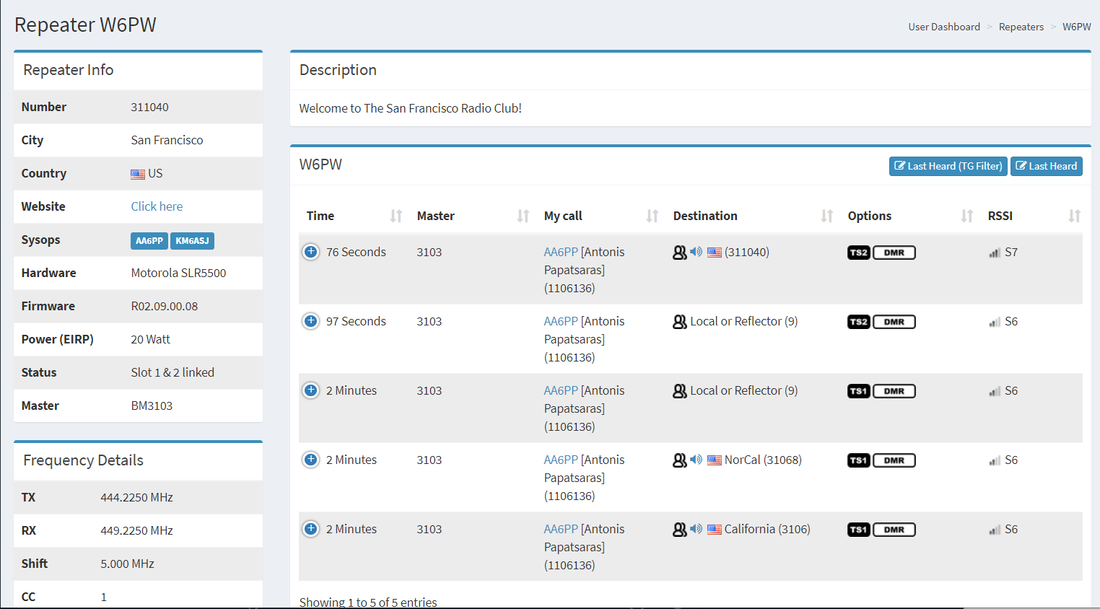
The magic of a repeater lies in its ability to perform what’s known as “duplex” operation. Unlike “simplex” communication, where both parties transmit and receive on the same frequency (like a walkie-talkie), duplex operation involves two distinct frequencies. Your radio transmits on one frequency, which the repeater hears, and the repeater then retransmits your signal on a different frequency, which your radio receives. This allows for continuous, two-way conversation without collision, as both sides can transmit and receive simultaneously, even though the repeater itself is the bottleneck. Repeaters are typically strategically placed on high elevations, such as mountains or tall buildings, maximizing their coverage area and enabling users with lower-power radios or less optimal antennas to communicate over tens, or even hundreds, of miles.
The Essence of Frequency Separation
For this duplex operation to work without interference, there must be a clear separation between the repeater’s input frequency (where it listens) and its output frequency (where it transmits). This frequency separation is known as the “offset.” Without a proper offset, the repeater would effectively be listening to its own retransmitted signal, leading to a cacophony of feedback or a total inability to function. The offset ensures that while your radio transmits on one frequency to the repeater, it receives the repeater’s output on a distinct frequency, allowing for clear and uninterrupted communication. Understanding and correctly configuring this offset is paramount for any amateur radio operator wishing to utilize repeaters effectively.
Decoding the 2-Meter Band Offset Standard
The 2-meter band, spanning 144 MHz to 148 MHz, is one of the most popular amateur radio bands, primarily used for local public service, emergency communication, and general ragchewing (casual conversation). Given its widespread use, standardized practices have evolved to ensure compatibility and ease of access to repeaters. The concept of a standard repeater offset is critical for simplifying radio programming and promoting consistent operation across a geographical region.
The North American Standard: +/- 600 kHz
In ITU Region 2, which includes North America (the United States, Canada, Mexico, and parts of the Caribbean and South America), the standard repeater offset for the 2-meter VHF band is 600 kHz (0.6 MHz). This means that the repeater’s transmit frequency will be either 600 kHz above or 600 kHz below its receive frequency.
The direction of this offset – whether it’s positive (+) or negative (-) – depends on where the repeater’s output frequency falls within the 2-meter band plan. Generally:
- Negative Offset (-600 kHz): Repeaters operating with an output frequency between 145.200 MHz and 145.495 MHz, and again between 146.610 MHz and 146.995 MHz, typically use a negative offset. This means your radio transmits 600 kHz below the repeater’s advertised output frequency.
- Positive Offset (+600 kHz): Repeaters operating with an output frequency between 147.000 MHz and 147.395 MHz typically use a positive offset. This means your radio transmits 600 kHz above the repeater’s advertised output frequency.
It’s important to note that these are general guidelines based on common band plans. Always verify the specific offset for any repeater you intend to use.
Applying the Offset to 145.150 MHz: The Negative Shift
Now, let’s address the specific frequency in question: 145.150 MHz.
Given the North American 2-meter band plan and the standard offset rules, if a repeater is advertised with an output frequency of 145.150 MHz, it falls into the segment where repeaters typically use a negative offset.
Therefore, for a repeater operating on an output frequency of 145.150 MHz, the standard repeater offset would be -600 kHz.
This means:
- Repeater Output Frequency (what your radio receives): 145.150 MHz
- Your Radio’s Transmit Frequency (what the repeater receives): 145.150 MHz – 0.600 MHz = 144.550 MHz
So, when you program your radio to communicate through a repeater on 145.150 MHz, you will set your receive frequency to 145.150 MHz and your transmit offset to -0.600 MHz.
Regional Nuances and Band Plan Variations
While the +/- 600 kHz offset is standard in North America, it’s crucial to understand that amateur radio band plans and repeater offsets can vary by ITU region and even by country. For instance:
- ITU Region 1 (Europe, Africa, Middle East, and parts of Asia): The 2-meter band typically runs from 144 MHz to 146 MHz. Standard offsets might be 600 kHz, but the specific segments for positive versus negative shifts can differ. Some areas might use 600 kHz, while others might adhere to different values based on national regulations.
- ITU Region 3 (Asia-Pacific): Similar to Region 1, band plans vary. Some countries might adopt a 600 kHz offset, while others might use 500 kHz or 700 kHz for certain segments.
For this reason, relying solely on the North American standard without verification can lead to communication failures when operating in different parts of the world. Always consult local band plans and repeater directories when traveling or operating internationally.
Configuring Your Transceiver for Seamless Repeater Access
Correctly configuring your radio for repeater operation is a fundamental skill for any amateur radio operator. Beyond just the frequency offset, several other parameters ensure you can access a repeater reliably.
Setting the Receive Frequency and Offset Direction
The first step is to set your radio’s main operating frequency to the repeater’s advertised output frequency. In our example, this would be 145.150 MHz. Most modern transceivers have a “shift” or “offset” setting. You will typically select either a positive (+) or negative (-) offset and then specify the magnitude of the offset, which for 2-meter repeaters in North America is 0.600 MHz. For 145.150 MHz, you would select a negative (-) offset of 0.600 MHz. This tells your radio to automatically transmit 600 kHz below its receive frequency.
Alternatively, some radios allow for “split frequency” operation where you manually enter both the transmit and receive frequencies. In this case, you would set your receive frequency to 145.150 MHz and your transmit frequency to 144.550 MHz. While this offers more granular control, using the automatic offset feature is generally simpler for standard repeaters.
The Critical Role of CTCSS and DCS Tones
Beyond the correct frequency and offset, many repeaters employ a “tone squelch” system to prevent unwanted signals from activating them. This is typically achieved using either CTCSS (Continuous Tone-Coded Squelch System), often called a “PL tone” (Private Line, a Motorola trademark), or DCS (Digital-Coded Squelch).
- CTCSS: This involves transmitting a very low-frequency audio tone (sub-audible to the human ear) along with your voice. The repeater’s receiver is configured to only open its squelch and retransmit if it detects the specific CTCSS tone it’s programmed for. Common CTCSS tones include 88.5 Hz, 100.0 Hz, 123.0 Hz, etc.
- DCS: This is a digital equivalent, transmitting a stream of digital codes. Like CTCSS, the repeater only activates if it receives the correct DCS code.
If a repeater requires a tone, and you don’t transmit it, the repeater will not hear you, even if you are on the correct frequency and offset. This is a very common reason for being unable to access a repeater. Repeater directories and club websites will usually list the required CTCSS or DCS tone alongside the repeater’s frequency and offset. You’ll need to enable the “tone encoder” (or “T-SQ” or “TX Tone”) function on your radio and select the correct tone frequency or DCS code.
Streamlining Operation with Memory Channels
Modern amateur radio transceivers, especially handheld (HT) and mobile units, have memory channels that allow you to save repeater configurations. Instead of manually entering the receive frequency, offset direction, offset magnitude, and CTCSS/DCS tone every time, you can program all these parameters into a memory channel. This makes switching between frequently used repeaters quick and effortless. Good practice involves labeling these memory channels with the repeater’s location or callsign for easy identification. Many operators also use programming software (often available from radio manufacturers or third parties) and a programming cable to manage their radio’s memory channels from a computer, which can be far more efficient than manual entry for a large number of repeaters.
Navigating the Repeater Landscape: Resources and Best Practices
While knowing the standard offset for 145.150 MHz is a great start, the world of repeaters is dynamic. Frequencies, offsets, and tones can change, and new repeaters are added regularly. Staying informed is key to successful repeater operation.
Leveraging Repeater Directories and Online Databases
The most authoritative sources for repeater information are online databases and published directories. Key resources include:
- RepeaterBook.com: A comprehensive, community-maintained online database covering repeaters worldwide. It allows users to search by frequency, location, callsign, and features. Each listing typically includes frequency, offset, CTCSS/DCS tone, and often notes on coverage or special uses.
- ARRL Repeater Directory: Published annually by the American Radio Relay League (ARRL), this physical and digital directory is a trusted resource for repeaters in North America.
- Local Club Websites: Many amateur radio clubs maintain lists of repeaters in their area, including those they own and operate. These lists are often the most up-to-date for local repeaters.
Always cross-reference information from multiple sources if possible, especially for repeaters you haven’t used before.
The Importance of Local Club Knowledge
Beyond formal directories, local amateur radio clubs and their members are invaluable resources. They often have firsthand knowledge of repeater status, known quirks, and common operating procedures. Joining a local club or simply listening in on local nets can provide insights into which repeaters are active, their typical usage, and any non-standard configurations. This community knowledge can be particularly helpful for understanding non-standard offsets or unusual tone requirements that might not be fully documented elsewhere.

Troubleshooting Common Connectivity Challenges
If you’re having trouble accessing a repeater, systematically check these common culprits:
- Incorrect Frequency: Double-check that your receive frequency exactly matches the repeater’s output frequency (e.g., 145.150 MHz).
- Incorrect Offset Direction or Magnitude: Ensure you have selected the correct offset (+ or -) and the correct value (e.g., 0.600 MHz). For 145.150 MHz, it’s typically -0.600 MHz.
- Missing or Wrong Tone: Verify that the repeater requires a CTCSS or DCS tone and that your radio is transmitting the correct one. This is a very frequent oversight.
- Out of Range: Repeaters have a finite coverage area. If you are too far away or behind significant terrain obstacles, your signal may not be strong enough to reach the repeater or for the repeater’s signal to reach you clearly.
- Repeater Malfunction or Offline: Occasionally, repeaters can experience technical issues or be taken offline for maintenance. If all settings are correct and you still can’t access it, try another repeater or check online resources for status updates.
Mastering repeater operation, starting with understanding the offset for frequencies like 145.150 MHz, opens up a world of communication possibilities for amateur radio enthusiasts. With the right configuration and a little local knowledge, you can reliably connect with fellow hams across your region and beyond.
aViewFromTheCave is a participant in the Amazon Services LLC Associates Program, an affiliate advertising program designed to provide a means for sites to earn advertising fees by advertising and linking to Amazon.com. Amazon, the Amazon logo, AmazonSupply, and the AmazonSupply logo are trademarks of Amazon.com, Inc. or its affiliates. As an Amazon Associate we earn affiliate commissions from qualifying purchases.