
In the intricate world of fluid dynamics and mechanical systems, few concepts are as fundamental yet frequently misunderstood as “pump head.” Far from being a physical component of a pump, pump head is a crucial metric that quantifies the energy a pump imparts to a fluid, expressed as the equivalent height to which the fluid can be lifted. Understanding pump head is essential for anyone involved in designing, selecting, or troubleshooting pumping systems, from large-scale industrial operations to residential water supply. It underpins the efficiency, reliability, and performance of countless technological applications that rely on moving liquids.
Unpacking the Fundamentals of Pump Head
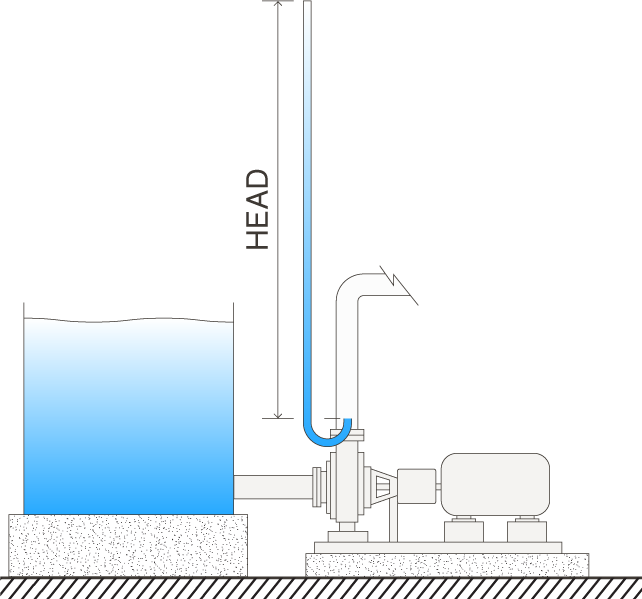
At its core, pump head is a measure of mechanical energy per unit weight of fluid. It represents the vertical distance a pump could theoretically lift a fluid against gravity, regardless of the fluid’s density. This distinction is critical because, unlike pressure, which is dependent on fluid density, head provides a universal measure of a pump’s energy contribution that remains constant for any non-compressible fluid.
Defining Head in Fluid Dynamics
In fluid mechanics, “head” refers to the height of a column of fluid that would produce a given pressure. It’s derived from Bernoulli’s principle, which states that for an incompressible, inviscid fluid, an increase in the speed of the fluid occurs simultaneously with a decrease in pressure or a decrease in the fluid’s potential energy. Head simplifies this by converting pressure, velocity, and elevation into a single, intuitive vertical dimension. This allows engineers to compare the performance of different pumps and analyze system requirements without constantly accounting for variations in fluid properties.
The Role of Pressure and Elevation
While distinct, pressure and elevation are integral components contributing to the overall head calculation. A pump’s primary function is to increase the pressure of a fluid, thereby enabling it to overcome resistance and elevation differences within a system. When a pump generates pressure, it essentially creates potential energy that can be converted into kinetic energy (velocity) or overcome gravitational potential energy (elevation). For example, to pump water to the top of a 50-foot building, the pump must generate enough head to overcome that 50 feet of static elevation, plus any losses due to friction or changes in velocity. The beauty of the head concept is that this 50-foot requirement remains constant whether you’re pumping water or a denser fluid like brine, assuming the pump’s mechanical capabilities are sufficient to handle the fluid.
Why Not Just Pressure?
Using pressure alone to characterize pump performance and system requirements would be problematic due to its dependence on fluid density. A pump generating 50 PSI (pounds per square inch) when pumping water will generate a significantly different head compared to pumping a much denser fluid like mercury or a lighter fluid like oil, even at the same pressure. Because head is expressed as a height of fluid (e.g., feet of water), it normalizes this density variable. This allows for direct comparison of pump performance curves—which are almost always plotted against head—regardless of the specific fluid being handled. For system designers, it means they can determine the required head for a system based on its physical layout and flow rates, and then select a pump that can deliver that head, knowing it will perform similarly for various fluids once converted to the specific fluid’s pressure equivalent.
Types of Pump Head and Their Calculations
To accurately assess the total energy a pump must provide, various components of head are considered. These components cumulatively define the total dynamic head (TDH) of a pumping system, which is the sum of all resistances and height differences the fluid must overcome.
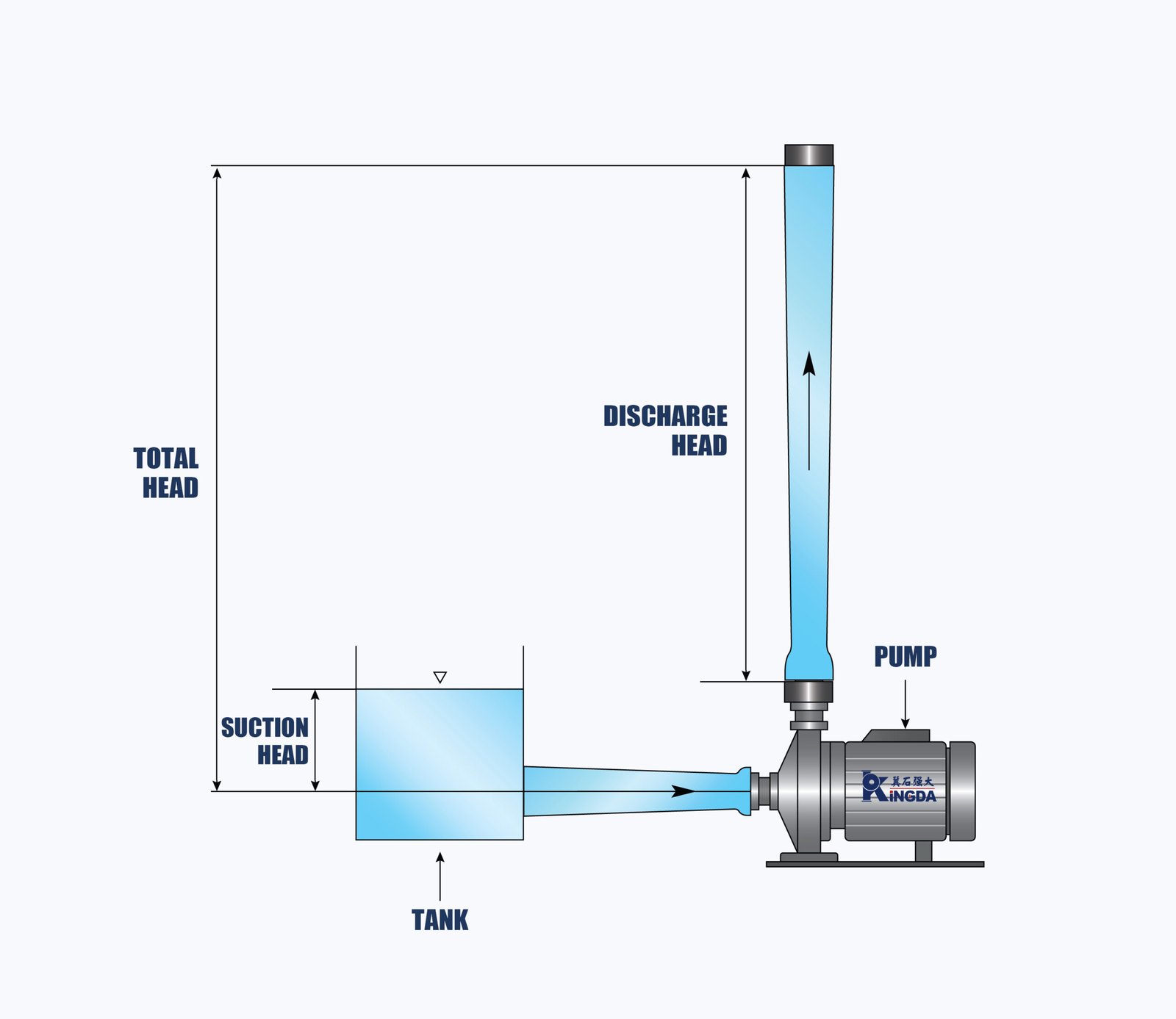
Static Head: Suction and Discharge
Static head refers to the vertical distance between two points in a system, independent of fluid flow. It’s purely about elevation.
- Static Suction Head: This is the vertical distance from the free surface of the fluid in the supply tank (e.g., well, reservoir) to the centerline of the pump impeller. If the fluid level is above the pump, it’s a positive static suction head, aiding the pump. If the fluid level is below the pump, it’s a negative static suction head, also known as static suction lift, requiring the pump to work harder to draw the fluid up.
- Static Discharge Head: This is the vertical distance from the pump’s centerline to the free surface of the fluid in the receiving tank or the point of discharge. This always represents a resistance the pump must overcome.
Friction Head: Overcoming Resistance
Friction head accounts for the energy lost due to resistance as the fluid moves through pipes, valves, fittings, and other components of the system. This resistance converts some of the fluid’s mechanical energy into heat. Factors influencing friction head include:
- Pipe Diameter: Smaller diameters result in higher velocities and thus more friction.
- Pipe Length: Longer pipes mean more surface area for friction.
- Pipe Material: Rougher internal surfaces (e.g., cast iron vs. smooth plastic) create more friction.
- Fluid Velocity: Friction loss increases significantly with velocity (proportional to velocity squared).
- Fluid Viscosity: Thicker, more viscous fluids generate more friction.
- Fittings and Valves: These create localized turbulence and energy loss.
Engineers use formulas like the Darcy-Weisbach equation or Hazen-Williams equation, along with K-factors for fittings, to calculate friction losses, converting them into an equivalent height of fluid.
Velocity Head: The Kinetic Component
Velocity head is the energy of the fluid due to its motion. It’s the vertical distance equivalent to the kinetic energy of the fluid flowing at a certain velocity. While often small compared to static and friction heads, it’s a necessary component for a complete energy balance. It’s calculated using the formula: Velocity Head = (v^2) / (2g), where ‘v’ is the average fluid velocity in the pipe and ‘g’ is the acceleration due to gravity. This component accounts for the energy required to accelerate the fluid to its flow velocity within the system.
Total Dynamic Head (TDH): The Comprehensive Metric
Total Dynamic Head (TDH) is the sum of all these individual head components. It represents the total energy per unit weight of fluid that the pump must provide to move the fluid from the suction point to the discharge point at a specified flow rate.
TDH = (Static Discharge Head – Static Suction Head) + Friction Head + Velocity Head
For systems with negative static suction (lift), the formula adjusts accordingly, typically adding the absolute value of the suction lift. Calculating TDH accurately is paramount for proper pump selection, as a pump must be able to generate at least the calculated TDH at the desired flow rate to ensure effective operation.
The Critical Importance of Pump Head in System Design
The meticulous calculation and consideration of pump head are not just academic exercises; they are fundamental to the operational success, energy efficiency, and longevity of any fluid transfer system.
Matching Pump to System Requirements
Every pumping system has a unique “system curve” that plots the total head required at different flow rates. This curve typically rises with increasing flow rate due to escalating friction losses. A pump, conversely, has a “pump curve” provided by the manufacturer, which shows the head it can generate at various flow rates. The intersection of the system curve and the pump curve identifies the system’s operating point—the flow rate and head at which the pump will operate within that specific system. A precise understanding of TDH ensures that the selected pump operates efficiently at or near its best efficiency point (BEP) for the intended flow rate, preventing oversizing or undersizing.
Preventing Cavitation and Ensuring Efficiency
Incorrectly calculating head can lead to severe operational issues. If the net positive suction head available (NPSHa) in the system is less than the net positive suction head required (NPSHr) by the pump (a metric closely related to suction head, indicating the minimum pressure required at the pump inlet to avoid cavitation), the pump can experience cavitation. Cavitation, the formation and collapse of vapor bubbles within the fluid, causes noise, vibration, damage to pump components (especially the impeller), and a drastic reduction in pump efficiency and lifespan. Accurate head calculations directly inform cavitation prevention strategies.
Impact on Energy Consumption and Longevity
An oversized pump, chosen due to an overestimation of TDH, will consume more energy than necessary, leading to higher operating costs and potentially shorter component life due to operating far from its BEP. Conversely, an undersized pump will fail to deliver the required flow or pressure, leading to system inefficiencies or complete operational failure. Optimal pump selection based on precise TDH minimizes energy waste, reduces maintenance needs, and extends the pump’s operational life, contributing to sustainable and cost-effective system management.
Real-World Applications and Technological Considerations
The concept of pump head is universally applied across diverse sectors that rely on fluid movement, from daily utilities to complex industrial processes.
HVAC and Building Systems
In heating, ventilation, and air conditioning (HVAC) systems, pumps circulate chilled water, hot water, or condenser water. The pump head calculation dictates the power required to move water through extensive piping networks, heat exchangers, cooling towers, and terminal units, overcoming static elevations, friction in pipes, and pressure drops across coils and valves. Modern HVAC systems often incorporate variable speed drives (VSDs) on pumps, allowing engineers to dynamically adjust pump speed and thus head to match varying building loads, optimizing energy consumption.
Water Treatment and Distribution
Municipal water treatment plants and distribution networks are perhaps the most prominent examples of systems reliant on pump head. Pumps lift raw water from sources, move it through filtration and chemical treatment processes, and then deliver potable water to homes and businesses, often across vast distances and varying terrains. Accurately determining the total dynamic head is crucial for ensuring sufficient pressure at every tap while minimizing the energy expenditure of these massive pumping operations. Advanced supervisory control and data acquisition (SCADA) systems monitor pressure and flow, allowing operators to adjust pump schedules and speeds to maintain optimal head across the network.
Industrial Processes and Chemical Transfer
In industrial settings, pumps handle everything from cooling water for machinery to corrosive chemicals and slurries in manufacturing processes. Each application presents unique challenges for head calculation, considering fluid properties (viscosity, specific gravity), elevated temperatures, and the complex piping geometries of processing plants. The precise determination of pump head ensures that chemical reactions are properly mixed, coolants effectively dissipate heat, and materials are transported efficiently and safely without compromising process integrity or equipment longevity.
Advanced Pumping Technologies and Smart Systems
Contemporary pump technology increasingly integrates smart sensors, IoT connectivity, and predictive analytics. These advanced systems continuously monitor operating parameters like flow, pressure, temperature, and vibration. By understanding the real-time head generated by a pump and comparing it to the system’s requirements, these smart pumps can self-adjust, optimize performance, and even predict maintenance needs. Digital twins and simulation software allow engineers to model complex pumping systems, calculate TDH with high precision under various scenarios, and select pumps that can adapt to fluctuating demands, further enhancing efficiency and reliability.
Selecting the Right Pump Based on Head
The ultimate goal of understanding pump head is to make informed decisions when selecting pumping equipment. This involves a careful interplay of calculations, manufacturer data, and system-specific considerations.
Interpreting Pump Curves
Pump manufacturers provide characteristic pump curves for each model, typically plotting head (vertical axis) against flow rate (horizontal axis). These curves also include lines for efficiency, power consumption, and NPSHr. By overlaying the calculated system curve onto the pump’s characteristic curve, engineers can identify the optimal operating point. A well-matched pump will operate near its best efficiency point (BEP) on the curve at the desired flow rate and head, maximizing energy savings and minimizing wear.
Accounting for Future System Changes
System designers must also consider potential future changes that could impact the required head. This might include anticipated increases in flow demand, changes in pipe length or diameter, or modifications to the fluid being pumped. Designing with a slight margin or selecting pumps with variable speed capabilities can provide the flexibility needed to adapt to evolving system requirements without significant rework or loss of efficiency.

Leveraging Simulation Tools for Optimal Design
Modern engineering relies heavily on computational fluid dynamics (CFD) and specialized pump selection software. These tools can accurately model complex piping networks, predict friction losses, and calculate TDH under various operating conditions. They allow engineers to virtually test different pump configurations, pipe sizes, and valve types, ensuring that the selected pump not only meets the current head requirements but also performs robustly and efficiently throughout its operational life cycle, pushing the boundaries of what these essential technological systems can achieve.
aViewFromTheCave is a participant in the Amazon Services LLC Associates Program, an affiliate advertising program designed to provide a means for sites to earn advertising fees by advertising and linking to Amazon.com. Amazon, the Amazon logo, AmazonSupply, and the AmazonSupply logo are trademarks of Amazon.com, Inc. or its affiliates. As an Amazon Associate we earn affiliate commissions from qualifying purchases.