
Understanding the poverty level in Virginia is a foundational step for residents, financial planners, and policy analysts alike. While the term “poverty” is often used broadly, in financial and governmental contexts, it refers to specific income thresholds that determine everything from tax liabilities to eligibility for essential social services. In the Commonwealth of Virginia—a state characterized by stark economic contrasts between the affluent corridors of Northern Virginia and the rural landscapes of Southwest Virginia—the poverty level serves as a critical benchmark for measuring economic health and personal financial stability.
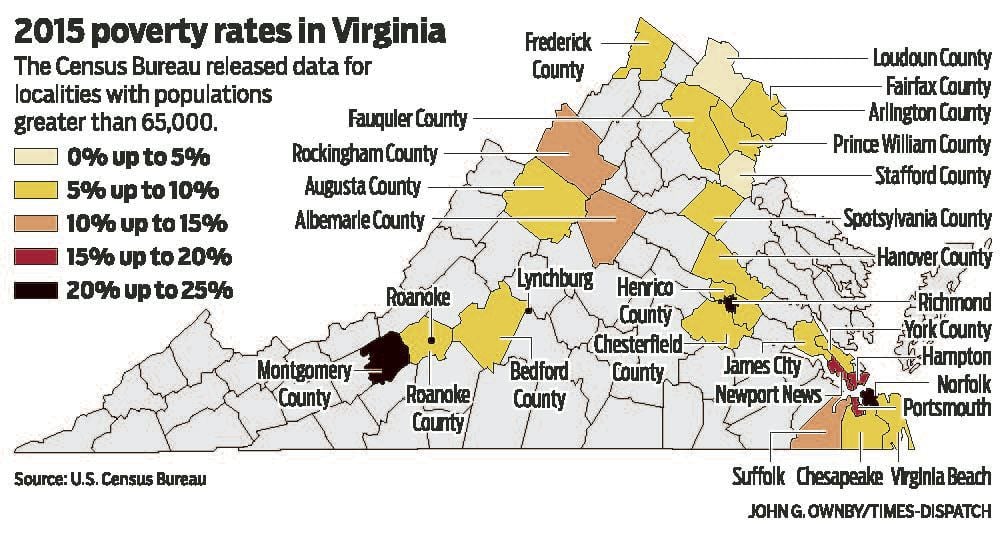
To navigate the financial landscape of the state, one must first distinguish between the federal guidelines used to define poverty and the actual cost of living required to thrive in various Virginia localities.
The Federal Poverty Guidelines and Their Application in the Commonwealth
In Virginia, as in the rest of the contiguous United States, the official poverty level is determined by the Federal Poverty Guidelines (FPL) issued annually by the Department of Health and Human Services (HHS). These guidelines are a simplified version of the poverty thresholds used by the Census Bureau for statistical purposes. For 2024, the FPL provides a standardized dollar amount based on household size, which serves as the “floor” for economic measurement.
The 2024 Guidelines for Individuals and Families
For a single individual living in Virginia in 2024, the federal poverty guideline is set at $15,060. As family size increases, the threshold rises by approximately $5,380 for each additional person. For a family of two, the level is $20,440; for a family of three, it is $25,820; and for a family of four, the poverty level is defined as an annual household income of $31,200.
These numbers are uniform across Virginia, regardless of whether a resident lives in the high-rent districts of Arlington or the more affordable regions of the Shenandoah Valley. This uniformity is a point of significant financial discussion, as a $31,200 income carries vastly different purchasing power depending on the local cost of housing, transportation, and childcare.
How the FPL Impacts Financial Eligibility
The significance of these figures lies in their role as the primary gatekeeper for financial assistance. Many state and federal programs in Virginia do not use the 100% poverty mark as the cutoff; instead, they use a percentage of the FPL to determine eligibility. For example:
- Medicaid Expansion: In Virginia, adults may qualify for Medicaid if their household income is at or below 138% of the FPL. For an individual, this is roughly $20,782 per year.
- SNAP (Supplemental Nutrition Assistance Program): Eligibility often extends to those at 130% to 200% of the FPL, depending on specific household expenses and deductions.
- Premium Tax Credits: Residents purchasing health insurance through the Virginia Insurance Marketplace may receive subsidies if their income falls between 100% and 400% of the FPL.
Analyzing the Gap: Poverty Line vs. Living Wage in Virginia
While the federal poverty level provides a baseline, it is rarely viewed as an accurate measure of what is required to achieve financial self-sufficiency in Virginia. Financial experts often point to the “Living Wage”—the minimum income necessary for a worker to meet their basic needs without public assistance—as a more realistic target for personal finance management.
Regional Disparities: Northern Virginia vs. Southwest Virginia
The economic diversity of Virginia creates a unique challenge. In Northern Virginia (NoVA), encompassing counties like Fairfax and Loudoun, the cost of living is among the highest in the nation. In these areas, the federal poverty level of $31,200 for a family of four is often insufficient to cover even the average annual cost of rent, which can easily exceed $25,000 for a modest two-bedroom apartment.
Conversely, in regions like the Southside or the Appalachian plateau, housing costs are significantly lower. However, these areas often face higher costs in transportation due to the lack of public transit and longer commute distances to employment hubs. When planning a budget in Virginia, relying solely on the federal poverty definition can be misleading; residents must adjust their financial expectations based on the specific cost-of-living index of their municipality.
The ALICE Threshold: Asset Limited, Income Constrained, Employed
A critical concept in Virginia’s financial discourse is the ALICE threshold. Developed by United Way, ALICE represents households that earn above the federal poverty level but less than what it costs to survive in their local economy. These individuals are often referred to as the “working poor.”

In Virginia, a significant percentage of the population falls into the ALICE category. These households often earn enough to be disqualified from many state-level financial assistance programs but do not earn enough to build savings, invest for retirement, or withstand a financial emergency. For these residents, financial strategy must focus heavily on debt management and accessing community-based resources that do not have the same rigid income requirements as federal programs.
Accessing Financial Safety Nets: Income Eligibility Requirements
For those living at or near the poverty level in Virginia, maximizing available financial tools and assistance is essential for long-term stability. The Commonwealth offers several programs designed to bridge the gap between low earnings and basic needs.
Medicaid and FAMIS Enrollment
Healthcare is often the largest “silent” expense in a household budget. Virginia’s Medicaid program and FAMIS (Family Access to Medical Insurance Security) provide low-cost or no-cost health coverage for children and pregnant women. For a family of four, the income limit for FAMIS can be as high as 205% of the FPL, allowing families who earn more than the “poverty level” to still receive significant financial relief regarding medical expenses. Reducing out-of-pocket healthcare costs is a primary strategy for redirecting limited income toward debt reduction or emergency savings.
Energy and Housing Assistance (LIHEAP)
Virginia’s Low Income Home Energy Assistance Program (LIHEAP), often managed through the Department of Social Services as “Fuel Assistance,” helps residents manage the high costs of heating and cooling. Eligibility is typically capped at 150% of the federal poverty level. In a state with humid summers and freezing winters, this program serves as a vital financial tool, preventing utility debt which can negatively impact credit scores and housing stability.
SNAP and Nutritional Support
The Supplemental Nutrition Assistance Program (SNAP) is a cornerstone of financial support for Virginia residents at the poverty level. By providing a monthly benefit via an EBT card, SNAP allows households to reallocate funds that would have been spent on groceries toward other fixed costs like rent or car payments. In Virginia, the gross income limit for most households is 200% of the FPL, reflecting the state’s recognition that food insecurity exists well above the official poverty line.
Navigating the “Benefits Cliff” and Strategic Financial Planning
One of the most complex financial challenges for Virginians living near the poverty level is the “benefits cliff.” This occurs when a small increase in income (such as a modest raise or extra overtime) results in the complete loss of a government benefit, leaving the individual or family worse off financially than they were before the raise.
Managing the Transition to Higher Income
Effective financial planning at the poverty level requires a keen understanding of these cliffs. For instance, if a $1.00 per hour raise pushes a family over the 138% FPL limit for Medicaid, the subsequent cost of employer-sponsored health insurance premiums and deductibles could far exceed the $2,080 annual increase in gross pay.
Strategies to mitigate this include:
- Utilizing Tax-Advantaged Accounts: Increasing contributions to a 401(k) or a traditional IRA can lower a household’s Adjusted Gross Income (AGI), potentially keeping them below the threshold for certain benefits while simultaneously building long-term wealth.
- Maximizing Tax Credits: The Earned Income Tax Credit (EITC) and the Child Tax Credit (CTC) are essential financial boosters. Virginia also offers a state-level EITC, which can provide a significant refund during tax season, often used by families to pay down high-interest debt or make necessary large purchases.
Building an Emergency Fund on a Limited Budget
While it may seem counterintuitive to save while living near the poverty level, financial advisors in the Commonwealth emphasize the importance of “micro-savings.” Even saving $10 per week can create a small buffer against predatory lending. Many Virginians in the lower income brackets fall prey to payday loans or title loans when faced with a car repair or medical bill. Avoiding these high-interest financial traps is the most effective way to protect a limited income and eventually move beyond the poverty threshold.

The Future of Economic Stability in Virginia
The poverty level in Virginia is not a static figure; it is a moving target influenced by inflation, legislative changes, and shifts in the labor market. As the state continues to see growth in the tech and defense sectors, the pressure on housing costs is expected to rise, potentially pushing more residents into the ALICE category.
For the individual resident, staying informed about the annual adjustments to the FPL and the specific eligibility percentages for state programs is a form of “financial literacy” that is just as important as understanding investment stocks or mortgage rates. By viewing the poverty level not just as a statistic, but as a framework for accessing resources and planning for growth, Virginians can better navigate the complexities of the Commonwealth’s economy and work toward a more secure financial future.
aViewFromTheCave is a participant in the Amazon Services LLC Associates Program, an affiliate advertising program designed to provide a means for sites to earn advertising fees by advertising and linking to Amazon.com. Amazon, the Amazon logo, AmazonSupply, and the AmazonSupply logo are trademarks of Amazon.com, Inc. or its affiliates. As an Amazon Associate we earn affiliate commissions from qualifying purchases.