
The question “what is the largest drone?” might seem straightforward, but its answer is surprisingly complex, evolving with rapid technological advancements and blurring definitions across various categories of uncrewed aerial vehicles (UAVs). To truly understand what constitutes the “largest,” one must look beyond mere physical dimensions and delve into aspects of payload capacity, operational range, technological sophistication, and intended application. The landscape of large drones spans from industrial heavy-lifters transforming logistics to experimental high-altitude platforms pushing the boundaries of autonomous flight, and even nascent passenger-carrying eVTOLs (electric Vertical Take-Off and Landing) that share drone-like characteristics.

Defining “Largest”: More Than Just Size
When discussing the largest drones, “size” is a multifaceted concept that encompasses several critical metrics. It’s not just about wingspan or fuselage length, but also about what the drone can do.
Physical Dimensions vs. Payload Capacity
While impressive, a drone’s physical dimensions — its wingspan, length, and height — are only one aspect of its “largeness.” A more pertinent measure, especially in commercial and industrial applications, is its payload capacity. This refers to the maximum weight a drone can lift and transport, which dictates its utility for tasks like cargo delivery, construction assistance, or specialized sensor deployment. A drone with a smaller footprint but a significantly higher payload capacity might be considered “larger” in terms of functional impact than a physically sprawling but less capable counterpart.
Range, Endurance, and Operational Scope
Another crucial dimension of “largeness” is a drone’s operational scope, defined by its range and endurance.
- Range refers to how far a drone can travel from its point of origin or control station.
- Endurance is the length of time it can remain airborne.
These factors are paramount for missions requiring extensive coverage, such as surveillance, mapping, or long-distance cargo transport. A drone that can fly for days on end or cross continents without refueling, even if not the largest in physical size, represents a significant leap in autonomous aviation capabilities. These long-endurance platforms often incorporate advanced aerodynamic designs and highly efficient propulsion systems, sometimes blurring the lines with conventional aircraft.
The Giants of the Sky: Current Record Holders and Contenders
The quest for the largest drone is a continuous race, with various players pushing the boundaries in different sectors. Identifying “the largest” requires segmenting the drone market into its primary applications.
Heavy-Lift Industrial Drones: Transforming Logistics and Construction
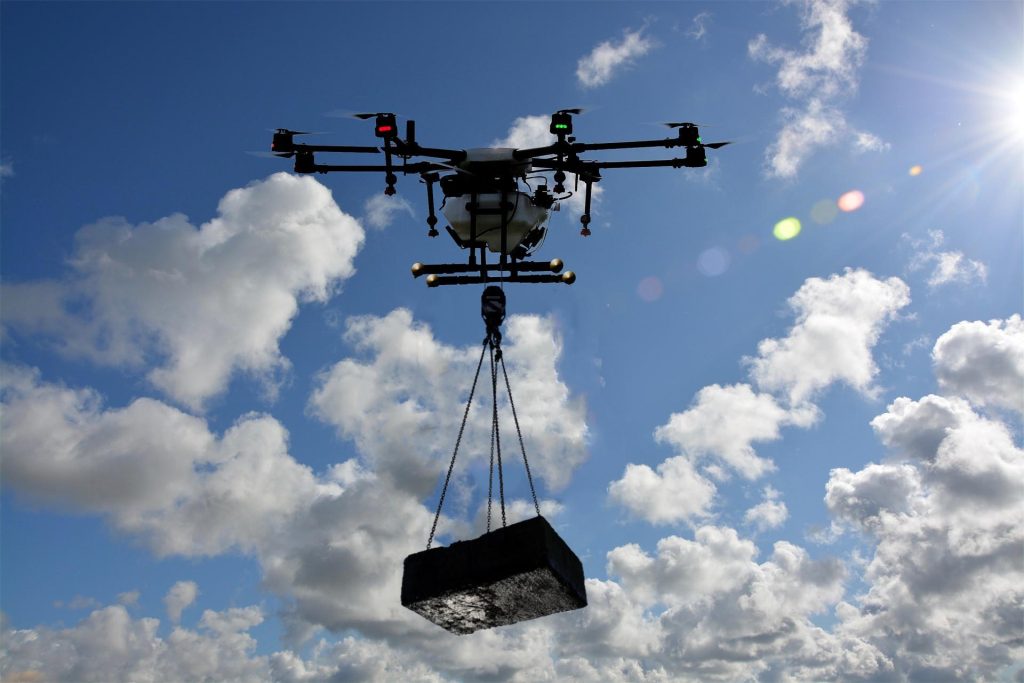
For sheer payload capacity and the ability to operate in demanding industrial environments, specialized heavy-lift drones are leading the charge. These robust machines are designed to transport significant loads over short to medium distances, revolutionizing supply chains and construction sites.
- DJI FlyCart 30: While not the absolute largest in terms of physical size compared to some military platforms, the FlyCart 30 from DJI is a significant player in the commercial heavy-lift sector. Designed for challenging terrain and last-mile delivery, it can carry up to 30 kg (66 lbs) with dual batteries or 40 kg (88 lbs) with a single battery in standard configuration, reaching speeds of 20 m/s (45 mph). Its robust design and integrated cargo solutions make it a practical workhorse.
- Volocopter VoloDrone: This cargo drone from the German eVTOL company is designed for heavy-duty logistics, capable of carrying a payload of up to 200 kg (440 lbs) over a range of 40 km (25 miles). Its 18 rotors make it a visually imposing and structurally complex machine, signaling a future where drone-based logistics are commonplace.
- Elroy Air Chaparral: A hybrid-electric vertical take-off and landing (VTOL) cargo drone, the Chaparral is designed for autonomous middle-mile logistics. It can carry 300-500 lbs (136-227 kg) over 300 miles (482 km), making it one of the largest and most capable unmanned cargo systems developed for commercial and military logistics. Its design allows for rapid deployment and retrieval without specialized airport infrastructure.
- Boeing Cargo Air Vehicle (CAV) concept: While still largely experimental, Boeing’s prototype CAV demonstrated the potential for carrying massive payloads. Weighing 750 pounds and capable of lifting up to 500 pounds, this large octocopter showcased the aerospace giant’s ambition in the heavy-lift drone space.
Experimental and Military Platforms: Pushing the Boundaries
The military sector has long been a driving force in developing large, sophisticated drones, often prioritizing intelligence, surveillance, reconnaissance (ISR), and long-endurance missions. These platforms often eclipse commercial drones in both physical size and technological complexity.
- Northrop Grumman RQ-4 Global Hawk: This high-altitude, long-endurance (HALE) UAV is one of the largest operational military drones. With a wingspan comparable to a Boeing 737 (approximately 39.9 meters or 130.9 feet) and a length of 14.5 meters (47.6 feet), it can fly for over 30 hours at altitudes of up to 60,000 feet (18,000 meters). Its primary role is extensive reconnaissance over vast areas.
- General Atomics MQ-9 Reaper: While slightly smaller than the Global Hawk, the MQ-9 Reaper (wingspan of 20 meters or 66 feet) is a formidable drone known for its ISR and strike capabilities. It represents a class of large, armed drones that operate at medium altitudes for long durations.
- Airbus Zephyr S: This ultra-lightweight, solar-electric HAPS (High Altitude Pseudo-Satellite) holds the record for the longest unrefueled UAV flight, staying aloft for 25 days, 23 hours, and 57 minutes. While its physical payload capacity is minimal, its immense endurance and ability to operate in the stratosphere (over 70,000 feet) for weeks or months at a time makes it “largest” in terms of operational duration and persistent observation, with a wingspan of 25 meters (82 feet).
Passenger Drones and eVTOL Aircraft: A New Era of Air Mobility
The line between large cargo drones and nascent passenger-carrying “drones” or eVTOLs is increasingly blurred. While often referred to as air taxis or electric aircraft, their autonomous or semi-autonomous flight capabilities and multi-rotor designs share core drone technologies.
- EHang 216: This autonomous aerial vehicle (AAV) is designed to carry two passengers. With 16 propellers and an empty weight of 600 kg (1,323 lbs), it’s a significant step towards urban air mobility, operating as a large, multi-rotor passenger drone.
- Joby Aviation S4: While more akin to a small aircraft, the Joby S4 is an eVTOL designed to carry a pilot and four passengers. Its six tilting propellers for vertical lift and forward flight represent advanced drone technology scaled for human transport.
The Technological Innovations Driving Drone Scaling
The development of larger, more capable drones is underpinned by continuous innovation across several technological domains.
Advanced Propulsion Systems and Battery Technology
The ability to lift heavy payloads and sustain long flights directly correlates with advancements in propulsion systems. Efficient electric motors, coupled with breakthroughs in battery technology (e.g., higher energy density lithium-ion variants, solid-state batteries), are crucial for enabling longer endurance and greater lifting power for electric drones. For larger, more energy-intensive platforms, hybrid-electric systems combining fuel generators with electric motors offer extended range, while highly fuel-efficient turbofans or internal combustion engines power military HALE UAVs.
Materials Science: Lightweight Strength for Massive Structures
Scaling up drone size and payload capacity without compromising efficiency requires sophisticated materials science. Composites like carbon fiber, fiberglass, and advanced polymers offer an exceptional strength-to-weight ratio, allowing manufacturers to build large, robust airframes that remain lightweight enough for efficient flight. These materials are critical for constructing large wingspans and strong fuselages capable of withstanding operational stresses while minimizing energy consumption.
Autonomous Navigation and AI Integration
The intelligence of a large drone is as important as its physical attributes. Advanced autonomous navigation systems using GPS, inertial measurement units (IMUs), LiDAR, and vision-based sensors enable complex flight paths, obstacle avoidance, and precision landing. The integration of AI and machine learning algorithms further enhances these capabilities, allowing drones to adapt to changing conditions, optimize flight efficiency, and even make independent decisions during missions, especially critical for long-endurance or beyond visual line of sight (BVLOS) operations.
Regulatory Frameworks and Airspace Management Challenges
As drones grow in size and operational scope, managing their integration into existing airspace becomes a significant challenge. Developing robust regulatory frameworks for large, autonomous aircraft, particularly those operating BVLOS or in shared airspace with manned aviation, is paramount. This includes establishing standards for communication, collision avoidance, remote identification, and air traffic control integration (UTM – Unmanned Aircraft System Traffic Management). The sheer scale and potential impact of these larger drones necessitate a global, harmonized approach to ensure safety and operational efficiency.
The Future of Large Drones: Impact and Potential Applications
The trajectory of large drone development points towards a future where these sophisticated aerial platforms play an increasingly pivotal role in various sectors, transforming industries and societal functions.
Logistics and Supply Chain Optimization
Large cargo drones are set to revolutionize logistics and supply chain management. They offer the potential for rapid, cost-effective delivery of goods to remote areas, disaster zones, or congested urban environments, bypassing traditional infrastructure limitations. From express parcel delivery to transporting critical medical supplies or heavy industrial components, these drones promise faster turnaround times and reduced operational costs.
Infrastructure Development and Maintenance
The ability of large drones to carry specialized sensors and equipment makes them invaluable for infrastructure development and maintenance. They can efficiently inspect vast networks of pipelines, power lines, bridges, and railways, identifying defects or areas needing repair with unprecedented speed and accuracy. This reduces human risk, improves inspection quality, and allows for proactive maintenance, extending the lifespan of critical infrastructure.
Environmental Monitoring and Disaster Response
In the realm of environmental monitoring and disaster response, large, long-endurance drones offer unparalleled capabilities. They can monitor large forest areas for early wildfire detection, track wildlife populations, assess agricultural health, or map pollution spread. During natural disasters, they can provide real-time situational awareness, deliver aid, and support search and rescue operations in hazardous or inaccessible areas, operating when manned aircraft might be too risky or impractical.

Urban Air Mobility and Beyond
The development of passenger-carrying eVTOLs, essentially scaled-up autonomous drones, signals a future of urban air mobility. These vehicles promise to alleviate ground traffic congestion by offering on-demand air travel within cities and between metropolitan areas. As technology matures and regulations adapt, these large “drones” could transform daily commuting and regional travel, moving beyond niche applications to become an integral part of public and private transportation networks. The journey to define “the largest drone” is thus not merely about physical dimensions but about the ever-expanding frontiers of autonomous aerial technology and its profound impact on our world.
aViewFromTheCave is a participant in the Amazon Services LLC Associates Program, an affiliate advertising program designed to provide a means for sites to earn advertising fees by advertising and linking to Amazon.com. Amazon, the Amazon logo, AmazonSupply, and the AmazonSupply logo are trademarks of Amazon.com, Inc. or its affiliates. As an Amazon Associate we earn affiliate commissions from qualifying purchases.