
Run-Length Encoding (RLE) stands as one of the simplest and oldest forms of lossless data compression. At its core, RLE operates on the principle of identifying and replacing sequences of identical, consecutive data values—known as “runs”—with a single instance of that value and a count of its repetitions. Unlike more complex algorithms that look for intricate statistical patterns or dictionary-based replacements, RLE thrives in environments where data exhibits significant redundancy, particularly long strings of the same character or pixel value. This makes it incredibly efficient for specific types of data, such as certain image formats, where large areas might share a uniform color, or simple graphics that contain repetitive patterns. The elegance of its simplicity lies in its low computational overhead and straightforward implementation, making it a foundational concept in the broader field of digital data management and optimization.
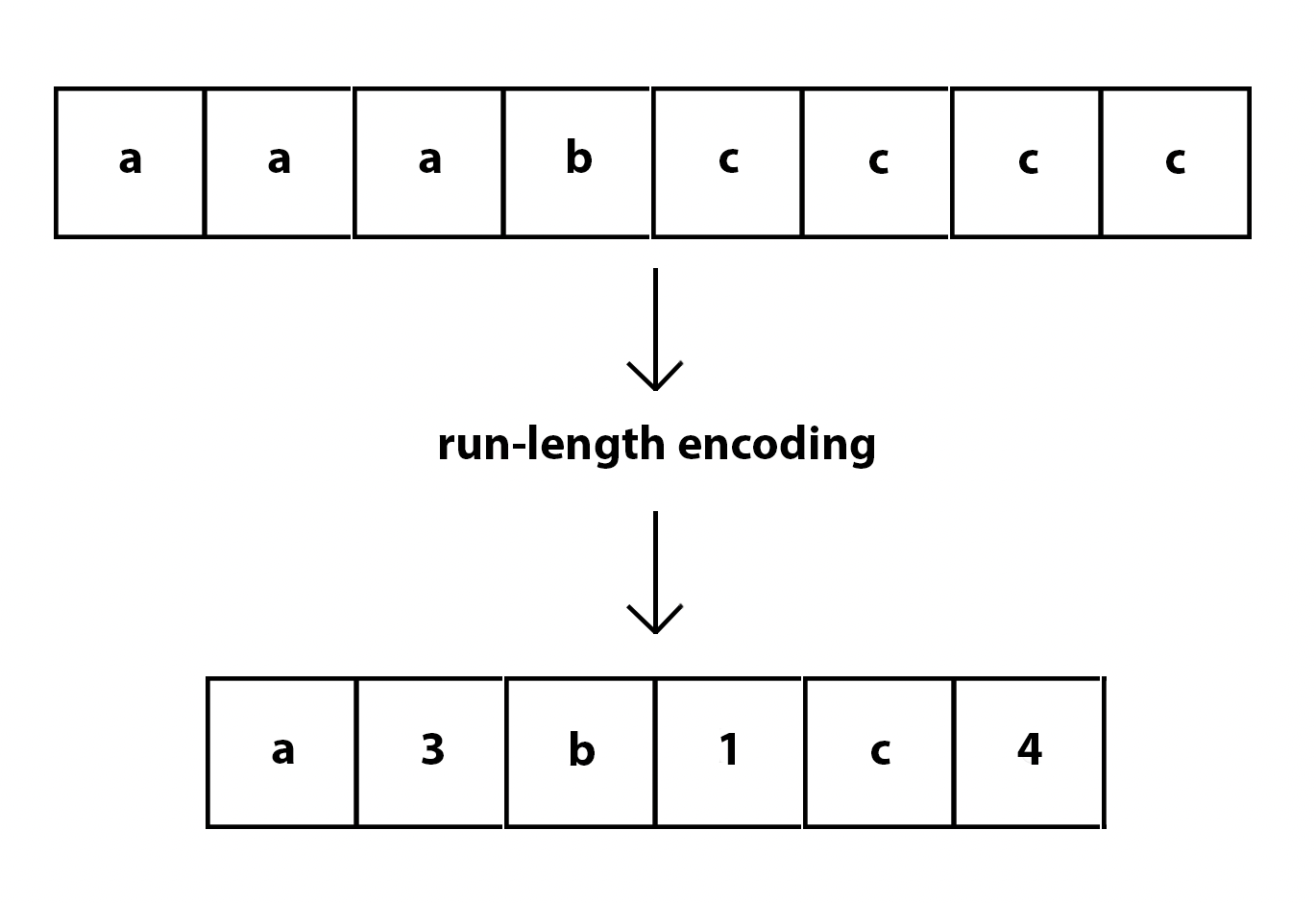
The Core Concept of Run-Length Encoding
RLE’s fundamental approach is easy to grasp: instead of storing every single data point in a sequence, it stores a single data point and the number of times it repeats consecutively. Imagine a simple line of text like “AAAAABBBCCDAA”. A naive storage approach would record each character individually. With RLE, this sequence would be compressed into something like “5A3B2C1D2A”. Here, ‘5A’ signifies five consecutive ‘A’s, ‘3B’ signifies three ‘B’s, and so on. This method is particularly effective when dealing with data that has many long runs of identical values.
How RLE Identifies and Replaces Patterns
The encoding process involves scanning the data sequentially, character by character or pixel by pixel. When the encoder encounters a value, it starts a “run.” It then continues to count how many times that exact same value appears consecutively. As soon as a different value is encountered, or the maximum run length is reached (a pre-defined limit, often 255 to fit into an 8-bit byte), the current run is terminated. The encoder then outputs a pair: the count of the run and the value itself. This pair then becomes the compressed representation of that segment of the original data. The decoder, upon receiving these pairs, simply reconstructs the original sequence by replicating each value the specified number of times.
A Simple Example in Action
Consider a simple black and white image represented by a binary sequence: 000001111100011.
Without compression, this sequence is 15 bits long.
Applying RLE:
- Five
0s become5,0 - Five
1s become5,1 - Three
0s become3,0 - Two
1s become2,1
The compressed output could be represented as(5,0), (5,1), (3,0), (2,1).
If each number in these pairs takes 4 bits, the total compressed size would be4 pairs * (4 bits for count + 4 bits for value) = 4 * 8 = 32 bits. Wait, this example is bad, the compressed output is larger. This highlights a key limitation, which will be discussed later. A better RLE output would use fewer bits to represent the counts and values.
Let’s re-evaluate the example, focusing on actual byte representation:
Original:000001111100011
RLE (human-readable):5x0 5x1 3x0 2x1
If we assume a 1-byte count and 1-byte value for simplicity, the original (15 values) would be 15 bytes. The compressed would be 8 bytes (4 pairs * 2 bytes/pair). This shows compression. The previous bit-level calculation was misleading because it assumed specific bit-lengths for counts and values, which can vary. The key is that5x0is smaller than0,0,0,0,0.
The Mechanics and Algorithm Behind RLE
Implementing RLE involves distinct encoding and decoding phases. The algorithm’s simplicity contributes to its speed and efficiency for suitable data types. Understanding these mechanics reveals why it remains relevant in specific applications, even with the advent of more sophisticated compression techniques.
Encoding Process
The RLE encoder typically maintains a counter and a current data value.
- Initialize
count = 0andcurrent_value = null. - Read the first data element. Set
current_valueto this element andcount = 1. - Continue reading subsequent data elements:
- If the next element is identical to
current_valueandcounthas not reached its maximum limit (e.g., 255 for an 8-bit count), incrementcount. - If the next element is different from
current_value, orcountreaches its maximum:- Output the pair (
count,current_value). - Reset
current_valueto the new element andcount = 1.
- Output the pair (
- If the next element is identical to
- Repeat step 3 until all data elements are processed.
- After the last element, output the final (
count,current_value) pair.
Decoding Process
The RLE decoder is even simpler, as it just reverses the encoding operation:
- Read the first pair (
count,value) from the compressed data. - Write
valueto the output streamcounttimes. - Repeat steps 1 and 2 until all pairs in the compressed data are processed.
Key Parameters and Considerations
A crucial aspect of RLE implementation is the choice of the run-length representation. Often, an 8-bit byte is used for the count, limiting a single run to 255 repetitions. For longer runs, the data must be broken into multiple (255, value) segments. Another design choice involves how to handle short runs or non-repeating data. Some RLE variants use a “mode byte” or flag to distinguish between literal (uncompressed) data and run-length encoded data, which can prevent expansion for random data. For instance, a negative count might indicate a run of literal bytes to be copied directly, while a positive count indicates a repeating run. This hybrid approach optimizes for both repetitive and non-repetitive sequences.
Where RLE Excels: Common Applications
Despite its age, RLE is not obsolete; it continues to be a highly effective solution in specific domains where its unique strengths are best utilized. Its speed, simplicity, and lossless nature make it ideal for data types prone to long sequences of identical values.
Image Compression (Bitmap, Fax)
One of RLE’s most prominent applications is in image compression, particularly for images with large areas of uniform color or simple patterns. Bitmap (BMP) images, especially those with 256 colors or less, can benefit significantly from RLE. Facsimile (fax) machines traditionally use RLE (specifically, CCITT Group 3 and Group 4 compression) for black-and-white documents. These documents are essentially binary images, consisting primarily of long runs of black or white pixels, which RLE compresses very efficiently. Medical images, like MRI or CT scans, also sometimes employ RLE for regions of consistent tissue density.
Medical Imaging
In medical imaging, RLE finds utility for specific types of data. Images generated by modalities like MRI, CT, or X-ray often contain significant areas of background or homogeneous tissue, which RLE can effectively compress. The DICOM (Digital Imaging and Communications in Medicine) standard, widely used for handling medical images, includes RLE as one of its supported compression transfer syntaxes. This allows for quick, lossless compression and decompression of medical data, crucial for maintaining diagnostic quality while managing storage and transmission.
Database and Data Storage Optimization
While not a primary compression method for general database tables, RLE can be used within specific database column types or storage engines. For instance, if a column frequently stores long sequences of the same value (e.g., status flags, category IDs in a time-series log), RLE could be applied at a block level to reduce storage footprint and potentially improve query performance by reducing I/O. Data warehousing environments, where large datasets are often stored with redundant categorical data, also leverage similar principles for columnar storage.
Graphics and Animation
Early computer graphics and animation formats frequently used RLE. Given the limited memory and processing power of older systems, RLE provided a straightforward way to compress sprite data, background tiles, and even entire animation frames that contained considerable repetition. Formats like PCX and some versions of TGA image files incorporated RLE. Even in modern contexts, RLE can be found in specialized graphics applications where lossless compression of highly uniform textures or masks is required, or within larger, more complex hybrid compression schemes.
Text and Log File Compression (Specific Use Cases)
While not generally suitable for arbitrary text (which rarely has long runs of identical characters), RLE can be useful for specific text-based scenarios. For example, log files that often record repetitive system messages or status codes might see some compression benefit. Similarly, highly structured data files where certain fields contain many repeating delimiters or placeholder characters could also utilize RLE effectively, though other algorithms like Huffman coding or LZ variations are typically more efficient for general text.
Limitations and When RLE Isn’t the Best Choice
Despite its advantages in specific contexts, RLE has significant limitations that restrict its universal applicability. Understanding these drawbacks is crucial for selecting the appropriate compression algorithm for any given dataset.
Inefficient for Random Data
RLE’s most notable weakness is its inefficiency with data that lacks long runs of repeating values. In fact, if data is highly random or alternates frequently (e.g., 01010101), RLE can actually expand the data size. This occurs because each unique or short run still needs to be represented by a count-value pair. If most runs are just one or two elements long, the overhead of storing the count for each run can quickly outweigh any savings, leading to a larger compressed file than the original. For instance, compressing ABCDEF with RLE might result in 1A1B1C1D1E1F, effectively doubling the storage if each count-value pair consumes more space than the original value alone.
Fixed-Length Run Representation Overhead
As mentioned, a typical RLE implementation uses a fixed-size representation for the run length (e.g., one byte for counts up to 255). This fixed overhead is paid for every run, regardless of its length. For very short runs (1 or 2 repetitions), the cost of storing the count can be disproportionately high compared to the data being compressed. This problem is exacerbated when data is not perfectly random but also doesn’t feature very long runs, leading to negligible compression or even expansion.
Comparison with Other Compression Methods
For general-purpose data, RLE is rarely the optimal choice. Algorithms like Huffman coding and Lempel-Ziv (LZ) variations (e.g., DEFLATE used in ZIP, PNG, and gzip) are far more effective. Huffman coding excels at compressing data by assigning shorter codes to frequently occurring symbols, regardless of their position. LZ algorithms identify and replace repeated sequences of any kind (not just identical consecutive ones) with references to their previous occurrences in a “dictionary.” These methods typically achieve much higher compression ratios for text, executables, and complex images, where patterns are more intricate than simple consecutive repetitions. RLE’s niche is precisely where its specific mechanism directly addresses the dominant data characteristic.
Modern Relevance and Future Outlook
While RLE might seem like a relic in an era of advanced compression, its foundational role and specific strengths ensure its continued relevance in specialized applications and as a building block for more complex systems.
RLE in Hybrid Compression Schemes
RLE often finds a new life as a component within larger, hybrid compression algorithms. For example, an image format might first apply a transform (like a discrete cosine transform in JPEG) or a filter, then use RLE to compress the resulting sparse data or error terms. This two-stage approach leverages RLE’s efficiency on highly repetitive or zero-padded data that emerges after the initial processing step. Many video codecs and sophisticated image compression standards use RLE as a post-processing step to further compact data streams that have been processed to highlight repetitive patterns.

Continued Niche Utility
The core principle of RLE—identifying and compacting consecutive identical values—will always have a place where such data patterns are prevalent. Its simplicity, speed, and lossless nature make it ideal for scenarios requiring minimal computational overhead and perfect data fidelity. From specialized scientific instruments generating highly repetitive data to internal data representations in certain software architectures, RLE continues to serve as a reliable and efficient compression workhorse for its specific niche. As data volumes grow, understanding and correctly applying algorithms like RLE remains a valuable skill in the pursuit of efficient digital data management.
aViewFromTheCave is a participant in the Amazon Services LLC Associates Program, an affiliate advertising program designed to provide a means for sites to earn advertising fees by advertising and linking to Amazon.com. Amazon, the Amazon logo, AmazonSupply, and the AmazonSupply logo are trademarks of Amazon.com, Inc. or its affiliates. As an Amazon Associate we earn affiliate commissions from qualifying purchases.