
In the intricate world of personal and business finance, understanding how income is calculated and disbursed is fundamental. Among the many terms that can cause confusion, “prorated salary” frequently emerges, particularly when individuals start new roles, transition between positions, or experience changes in their employment terms mid-pay cycle. Far from being an obscure concept, prorated salary is a practical and widely applied method of compensation calculation, ensuring fairness and accuracy in various financial scenarios.
At its core, a prorated salary refers to a portion of a full salary, calculated proportionately based on the time an employee has worked within a specific pay period or the proportion of work completed. It’s an equitable adjustment, rather than a full payment, reflecting a situation where an employee does not work an entire standard period, whether that’s a month, a year, or a full two-week pay cycle. This principle extends beyond just salaries, influencing calculations for benefits, bonuses, and even non-employment financial arrangements like rent or insurance. For anyone managing their personal finances or overseeing a business’s payroll, grasping the mechanics and implications of prorated salary is essential for accurate budgeting, tax planning, and financial compliance.
Understanding the Basics of Proration
Proration is a fundamental financial concept rooted in fairness and proportionality. When something is prorated, it means it’s divided or distributed proportionately, often based on time or quantity. In the context of salary, this means an employee receives only the earnings corresponding to the actual time they dedicated to their role during a specific period, rather than the full, standard amount for that period.
Definition and Core Principle
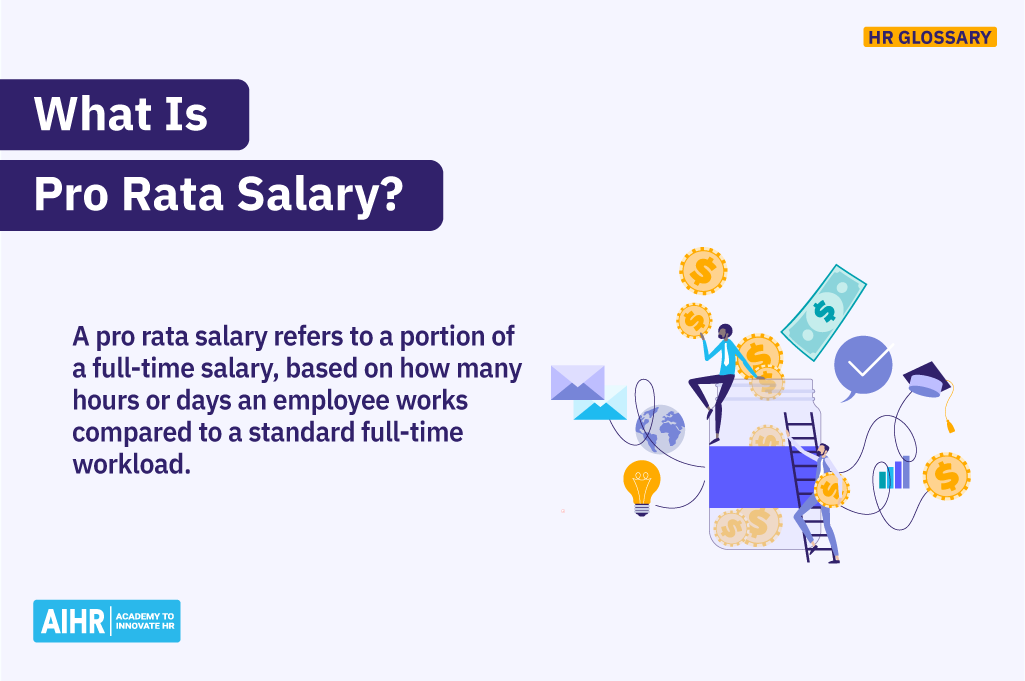
A prorated salary is a compensation amount that is adjusted from the full annual or periodic salary to reflect a partial period of work. The core principle is simple: if an employee works only a fraction of a standard pay period, they should receive only a corresponding fraction of the standard pay for that period. This ensures that employees are compensated accurately for their contributions and that employers pay precisely for the services rendered. It prevents both overpayment and underpayment, maintaining financial integrity in employment relationships.
This adjustment is most commonly based on time—specifically, the number of days or hours worked within a given pay cycle compared to the total number of working days or hours in that cycle. For instance, if a company’s pay period runs from the 1st to the 30th of the month, and an employee starts on the 15th, their salary for that initial month will be prorated to cover only the 15 days they actually worked.
Why Proration Matters
Proration is crucial for several reasons, impacting both employees and employers. For employees, understanding prorated salary helps in accurately forecasting income, especially when starting a new job or undergoing employment changes. This clarity is vital for personal financial planning, budgeting, and managing cash flow. Without it, new hires might mistakenly expect a full paycheck when they’ve only worked a portion of the period, leading to financial strain or confusion.
For employers, accurate proration is essential for maintaining precise payroll records, ensuring compliance with labor laws, and managing operational costs effectively. Incorrect proration can lead to costly errors, disputes with employees, and potential legal issues. It also plays a significant role in financial reporting, as it directly impacts expense tracking and overall profitability analysis. Beyond salaries, proration is a standard practice for adjusting various financial instruments, from rent and utilities to insurance premiums and benefits, reinforcing its importance across diverse financial contexts.
Common Scenarios for Prorated Salary
Prorated salary calculations are not an everyday occurrence for most employees, but they become highly relevant during specific transitions and changes in employment. Understanding these common scenarios helps both employers and employees anticipate and correctly process partial payments.
Starting or Leaving a Job Mid-Pay Period
This is arguably the most frequent scenario where prorated salary comes into play. When a new employee begins work partway through an employer’s standard pay cycle (e.g., a bi-weekly or monthly period), their first paycheck will reflect only the days or hours they actually worked from their start date to the end of that pay cycle. Similarly, when an employee resigns or is terminated before the end of a pay period, their final paycheck will be prorated to cover only the days or hours worked up to their last day of employment. This ensures that compensation aligns precisely with the duration of service within that specific pay period.
Changes in Employment Status or Hours
An employee’s status can shift in various ways that necessitate a prorated salary adjustment. For instance:
- Switching from Full-time to Part-time (or vice versa): If an employee transitions from a full-time, salaried role to a part-time position with fewer hours, their salary for the pay period in which this change occurs will be prorated. The full-time portion will be paid up to the effective date of the change, and the part-time rate will apply thereafter. The reverse is true when moving from part-time to full-time.
- Salary Increases or Decreases: When an employee receives a raise or experiences a salary reduction mid-pay period, the old salary rate applies up to the effective date of the change, and the new rate is applied for the remainder of the period. Their paycheck will reflect a combination of both rates, prorated accordingly.
- Promotions or Demotions: Similar to salary changes, a promotion often comes with a new salary. If the promotion becomes effective mid-pay period, the salary for that period will be prorated to reflect the old rate for the initial days and the new, higher rate for the subsequent days.
Leave of Absence
Employees taking various forms of leave—such as unpaid leave, family and medical leave (FMLA), or extended sick leave—may also experience prorated salary adjustments. If a portion of their leave is unpaid, their salary for the pay period encompassing the leave will be reduced proportionally to the number of unpaid days or hours. Even paid leave can sometimes involve proration if, for example, a company policy provides a set number of paid sick days per year, and an employee exhausts them before the year’s end, with subsequent leave becoming unpaid.
Bonuses and Commissions
While often calculated differently from base salary, bonuses and commissions can also be subject to proration. If a bonus is tied to performance over a full year, but an employee only worked for a portion of that year (e.g., started mid-year), their bonus might be prorated based on the months worked. Similarly, if commissions are tied to a sales period, and an employee leaves or joins mid-period, their commission payout would typically be prorated to reflect their contribution during the active part of that period. This ensures that incentives and variable pay are distributed fairly based on the actual duration of service or contribution to the qualifying metric.
How to Calculate Prorated Salary
Calculating prorated salary accurately is crucial for both employers and employees. While the exact methodology can vary slightly based on company policy or the specific nature of the salary (hourly vs. fixed), the underlying principle remains consistent.
Step-by-Step Calculation Method
The most common approach involves determining a daily or hourly rate and then multiplying it by the actual days or hours worked.
For Salaried Employees (Annual Salary):
-
Determine the Annual Salary: This is the full salary an employee would receive if they worked a full year.
-
Calculate the Daily Rate:
- Method A (Based on Total Working Days): Divide the annual salary by the total number of working days in the year (typically 260 days for a 5-day work week, excluding weekends and holidays, or a more precise count).
- Example: $60,000 / 260 working days = $230.77 per working day.
- Method B (Based on Calendar Days in the Pay Period): If the pay period is monthly, divide the monthly salary (Annual Salary / 12) by the number of calendar days in that specific month.
- Example (March, 31 days): ($60,000 / 12) / 31 days = $5,000 / 31 = $161.29 per calendar day.
- This method is often preferred for partial months, as it accounts for weekends and holidays as part of the total period.
- Method A (Based on Total Working Days): Divide the annual salary by the total number of working days in the year (typically 260 days for a 5-day work week, excluding weekends and holidays, or a more precise count).
-
Count Actual Days Worked: Determine the number of days the employee actually worked within the specific pay period.
-
Calculate Prorated Salary: Multiply the daily rate by the actual number of days worked.
- Example using Method B: An employee with a $60,000 annual salary starts on March 15th. March has 31 calendar days. They work from March 15th to March 31st, which is 17 days (including March 15th).
- Daily rate: $161.29
- Days worked: 17
- Prorated salary: $161.29 * 17 = $2,741.93
- Example using Method B: An employee with a $60,000 annual salary starts on March 15th. March has 31 calendar days. They work from March 15th to March 31st, which is 17 days (including March 15th).
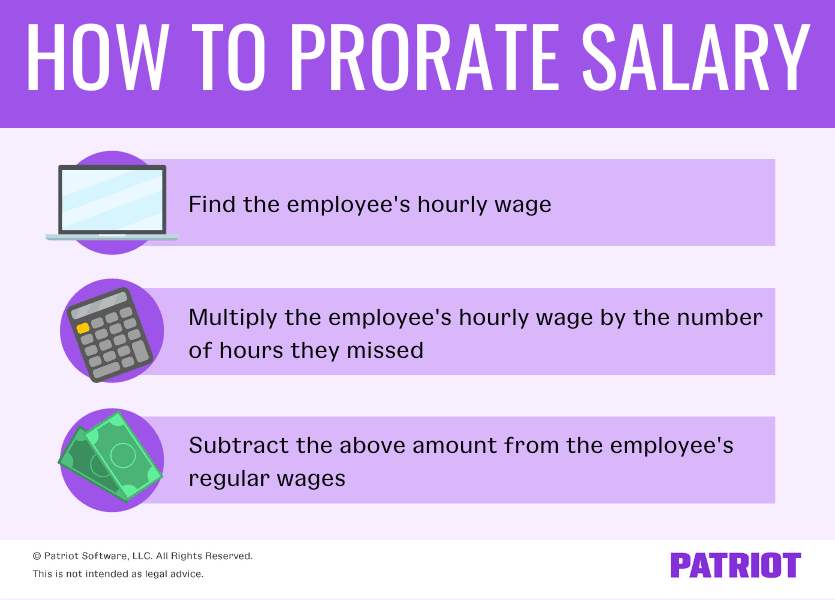
For Hourly Employees:
Calculating prorated salary for hourly employees is generally simpler, as their pay is directly tied to hours worked.
-
Determine the Hourly Rate: This is the employee’s agreed-upon wage per hour.
-
Count Actual Hours Worked: Sum the total hours the employee worked within the pay period.
-
Calculate Prorated Salary: Multiply the hourly rate by the actual hours worked.
- Example: An employee earning $25/hour works 60 hours in a bi-weekly pay period.
- Prorated salary: $25 * 60 = $1,500
- Example: An employee earning $25/hour works 60 hours in a bi-weekly pay period.
Important Factors to Consider
- Workdays vs. Calendar Days: The choice between using working days (excluding weekends and holidays) or calendar days (including all days) for the daily rate calculation can significantly impact the final prorated amount. Employer policies typically dictate which method is used. Calendar days are common for monthly-salaried positions for simplicity, while working days might be used where actual presence at work is the primary determinant.
- Pay Period Length: Whether the pay period is weekly, bi-weekly, semi-monthly, or monthly will affect how the daily or hourly rate is derived from an annual salary. Ensure consistency with the company’s payroll schedule.
- Leap Years: For calculations based on calendar days in a year, remember to account for 366 days in a leap year when applicable.
- Overtime and Bonuses: These components are usually calculated separately from the base prorated salary, based on specific company policies or legal requirements (e.g., overtime laws).
Implications and Financial Planning
Understanding prorated salary extends beyond mere calculation; it has significant implications for personal financial planning, budgeting, and tax obligations. Both employees and employers need to be aware of these downstream effects.
Budgeting for Irregular Paychecks
For employees, particularly those starting new jobs or experiencing mid-period employment changes, a prorated first or last paycheck can be significantly smaller than a full, regular one. This necessitates proactive budgeting. If you’re starting a new role, don’t assume your first pay will be a full month’s salary. Calculate an estimate of your prorated income and adjust your expenses accordingly for that initial period. Having an emergency fund or savings to cover a potentially smaller first paycheck is a prudent financial strategy. Similarly, when leaving a job, be prepared for a final check that only covers your actual working days, rather than a full period. This foreknowledge prevents unexpected shortfalls and helps maintain financial stability during transitions.
Understanding Tax Implications
Prorated salaries are still subject to all applicable payroll taxes, including federal income tax, state income tax (if applicable), Social Security, and Medicare (FICA taxes). While the amount of gross pay is smaller, the rate at which taxes are withheld generally remains consistent with standard payroll practices. However, a smaller gross income for a given pay period might result in a temporarily lower total tax withholding for that specific period. It’s crucial not to mistake this for a permanent tax reduction. Your annual income will ultimately determine your overall tax liability, and a prorated paycheck simply reflects a reduced income for that specific period, not a change in your tax bracket or filing status. Employers must accurately report prorated wages to the IRS and relevant state agencies to ensure compliance.
What to Check on Your Pay Stub
When you receive a paycheck that you suspect is prorated, it’s vital to meticulously review your pay stub. Look for the following:
- Gross Pay: Verify that the gross pay amount aligns with your prorated calculation based on your daily/hourly rate and days/hours worked.
- Pay Period Dates: Confirm the start and end dates of the pay period on the stub. This is key to understanding which days are included in the calculation.
- Hours/Days Worked: For hourly employees, check the total hours worked. For salaried employees, the number of working days used in the calculation might sometimes be noted or inferred from the gross pay.
- Deductions: Ensure that standard deductions for benefits (health insurance, 401(k) contributions) and taxes are applied correctly to the prorated gross pay. Some benefits might be deducted in full even on a prorated check, or they might also be prorated. Understand your company’s policy on this.
- Net Pay: Confirm that the final net pay after all deductions makes sense in the context of your prorated gross pay.
If anything seems incorrect or unclear, promptly contact your HR or payroll department for clarification. Proactive review of your pay stub ensures accuracy and helps you maintain control over your financial records.
Beyond Salary: Other Prorated Payments
The principle of proration isn’t confined solely to employment salaries. It’s a widely used financial concept that ensures fairness and proportional distribution across various other payments and services, impacting everyday personal and business finances.
Prorated Rent and Utilities
One of the most common non-salary applications of proration occurs in housing. When you move into or out of a rental property in the middle of a month, your landlord will typically charge you a prorated rent. This means you only pay for the specific number of days you occupy the property within that month, rather than the full month’s rent.
- Calculation for Rent: To calculate prorated rent, the monthly rent is divided by the number of days in that specific month to determine a daily rate. This daily rate is then multiplied by the number of days you will be living in the property. For example, if rent is $1,500 per month and you move in on the 10th of a 30-day month, you’d pay for 21 days ($1,500 / 30 days = $50/day; $50/day * 21 days = $1,050).
- Utilities: Similarly, utility bills like electricity, water, and internet can also be prorated when services start or stop mid-billing cycle. Utility companies often automatically adjust the first or final bill to reflect only the days service was provided, ensuring you’re not charged for a full month when you only used the service for a partial period.

Prorated Benefits
Many employee benefits, particularly those with a cost to the employer or a contribution from the employee, can also be prorated.
- Health Insurance Premiums: If you start a job mid-month, your share of health insurance premiums might be prorated for that first month, meaning you only pay for the portion of the month you were covered. Conversely, if you leave a job, your final premium payment might also be prorated.
- Paid Time Off (PTO): Employees often accrue PTO (vacation, sick leave) based on the number of hours or days worked within a year. If an employee starts mid-year, their initial PTO accrual might be prorated to reflect only the remaining months they will work in that calendar year. This ensures that new hires don’t immediately receive a full year’s worth of PTO when they haven’t worked a full year.
- Retirement Contributions: While salary contributions to 401(k)s are typically based on the actual prorated salary received, employer matching contributions might also have prorated vesting schedules or eligibility requirements tied to the duration of employment within a year.
In essence, the concept of proration serves as a foundational tool for equitable financial distribution and accountability across a wide array of transactions, extending its relevance far beyond the initial paycheck. Mastering its application is a valuable asset for navigating the complexities of personal finance and business operations.
aViewFromTheCave is a participant in the Amazon Services LLC Associates Program, an affiliate advertising program designed to provide a means for sites to earn advertising fees by advertising and linking to Amazon.com. Amazon, the Amazon logo, AmazonSupply, and the AmazonSupply logo are trademarks of Amazon.com, Inc. or its affiliates. As an Amazon Associate we earn affiliate commissions from qualifying purchases.