
The Luer Lock syringe represents a significant advancement in medical technology, primarily designed to ensure secure, leak-proof connections during the administration or withdrawal of fluids. Far from being a simple fluid delivery device, its sophisticated design embodies principles of precision engineering, user-centric safety, and system standardization, making it a critical component in various scientific and medical applications. Understanding the Luer Lock system is to appreciate a subtle yet powerful technological solution that underpins countless daily operations, from vaccine delivery to intricate laboratory procedures.
The Engineering Behind Secure Fluid Transfer
At its core, the Luer Lock syringe is a triumph of mechanical engineering applied to a highly sensitive field. Its defining characteristic is a threaded collar that allows the syringe to be securely twisted onto a mating luer fitting, forming a robust connection. This design transcends the simpler “Luer Slip” mechanism by actively preventing accidental disengagement and leakage, thereby enhancing both safety and operational efficiency. The technological innovation lies not just in the presence of threads, but in the precise tolerances and standardized dimensions that ensure universal compatibility across a vast ecosystem of medical devices.

A Foundation in Precision Mechanics
The concept of the Luer fitting dates back to the early 20th century, named after Hermann Luer, a German instrument maker. Initially, the fittings were purely frictional, relying on a conical taper to create a seal – the “Luer Slip.” While revolutionary for its time, this friction-fit had inherent limitations, particularly under pressure or with accidental lateral forces. The evolution to the Luer Lock system was driven by the imperative for greater security and reliability. This transition involved integrating a precisely engineered male thread on the syringe’s tip or cannula hub and a corresponding female thread on the receiving device. The success of this system hinges on extremely tight manufacturing tolerances, ensuring that all Luer Lock components from different manufacturers can interface seamlessly and securely. This standardization, codified by international standards bodies like ISO (ISO 594 and later ISO 80369), is a foundational aspect of its technological success, creating a universally interoperable “digital handshake” in the physical world of fluid mechanics.
The Anatomy of the Luer Lock Mechanism
The Luer Lock system consists of two primary parts: the male Luer connector, typically found on the syringe tip, and the female Luer connector, found on needles, catheters, or other tubing. The male connector features a conical taper that fits snugly into the female connector’s corresponding taper, providing the initial seal. Crucially, the male connector is surrounded by an external threaded collar. Once the conical portions are engaged by friction, the user twists this threaded collar onto the internal threads of the female connector, creating a rigid, interlocking bond. This threaded connection does two vital things: it physically secures the two components against axial separation and further compresses the conical seal, virtually eliminating the risk of leakage or accidental disconnection. From an engineering perspective, it transforms a temporary, friction-based interface into a durable, mechanically locked joint, offering a significant upgrade in device security and reliability. The tactile feedback of the “lock” provides a definitive confirmation of connection, a simple yet effective user interface feature in a critical environment.
Enhancing Operational Safety and Efficiency
The technological advantages of the Luer Lock system extend far beyond mere connection security, fundamentally impacting operational safety protocols and the efficiency of medical and laboratory workflows. Its design directly addresses historical pain points associated with fluid transfer, transforming potential hazards into manageable, reliable processes.
Preventing Connection Failures and Spills: A Security Protocol
Perhaps the most direct benefit of the Luer Lock system is its robust protection against accidental disconnection. In scenarios where precise fluid delivery is paramount, or where the fluids are hazardous (e.g., chemotherapy drugs, blood products, or certain laboratory reagents), an accidental separation of components can have severe consequences. This ranges from medication errors and dosage inaccuracies to exposure risks for healthcare professionals and patients. The threaded lock acts as a physical security protocol, a digital fingerprint of sorts for physical connectivity, ensuring that once engaged, the connection remains intact even under moderate pressure or movement. This intrinsic security minimizes the risk of spills, contamination, and patient injury, thereby reinforcing safety standards and reducing clinical liabilities. It’s a design philosophy that prioritizes error prevention through mechanical redundancy.
Optimizing Dosage Accuracy and Integrity
The secure, leak-proof nature of the Luer Lock connection also has a profound impact on dosage accuracy and the integrity of administered substances. In many medical treatments, even minute deviations in dosage can have significant physiological effects. A leaky connection, common with older Luer Slip designs under pressure, can lead to partial loss of medication, resulting in under-dosing and compromised treatment efficacy. The Luer Lock system ensures that the entire intended volume of fluid is transferred without loss, maintaining the exact prescribed dosage. This level of precision is critical for therapies requiring narrow therapeutic windows or for sensitive diagnostic procedures where sample integrity is non-negotiable. It embodies an engineering solution for maintaining data integrity in fluid mechanics.
Versatility and Standardization: A Systemic Advantage
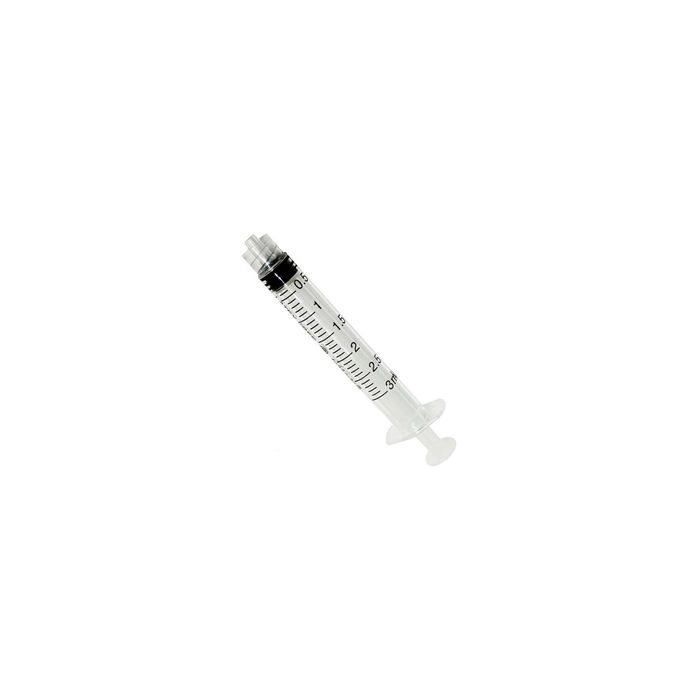
The universal adoption and standardization of the Luer Lock mechanism across the medical technology landscape are profound. This standardization means that a Luer Lock syringe from one manufacturer can seamlessly connect to a needle, catheter, or IV line from another, fostering unparalleled interoperability. This technological ecosystem allows for flexibility in procurement, streamlines training, and reduces the complexity of managing diverse equipment inventories. It’s a testament to the power of open standards in hardware design, much like how USB revolutionized connectivity in electronics. This systemic compatibility is crucial in fast-paced clinical environments where quick, reliable connections are often life-saving. The Luer Lock system facilitates rapid setup and confident operation, providing a common interface that transcends specific brands or specialized applications.
Materials, Manufacturing, and Future Innovations
The efficacy and reliability of the Luer Lock syringe are not solely due to its mechanical design but also heavily depend on the materials used and the precision of its manufacturing processes. Furthermore, the principles behind its success continue to inspire future technological advancements in fluid delivery systems.
Advanced Materials for Performance and Biocompatibility
Modern Luer Lock syringes are typically manufactured from medical-grade plastics such as polypropylene or polycarbonate. The selection of these materials is critical, balancing several performance requirements. They must offer excellent chemical inertness to prevent reactions with a wide range of pharmaceutical solutions, ensuring fluid integrity. Furthermore, they must possess high mechanical strength to withstand the forces of connection and fluid administration without deforming or failing. Biocompatibility is another paramount concern, as these materials come into direct contact with bodily fluids and tissues; they must be non-toxic and non-allergenic. The transparent nature of these plastics also allows for visual inspection of the fluid, an important safety feature. The technological advancements in polymer science have directly contributed to the current high standards of Luer Lock syringe performance.
High-Precision Manufacturing for Reliable Functionality
The intricate design of the Luer Lock mechanism, with its fine threads and precise conical taper, necessitates advanced manufacturing techniques. Injection molding is the predominant method, requiring highly accurate molds and stringent process control to produce components with tight tolerances. Any deviation in the threading or the conical angle can compromise the seal integrity or the ease of connection, leading to potential leaks or disconnections. Quality control processes, often involving automated vision systems and dimensional checks, are critical to ensure that every Luer Lock component adheres to the ISO standards. This commitment to manufacturing precision is a direct reflection of the system’s reliance on exact geometry for its security and functionality. It underscores the “tech” in medical devices, where even seemingly simple components require complex production methodologies.
Conceptualizing the Next Generation: Smart Syringe Technology
While the fundamental Luer Lock mechanism remains robust, the drive for continuous innovation pushes towards “smart” syringe technology. Future iterations might integrate sensors for real-time dose verification, flow rate monitoring, or even automated drug identification through RFID or NFC tags. Imagine a syringe that communicates wirelessly with a patient’s electronic health record, confirming drug administration and dosage, much like a digital security token. Such advancements could leverage the Luer Lock as the secure physical interface for an increasingly digitized and interconnected healthcare system. This would merge mechanical security with digital intelligence, building upon the established reliability of the Luer Lock to deliver enhanced safety, traceability, and data analytics in fluid delivery. The secure physical connection could become the gateway for secure digital data transfer.
Comparative Analysis: Luer Lock vs. Luer Slip Mechanisms
To fully appreciate the technological significance of the Luer Lock, it’s useful to understand its predecessor, the Luer Slip, and the distinct advantages the lock mechanism provides. While both share the conical taper design, their method of securing the connection represents a fundamental divergence in design philosophy and application suitability.
Distinguishing Design Philosophies
The Luer Slip relies purely on friction between the tapered male and female components. The male Luer tip is simply pushed into the female receptacle, and the friction between the surfaces holds them together. This design prioritizes speed and simplicity of connection. It’s akin to a quick-release mechanism in other tech gadgets, where convenience often outweighs absolute security. The Luer Lock, on the other hand, adds a secondary, mechanical locking mechanism through its threaded collar. This design prioritizes security and reliability above all else. It’s a deliberate and robust “lock and key” system, demanding a slightly longer engagement process but providing an undeniable level of assurance against accidental separation. From an engineering perspective, Luer Slip is a temporary, non-positive connection, whereas Luer Lock offers a positive, mechanically secured connection.

Strategic Application in Diverse Environments
Due to their differing design philosophies, Luer Slip and Luer Lock syringes find optimal use in different scenarios. Luer Slip syringes are often preferred for applications requiring rapid, high-volume fluid transfers where dislodgement risk is minimal or consequences are less severe. Examples include oral syringe administration, general aspiration, or flushing procedures where speed is more critical than an absolute lock. They are also cost-effective and simpler to manufacture.
Conversely, Luer Lock syringes are the standard in critical applications where connection integrity is paramount. This includes intravenous infusions, arterial lines, epidural catheters, and any procedure involving hazardous medications, high-pressure fluid delivery, or sensitive biological samples. Their use minimizes the risk of air embolism, blood loss, medication spill, and contamination. In laboratory settings, they are indispensable for precise reagent handling and secure chromatography connections. The choice between Luer Slip and Luer Lock is a strategic decision based on risk assessment, procedural requirements, and the desired level of technological assurance in fluid transfer. The Luer Lock, through its robust engineering, provides an enhanced level of operational security, making it the preferred choice for demanding applications across modern medical and scientific technology landscapes.
aViewFromTheCave is a participant in the Amazon Services LLC Associates Program, an affiliate advertising program designed to provide a means for sites to earn advertising fees by advertising and linking to Amazon.com. Amazon, the Amazon logo, AmazonSupply, and the AmazonSupply logo are trademarks of Amazon.com, Inc. or its affiliates. As an Amazon Associate we earn affiliate commissions from qualifying purchases.