
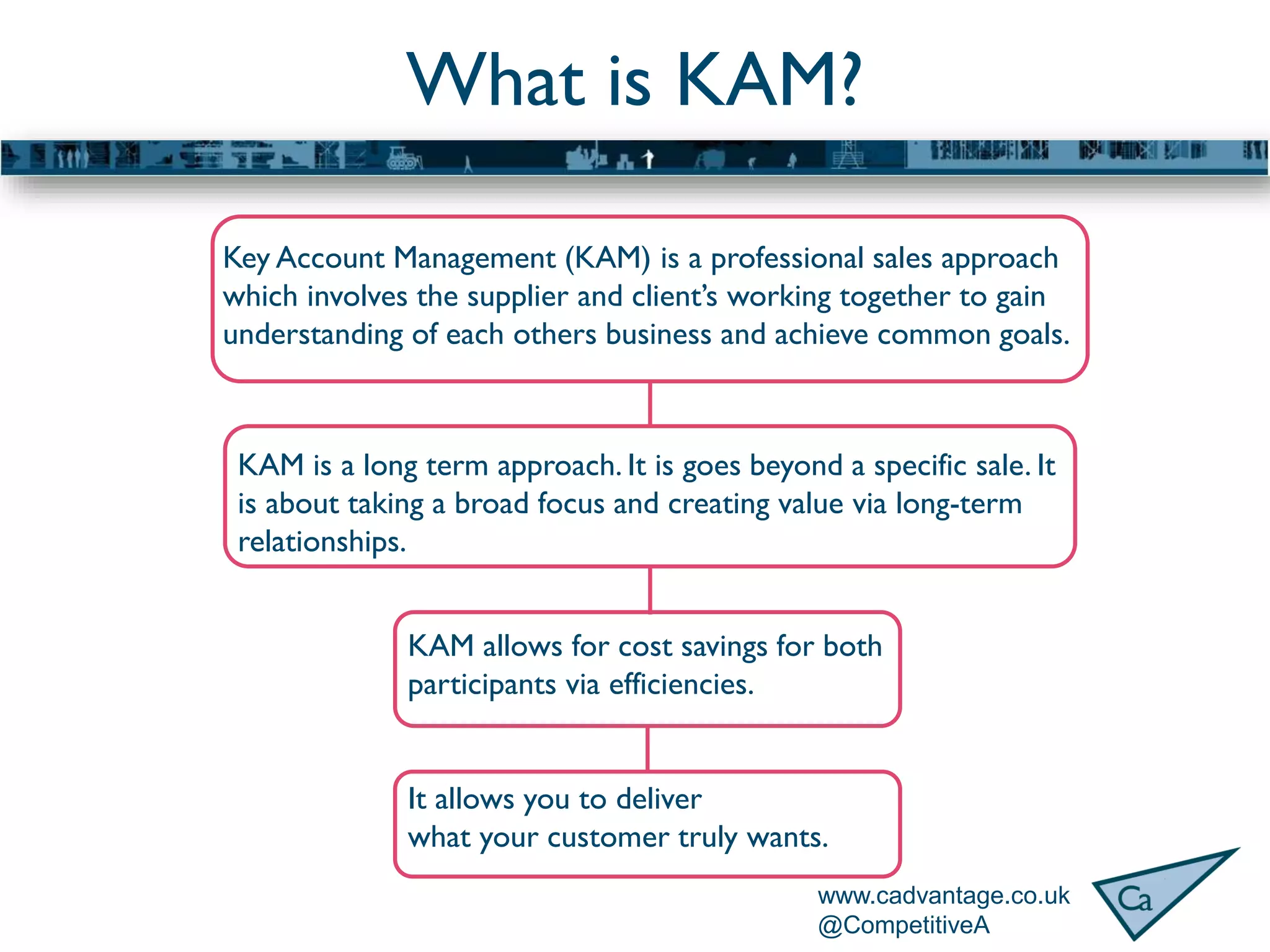
In the dynamic landscape of modern business, not all clients are created equal. While every customer is valued, a select group of high-value, strategically important clients—often termed “key accounts”—warrant a specialized approach to foster deeper relationships and maximize long-term mutual value. This strategic discipline is known as Key Account Management (KAM), and it stands as a critical pillar of effective brand strategy, corporate identity, and sustainable marketing success.
At its core, KAM is a strategic approach focused on building, nurturing, and expanding long-term relationships with a company’s most important customers. Unlike traditional sales, which often prioritizes transactional exchanges, KAM operates with a holistic, long-term perspective. It recognizes that key accounts are not merely sources of revenue but strategic partners whose success is intrinsically linked to the brand’s own growth and reputation. By understanding their complex needs, aligning services and products, and proactively addressing challenges, brands can transform transactional relationships into enduring, collaborative partnerships that drive significant value for both parties.

The Strategic Imperative of Key Account Management
The decision to implement a Key Account Management strategy is a strategic one, born from the recognition that a disproportionate amount of a company’s revenue, profitability, and brand influence often comes from a relatively small number of clients. Neglecting these relationships can have severe repercussions, making a dedicated KAM approach not just beneficial, but imperative for long-term brand health.
Beyond Transactional Sales: Building Enduring Partnerships
Traditional sales models often focus on the immediate sale, with interactions driven by quotas and short-term revenue goals. While essential, this approach can fall short when dealing with large, complex organizations whose needs evolve, and whose partnerships require continuous engagement. KAM transcends this by shifting the focus from individual transactions to the overall customer journey and relationship lifecycle. Key Account Managers act as strategic consultants, deeply embedded within the client’s business, understanding their market pressures, strategic objectives, and operational challenges. This deep understanding allows the brand to co-create solutions, anticipate future needs, and demonstrate genuine commitment to the client’s success, thereby solidifying the partnership far beyond any single product or service offering. This commitment to co-creation and mutual growth significantly enhances the brand’s reputation for reliability, expertise, and client-centricity.
Identifying and Prioritizing Key Accounts
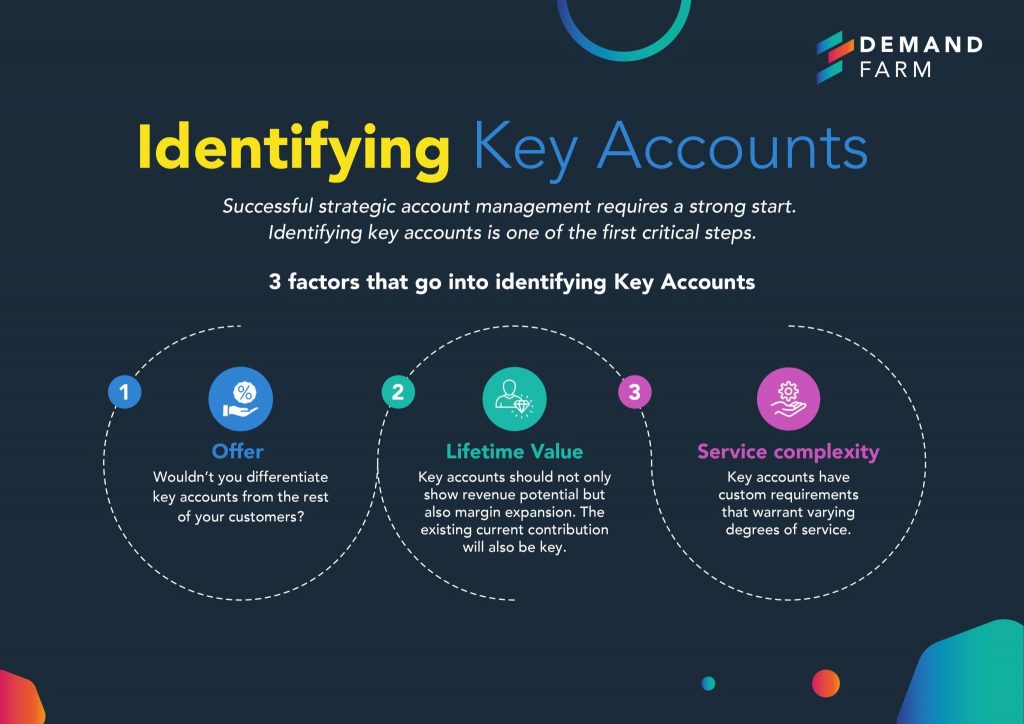
Not every customer can or should be designated a key account. A critical first step in establishing a KAM program is to develop clear, objective criteria for identification and prioritization. These criteria typically extend beyond mere revenue volume, encompassing factors that reflect strategic importance to the brand.
Common criteria include:
- Revenue Potential: Not just current revenue, but the potential for future growth and expansion of services.
- Strategic Importance: Does the client operate in a strategically important market segment? Do they hold significant market share or influence?
- Profitability: Are they highly profitable clients, or do they offer opportunities for high-margin business?
- Brand Influence/Prestige: Does working with this client enhance the brand’s credibility, open doors to new markets, or provide valuable testimonials?
- Relationship Depth: Are there multiple touchpoints and stakeholders within the client organization?
- Innovation Potential: Does the client offer opportunities for co-development, piloting new solutions, or providing critical market feedback?
By carefully segmenting clients and applying these criteria, brands can allocate resources effectively, ensuring that their most valuable relationships receive the dedicated attention they deserve, which in turn reinforces their corporate identity as a strategic partner.
KAM as a Cornerstone of Brand Strategy
A well-executed Key Account Management strategy isn’t just about retaining customers; it’s a powerful driver of brand equity, market positioning, and overall corporate identity. By demonstrating a profound commitment to its most important clients, a brand solidifies its reputation and establishes itself as a trusted leader in its industry.
Enhancing Brand Perception and Trust
The way a brand manages its most significant client relationships directly shapes its external perception. When key accounts consistently experience proactive support, tailored solutions, and a deep understanding of their business, it signals a brand that is reliable, expert, and truly client-focused. This positive experience translates into stronger trust, which is invaluable. Trust built through KAM extends beyond the individual account; satisfied key clients often become vocal advocates, sharing their positive experiences within their networks and industry circles. This organic advocacy serves as a potent form of marketing, building a formidable reputation that attracts new business and reinforces the brand’s position as a premium provider. The commitment shown to a key account reflects the brand’s core values and operational excellence.
Driving Customer Loyalty and Advocacy
Loyalty is not merely repeat business; it’s a deep-seated commitment that withstands competitive pressures. KAM cultivates this loyalty by consistently delivering exceptional value and fostering a sense of partnership. When a key account feels truly understood and supported, they are less likely to seek alternatives, even when faced with lower-priced competitors. Furthermore, highly satisfied key accounts often become powerful brand advocates. They provide testimonials, participate in case studies, refer new clients, and actively champion the brand’s offerings. This advocacy is an incredibly potent form of marketing, as it leverages authentic experiences and trusted voices to expand the brand’s reach and reinforce its credibility in the market. Case studies involving key accounts become compelling proof points of the brand’s capabilities and commitment.
Leveraging Key Accounts for Market Insights and Innovation
Key accounts are often at the forefront of their respective industries, facing unique challenges and identifying emerging trends. Through deep engagement, Key Account Managers gain unparalleled insights into market dynamics, competitive landscapes, and evolving customer needs. This direct feedback loop is invaluable for product development, service enhancement, and strategic planning. Brands can leverage these insights to refine existing offerings, innovate new solutions, and even co-develop products specifically tailored to key account needs, which can then be scaled for a broader market. This collaborative approach not only strengthens the relationship with the key account but also positions the brand as an innovative leader, constantly evolving to meet market demands. It allows the brand to showcase its forward-thinking corporate identity.
Implementing an Effective KAM Program
Establishing a successful KAM program requires more than just identifying key accounts; it demands a structured approach encompassing dedicated roles, customized strategies, and robust communication frameworks.
The Role of the Key Account Manager
The Key Account Manager (KAM) is pivotal to the success of the program. This individual is not merely a salesperson but a strategic relationship manager, business consultant, and internal orchestrator. A successful KAM possesses a unique blend of skills: deep industry knowledge, strategic thinking, exceptional communication, strong negotiation capabilities, and the ability to navigate complex client organizations. They serve as the primary point of contact, coordinating internal resources—from product development to customer service—to ensure the key account receives a seamless and exceptional experience. Their objective is to understand the client’s strategic goals and align the brand’s capabilities to help them achieve those goals. This proactive, consultative role defines the corporate identity of the brand as a true partner.
Developing Tailored Value Propositions
Generic offerings rarely resonate with key accounts, which often have highly specific and complex needs. An effective KAM strategy involves developing tailored value propositions that directly address the unique challenges and opportunities of each key account. This requires a deep understanding of their business model, market position, and strategic objectives. The value proposition should articulate how the brand’s solutions will specifically contribute to the key account’s success, whether through cost savings, revenue growth, operational efficiency, or competitive advantage. This customization demonstrates the brand’s commitment and expertise, reinforcing its strategic importance. Each tailored solution becomes a mini case study of the brand’s problem-solving capabilities.
Collaborative Planning and Communication
Effective KAM relies on robust, consistent, and multi-layered communication. This includes regular strategic reviews with key account stakeholders, joint business planning sessions, and proactive updates on performance and upcoming initiatives. Internally, the KAM must foster strong cross-functional collaboration, ensuring that all relevant departments—sales, marketing, product, service, finance—are aligned in their support of the key account. A shared understanding of the client’s priorities and a unified approach to service delivery are crucial for maintaining consistency and delivering on promises. This collaborative spirit, both internal and external, is a hallmark of a strong corporate identity.
Measuring the ROI of KAM for Brand Health
Measuring the return on investment (ROI) of a KAM program is essential for demonstrating its value and securing continued executive support. The ROI extends beyond immediate financial gains, encompassing the long-term benefits to brand health and market positioning.
Financial Metrics: Revenue Growth and Profitability
Direct financial metrics provide clear evidence of KAM’s impact. These include:
- Revenue Growth: Increased sales volume, upselling, and cross-selling within key accounts.
- Profitability: Improved margins due to efficient service delivery, reduced churn, and premium pricing justified by added value.
- Customer Lifetime Value (CLTV): The projected total revenue a key account will generate over the course of the relationship.
- Reduced Churn Rate: The decrease in key accounts lost over time, indicating stronger retention.
- Cost of Sales: Efficiencies gained by focusing resources on fewer, higher-value accounts.
These metrics directly tie KAM efforts to the bottom line, showcasing the tangible financial benefits that contribute to overall business health.
Non-Financial Metrics: Brand Equity and Relationship Strength
Beyond financials, KAM significantly impacts intangible assets critical to brand equity. These qualitative measures often indicate the long-term health and resilience of the brand.
- Customer Satisfaction Scores (CSAT): High satisfaction among key accounts.
- Net Promoter Score (NPS): Key accounts’ willingness to recommend the brand.
- Relationship Depth: Measured by the number of contacts, decision-makers engaged, and the breadth of product/service adoption within the key account.
- Brand Perception Surveys: Tracking how key accounts perceive the brand’s reliability, innovation, and partnership quality.
- Case Studies and Testimonials: The willingness of key accounts to publicly endorse the brand, a powerful indicator of trust and satisfaction.
These non-financial metrics are crucial for understanding the qualitative value KAM brings to brand strength, reputation, and long-term market influence. They underpin the brand strategy and demonstrate how corporate identity is being reinforced.
Future Trends in Key Account Management
The landscape of KAM is continually evolving, driven by technological advancements and shifting client expectations. Brands must adapt to these changes to maintain a competitive edge and ensure their KAM strategies remain effective.
Technology’s Role: CRM and Predictive Analytics
Technology is revolutionizing KAM. Advanced Customer Relationship Management (CRM) systems provide KAMs with comprehensive client data, enabling a 360-degree view of interactions, purchase history, and service requests. Predictive analytics tools are increasingly used to identify potential churn risks, forecast future needs, and recommend personalized solutions, allowing KAMs to be even more proactive and strategic. AI-driven insights can help map complex client organizations, identify new stakeholders, and even suggest optimal communication strategies. These tools empower KAMs to operate with greater efficiency and insight, delivering more sophisticated and timely value to key accounts, aligning with modern marketing and brand strategy.
The Evolving Landscape of Client Expectations
Key accounts today expect more than just excellent products or services; they demand strategic partnership, proactive engagement, and measurable value. They seek brands that act as extensions of their own teams, helping them navigate market complexities and achieve their strategic goals. Personalization, transparency, and a commitment to shared success are no longer just differentiators but baseline expectations. As such, future KAM strategies must emphasize even deeper collaboration, agility, and a relentless focus on delivering demonstrable, customized value that resonates with the evolving priorities of these critical clients. This evolution directly impacts how a brand defines its corporate identity and brand promise in the market.
aViewFromTheCave is a participant in the Amazon Services LLC Associates Program, an affiliate advertising program designed to provide a means for sites to earn advertising fees by advertising and linking to Amazon.com. Amazon, the Amazon logo, AmazonSupply, and the AmazonSupply logo are trademarks of Amazon.com, Inc. or its affiliates. As an Amazon Associate we earn affiliate commissions from qualifying purchases.