
Bioelectric massage represents a cutting-edge fusion of traditional therapeutic practices and modern electrical technology, designed to alleviate pain, stimulate muscles, and promote overall wellness. At its heart, this technique harnesses the body’s natural electrical properties, utilizing controlled electrical impulses to create therapeutic effects. Far from being a mere gimmick, bioelectric massage is rooted in established scientific principles, leveraging our understanding of neurophysiology and cellular biology to offer a non-invasive approach to physical rehabilitation and relaxation. It bridges the gap between conventional massage and advanced electrotherapy, providing a unique modality that is increasingly gaining traction in both clinical and home-use settings as a sophisticated health tech solution.

The Core Technology: Understanding Bioelectricity in Therapy
The human body is an inherently bioelectric system. Every cellular process, from nerve impulse transmission to muscle contraction, involves electrical signals. Bioelectric massage capitalizes on this intrinsic electrical activity by introducing external electrical currents that mimic or augment the body’s natural signals. This technological intervention is not about shocking the system but rather about delivering precisely controlled, low-level electrical stimulation to targeted areas.
How Electrical Currents Interact with the Body
The interaction between external electrical currents and biological tissues is a complex yet well-understood phenomenon. When an electrical current passes through the skin, it influences the electrical potential of nerve and muscle cells. These cells have an inherent resting membrane potential, which can be altered by external stimuli. In bioelectric massage, the applied current is modulated in terms of frequency, intensity, and waveform to achieve specific therapeutic outcomes. Low-frequency currents, for instance, are often used to stimulate motor nerves, leading to muscle contractions that can improve circulation, reduce muscle atrophy, and enhance muscle tone. Higher frequencies, on the other hand, are sometimes employed for sensory nerve stimulation, which can effectively block pain signals. The strategic placement of electrodes allows practitioners and users to direct these currents precisely, ensuring that the therapeutic effects are localized and optimized for the intended purpose. The technology ensures that these currents are safe and comfortable, operating within parameters that are non-damaging to tissues.
The Science Behind Muscle Stimulation and Nerve Pathways
The efficacy of bioelectric massage largely stems from its ability to directly influence muscle and nerve pathways. Electrical Muscle Stimulation (EMS) component of bioelectric massage works by directly stimulating motor neurons, the nerve cells that carry signals from the brain and spinal cord to muscles. When an electrical impulse reaches a motor neuron, it triggers an action potential, leading to muscle fiber contraction. This process is analogous to the contractions initiated by voluntary exercise but can be achieved without conscious effort, making it particularly useful for individuals with limited mobility or those recovering from injury. For pain relief, the Transcutaneous Electrical Nerve Stimulation (TENS) aspect of bioelectric massage employs two primary mechanisms: the “Gate Control Theory” and the release of endorphins. According to the Gate Control Theory, non-painful electrical stimulation of sensory nerves can effectively close the “pain gate” in the spinal cord, preventing pain signals from reaching the brain. Concurrently, the electrical impulses can stimulate the body’s natural opioid system, prompting the release of endorphins, which are potent, natural pain-relieving chemicals. These dual mechanisms provide a powerful technological approach to managing both acute and chronic pain.
Devices and Modalities: Tools of Bioelectric Massage
The landscape of bioelectric massage technology is diverse, encompassing a range of devices tailored for different therapeutic goals. From professional-grade clinical equipment to compact, user-friendly home devices, the core principle remains the same: delivering controlled electrical impulses.
Transcutaneous Electrical Nerve Stimulation (TENS) Units
TENS units are perhaps the most widely recognized form of bioelectric massage technology, primarily used for pain management. These compact, battery-powered devices deliver low-voltage electrical current through electrodes placed on the skin near the area of pain. Users can typically adjust the intensity, frequency, and pulse width to customize the stimulation. TENS technology operates by stimulating sensory nerves, aiming to block pain signals from reaching the brain and promoting the release of endorphins. Modern TENS devices often feature multiple modes and pre-set programs, making them versatile tools for individuals suffering from conditions such as back pain, arthritis, fibromyalgia, and sports injuries. The technological advancements in TENS have focused on miniaturization, enhanced battery life, and more intuitive user interfaces, making them accessible for personal use.
Electrical Muscle Stimulation (EMS) Devices
EMS devices are designed to stimulate muscle contraction directly, offering benefits beyond simple pain relief. These gadgets target motor nerves, causing muscles to contract and relax rhythmically. EMS technology is widely used in physical therapy for muscle re-education, preventing muscle atrophy, improving blood circulation, and increasing range of motion. Athletes also leverage EMS for muscle recovery, strength training, and warm-up routines, seeing it as a supplementary tool to conventional training. Contemporary EMS units often incorporate multiple channels, allowing for the simultaneous treatment of different muscle groups. Advanced models feature diverse waveform options and intricate program settings that cater to specific muscle rehabilitation or performance enhancement protocols. The integration of EMS into wearable tech is a growing trend, offering discreet and continuous muscle support.
Microcurrent Therapy and Other Advanced Systems
Beyond TENS and EMS, more advanced bioelectric massage systems employ different types of electrical currents. Microcurrent Electrical Neuromuscular Stimulation (MENS), or simply microcurrent therapy, uses extremely low-level electrical currents, often in the microampere range (millionths of an ampere), which are thought to mimic the body’s natural healing currents. Unlike TENS and EMS, which stimulate nerves and muscles to evoke a response, microcurrent therapy is designed to operate below the sensory threshold, meaning the user often feels little to no sensation. The proposed benefits of microcurrent therapy include accelerated wound healing, reduced inflammation, and enhanced cellular repair by increasing ATP (adenosine triphosphate) production, a key energy molecule for cellular functions. Other advanced systems include interferential current therapy (IFC), which uses two medium-frequency currents that “interfere” with each other to produce a lower-frequency therapeutic current at a deeper tissue level, and Russian stimulation, a specific form of EMS utilizing burst-modulated alternating currents for muscle strengthening. These advanced technologies showcase the continuous evolution within the bioelectric massage domain, pushing the boundaries of non-pharmacological treatment.
Applications and User Experience in Modern Wellness
The application of bioelectric massage technology extends across various domains of health and wellness, providing both therapeutic and performance-enhancing benefits. Its non-invasive nature and customizable settings make it a versatile tool for a broad demographic.
Pain Management and Rehabilitation
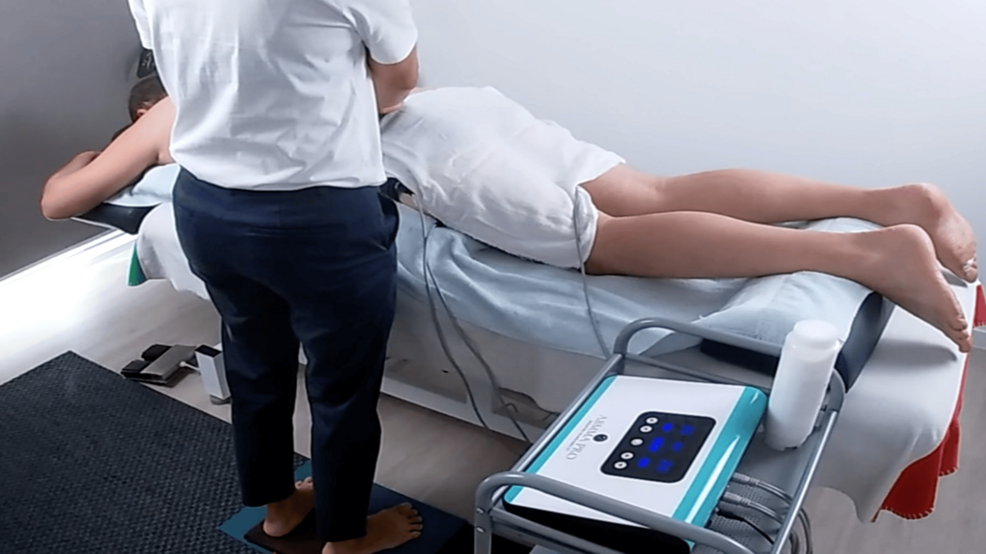
One of the most significant applications of bioelectric massage is in the realm of pain management. As discussed with TENS technology, it provides a drug-free alternative for individuals suffering from chronic conditions like sciatica, osteoarthritis, neuropathic pain, and neck and shoulder pain. In rehabilitation settings, bioelectric massage aids in restoring muscle function after injury or surgery. For instance, an EMS device can help prevent muscle atrophy in a limb that is immobilized, maintaining muscle tone and promoting faster recovery once movement is reinstated. Physical therapists frequently integrate these devices into their treatment plans for patients recovering from strokes, spinal cord injuries, or orthopedic surgeries, using them to re-educate muscles and improve motor control. The ability to target specific muscle groups and nerve pathways precisely makes it an invaluable technological adjunct to traditional physical therapy.
Muscle Recovery and Performance Enhancement
Athletes and fitness enthusiasts have increasingly adopted bioelectric massage technology for muscle recovery and performance enhancement. After intense workouts, muscles can experience micro-tears and build up lactic acid, leading to soreness and fatigue. EMS devices can facilitate faster recovery by increasing blood flow to the muscles, which helps flush out metabolic waste products and delivers essential nutrients for repair. The gentle contractions help in reducing muscle stiffness and accelerating the healing process. Furthermore, some athletes use EMS as a supplementary training tool to enhance muscle strength, endurance, and power, integrating it into their routines to activate muscle fibers that might be difficult to engage through voluntary contractions alone. The portability of many modern devices allows athletes to incorporate this technology into their training regimens, whether at home, in the gym, or on the road.
Accessibility and Home-Use Gadgets
Technological advancements have made bioelectric massage devices more accessible and user-friendly for home use. Once primarily found in clinics and hospitals, compact, portable, and often wireless units are now readily available to consumers. These home-use gadgets are designed with simplicity in mind, featuring intuitive controls, pre-set programs, and clear instructions, enabling individuals to manage their pain or aid in muscle recovery independently. The convenience of being able to apply therapy at home, without the need for frequent clinic visits, is a major driver of their popularity. From small, adhesive electrode patches controlled by a smartphone app to more robust handheld units, the range of personal bioelectric massage devices continues to expand, empowering users to take a proactive role in their personal wellness.
Future Trends and Technological Advancements
The field of bioelectric massage is dynamic, with continuous innovation driving its evolution. Future advancements are set to make these technologies even more integrated, intelligent, and personalized, pushing the boundaries of therapeutic effectiveness.
Integration with Wearables and Smart Devices
The convergence of bioelectric massage technology with wearable devices and smart platforms represents a significant future trend. Imagine smart clothing embedded with electrodes that can deliver targeted electrical stimulation throughout the day, controlled by a smartphone app that monitors activity levels, posture, and pain points. These integrated systems could offer continuous, real-time therapeutic intervention, adapting to the user’s changing needs. Wearable patches that provide discreet, long-duration therapy for chronic pain or muscle recovery are already emerging, and their capabilities are expected to expand to include sophisticated biometric feedback and automated adjustments. This integration will make bioelectric massage not just a treatment, but a seamless part of daily health management.
AI-Driven Personalization and Adaptive Therapies
Artificial intelligence (AI) is poised to revolutionize bioelectric massage by enabling highly personalized and adaptive therapies. AI algorithms can analyze vast amounts of user data, including pain levels, muscle response, activity patterns, and even sleep quality, to generate customized treatment protocols. Rather than relying on generic settings, an AI-powered bioelectric device could dynamically adjust parameters like intensity, frequency, and waveform in real-time to optimize therapeutic outcomes. For instance, if a user’s muscle spasm reduces after a certain pattern of stimulation, the AI could learn and recommend similar effective patterns for future sessions. This level of intelligent personalization promises to enhance efficacy, minimize discomfort, and maximize user compliance, making bioelectric massage an even more precise and effective health technology.

Miniaturization and Enhanced User Interfaces
Continued miniaturization of components will lead to even smaller, more discreet, and comfortable bioelectric massage devices. This will enable greater portability and the development of less obtrusive wearables. Simultaneously, advancements in user interface (UI) design will make these technologies more intuitive and accessible to a wider audience. Touchscreen displays, haptic feedback, voice control, and seamless app integration will simplify operation and allow users to effortlessly control complex therapeutic programs. The focus will be on creating an experience that is not only effective but also enjoyable and easy to incorporate into daily life, making bioelectric massage technology an indispensable tool in the evolving landscape of personal health and wellness.
aViewFromTheCave is a participant in the Amazon Services LLC Associates Program, an affiliate advertising program designed to provide a means for sites to earn advertising fees by advertising and linking to Amazon.com. Amazon, the Amazon logo, AmazonSupply, and the AmazonSupply logo are trademarks of Amazon.com, Inc. or its affiliates. As an Amazon Associate we earn affiliate commissions from qualifying purchases.