
In the dynamic world of real estate, understanding the various types of agreements that govern property sales is crucial for both sellers and agents. Among these, the open listing agreement stands out as a unique and often misunderstood contract. Unlike more common exclusive agreements, an open listing offers a distinct approach to marketing and selling property, with specific implications for financial incentives, marketing efforts, and the overall selling process. For those navigating the complexities of business finance, personal investing, or simply managing a property sale, a clear grasp of this agreement type is essential.
Understanding Listing Agreements in Real Estate
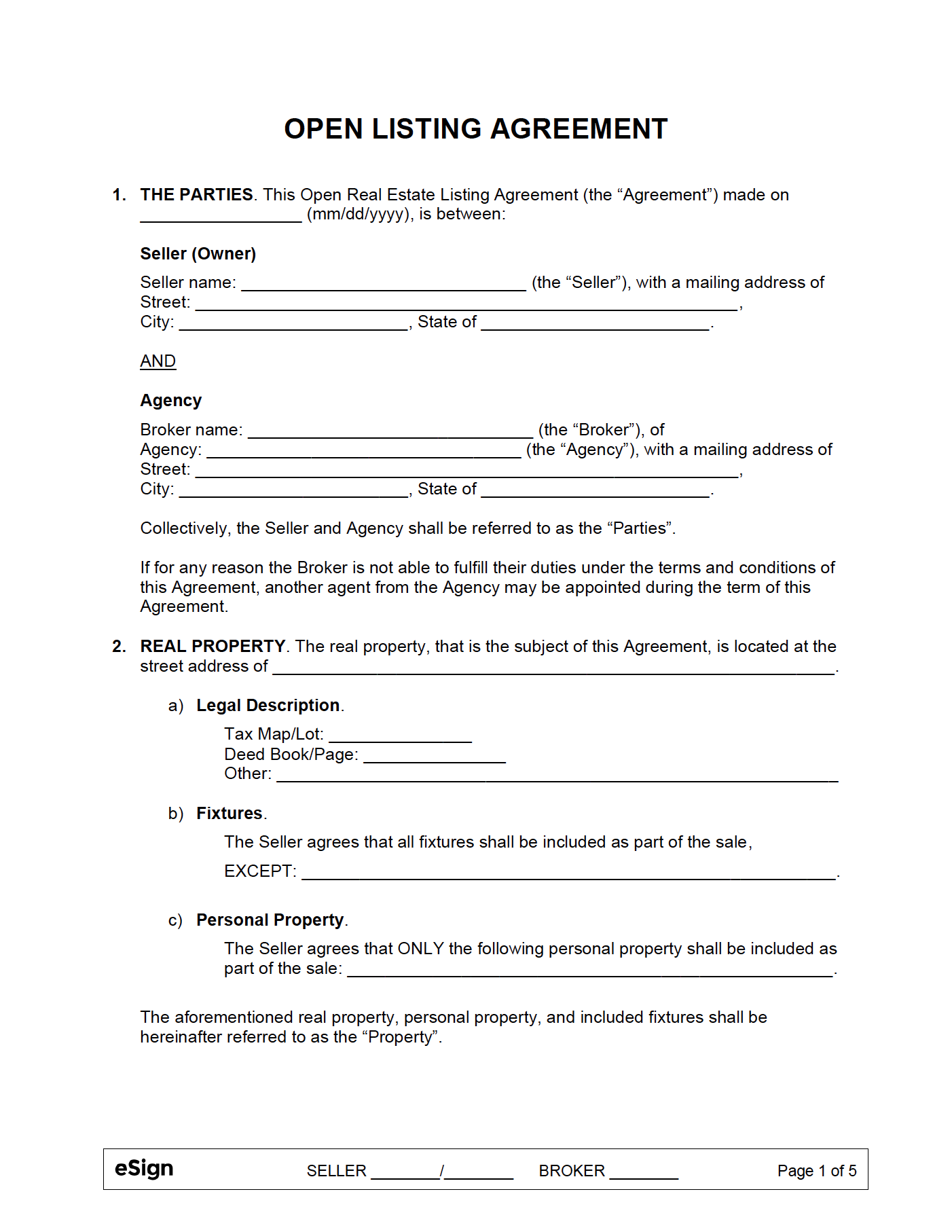
Before diving into the specifics of an open listing, it’s helpful to contextualize it within the broader landscape of real estate contracts. A listing agreement is a legally binding contract between a property owner (seller) and a real estate broker, granting the broker the authority to act as the seller’s agent in the sale of the property. These agreements define the terms of the sale, including the listing price, the duration of the agreement, the commission rate, and the responsibilities of both parties.
The Basics of Real Estate Contracts
At its core, any listing agreement aims to formalize the relationship and expectations between a seller and their chosen representative. These contracts are pivotal in ensuring clarity on roles, compensation, and the parameters within which the property will be marketed and sold. Without a written agreement, disputes over commissions or marketing efforts can easily arise, leading to costly legal battles and delays in financial transactions. From a business finance perspective, this agreement ensures that all costs, including the agent’s remuneration, are clearly outlined from the outset, allowing for accurate financial forecasting related to the sale.
Types of Listing Agreements
While open listings are less common, they exist alongside two primary types of exclusive agreements:
- Exclusive Right-to-Sell Listing: This is the most common and preferred type for agents. It grants one broker the sole right to sell the property and earn a commission, regardless of who finds the buyer (even if the seller finds the buyer independently). This structure provides maximum incentive for the agent to invest resources in marketing and selling the property, as their commission is guaranteed upon sale within the agreement term. From a financial standpoint, sellers commit to a fixed commission but benefit from dedicated agent effort.
- Exclusive Agency Listing: This agreement also designates one broker as the exclusive agent. However, if the seller finds a buyer on their own efforts, the seller is not obligated to pay the broker’s commission. This offers a middle ground, providing some exclusivity for the agent while allowing the seller to save on commission if they can secure a buyer directly. The financial implication for the seller is a potential cost saving, but it might slightly reduce the agent’s incentive compared to an exclusive right-to-sell agreement.
These exclusive agreements contrast sharply with the non-exclusive nature of an open listing, which operates on a fundamentally different financial and operational model.
The Mechanics of an Open Listing Agreement
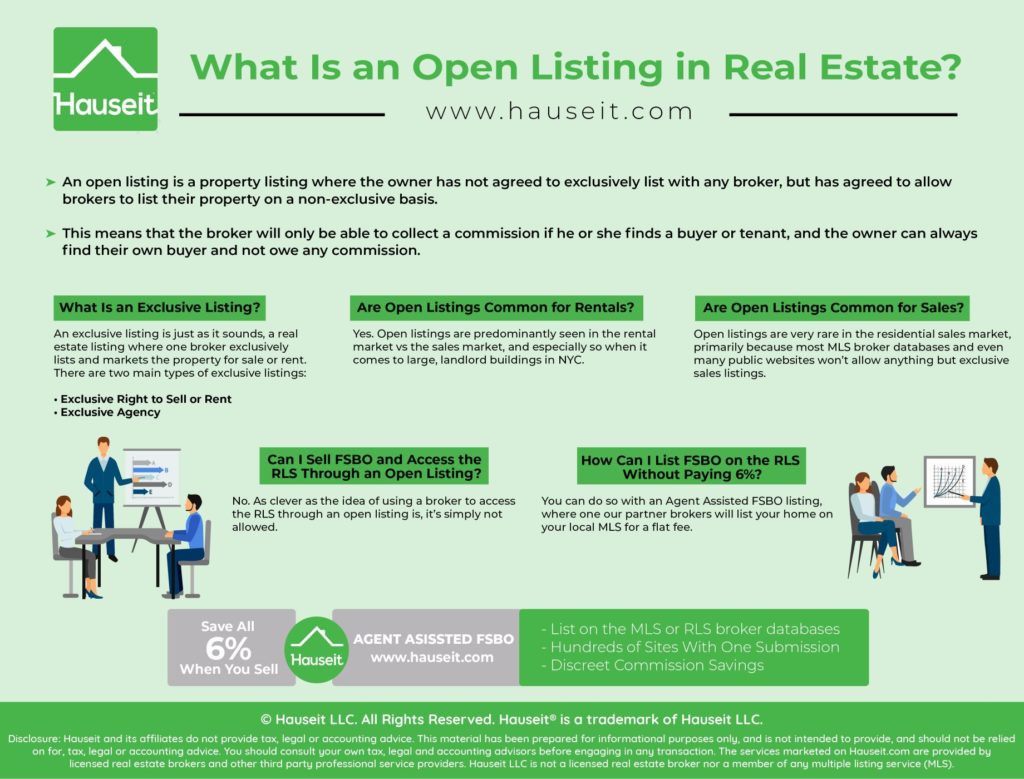
An open listing agreement is unique because it is non-exclusive and permits multiple real estate brokers or agents to market and sell the same property simultaneously. This structure deviates significantly from the standard models, presenting both potential financial benefits and considerable challenges.
Non-Exclusivity and Multiple Agents
The defining characteristic of an open listing is its non-exclusive nature. A seller can enter into an open listing agreement with as many real estate agents or brokers as they wish, or even attempt to sell the property themselves concurrently. There is no single agent holding an exclusive right to market the property. This means that several different agents might be showing the property, advertising it, and bringing potential buyers, all at the same time. For sellers, this might initially seem like an advantage, potentially broadening the reach of their marketing efforts without being tied to a single entity.
The “Finders Keepers” Principle
The commission structure of an open listing operates on a “finders keepers” or “first come, first served” basis. The real estate agent who successfully brings a ready, willing, and able buyer whose offer is accepted by the seller is the only one who earns the commission. If multiple agents are working on the same property, only the one who closes the deal gets paid. This creates a highly competitive environment among agents. Moreover, if the seller finds a buyer on their own — without any agent involvement — they are not obligated to pay any commission to any of the agents with whom they have an open listing agreement. This is a significant financial consideration for sellers, offering the potential to save thousands in commission costs.
Commission Structure and Payment
With an open listing, the commission rate is typically negotiated and specified within each individual agreement a seller has with each agent. While the rate itself might be comparable to exclusive agreements, the payment trigger is distinct. Payment is contingent solely upon successful closure by that specific agent. This means that agents operating under an open listing bear a higher risk; they invest time, money, and effort into marketing a property with no guarantee of compensation. From a business finance perspective for the agent, open listings represent speculative endeavors with a low probability of return, making them generally less attractive unless the property offers unique selling points or the market is extremely hot. For the seller, the potential to avoid commission if they sell themselves is a key financial motivator.
Advantages and Disadvantages for Sellers
Opting for an open listing agreement involves weighing several financial and practical considerations. While it offers unique freedoms, it also comes with notable drawbacks.
Potential Benefits: Flexibility and Cost Savings
The primary allure of an open listing for a seller lies in its flexibility and the potential for cost savings.
- Flexibility: Sellers are not bound to a single agent or a lengthy exclusive contract. They can change their mind about working with an agent at any time, or list with additional agents, without penalty. This freedom allows sellers to remain highly involved in the sales process and adapt their strategy as needed.
- Potential Commission Savings: Crucially, if the seller finds a buyer independently without the assistance of any agent, they owe no commission. This can result in substantial savings, directly increasing the net proceeds from the sale. For a property valued at $500,000 with a 6% commission, saving $30,000 is a significant financial incentive, making the “For Sale By Owner” (FSBO) route, perhaps supplemented by open listings, appealing to some financially savvy sellers.
Key Drawbacks: Reduced Agent Motivation, Marketing Limitations, Coordination Issues
Despite the potential for savings, open listings come with significant disadvantages that often outweigh the benefits, particularly in standard market conditions.
- Reduced Agent Motivation: This is perhaps the most critical drawback from a financial and marketing perspective. Because multiple agents can pursue the same sale, and only one will be paid, agents have far less incentive to dedicate significant resources (time, advertising spend, professional photography, virtual tours) to marketing an open listing. Their efforts become a high-risk gamble. Most professional agents prefer the security of an exclusive agreement, where their investment of resources is protected. Consequently, open listings often receive minimal marketing effort compared to exclusive listings, which can prolong the selling process and potentially lead to a lower sale price.
- Marketing Limitations: Due to the lack of exclusivity and reduced agent motivation, open listings are rarely syndicated widely across major multiple listing services (MLS) unless a specific agent decides to list it there, which may not be a common practice for low-return listings. This significantly limits exposure for the property, making it harder to reach a broad pool of potential buyers. Limited exposure generally translates to longer market times and potentially lower offers, impacting the seller’s financial outcome.
- Coordination Issues and Confusion: Managing multiple agents can lead to logistical nightmares. Scheduling showings, fielding inquiries, and negotiating offers from various sources can become chaotic and inefficient. There’s also the risk of duplicate efforts, conflicting information, and potential disputes over who “found” the buyer, all of which can complicate the sale process and add undue stress to the seller. From a business finance standpoint, this inefficiency can translate into opportunity costs and prolonged holding costs for the property.
Implications for Real Estate Agents
For real estate professionals, open listings represent a particular segment of the market with inherent challenges and a distinct risk-reward profile.
High Risk, Low Reward Scenario
For most established and successful agents, open listings are generally unattractive. The “finders keepers” principle means they could invest considerable time, effort, and personal capital (marketing costs, travel) into a property only to have another agent close the deal, or worse, have the seller sell it themselves, resulting in no compensation. This high-risk, low-reward scenario makes open listings economically unviable for agents whose business model relies on a more predictable income stream. They simply cannot afford to dedicate significant resources to a property with such an uncertain payout.
Strategic Considerations for Agents
Despite the high risk, some agents may occasionally engage with open listings under specific circumstances:
- Networking and Lead Generation: An agent might take an open listing if they believe it will generate leads for other, more secure transactions, or if it helps them build relationships in a new market.
- Unique Property: If an agent has a specific buyer in mind for a highly unique or niche property that aligns perfectly with an open listing, they might pursue it. In such cases, the agent effectively becomes a “matchmaker” rather than a full-service marketer.
- Slow Market / Niche Agent: In very slow markets where exclusive listings are scarce, or for new agents trying to build a portfolio, an open listing might be a last resort. However, even then, the financial investment versus potential return often deters serious engagement.
Ultimately, the business finance model for most real estate agencies prioritizes exclusive agreements because they provide a higher probability of return on investment for the agent’s time and marketing spend.
When Might an Open Listing Be Considered?
While generally less advantageous for sellers in a typical market, there are specific, albeit rare, scenarios where an open listing agreement might be considered.
Unique Property Sales
For properties that are highly unique, niche, or perhaps challenging to appraise and market traditionally, an open listing might occasionally be explored. This could include properties with significant historical value, specialized commercial properties, or extremely remote parcels of land. In such cases, a seller might seek a wide net to catch the one specific buyer for such a distinctive asset, and some agents might be willing to take a chance if they have a pre-existing client who fits the bill.
Seller’s Market Conditions
In an extremely robust seller’s market, where demand far outstrips supply, properties tend to sell quickly regardless of extensive marketing efforts. In such a scenario, a seller might consider an open listing, potentially even simultaneously with a strong “For Sale By Owner” (FSBO) effort. The logic is that the property will likely sell itself, minimizing the need for an exclusive agent’s dedicated marketing spend, and thus offering the seller the chance to avoid commission entirely if they find the buyer. However, even in a hot market, the professional guidance and negotiation skills of an exclusive agent often result in a higher sale price, potentially offsetting or exceeding the commission cost.
“For Sale By Owner” (FSBO) with Agent Backup
Some sellers committed to the FSBO route might use open listings as a fallback or supplementary strategy. They handle the bulk of the marketing and showings themselves, but list with a few agents on an open basis, effectively having an “agent backup” in case their own efforts don’t yield a buyer. If an agent does bring the buyer, the seller still pays commission, but they’ve leveraged their own efforts first. This reflects a specific financial calculation where the seller prioritizes commission savings above all else, accepting the associated risks of potentially slower sale times or lower prices.
Limited Agent Involvement
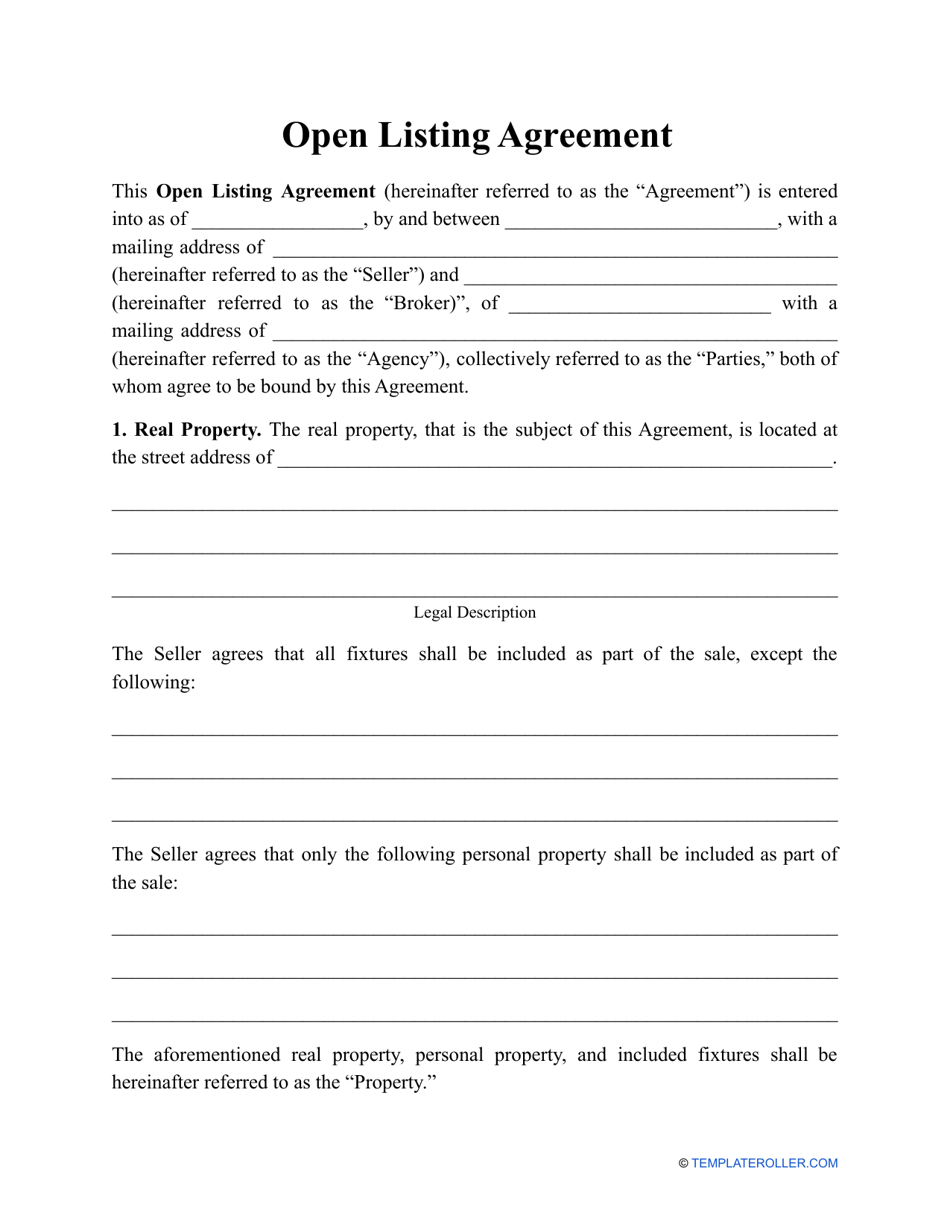
If a seller is prepared to do most of the legwork – photography, advertising, open houses, and negotiation – an open listing might be considered as a way to access the Multiple Listing Service (MLS) through an agent without committing to an exclusive agreement. Some agents offer “flat-fee MLS listing” services that blur the lines, effectively functioning like an open listing where the agent’s involvement is minimal, and their compensation is a pre-set fee rather than a percentage commission. This is a niche strategy for financially shrewd sellers who are confident in their ability to manage the sales process but understand the importance of MLS exposure.
In conclusion, while an open listing agreement provides tempting flexibility and the potential for commission savings, its non-exclusive nature generally deters most professional agents from investing heavily, leading to limited marketing and slower sales. For the average seller, the benefits of dedicated agent service and broad market exposure through an exclusive agreement often far outweigh the perceived financial advantages of an open listing, resulting in a more efficient and ultimately more profitable sale. Understanding these financial dynamics is key to making an informed decision in real estate transactions.
aViewFromTheCave is a participant in the Amazon Services LLC Associates Program, an affiliate advertising program designed to provide a means for sites to earn advertising fees by advertising and linking to Amazon.com. Amazon, the Amazon logo, AmazonSupply, and the AmazonSupply logo are trademarks of Amazon.com, Inc. or its affiliates. As an Amazon Associate we earn affiliate commissions from qualifying purchases.