
An offsite, in the context of modern business and organizational development, refers to any meeting, retreat, or strategic gathering held away from the usual workplace. While often perceived as merely a change of scenery or an employee perk, a well-conceived offsite is a potent strategic tool, particularly for shaping and reinforcing a brand’s corporate identity, marketing efficacy, and overall market positioning. It transcends a simple business meeting, evolving into a deliberate investment in culture, alignment, and innovation that directly impacts the brand’s internal health and external perception.
More Than Just a Retreat: Defining the Modern Offsite for Brand Impact
The distinction between a casual team outing and a strategic offsite lies in its deliberate purpose and the intentional design behind its execution. For a brand, an offsite is not an interruption to work but an intensification of it, focusing on objectives that are difficult or impossible to achieve amidst daily operational demands.

Strategic Intent vs. Casual Gathering
At its core, a strategic offsite is meticulously planned to achieve specific, measurable outcomes that contribute to the organization’s overarching brand strategy. Unlike informal gatherings, which might prioritize social cohesion alone, an offsite for brand development focuses on critical discussions, intensive workshops, and collaborative sessions designed to:
- Clarify Brand Messaging: Ensuring all key stakeholders understand and can articulate the brand’s core promise, values, and unique selling propositions.
- Innovate Brand Experiences: Brainstorming new products, services, or marketing campaigns that align with and enhance the brand’s identity.
- Strengthen Internal Brand Advocacy: Building a cohesive employee culture where individuals embody and champion the brand’s values, becoming powerful brand ambassadors.
- Address Strategic Challenges: Tackling complex issues related to market perception, competitive landscape, or brand repositioning in a focused, distraction-free environment.
A casual gathering, while beneficial for morale, typically lacks this rigorous planning and direct linkage to brand-centric goals. The modern offsite is an intentional investment, not an incidental expense, designed to propel the brand forward.
Diverse Formats and Objectives
Offsites come in various forms, each tailored to specific brand objectives. Their structure and duration depend on the desired outcomes and the cultural nuances of the organization. Common formats include:
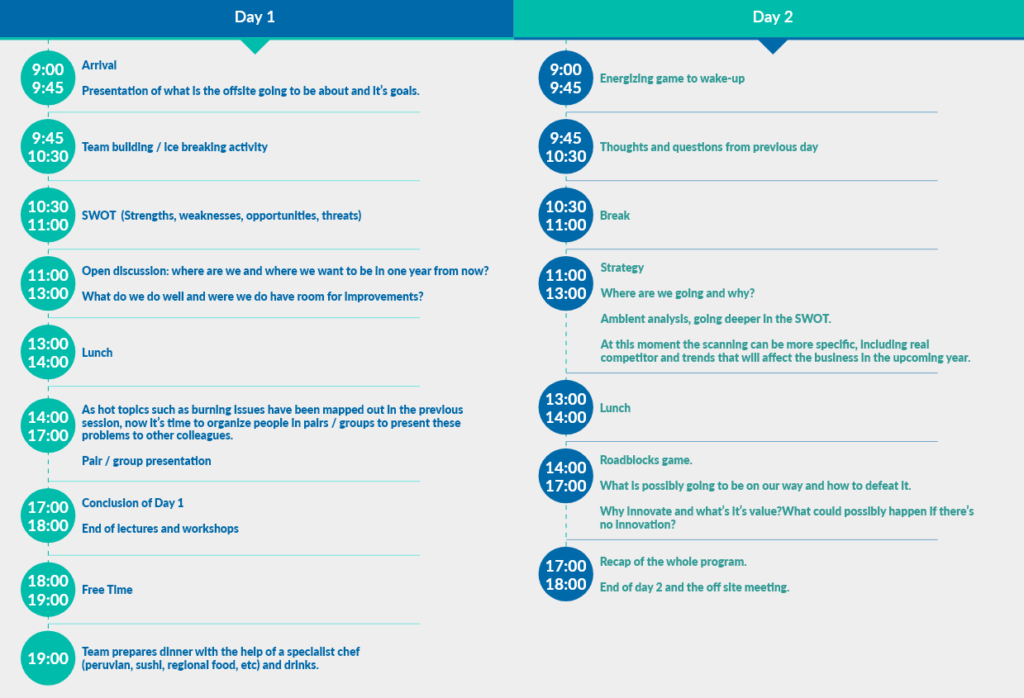
- Strategic Planning Offsites: Focused on long-term brand vision, market analysis, competitor differentiation, and the development of overarching brand strategies for the coming year or beyond. These often involve leadership teams and key strategists.
- Team Building & Culture Offsites: Designed to strengthen internal bonds, reinforce core brand values, improve cross-functional collaboration, and foster a unified corporate identity. Activities might range from structured workshops on communication to shared experiences that build camaraderie.
- Innovation & Product Development Offsites: Dedicated to brainstorming new ideas, iterating on existing products or services, and developing new brand experiences. These often involve design thinking methodologies and cross-functional teams from R&D, marketing, and product management.
- Marketing & Communications Alignment Offsites: Aimed at synchronizing marketing messages, refining brand narratives, developing integrated campaigns, and ensuring consistent brand voice across all touchpoints. These are crucial for maintaining brand integrity in the marketplace.
- Leadership Development Offsites: Focusing on enhancing the leadership skills of senior executives, aligning them with the brand’s strategic direction, and fostering a shared leadership philosophy that embodies the corporate identity.
Each format, regardless of its specific focus, inherently contributes to the brand by reinforcing its values, aligning its people, and refining its outward expression.
The Offsite as a Cornerstone of Corporate Identity and Brand Strategy
A strong brand is built from within. An offsite serves as a critical mechanism for internalizing the brand’s essence, ensuring that every employee understands, believes in, and embodies the corporate identity. This internal cohesion is the bedrock upon which successful external branding is built.
Cultivating Company Culture and Values
Corporate identity is not merely a logo or a mission statement; it is the sum total of an organization’s values, beliefs, and behaviors. Offsites provide a unique opportunity to actively cultivate and reinforce this identity. By bringing employees together outside of their daily routines, companies can:
- Deepen Understanding of Core Values: Through workshops, storytelling, and shared experiences, employees can gain a richer understanding of what the brand stands for and how these values translate into action.
- Foster a Shared Purpose: Offsites can explicitly articulate the brand’s higher purpose beyond profit, inspiring employees and aligning their personal contributions with the company’s broader impact.
- Build a Cohesive Culture: Shared experiences and dedicated time for connection outside of work strengthen interpersonal relationships, leading to more effective teamwork and a more unified organizational culture—a vital component of corporate identity.
When employees deeply connect with the company’s culture and values, they become more engaged, more productive, and more likely to advocate for the brand, both internally and externally.
Aligning Teams with Brand Mission and Vision
Dispersed teams and siloed departments can inadvertently dilute a brand’s message. Offsites are invaluable for realigning diverse teams with a unified brand mission and vision, ensuring that all efforts are channeled towards common strategic goals. This alignment helps in:
- Consolidating Strategic Understanding: Leadership can articulate the brand’s strategic direction, market positioning, and upcoming initiatives without the distractions of daily operations, ensuring everyone is on the same page.
- Breaking Down Silos: Cross-functional collaboration fostered during offsites helps different departments understand each other’s roles in delivering the brand promise, leading to more integrated marketing campaigns and customer experiences.
- Harmonizing Brand Voice: By working together on brand-related projects, teams can develop a more consistent understanding of the brand’s voice, tone, and messaging, crucial for coherent external communications.
This strategic alignment ensures that every facet of the organization contributes synergistically to strengthening the overall brand.
Fostering Innovation and Product Development
A brand’s longevity and relevance depend on its ability to innovate and evolve. Offsites offer a fertile ground for creative exploration, free from the constraints of daily tasks. They facilitate:
- Uninterrupted Brainstorming: Dedicated time and a fresh environment encourage employees to think outside the box, generating new ideas for products, services, and brand experiences that can differentiate the company in the marketplace.
- Cross-Pollination of Ideas: Bringing together individuals from different departments (e.g., R&D, marketing, sales, customer service) can lead to novel solutions that leverage diverse perspectives and insights, often resulting in innovations that are more holistic and market-ready.
- Rapid Prototyping and Iteration: Some offsites are structured as hackathons or design sprints, allowing teams to quickly develop and test new concepts, accelerating the innovation cycle and ensuring that new offerings align closely with the brand’s evolving identity and market needs.
By fostering innovation, offsites directly contribute to the brand’s vitality, ensuring it remains relevant, competitive, and forward-thinking.
Marketing and External Perception: Branding Through Internal Cohesion
While offsites primarily focus on internal dynamics, their impact reverberates externally, profoundly influencing marketing efforts, customer perception, and the brand’s ability to attract top talent. A cohesive internal brand translates into a compelling external narrative.
Employee Advocacy and Brand Ambassadors
When employees are engaged, aligned, and passionate about their brand, they become its most authentic and credible advocates. Offsites, by fostering this internal connection, naturally cultivate powerful brand ambassadors.
- Authentic Storytelling: Employees who genuinely believe in the brand’s mission and values are more likely to share positive stories about their workplace and its products/services, lending authenticity that traditional advertising often lacks.
- Extended Reach: Through personal networks and social media, employee advocacy can significantly extend a brand’s reach, often more effectively and cost-efficiently than paid media. This “human face” of the brand builds trust and relatability.
- Enhanced Reputation: A company known for its strong internal culture and engaged employees develops a positive reputation that attracts customers and partners who value ethical and thriving workplaces.
This organic marketing, driven by genuine employee enthusiasm, is an invaluable asset to any brand.
Crafting a Cohesive Brand Narrative
A brand’s narrative—its story, values, and promise—must be consistent across all touchpoints to resonate effectively with its target audience. Offsites play a critical role in ensuring this cohesion.
- Harmonized Messaging: By bringing together marketing, sales, and communications teams, offsites ensure that everyone understands and can articulate the core brand message with consistency, regardless of the channel or audience.
- Refining Brand Story: Intensive sessions allow for the collaborative refining of the brand’s narrative, ensuring it is compelling, relevant, and differentiated in the marketplace. This might involve revisiting brand archetypes, unique selling propositions, or target audience profiles.
- Preparing for Market Launches: For new products or services, an offsite can serve as a launchpad for developing integrated marketing plans, press strategies, and internal communications, ensuring a unified and impactful market entry.
A cohesive brand narrative built on internal alignment is far more impactful than one fragmented by internal disconnects.
Impact on Recruitment and Talent Branding
In today’s competitive talent landscape, a strong employer brand is as crucial as a strong consumer brand. Offsites contribute significantly to attracting and retaining top talent by showcasing an attractive corporate identity.
- Showcasing Culture: The experiences and outcomes of offsites—photos, testimonials, innovative ideas generated—can be powerful tools for recruitment marketing, illustrating a vibrant, collaborative, and purpose-driven work environment.
- Employee Retention: Investing in offsites demonstrates a commitment to employee development, well-being, and strategic engagement, fostering loyalty and reducing turnover. A positive internal brand experience encourages employees to stay and grow with the company.
- Attracting Top Talent: Prospective employees are increasingly seeking organizations with strong cultures and clear missions. A brand that consistently invests in its people and future through strategic offsites inherently signals an attractive employer brand.
By enhancing employer branding, offsites contribute to securing the human capital essential for the brand’s continued success and innovation.
Designing an Effective Offsite: Strategic Considerations for Brand Impact
The effectiveness of an offsite in strengthening a brand is not accidental; it is the result of meticulous planning and strategic design. Every element, from location to agenda, should reinforce the brand’s identity and objectives.
Setting Clear Brand-Aligned Objectives
The first step in designing any effective offsite is to define its purpose with absolute clarity, explicitly linking it to brand strategy. Before booking anything, ask:
- What specific brand challenge are we addressing? (e.g., market differentiation, brand narrative consistency, internal brand advocacy).
- What brand outcome do we expect? (e.g., a refined brand message, a new product concept, a stronger culture of collaboration around brand values).
- How will this offsite contribute to our overall brand vision?
These objectives must be communicated to all participants, ensuring everyone understands their role in achieving brand-centric goals. Without clear, brand-aligned objectives, an offsite risks becoming an unfocused expenditure.
Location and Environment as Brand Extensions
The chosen venue and environment for an offsite are not merely logistical details; they are extensions of the brand itself. They should reflect the brand’s values, aesthetic, and desired atmosphere.
- Reflecting Brand Personality: A tech-forward brand might choose a sleek, modern, high-tech venue. An eco-conscious brand might opt for a sustainable retreat in nature. The environment sets the tone and reinforces the brand’s image.
- Fostering Desired Behaviors: The layout of the space can encourage collaboration, quiet contemplation, or dynamic presentations, aligning with the type of brand work being undertaken. Breakout rooms for small group ideation, large open spaces for plenary sessions, or inspiring outdoor settings for creative thinking all contribute.
- Minimizing Distractions: Removing employees from their usual work environment is key. A location that inspires focus and creativity, away from the daily grind, allows for deeper engagement with brand-related tasks.
The physical setting subtly communicates brand identity and influences the success of the offsite’s brand objectives.
Content and Activities Reinforcing Core Messages
The agenda and activities within an offsite must be carefully curated to directly support the brand-aligned objectives. Every session should be a purposeful step towards strengthening the brand.
- Interactive Workshops: Instead of passive presentations, engage participants in hands-on workshops that involve brand identity exercises, collaborative ideation, or role-playing scenarios to practice brand messaging.
- Keynote Speakers: Invite speakers (internal or external) who embody or can articulate aspects of the brand’s vision, values, or market position, providing inspiration and strategic insights.
- Facilitated Discussions: Structured discussions are crucial for addressing complex brand challenges, gaining consensus on strategic directions, and fostering shared understanding of brand priorities.
- Brand Immersion Experiences: Integrate activities that directly relate to the brand’s product, service, or customer base. For example, a customer service offsite might include listening to real customer calls to better empathize with the brand experience.
Every element of the agenda should consciously contribute to building, refining, or reinforcing the brand’s identity and strategy.
Measuring the Brand ROI of Your Offsite
While the qualitative benefits of offsites are often evident, measuring their return on investment (ROI) for the brand is crucial for demonstrating their strategic value and justifying future investments. This requires a blend of qualitative and quantitative assessments.
Qualitative and Quantitative Metrics
Measuring the brand impact of an offsite involves looking beyond immediate outputs to long-term outcomes.
- Qualitative Metrics:
- Post-Offsite Surveys: Assess participant engagement, alignment with objectives, perceived understanding of brand strategy, and satisfaction.
- Focus Groups/Interviews: Gather deeper insights into how the offsite influenced participants’ understanding of the brand, their role in delivering its promise, and their overall sense of belonging.
- Leadership Feedback: Evaluate if the offsite successfully advanced strategic brand initiatives, resolved specific brand challenges, or fostered a desired cultural shift.
- Observation of Collaboration: Note improvements in cross-functional teamwork, communication, and shared problem-solving related to brand initiatives.
- Quantitative Metrics:
- Employee Engagement Scores: Track changes in employee engagement and satisfaction before and after the offsite, particularly concerning aspects related to corporate identity and purpose.
- Brand Consistency Audits: Monitor the consistency of brand messaging across internal and external communications following the offsite.
- Innovation Pipeline: Track the number and quality of new ideas or initiatives generated during the offsite that directly contribute to brand differentiation or new product development.
- Recruitment Metrics: Observe any positive shifts in applicant quality, acceptance rates, or time-to-hire, indicating an improved employer brand.
- Marketing Campaign Performance: Analyze the performance of marketing campaigns developed or significantly influenced by offsite strategies, looking at metrics like reach, engagement, and conversion.
- Employee Turnover Rates: Monitor if offsites contribute to lower turnover, signaling stronger employee loyalty and internal brand appeal.

Long-Term Brand Equity Growth
The true ROI of a well-executed offsite often manifests over the long term, contributing to sustained brand equity growth. This includes:
- Enhanced Brand Reputation: A cohesive, innovative, and value-driven organization (a result of successful offsites) naturally builds a stronger reputation in the market.
- Increased Brand Loyalty: Internally aligned teams deliver more consistent and positive customer experiences, fostering greater customer loyalty and advocacy.
- Market Leadership: Brands that continuously align their strategy, culture, and innovation through offsites are better positioned to adapt, evolve, and maintain a leading edge in their respective industries.
- Valuation Impact: Ultimately, a strong, resilient brand with a clear identity and purpose, fueled by effective internal alignment, commands higher valuation and sustained competitive advantage.
An offsite, therefore, is not just an event; it is a strategic investment in the intangible assets of brand reputation, culture, and innovation, all of which are critical for long-term success and market leadership.
aViewFromTheCave is a participant in the Amazon Services LLC Associates Program, an affiliate advertising program designed to provide a means for sites to earn advertising fees by advertising and linking to Amazon.com. Amazon, the Amazon logo, AmazonSupply, and the AmazonSupply logo are trademarks of Amazon.com, Inc. or its affiliates. As an Amazon Associate we earn affiliate commissions from qualifying purchases.