
In the intricate tapestry of human language, the accented syllable plays a pivotal, often unnoticed, role in conveying meaning, emotion, and clarity. While seemingly a basic linguistic concept, its accurate identification and reproduction are foundational to the functionality and advancement of modern speech technology, AI, and natural language processing (NLP). Understanding what constitutes an accented syllable, and how machines are being taught to recognize and generate them, is key to unlocking more natural and effective human-computer interaction.
The Core Concept in Human Language and Its Digital Echo
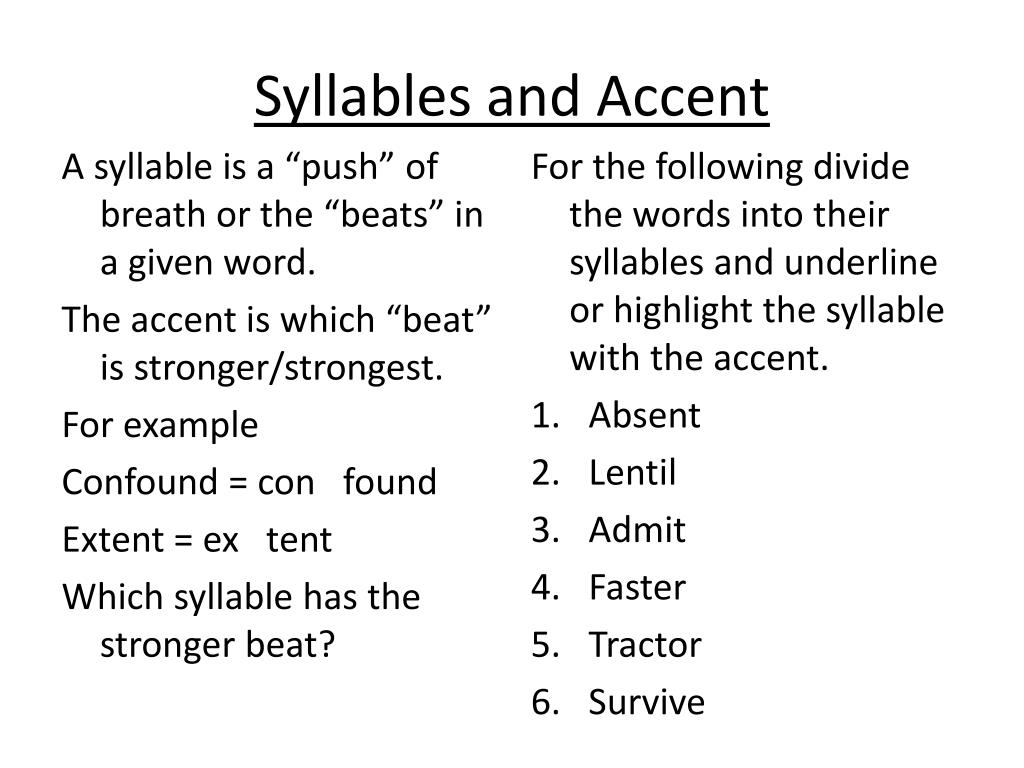
At its heart, an accented syllable – often referred to as a stressed syllable – is the part of a word that is pronounced with greater emphasis or prominence than other syllables within the same word. This emphasis isn’t arbitrary; it carries significant information and contributes to the rhythmic flow of speech. For humans, this is largely an intuitive process, but for machines, it represents a complex set of acoustic features that must be precisely identified and mapped.

Defining Stress and Prominence
Stress in language is a multifaceted phenomenon. A syllable is “stressed” when it stands out from its neighbors. This prominence is achieved through a combination of acoustic cues. In languages like English, stress is phonemic, meaning its placement can differentiate between words that are otherwise spelled identically (e.g., “present” as a noun vs. “present” as a verb). This distinction is critical not just for human understanding, but for AI systems that need to parse semantic meaning from spoken input. For instance, a voice assistant misinterpreting the stress in “record” could lead to it initiating a recording function instead of retrieving a historical document, highlighting the practical implications of syllable accentuation.
The Role of Pitch, Volume, and Duration
The acoustic hallmarks of an accented syllable are primarily:
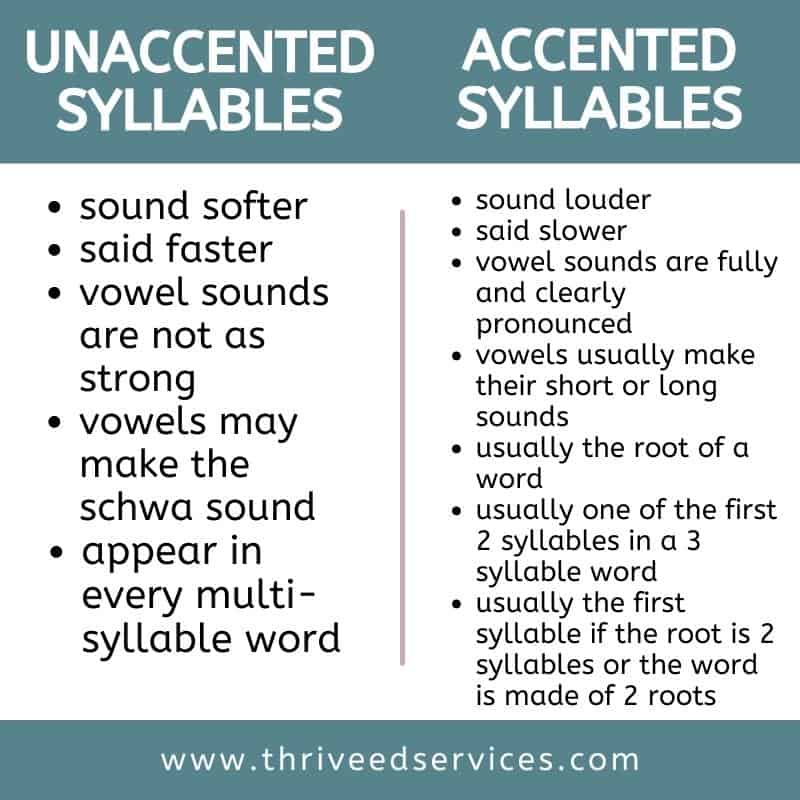
- Higher Pitch (Fundamental Frequency): The vocal cords vibrate faster, resulting in a higher perceived tone. AI systems analyze the fundamental frequency (F0) contour of speech to detect these peaks.
- Increased Volume (Intensity): More air is expelled during the pronunciation of the stressed syllable, leading to a louder sound. Digital signal processing techniques measure the amplitude of the speech waveform.
- Longer Duration: The vowel sound in an accented syllable is typically prolonged. Temporal analysis of phoneme durations is a crucial component in speech recognition models.
Beyond these primary cues, a shift in vowel quality (clearer articulation) and facial muscle tension also contribute to the perception of stress. For AI, isolating and quantifying these distinct features allows for the algorithmic identification and replication of accentuation, transforming raw audio data into meaningful linguistic units.
Why it Matters for Clarity and Meaning in Digital Communication
For humans, the correct placement of stress enhances intelligibility and reduces ambiguity. For AI, it’s even more fundamental. Natural Language Understanding (NLU) models rely on a deep comprehension of spoken input, and prosodic features, including syllable stress, are non-verbal cues that enrich semantic interpretation. Without the ability to correctly identify accented syllables, speech-to-text engines would struggle with homographs, voice assistants would frequently misinterpret commands, and AI-driven translation tools would produce less natural and potentially misleading output. The nuances of human communication, heavily reliant on these subtle vocal variations, necessitate sophisticated AI models capable of processing and generating accented syllables with high fidelity.
Accented Syllables in the Age of AI and Voice Technology
The burgeoning landscape of artificial intelligence, particularly in areas concerning speech and language, critically depends on robust models of syllable accentuation. From personal assistants to sophisticated language learning platforms, the accurate handling of stressed syllables underpins the user experience and the very utility of these technologies.
Speech Recognition and Natural Language Understanding (NLU)
Speech recognition systems, the backbone of voice assistants and transcription services, must accurately segment spoken words into syllables and identify the stressed ones. This isn’t merely for aesthetic output; it’s fundamental to disambiguation. Consider the English word “contract.” If stress is on the first syllable (/ˈkɒn.trækt/), it’s typically a noun (an agreement). If on the second (/kən.ˈtrækt/), it’s usually a verb (to shrink or make an agreement). AI models, trained on vast datasets of human speech annotated with prosodic information, use deep learning architectures (like recurrent neural networks and transformers) to infer stress patterns from acoustic features. This allows NLU components to assign the correct part-of-speech tag and ultimately, the correct meaning, improving the accuracy and utility of voice-controlled interfaces.
Text-to-Speech (TTS) Synthesis and Realistic Voice Generation
For AI systems to sound natural and engaging, Text-to-Speech (TTS) engines must synthesize speech that mirrors human prosody, including accurate syllable accentuation. Early TTS systems often produced robotic, monotonous voices precisely because they lacked sophisticated stress models. Modern neural TTS models, however, leverage advanced deep learning techniques to predict the appropriate pitch, duration, and intensity variations for each syllable, based on linguistic rules and contextual information. This capability is crucial for creating synthetic voices that are not only intelligible but also expressive and capable of conveying nuanced meaning, whether for audiobooks, navigational systems, or conversational AI agents. The emotional resonance and persuasive power of a synthetic voice are directly tied to its ability to correctly place emphasis.
AI-Powered Language Learning and Pronunciation Coaching
The application of AI in language education is another area where accented syllables are paramount. AI-powered language learning apps and pronunciation coaches use speech recognition to analyze a learner’s spoken input, compare it against native speaker models, and provide real-time feedback on pronunciation, including stress placement. These tools can highlight misstressed syllables, helping learners to refine their accent and improve intelligibility. By leveraging advanced acoustic analysis and machine learning algorithms, these AI systems can act as personalized tutors, identifying specific phonetic challenges related to stress and guiding learners towards more native-like speech patterns.
The Algorithmic Challenge: Teaching Machines to ‘Hear’ Stress
Building AI that can effectively process and generate accented syllables is a significant engineering and linguistic challenge. It requires sophisticated algorithms capable of discerning subtle acoustic cues and translating them into meaningful linguistic distinctions.
Feature Extraction and Acoustic Models
The first step in teaching machines to ‘hear’ stress involves robust feature extraction. Raw audio waveforms are processed to extract acoustic features such as Mel-frequency cepstral coefficients (MFCCs), fundamental frequency (F0) contours, and energy envelopes. These features serve as the input for acoustic models, typically deep neural networks (DNNs), which are trained on large corpora of labeled speech data. The labels include not only phonetic transcriptions but also annotations for syllable boundaries and stress levels. These models learn to map specific patterns in the acoustic features to the presence or absence of an accented syllable.
Prosody Modeling and Intonation Generation
Beyond individual syllable stress, AI must also understand prosody – the rhythm, stress, and intonation of speech. Prosody modeling involves predicting the entire F0 contour, duration, and amplitude variations across an utterance, not just within a single word. For TTS, this means generating an intonation pattern that sounds natural for the given sentence structure and communicative intent. Advanced models use attention mechanisms and sequence-to-sequence architectures to generate prosodic features that are contextually appropriate, ensuring that the overall spoken output sounds coherent and human-like, with correctly accented syllables fitting seamlessly into the broader speech melody.
Machine Learning Approaches to Syllable Accentuation
Modern AI systems employ various machine learning approaches for syllable accentuation. Hidden Markov Models (HMMs) were historically used, but deep learning models have largely superseded them. Convolutional Neural Networks (CNNs) are effective for feature extraction, while Recurrent Neural Networks (RNNs) and Long Short-Term Memory (LSTM) networks are adept at capturing temporal dependencies in speech, crucial for stress prediction. Transformer networks, with their self-attention mechanisms, are particularly powerful for modeling long-range dependencies in speech, enabling more accurate and context-aware stress prediction and generation. These models learn from vast datasets to recognize the intricate patterns that define an accented syllable and apply them consistently.
Impact on User Experience and Global Communication
The continuous refinement of AI’s ability to handle accented syllables has profound implications for user experience across a multitude of digital platforms and is a key enabler for more effective global communication tools.
Improving Voice Assistant Accuracy
The accuracy and naturalness of voice assistants like Siri, Alexa, and Google Assistant are directly tied to their ability to process and generate accented syllables correctly. When an assistant misinterprets a command due to incorrect stress detection, the user experience suffers, leading to frustration and reduced trust. Conversely, a voice assistant that can discern subtle prosodic cues can understand context better, leading to more relevant responses and seamless interactions. This extends to multilingual voice assistants, where accurately recognizing and reproducing stress patterns in diverse languages is paramount for universal usability.
Enhancing Cross-Lingual Communication Tools
For real-time translation and cross-lingual communication tools, the fidelity of syllable accentuation is not just about sounding natural; it’s about preserving meaning and tone. A misstressed word in translation can alter the message or even offend. AI-powered translation systems that accurately transfer prosodic information, including stress, between languages can create more nuanced and culturally sensitive communication. This capability is vital for international business, diplomacy, and personal connections, breaking down linguistic barriers with greater precision and empathy.
The Future of Empathetic AI Voices
As AI progresses, there’s a growing demand for empathetic AI voices that can express a range of emotions and intentions. Correct syllable accentuation is a fundamental building block for this. The strategic placement of stress can convey sarcasm, emphasis, certainty, or questioning. By mastering these nuances, AI voices can move beyond mere information delivery to become more engaging, persuasive, and even comforting. This has implications for customer service bots, educational tools, and therapeutic AI applications, where the voice’s emotional intelligence significantly impacts user perception and engagement.
Practical Applications and Future Directions
The understanding and mastery of accented syllables by AI are not academic exercises; they are driving tangible advancements and opening new avenues for technological innovation.
AI in Professional Communication
In professional settings, clear and impactful communication is paramount. AI tools are emerging that can analyze a speaker’s prosody, including their syllable stress patterns, and provide feedback to improve public speaking, presentation skills, or even sales pitches. Imagine an AI coach that helps you emphasize key points in a presentation by guiding your vocal stress, ensuring your message resonates more effectively with your audience. Such applications leverage the detailed prosodic analysis capabilities of advanced AI.
Personalizing Digital Interactions
The future of digital interaction will increasingly involve highly personalized experiences. AI-driven personalization could extend to adapting the accentuation of synthetic voices to match a user’s regional dialect or even their individual speech patterns, creating a more comfortable and familiar auditory experience. Furthermore, AI could dynamically adjust its prosody, including syllable stress, based on the context of a conversation or the detected emotional state of the user, leading to truly adaptive and human-centric digital companions. The ability of AI to accurately perceive and strategically employ accented syllables is a cornerstone in building this more intuitive and personally tailored digital future.
aViewFromTheCave is a participant in the Amazon Services LLC Associates Program, an affiliate advertising program designed to provide a means for sites to earn advertising fees by advertising and linking to Amazon.com. Amazon, the Amazon logo, AmazonSupply, and the AmazonSupply logo are trademarks of Amazon.com, Inc. or its affiliates. As an Amazon Associate we earn affiliate commissions from qualifying purchases.