
The modern volleyball is a marvel of material science and precision engineering, a far cry from the rudimentary leather spheres of its origins. Far from being a simple inflated ball, its construction involves advanced polymers, sophisticated manufacturing techniques, and meticulous design to ensure optimal performance, durability, and a consistent playing experience. Understanding “what is a volleyball made of” requires a deep dive into the technological architecture that underpins its form and function.
The Core Technological Architecture: From Bladder to Outer Casing
Every volleyball is a meticulously engineered system comprising distinct layers, each serving a critical technological purpose. These layers work in concert to provide the ball with its characteristic bounce, shape retention, and tactile properties.
The Inner Sanctum: Bladder Technology
At the heart of every volleyball lies the bladder, an inflatable core responsible for air retention and the ball’s foundational shape. Historically, bladders were made from natural latex, offering excellent elasticity and rebound characteristics. However, modern volleyballs predominantly utilize butyl rubber bladders. Butyl rubber is a synthetic elastomer renowned for its superior air retention capabilities compared to natural latex. This technological advancement significantly reduces the frequency with which a ball needs to be reinflated, ensuring consistent pressure and playability over extended periods. The manufacturing of butyl bladders involves precision molding and vulcanization processes to create a seamless, airtight internal sphere. Some high-performance balls might still incorporate latex for a softer feel, but often blend it with butyl for improved air retention.
The Structural Integrity: Reinforcing Winding
Surrounding the bladder is a crucial layer of winding, typically made from nylon or polyester threads. This winding is not merely decorative; it’s a critical engineering component that provides structural integrity and helps the ball maintain its spherical shape under impact. The threads are machine-wound around the bladder in a precise, multi-directional pattern, often utilizing automated winding machines that ensure even tension and coverage. This advanced winding technique distributes stress uniformly across the bladder, preventing deformation and enhancing durability. It also contributes significantly to the ball’s responsiveness and predictable bounce, as the taut winding acts like a spring, transferring energy efficiently upon impact. Without this reinforcement, the bladder alone would be too fragile and susceptible to significant deformation during play.
The Aerodynamic Skin: Outer Panels and Material Science
The outermost layer, the casing, is perhaps the most visible and tactile component, directly influencing player interaction and aerodynamic performance. This casing is constructed from multiple panels, meticulously joined together. The choice of material and method of joining these panels are paramount to the ball’s overall quality and playability. Modern volleyballs have largely moved away from natural leather due to its inconsistent properties when exposed to moisture and varying temperatures.
Advanced Materials Engineering for Optimal Performance
The pursuit of the perfect volleyball has led to significant advancements in material engineering, with synthetic compounds now dominating the construction. These materials are chosen for their specific properties that enhance durability, feel, and performance.
Synthetic Leather Composites: The Touch and Feel
The gold standard for high-performance volleyballs is synthetic leather, specifically micro-fiber composite leather. Unlike traditional PVC or PU synthetic leathers, microfiber composites mimic the structure and feel of natural leather while offering superior consistency and performance characteristics. These composites are multi-layered materials, often consisting of a soft, porous surface layer for grip and moisture absorption, backed by denser layers for durability and structure.
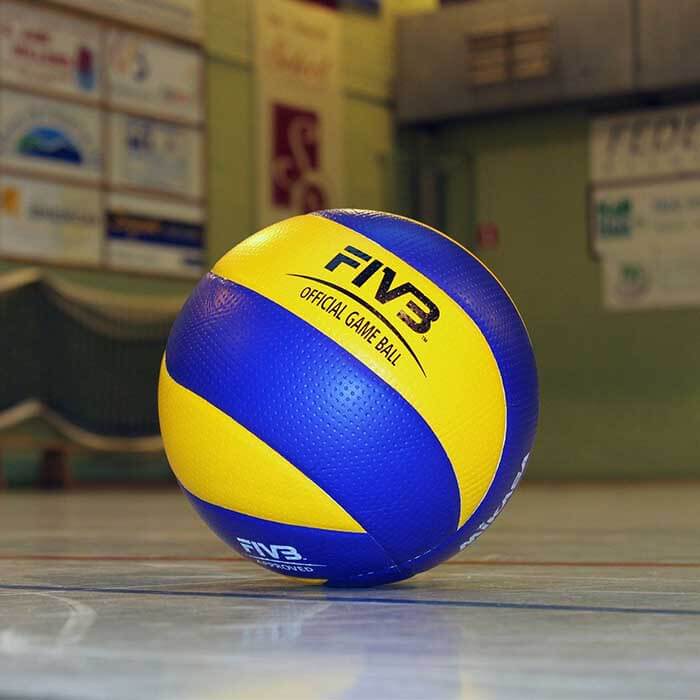
The manufacturing process for these composites involves advanced textile engineering, often incorporating proprietary blends of polyurethane (PU) and microfiber materials. The result is a surface that offers excellent grip, a soft touch that reduces impact stress on players’ arms, and resistance to environmental factors like sweat and humidity, which can degrade natural leather. The textured surface of many modern balls, such as the dimpled or hexagonal patterns, is also an intentional design feature, enhancing grip and optimizing aerodynamics.
Butyl Rubber and Latex Bladders: Air Retention and Responsiveness
As mentioned, butyl rubber is favored for its excellent air retention, making the ball consistently inflated between uses. Its low gas permeability ensures that the ball maintains its specified pressure (typically 4.3 to 4.6 psi or 0.30 to 0.325 kgf/cm² for indoor volleyball) for longer periods. Some manufacturers, particularly for beach volleyballs where a softer touch might be preferred, may blend butyl with natural latex. Latex offers a more elastic and responsive feel but is more permeable to air. The technological challenge lies in achieving the optimal balance between air retention, elasticity, and weight. Precision manufacturing techniques for bladders involve multi-stage molding and curing processes to eliminate weak points and ensure uniform thickness.
Nylon and Polyester Threads: Durability and Seam Strength
The threads used for the winding layer and sometimes for stitching panels are critical for structural integrity. Nylon and polyester are chosen for their high tensile strength, resistance to stretching, and durability. Nylon offers excellent abrasion resistance and elasticity, while polyester provides superior UV resistance and dimensional stability. The specific denier and twist of the threads are carefully selected to provide the right balance of strength and flexibility, ensuring the ball maintains its shape and resilience through countless impacts and high-speed serves. For stitched balls, the quality of these threads directly impacts the longevity and integrity of the seams.
Precision Manufacturing: Assembling Performance
The journey from raw materials to a finished volleyball involves sophisticated manufacturing processes that ensure consistency, durability, and adherence to strict performance standards set by governing bodies like the FIVB.
Machine Stitching vs. Thermal Bonding: Seam Technologies

There are primarily two technological approaches to joining the panels of a volleyball: machine stitching and thermal bonding.
- Machine stitching involves precisely sewing the panels together using industrial-grade sewing machines. This method creates raised seams which can affect aerodynamics and feel. While historically common, it is now less prevalent in top-tier indoor balls. However, for some outdoor or recreational balls, and particularly for beach volleyballs, stitching offers a robust construction that can withstand harsher environments. Advanced machine stitching utilizes computer-controlled patterns to ensure uniform tension and seam strength across all panels.
- Thermal bonding, also known as lamination, is the cutting-edge technology for high-performance indoor volleyballs. In this process, the panels are fused together under high heat and pressure, often with an adhesive layer. This creates a seamless, smooth surface. The absence of raised seams significantly improves the ball’s aerodynamic properties, leading to a more stable flight path and predictable trajectory, crucial for precise passing and hitting. Thermal bonding also enhances the ball’s water resistance and overall durability, preventing moisture ingress that could weaken traditional stitching. This process requires precise temperature and pressure control, often involving sophisticated robotics, to ensure uniform bonding strength and a perfectly spherical outcome.
Panel Construction and Aerodynamic Design
The number and shape of panels also influence a volleyball’s performance. Traditional balls often featured 18 panels, while newer, technologically advanced designs, such as those from Mikasa (e.g., V200W), employ 18 uniquely shaped panels arranged in an interlocking, aerodynamically optimized pattern. This design aims to create a more stable flight path by minimizing air resistance and turbulence, leading to more consistent performance during serves and spikes. The surface texture, whether dimpled or hex-patterned, is also an integral part of this aerodynamic design, creating micro-turbulence that helps stabilize the ball in flight, akin to the dimples on a golf ball. This is a testament to the blend of material science and fluid dynamics in sports equipment engineering.
Quality Control and Performance Testing Technologies
Every stage of a volleyball’s production is subject to rigorous quality control. From inspecting raw material consistency to testing bladder air retention, winding tension, and panel bonding strength, technological tools are employed to ensure adherence to specifications. Finished balls undergo extensive performance testing, including rebound tests, shape retention under pressure, impact durability, and weight and circumference measurements. Computerized vision systems can detect minute imperfections, and pneumatic testing ensures burst resistance. These stringent quality assurance protocols, often utilizing advanced sensors and data analytics, guarantee that each ball meets the exacting standards required for competitive play and player satisfaction.
The Evolution of Volleyball Technology: A Continuous Pursuit of Excellence
The journey of the volleyball, from its inception as a bladder-covered leather sphere to the advanced composite artifact of today, reflects a continuous drive for technological enhancement. This evolution is not merely about aesthetic changes but a profound shift in materials, manufacturing, and design principles, all aimed at optimizing performance.
From Leather to Microfiber: Enhancing Playability
Early volleyballs were made of genuine leather, often with an inner rubber bladder. While leather offered a certain feel, it was inconsistent. It absorbed moisture, making the ball heavier and altering its flight characteristics, and its texture varied. The significant technological leap came with the introduction of synthetic leathers in the late 20th century. Initially, these were PVC or PU, offering more durability and water resistance but often lacking the soft touch of natural leather. The true breakthrough was the development of microfiber composite leathers. These materials, engineered at a molecular level, replicate the fibrous structure of natural leather while offering superior consistency, grip in both wet and dry conditions, and a softer impact on players’ forearms, thereby reducing repetitive stress injuries. This advancement directly contributed to faster, more dynamic gameplay and enhanced player comfort.
Innovation in Air Retention and Shape Stability
The transition from natural latex bladders to butyl rubber was a critical technological improvement for maintaining consistent air pressure. Early latex bladders required frequent reinflation, leading to variations in ball performance during a match. Butyl rubber, with its lower gas permeability, ensures the ball stays at optimal pressure for significantly longer periods, thereby providing a more uniform and predictable bounce throughout play. Concurrently, the advancement in nylon winding technologies around the bladder has drastically improved shape retention. Precision winding machines apply threads with uniform tension, preventing the bladder from expanding unevenly and ensuring the ball remains perfectly spherical even after countless powerful impacts.
Data-Driven Design: The Future of Volleyball Engineering
Modern volleyball design increasingly leverages data analytics and computational fluid dynamics (CFD). Manufacturers utilize advanced simulation software to model airflow around different panel configurations and surface textures, predicting how subtle changes will affect flight stability, speed, and trajectory. This allows for iterative design improvements before physical prototypes are even created, significantly accelerating the research and development cycle. Player feedback is also systematically collected and analyzed, informing material choices for grip, softness, and durability. The integration of advanced sensor technology during testing allows for precise measurements of impact forces, spin rates, and deformation, providing granular data that drives further innovation in materials and construction, pushing the boundaries of what a volleyball can achieve.
Impact on Player Experience and Game Dynamics
The technological advancements in volleyball construction are not abstract concepts; they directly translate into a tangible impact on the player experience and the very dynamics of the game itself.
Consistency and Predictability: The Player’s Edge
Perhaps the most significant benefit of advanced volleyball technology is the unparalleled consistency and predictability it offers. When every ball used in a competition performs identically—in terms of bounce, flight path, and feel—it allows players to develop more precise techniques and strategies. A seamless, aerodynamically optimized surface, combined with consistent air pressure and shape retention, means that a player can rely on the ball to behave in a predictable manner, whether serving, passing, setting, or hitting. This eliminates variables introduced by poorly constructed or inconsistent equipment, allowing skill and athleticism to be the primary determinants of success, elevating the competitive standard of the sport.
Durability in Demanding Environments
The materials and construction techniques employed in modern volleyballs are engineered for extreme durability. Whether it’s the intense indoor impacts of competitive play or the challenging outdoor conditions of beach volleyball (sun, sand, water), these balls are built to withstand significant wear and tear. Synthetic leather composites resist abrasion and moisture better than natural leather, while thermal bonding ensures seams remain intact. This robustness means fewer ball replacements, leading to cost savings for teams and venues, and ensures that the quality of play isn’t compromised by equipment degradation, even during extended practice sessions or tournaments.

Ergonomics and Reduced Impact Stress
The technological focus on creating softer, more responsive synthetic leather surfaces has a direct ergonomic benefit for players. The microfiber composites used in top-tier balls are designed to absorb and distribute impact forces more effectively than harder materials. This “softer touch” reduces the shock transferred to a player’s forearms and hands, mitigating the risk of pain, bruising, and long-term repetitive stress injuries. This ergonomic consideration not only enhances player comfort but also allows for longer, more intensive training sessions and competitive play without undue physical strain, contributing to player longevity and overall enjoyment of the sport.
aViewFromTheCave is a participant in the Amazon Services LLC Associates Program, an affiliate advertising program designed to provide a means for sites to earn advertising fees by advertising and linking to Amazon.com. Amazon, the Amazon logo, AmazonSupply, and the AmazonSupply logo are trademarks of Amazon.com, Inc. or its affiliates. As an Amazon Associate we earn affiliate commissions from qualifying purchases.