
A sewage bill is a fundamental component of household expenses, representing the financial obligation for the collection, treatment, and disposal of wastewater from your property. Often overshadowed by more prominent utility costs like electricity or natural gas, understanding your sewage bill is crucial for accurate personal budgeting and effective financial management. It’s not merely a charge for water disappearing down the drain; it encompasses a complex system designed to protect public health and the environment, with a corresponding cost structure that directly impacts your personal finances.
Unpacking the Essentials of Your Sewage Bill
To effectively manage this expense, it’s vital to dissect what a sewage bill represents and what services it covers. This isn’t just about water consumption; it’s about the journey and purification of water after it leaves your home.
Beyond the Water Meter: Understanding Wastewater Services
When water flows down your sink, toilet, or shower drain, it becomes wastewater, commonly known as sewage. This wastewater contains various contaminants and pollutants that cannot be safely released back into the environment without treatment. Your sewage bill covers the intricate process managed by your local municipality or a private utility company, which includes:
- Collection: The network of underground pipes, known as sanitary sewers, that transports wastewater from your home to treatment facilities.
- Treatment: Sophisticated processes at wastewater treatment plants that remove solids, pathogens, and other pollutants, converting contaminated water into effluent that meets environmental standards for discharge.
- Disposal/Return: Safely returning treated water to local rivers, lakes, or oceans, or in some cases, reclaiming it for irrigation or industrial use.
- Maintenance: Ongoing upkeep, repairs, and upgrades to the extensive infrastructure required for collection and treatment.
Without these essential services, communities would face severe public health crises and environmental degradation, underscoring the critical value, and thus the unavoidable cost, reflected in your bill.
The Cost of Cleanliness: Components of a Typical Bill
While the specific line items on a sewage bill can vary by region and provider, common charges you might encounter include:
- Volumetric Charges: This is typically the largest component and is directly tied to your water consumption. Utilities assume that most of the water entering your home eventually leaves as wastewater. These charges are usually calculated per 1,000 gallons or cubic feet of water used.
- Fixed Charges (or Service Fees): A flat monthly fee that covers administrative costs, customer service, and a portion of the infrastructure maintenance, regardless of your water usage.
- Environmental or Regulatory Fees: Surcharges levied to comply with federal or state environmental regulations, fund pollution control programs, or cover costs associated with stricter discharge limits.
- Stormwater Fees: In some areas, the sewage bill may include a fee for managing stormwater runoff. This covers the cost of systems that collect and manage rainwater to prevent flooding and reduce pollution in local waterways. While distinct from sanitary sewage, these are often consolidated for billing convenience.
- Capital Improvement Fees: Charges designated to fund major upgrades, expansions, or replacements of aging wastewater infrastructure, ensuring the long-term reliability and capacity of the system.
- Debt Service Charges: Fees contributing to the repayment of bonds or loans taken out by the utility to finance significant projects.
Understanding each component allows for a more granular analysis of your expenditures and helps identify potential areas for financial optimization.
Who Bills You? Municipalities vs. Private Utilities
The entity responsible for your sewage bill depends on your geographic location. Most commonly, wastewater services are provided by:
- Municipal Utilities: Government-owned and operated departments or agencies (e.g., city or county water and sewer departments). These are non-profit entities, and their rates are typically set to cover operational costs and infrastructure investments.
- Private Utility Companies: For-profit corporations that operate under state regulation. Their rates are approved by public utility commissions, often including a return on investment for shareholders.
- Special Districts: Independent governmental units created to provide specific services, such as water and sewer, to a defined geographical area.
Knowing who your provider is can be important for understanding rate structures, policies regarding bill disputes, and available assistance programs.
How Sewage Costs are Calculated
The methodology behind calculating your sewage bill is primarily driven by your household’s water usage, with additional factors contributing to the final figure. Deciphering this calculation is key to predicting and controlling your financial outflow for this utility.
The Link to Water Consumption: The Basis of Volumetric Charges
For most residential customers, sewage charges are inextricably linked to water consumption. Utilities typically lack a separate meter for wastewater exiting a property. Therefore, the prevailing assumption is that nearly all potable water delivered to your home eventually enters the sewer system. This means your water meter reading serves as the primary metric for calculating volumetric sewage charges. If your water bill shows usage of 5,000 gallons, your sewage bill will often reflect a charge for 5,000 gallons of wastewater treatment. This direct correlation makes water conservation efforts dually impactful, reducing both water and sewage expenses.
Factors Influencing Your Monthly Charges
Beyond the direct consumption link, several variables can cause your sewage bill to fluctuate or differ from your neighbors’:
- Location and Local Rates: Utility rates vary significantly by city, county, and state due to differing operational costs, infrastructure age, environmental regulations, and local economic conditions. Urban areas with dense populations might have economies of scale but higher infrastructure demands, while rural areas might have higher per-capita costs for dispersed infrastructure.
- Household Size and Habits: More occupants generally mean higher water usage for bathing, laundry, and toilet flushing, directly translating to higher sewage volumes and costs. Lifestyle habits, such as frequent laundry loads or long showers, also play a significant role.
- Appliance Efficiency: Older, less efficient appliances (e.g., toilets, washing machines, dishwashers) consume more water per use, thereby increasing both water and sewage bills. Investing in WaterSense-certified appliances can yield long-term financial benefits.
- Outdoor Water Use Consideration: A critical nuance for financial planning is outdoor water use. While water used for irrigation, car washing, or filling swimming pools does not typically enter the sanitary sewer system, many utilities still base sewage charges on total water consumption. Some progressive utilities offer separate meters for outdoor use or provide allowances/adjustments to avoid charging sewage for non-sewered water. Checking your utility’s specific policy is essential for avoiding unnecessary expenses.
- Tiered Pricing Structures: Some utilities implement tiered or inclining block rate structures. This means that as your water consumption increases, the rate per unit (e.g., per 1,000 gallons) also increases. This structure aims to incentivize conservation, but it also means that high-usage households face disproportionately higher costs.
The Impact of Leakage and Inefficiency on Your Wallet
One of the most insidious financial drains related to sewage bills is undetected leaks. A running toilet, a dripping faucet, or a hidden pipe leak not only wastes valuable water but also inflates your sewage bill significantly. Since sewage charges are often based on metered water input, every gallon leaked is a gallon you pay to treat as wastewater, even if it never actually enters the sewer system (e.g., a leak in your irrigation system).
- Financial Consequences: A constant drip can waste thousands of gallons per month, leading to hundreds of dollars in avoidable expenses on both your water and sewage bills annually.
- Detection: Regularly checking for leaks (e.g., using food coloring in toilet tanks, monitoring your water meter when no water is being used) is a critical proactive financial measure. Prompt repair of leaks is not just about conservation; it’s about protecting your personal budget from unnecessary outflows.
Managing Your Sewage Bill: Financial Strategies and Savings
Proactively managing your sewage bill is an integral part of comprehensive personal finance. While it’s a non-discretionary expense, there are distinct strategies to mitigate its impact on your budget and even reduce its cost.

Budgeting for Utility Expenses: Integrating Sewage Costs into Your Financial Plan
Effective financial planning necessitates a clear understanding of all recurring expenses. Your sewage bill, though sometimes variable, should be a consistent line item in your monthly or quarterly budget.
- Accurate Estimation: Review past bills to determine an average monthly cost. For those with highly variable bills (e.g., due to seasonal outdoor water use), consider budgeting for the higher end or setting aside extra funds during peak periods.
- Categorization: Treat your sewage bill as a fixed or semi-fixed household utility expense. This ensures that funds are allocated, preventing shortfalls and the accumulation of late fees.
- Buffer Funds: For highly variable utility costs, establishing a small emergency or buffer fund specifically for utilities can prevent budget overruns during unexpected usage spikes or rate increases.
Conservation as a Cost-Saving Measure: Practical Tips
Since sewage costs are largely volume-based, water conservation directly translates into financial savings.
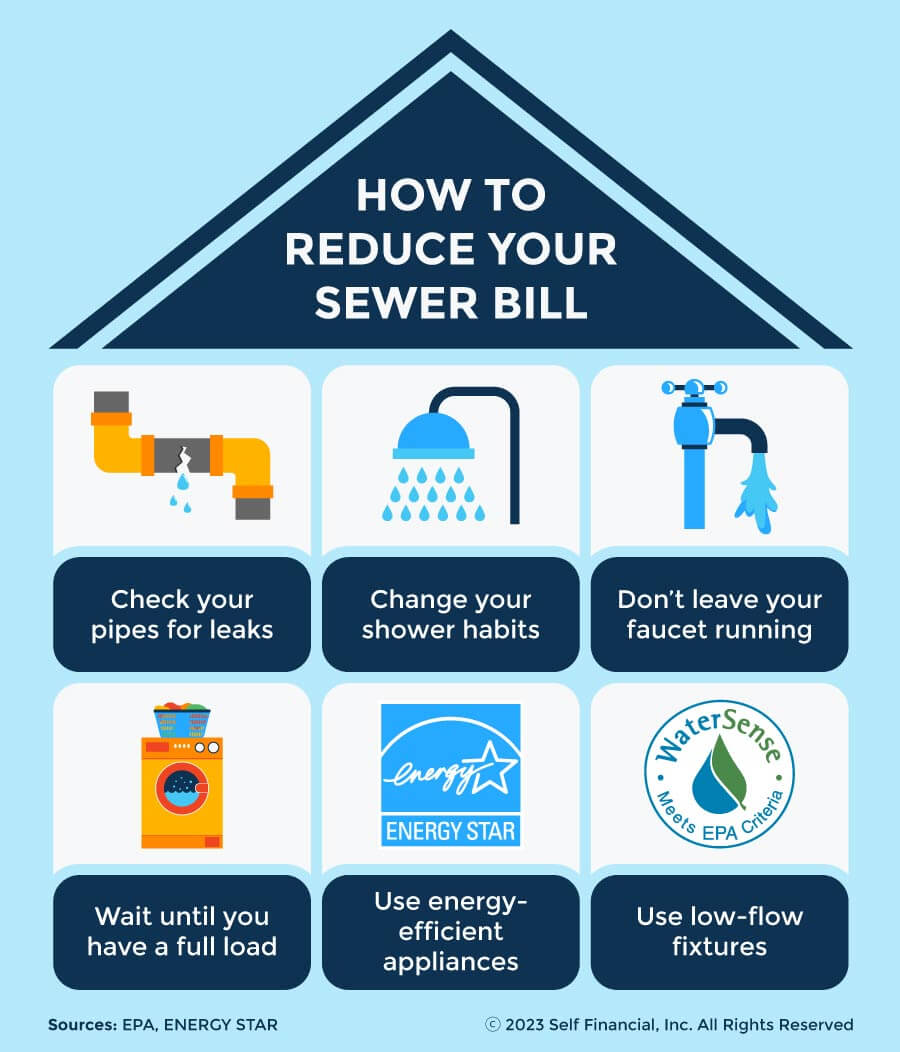
- Install Low-Flow Fixtures: Replacing old toilets (pre-1994 models can use up to 7 gallons per flush) with WaterSense-certified models (1.28 gallons per flush or less) can significantly reduce water and, consequently, sewage usage. Low-flow showerheads and faucet aerators also contribute to substantial savings.
- Efficient Appliance Use: Run washing machines and dishwashers only when full. Opt for energy-efficient models that also boast water-saving features.
- Mindful Habits: Take shorter showers, turn off the tap while brushing teeth or shaving, and avoid letting water run unnecessarily.
- Outdoor Water Management: If your utility does not offer a separate outdoor water meter or allowance, focus on efficient irrigation to minimize overall metered water. Consider xeriscaping or drought-tolerant landscaping to reduce reliance on sprinklers.
- Fix Leaks Promptly: As previously noted, even minor leaks can drastically inflate your bill. Regularly inspect toilets, faucets, and visible pipes for drips. A running toilet can waste hundreds of gallons per day, directly impacting your sewage charges. This is arguably the most impactful single action for cost reduction.
Understanding and Appealing High Bills
Occasionally, a sewage bill might appear unusually high without an obvious explanation. Knowing how to scrutinize your bill and whom to contact is crucial.
- Review Your Bill Detail: Check the usage period, the reported water consumption, and the rates applied. Compare it to previous months and the same period last year. Look for any new fees or changes in calculation methodology.
- Check for Leaks: Before contacting the utility, conduct a thorough leak check within your property. This is the most common reason for unexpected spikes.
- Contact Your Utility Provider: If you’ve ruled out leaks and discrepancies, contact their customer service. They can often provide insights into historical usage, explain specific charges, or offer a meter re-read.
- Request a Leak Adjustment: Many utility companies offer a one-time or infrequent leak adjustment policy. If you had a significant leak that was promptly repaired, you might be eligible for a reduction in the water portion of your bill, which would subsequently reduce the sewage portion based on that adjusted usage. Be prepared to provide proof of repair (e.g., plumber’s invoice).
Financial Implications of Unpaid Sewage Bills
Ignoring a sewage bill can lead to a cascade of negative financial consequences that extend far beyond the initial overdue amount. It’s imperative for sound financial health to prioritize timely payment of utility bills.
Penalties and Late Fees: The Immediate Impact
The most immediate financial repercussion of an unpaid sewage bill is the imposition of late fees and penalties. These charges are typically added as a percentage of the outstanding balance or as a flat fee, escalating the total debt. Consistently incurring late fees is a drain on personal finances, diverting money that could be used for savings, investments, or other essential expenses. Over time, these small, avoidable costs can accumulate into substantial, unnecessary expenditures.
Service Disruption and Reconnection Costs
While less common for sewage service alone, a delinquent sewage bill can often lead to the discontinuation of your water service, especially if both services are bundled or managed by the same utility. Without water, your home becomes uninhabitable, necessitating immediate resolution.
- Shut-off Notices: Utilities typically issue multiple warnings before service disconnection, giving you time to address the issue. Ignoring these notices can be costly.
- Reconnection Fees: Once service is disconnected, you will not only need to pay the full outstanding balance (including all late fees and penalties) but also an additional reconnection fee. This fee can be substantial and is an entirely avoidable expense if bills are paid on time.
- Deposits: Some utilities may require a larger security deposit before reconnecting service, tying up more of your personal capital.
Long-Term Financial Repercussions: Liens and Property Value
In some jurisdictions, particularly for municipal utility services, unpaid sewage bills can have severe long-term financial consequences, potentially affecting your property and credit.
- Property Liens: In certain areas, an outstanding utility balance can result in a lien being placed against your property. A utility lien is a legal claim against an asset (your home) used as collateral to satisfy an unpaid debt. This lien can prevent you from selling or refinancing your home until the debt is paid. It effectively clouds your property’s title and reduces its marketability.
- Impact on Credit Score: While utility bills themselves generally don’t directly report to credit bureaus like loans do, severely delinquent accounts that are sent to collections will appear on your credit report. A collection account can significantly damage your credit score, making it harder to obtain loans, credit cards, or even rent property in the future.
- Accumulation of Debt: Unpaid bills can quickly snowball due to compounding interest and fees, making it increasingly difficult to get out of debt.
- Foreclosure Risk (Extreme Cases): In extreme and prolonged cases of unpaid utility liens, local governments in some states have the authority to initiate foreclosure proceedings to recover the outstanding debt. While rare, it underscores the serious financial risk of ignoring these obligations.
Future-Proofing Your Finances Against Rising Utility Costs
As infrastructure ages and environmental regulations evolve, utility costs, including those for sewage, are likely to continue their upward trend. Proactive financial planning involves not just managing current expenses but also strategically preparing for future increases.
Investing in Water-Efficient Home Improvements
View efficiency upgrades not as expenses, but as long-term financial investments with a clear return on investment (ROI).
- Smart Appliances: High-efficiency washing machines and dishwashers not only conserve water but often use less energy, leading to double savings. The initial outlay is offset over time by reduced utility bills.
- Low-Flow Conversions: Replacing older, inefficient toilets, showerheads, and faucets yields immediate and ongoing reductions in water and sewage usage. These are typically affordable upgrades with rapid payback periods.
- Xeriscaping and Rainwater Harvesting: For properties with significant outdoor water use, adopting xeriscaping (landscaping that requires little or no irrigation) or installing a rainwater harvesting system can drastically cut down on metered water consumption, especially if your utility charges sewage on all water used. The financial savings, especially in drought-prone areas, can be substantial.
Leveraging Technology for Monitoring and Management
Technology offers powerful tools for gaining control over your utility expenses.
- Smart Home Water Monitors: Devices that connect to your main water line can provide real-time water usage data, alert you to leaks (even small ones), and help you understand consumption patterns. This insight empowers you to identify wasteful habits and potential financial drains quickly.
- Utility Company Online Portals: Most modern utility providers offer online portals where customers can access detailed billing history, usage graphs, and sometimes even real-time usage data. Regularly checking these platforms allows for early detection of anomalies and provides a clear picture of your financial outlay for water and sewage.
- Budgeting Apps: Integrating your utility bills into personal finance apps or budgeting software can help you track spending, set financial goals, and ensure that adequate funds are allocated to these non-discretionary expenses.

Advocacy and Understanding Local Policies
Being an informed consumer and, where appropriate, an engaged citizen can also indirectly contribute to future financial stability regarding utility costs.
- Attend Public Hearings: Utility rate increases often require public hearings. Attending these or reviewing proposed rate changes can help you understand the rationale behind potential cost increases and, in some cases, provide feedback.
- Understand Rate Structures: Familiarize yourself with how your utility sets its rates. Knowledge of tiered pricing, fixed charges, and special assessments empowers you to make informed decisions about consumption and budgeting.
- Explore Assistance Programs: If facing financial hardship, investigate whether your utility or local government offers low-income assistance programs for water and wastewater bills. Many programs exist to ensure essential services remain accessible.
By integrating these strategies into your financial planning, you can effectively manage current sewage expenses and proactively safeguard your personal finances against future increases, ensuring that this essential service remains a manageable part of your household budget.
aViewFromTheCave is a participant in the Amazon Services LLC Associates Program, an affiliate advertising program designed to provide a means for sites to earn advertising fees by advertising and linking to Amazon.com. Amazon, the Amazon logo, AmazonSupply, and the AmazonSupply logo are trademarks of Amazon.com, Inc. or its affiliates. As an Amazon Associate we earn affiliate commissions from qualifying purchases.