
A pintle hook represents a cornerstone technology in the realm of heavy-duty towing and industrial transport. Far from being a mere piece of hardware, it is a sophisticated mechanical coupling device engineered to connect a tow vehicle to a trailer or piece of equipment, particularly in demanding applications where conventional ball hitches may prove inadequate. Its design prioritizes robust strength, unparalleled durability, and the secure articulation necessary for navigating diverse terrains and handling significant loads. Understanding the pintle hook goes beyond identifying its form; it delves into the engineering principles that enable it to withstand extreme forces, maintain critical connections, and ensure operational safety across a multitude of sectors, from commercial logistics and agriculture to military operations and construction.

The Engineering Marvel of Heavy-Duty Coupling
At its core, the pintle hook is an exemplar of functional engineering, designed for maximum resilience and reliability under stress. Unlike the relatively rigid connection of a ball hitch, the pintle hook offers a degree of rotational freedom, allowing the towed equipment to articulate more flexibly without imposing undue twisting forces on the towing vehicle. This characteristic is paramount when operating on uneven ground, navigating tight turns with long trailers, or encountering dynamic forces that would challenge less robust coupling systems.
Core Functionality and Design Principles
The fundamental design of a pintle hook revolves around a heavy-duty hook, often forged from high-strength steel alloys, and a corresponding lunette ring (or eye) on the trailer. The hook itself typically features a locking mechanism, which can be a hinged jaw, a spring-loaded latch, or a bolt, designed to securely encircle and retain the lunette ring. The robust construction ensures that the connection can absorb significant shock loads and resist wear and tear over extended periods of heavy use. Key design principles include:
- Load Distribution: The pintle hook system is engineered to distribute immense tensile and compressive forces efficiently, preventing concentrated stress points that could lead to material fatigue or failure.
- Articulation: The generous clearance between the pintle hook and the lunette ring allows for substantial angular movement. This freedom is critical for heavy equipment operating off-road or traversing undulating landscapes, where the trailer and tow vehicle may be at significantly different angles.
- Redundant Locking Mechanisms: Many modern pintle hooks incorporate multiple locking features or visible indicators to confirm a secure connection, reducing the risk of accidental uncoupling.
- Corrosion Resistance: Given their frequent exposure to harsh environments, pintle hooks are often treated with specialized coatings or manufactured from corrosion-resistant materials to prolong their service life.
Components and Mechanics
A typical pintle hook assembly comprises several critical components that work in concert to achieve its heavy-duty coupling capabilities:
- The Hook Body: This is the main structural element, typically a solid, cast or forged steel component that attaches directly to the tow vehicle’s frame or hitch receiver. Its design dictates the maximum load capacity.
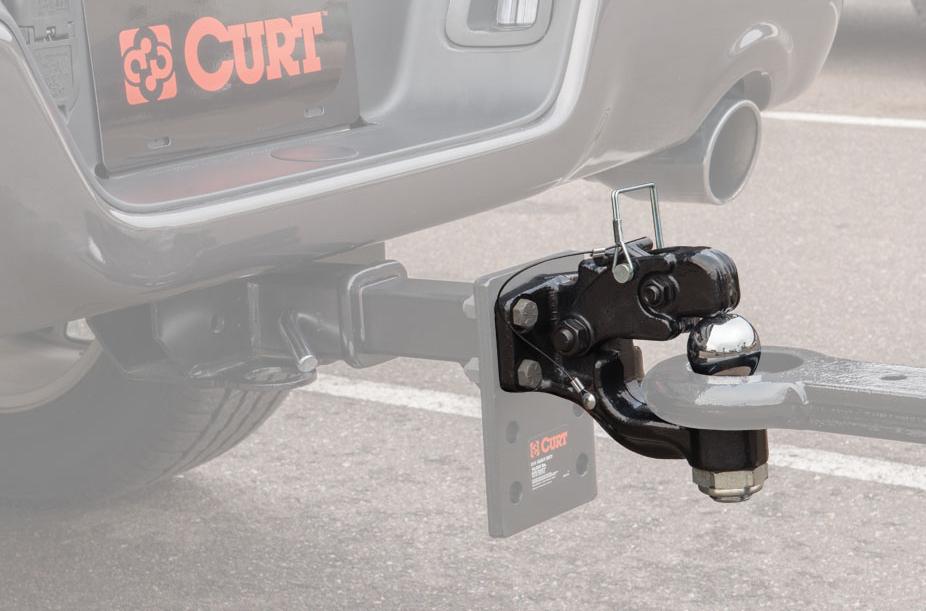
- The Pintle Pin/Jaw: This is the moving part that secures the lunette ring. It pivots or slides to open and close, encasing the ring. The mechanism is designed to prevent accidental opening during operation.
- Locking Mechanism: A crucial safety feature, this secures the pintle pin/jaw in the closed position. Common types include spring-loaded plungers, manual bolts, or a simple yet effective gravity-assisted latch that locks the pintle jaw down once the lunette ring is seated.
- Mounting Plate: A robust steel plate often accompanies the pintle hook, providing a solid interface for attachment to the tow vehicle. This plate must be strong enough to transfer all towing forces directly to the vehicle’s chassis.
- The Lunette Ring: Although technically part of the trailer, its design is integral to the pintle hook system. This heavy-duty, often forged, circular or oval ring provides the direct coupling point for the pintle hook. Its inner diameter must be compatible with the pintle hook’s dimensions to ensure a snug, yet articulating, fit.
The mechanical advantage offered by the pintle hook’s design, combined with the strength of its materials, makes it an indispensable component in any fleet tasked with heavy hauling under challenging conditions.
Diverse Applications Across Industries
The versatility and robustness of the pintle hook system have cemented its place as a preferred towing solution across a wide spectrum of industries. Its ability to handle extreme weights and provide secure connections in demanding environments makes it indispensable where failure is not an option.
Commercial and Agricultural Towing
In commercial trucking and agricultural sectors, pintle hooks are ubiquitous. Large semi-trucks often utilize pintle hitches to pull heavy trailers such as those carrying construction equipment, multiple farming implements, or aggregate materials. For instance, lowboy trailers, which transport excavators, bulldozers, and other heavy machinery, almost exclusively rely on pintle connections due to the immense static and dynamic loads involved. In agriculture, tractors use pintle hooks to tow plows, planters, cultivators, and various harvesting equipment, often across uneven, muddy, or dusty fields where a secure and flexible coupling is essential for productivity and safety. The continuous stress of repetitive operations and varying terrain highlights the engineering superiority of the pintle system in these applications.
Military and Off-Road Resilience
Perhaps no sector demands more from its towing technology than the military. Military vehicles, from tactical trucks to specialized transport platforms, frequently encounter extreme off-road conditions, steep inclines, and sudden impacts. Pintle hooks are the standard for towing military trailers, artillery pieces, and recovery vehicles precisely because of their ability to maintain connection through jarring movements and severe articulation angles. Their robust construction resists damage from impacts, corrosion, and exposure to harsh elements. Similarly, in civilian off-road recovery and expedition vehicles, where traversing rough terrain is commonplace, pintle hooks offer the reliability needed to pull heavy loads through challenging landscapes without the risk of decoupling that could occur with less flexible hitch types.
Specialized Industrial Uses
Beyond commercial and military applications, pintle hooks find critical roles in various specialized industrial settings. Mining operations, for example, rely on them to connect massive ore carts or specialized equipment trailers within rugged environments. In port operations, terminal tractors often use pintle hooks to move heavy shipping containers on chassis. Construction sites frequently employ pintle systems for moving mobile generators, air compressors, and other heavy equipment around dynamic and often unpaved areas. Even in certain rail applications, specialized pintle-like couplings are used for specific rolling stock. These diverse applications underscore the pintle hook’s fundamental technological advantage: providing a reliably strong, yet flexible, connection for heavy loads in environments that would quickly degrade or break lesser towing systems.
Technological Variations and Advancements

While the fundamental principle of the pintle hook remains constant, technological evolution has led to variations in design, materials, and integrated features, enhancing their performance, safety, and versatility.
Types of Pintle Hooks: Rigid vs. Combination
The most common distinction lies between rigid pintle hooks and combination pintle hooks.
- Rigid Pintle Hooks: These are dedicated pintle devices, designed solely to couple with a lunette ring. They offer maximum strength and simplicity for applications where only pintle towing is required. Their robust, single-purpose design often translates to higher load capacities.
- Combination Pintle Hooks: Also known as pintle/ball hitches, these ingenious devices integrate a trailer ball (typically 2-inch or 2 5/16-inch) directly into the pintle hook’s lower jaw. This allows the same hitch receiver to be used for both pintle-ring trailers and standard ball-coupler trailers, offering significant operational flexibility without requiring a hitch change. The design carefully balances the structural integrity required for pintle towing with the precision needed for ball coupling. Modern combination hitches often feature quick-release mechanisms for easy swapping between modes, enhancing user convenience and efficiency.
Material Science and Durability
Advancements in metallurgy and material science have directly influenced pintle hook technology. High-strength alloy steels, often heat-treated, are now standard, offering superior tensile strength, yield strength, and fatigue resistance. This allows for lighter-weight designs with equal or greater load capacities than older, bulkier counterparts. Surface treatments like galvanization, powder coating, and specialized anti-corrosion paints further extend the lifespan of these components, particularly in environments exposed to saltwater, chemicals, or extreme weather. Some heavy-duty pintle hooks may also incorporate features like hardened steel inserts in wear areas to resist abrasion and prolong component life under continuous stress.
Safety Features and Electronic Integration
Modern pintle hook technology also incorporates advanced safety features. Many designs now include:
- Positive Lock Indicators: Visual cues (e.g., color-coded markers, clearly visible engagement pins) that confirm the locking mechanism is fully engaged.
- Anti-Rattle Adjustments: Mechanisms, often involving tensioning bolts or spring-loaded components, to minimize play and rattling between the lunette ring and the hook, reducing wear and improving operator comfort.
- Integrated Sensors: While not universally adopted, some advanced towing systems, particularly in heavy machinery and military applications, are beginning to integrate sensors. These can monitor the coupling status, detect unusual stresses or vibrations, and even provide feedback to the vehicle’s control system, potentially alerting the operator to an impending issue or assisting with automated coupling procedures. This integration represents a significant step towards “smart” towing technology, leveraging digital advancements to enhance the safety and efficiency of traditional mechanical systems.
Operational Best Practices and Maintenance Tech
Optimizing the performance and longevity of a pintle hook system extends beyond its initial design and manufacturing. Proper selection, installation, and ongoing maintenance are crucial “technological practices” that ensure safety and efficiency.
Proper Selection and Installation
Choosing the correct pintle hook is a critical technical decision. It involves matching the pintle hook’s Gross Trailer Weight (GTW) and Tongue Weight (TW) capacities to the specifications of the heaviest trailer it will tow. Overloading a pintle hook can lead to catastrophic failure. Furthermore, the pintle hook’s mounting position and the dimensions of its lunette ring counterpart must be compatible. Incorrectly sized components can result in excessive wear, rattling, or an unstable connection.
Installation requires precise adherence to manufacturer guidelines. This typically involves using high-grade, properly torqued fasteners to secure the pintle hook to a reinforced part of the tow vehicle’s frame or a dedicated hitch receiver. Any deviation can compromise the structural integrity of the entire towing system. The use of specialized tools for torqueing and alignment ensures that the pintle hook is mounted securely and operates within its intended design parameters.
Regular Inspection and Maintenance Protocols
Maintaining a pintle hook is a key aspect of its technological longevity. Operators must implement a rigorous inspection schedule, often before each use or daily for high-frequency operations. Inspections should focus on:
- Wear and Tear: Checking for excessive wear on the pintle hook, lunette ring, and locking mechanism. Any signs of cracking, bending, or thinning of metal components warrant immediate replacement.
- Lubrication: Ensuring all moving parts (e.g., the pintle jaw, locking pin) are properly lubricated according to manufacturer recommendations. This reduces friction, prevents corrosion, and ensures smooth operation.
- Fastener Tightness: Verifying that all mounting bolts and nuts are securely tightened to their specified torque values. Loose fasteners can lead to dangerous wobbling or detachment.
- Functionality: Confirming that the locking mechanism engages fully and securely, without sticking or binding.
These maintenance protocols are not just routine tasks; they are critical technical processes that prevent mechanical failures, extend the lifespan of expensive equipment, and, most importantly, safeguard personnel and cargo.
Emerging Trends in Towing Technology
The future of towing technology, even for robust mechanical components like pintle hooks, lies in greater integration and intelligence. While the basic mechanical design will likely endure, emerging trends point towards:
- Smart Sensing: Increased adoption of sensors to monitor hitch status, load distribution, and trailer dynamics, feeding data back to the vehicle’s onboard computer for real-time adjustments or alerts.
- Automated Coupling Assistance: While fully autonomous coupling is complex for heavy industrial applications, technologies that assist drivers with precise alignment and remote locking mechanisms are gaining traction.
- Advanced Materials and Design: Continued research into lighter, stronger materials and more aerodynamic designs for both hooks and lunette rings, aiming to improve fuel efficiency and further enhance durability.
- Modularity and Quick-Change Systems: Development of pintle systems that allow for even faster, tool-free swapping of different hitch types or capacities, catering to diverse operational needs without significant downtime.
In conclusion, the pintle hook is far more than a simple connector; it is a critical piece of engineered technology that facilitates heavy-duty transport across virtually every demanding industry. Its design, materials, and evolving features underscore a continuous commitment to strength, safety, and operational efficiency, making it an indispensable component in the technological landscape of heavy hauling.
aViewFromTheCave is a participant in the Amazon Services LLC Associates Program, an affiliate advertising program designed to provide a means for sites to earn advertising fees by advertising and linking to Amazon.com. Amazon, the Amazon logo, AmazonSupply, and the AmazonSupply logo are trademarks of Amazon.com, Inc. or its affiliates. As an Amazon Associate we earn affiliate commissions from qualifying purchases.