
Lumens serve as the fundamental unit for measuring the total amount of visible light emitted by a source. Unlike watts, which measure power consumption, lumens quantify brightness—the sheer volume of light perceived by the human eye. Understanding what constitutes a “high” amount of lumens is crucial for anyone evaluating lighting products, projectors, display technologies, or even tactical flashlights, as the definition of “high” is entirely dependent on the application and context. A high lumen output in one scenario might be overkill in another, or woefully inadequate.
Decoding Lumens: The Metric of Brightness
At its core, a lumen (lm) measures luminous flux, representing the total quantity of light produced by a source across all directions, as perceived by the average human eye. This is distinct from illuminance (measured in lux), which quantifies how much light falls on a specific surface, or candela, which measures light intensity in a particular direction. For consumers, lumens provide the most straightforward metric for comparing the overall brightness of various light-emitting devices.
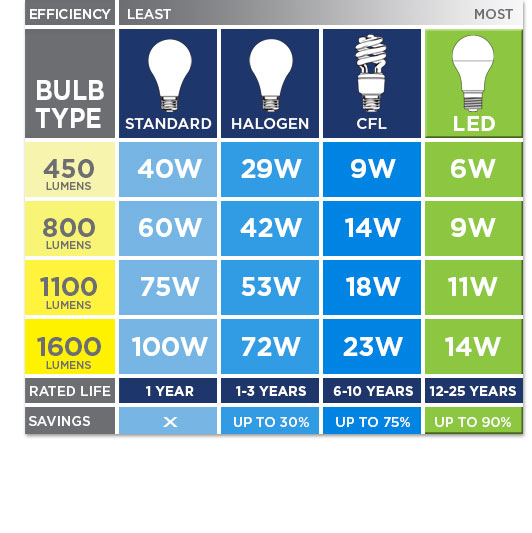
The transition from incandescent bulbs, primarily rated by wattage, to energy-efficient LED technology, which emphasizes lumens, has reshaped how consumers understand light output. A 60-watt incandescent bulb, for example, typically produces around 800 lumens, whereas an LED bulb can achieve the same 800 lumens using only 8 to 12 watts of power. This shift underscores that higher wattage does not necessarily equate to higher brightness, but rather higher energy consumption. Therefore, when assessing a light source’s capability, lumens are the paramount specification.
Contextualizing “High” Lumens Across Tech Applications
The concept of a “high” lumen count is not universal; it’s deeply rooted in the specific device and its intended use. What’s considered intensely bright for a portable headlamp would be dim for a home theater projector.
General Lighting: Home and Office Illumination
For residential and commercial overhead lighting, determining a high lumen output involves balancing ambient light needs with energy efficiency and comfort.
- Small Rooms (e.g., bathrooms, closets, hallways): 300-500 lumens per light fixture is often sufficient. A single bulb providing 450-600 lumens would be considered standard, not high.
- Medium Rooms (e.g., bedrooms, kitchens, living rooms): These spaces typically require more light, often through multiple fixtures. A common ceiling fixture might provide 800-1100 lumens, with 1500-2000 lumens from a single fixture being notably bright. For an entire room, combining several such fixtures or a high-output panel could achieve total lumen outputs upwards of 3000-5000+ lumens, which would be considered high for general ambient lighting.
- Large Spaces (e.g., open-plan offices, garages, workshops): These areas demand significant illumination. Fixtures providing 3000-5000 lumens each are common, and systems totaling 10,000 lumens or more across multiple units would be typical. A single high-bay LED fixture might reach 15,000-30,000 lumens, classifying it as very high.
Portable Lighting: Flashlights and Headlamps
In the realm of portable illumination, high lumens denote intense, often tactical-grade brightness designed for specific outdoor or emergency scenarios.
- Everyday Carry (EDC) Flashlights: Often prioritize compactness and moderate brightness for daily tasks. 100-300 lumens is common. 500-800 lumens would be considered high for an EDC.
- General Purpose/Outdoor Flashlights: Used for camping, hiking, or home emergencies. 500-1000 lumens offers robust illumination. Flashlights in the 1000-2000 lumen range are powerful and widely available, often offering various modes.
- Tactical/Search and Rescue Flashlights: Designed for maximum output and throw distance. These often start at 2000 lumens and can easily reach 5000-10000+ lumens. Devices exceeding 10,000 lumens, some even reaching 50,000-100,000 lumens in multi-LED configurations, are unequivocally considered extremely high-lumen devices, capable of temporarily blinding, dazzling, or illuminating vast distances.
Projectors: Home Theater, Business, and Portable
Projectors have a unique relationship with lumens, where ambient light conditions play a critical role in determining what is “high.” Projector lumens are often measured as ANSI lumens, a standardized measurement method.
- Pico/Mini Projectors: Designed for extreme portability, often sacrificing brightness. 50-500 lumens is typical. 600-1000 lumens would be considered high for this category, enabling use in dimly lit rooms.
- Home Theater Projectors: Aim for cinematic quality in dark or very dim environments. 1500-2500 ANSI lumens is standard. 2500-3500 ANSI lumens is considered high, offering flexibility for some ambient light or larger screens. Projectors exceeding 4000 ANSI lumens are very bright for home use, suitable for extremely large screens or rooms with persistent ambient light.
- Business/Classroom Projectors: Need to contend with office lighting. 3000-5000 ANSI lumens is common. 5000-7000 ANSI lumens is high, suitable for large conference rooms or auditoriums.
- Large Venue/Professional Projectors: Used in concert halls, events, or digital signage. These begin at 7000-10,000 ANSI lumens and can soar to 20,000, 30,000, or even 50,000+ ANSI lumens for specialized applications, making them supremely high-output devices.
Displays: TVs, Monitors, and Smartphones
While lumens measure the total light output of a source, displays typically use “nits” (candelas per square meter, cd/m²) to express brightness, as it quantifies the intensity of light emitted per unit area of the screen. However, for some HDR (High Dynamic Range) content, peak brightness in nits is crucial. A “high” nit count for a display translates to a very bright image.
- SDR Displays (Standard Dynamic Range): Most monitors and TVs operate around 200-400 nits.
- HDR Displays: These require significantly higher brightness to showcase dynamic range. 600-1000 nits is considered good HDR performance. Displays capable of 1000-2000 nits peak brightness are high-end, providing stunning contrast and vibrant highlights. Some professional-grade or reference monitors can exceed 2000-4000 nits, which is exceptionally high.
- Smartphones: Screens often reach 500-800 nits for general use, with peak brightness for HDR content or outdoor visibility often exceeding 1000-2000 nits, which is very high for such a small device.
Automotive Lighting: Headlights
Headlights are a critical safety feature, and their lumen output impacts visibility and road safety. Modern LED and HID headlights significantly outperform older halogen lamps.
- Halogen Headlights: Typically produce 700-1200 lumens per bulb.
- HID (Xenon) Headlights: Range from 2800-3500 lumens per bulb. This is considered a substantial upgrade.
- LED Headlights: Can vary widely based on design. OEM LED headlights often produce 3000-4000 lumens per assembly (not per individual diode), and some advanced matrix LED systems can achieve 5000+ lumens per assembly, which is very high, allowing for adaptive beam patterns and superior road illumination. Regulations often cap total luminous intensity to prevent glare, so a “high” lumen count must also be paired with precise optics.
Factors Beyond Lumens Affecting Perceived Brightness
While lumens provide a quantitative measure of light output, several other technological factors significantly influence how bright light is perceived and how effectively it serves its purpose.
Beam Angle and Spread
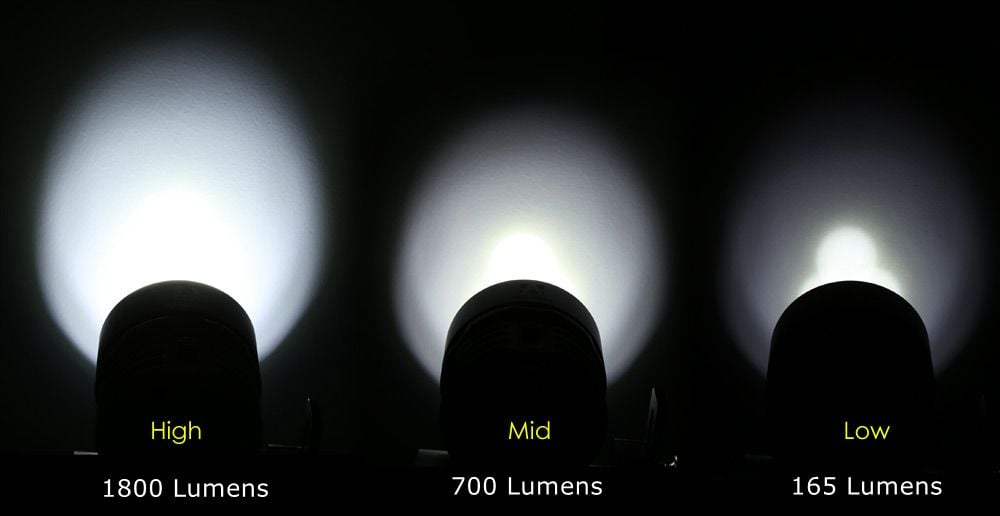
The direction and spread of light are crucial. A 1000-lumen flashlight with a tightly focused beam (spotlight) will appear much brighter in the center than a 1000-lumen flashlight with a wide, diffused beam (floodlight). For general room lighting, a wider beam angle is preferred, while for tactical flashlights, a narrow, long-distance beam is often desired. This optical design determines how the total lumen output is distributed.
Color Temperature
Measured in Kelvins (K), color temperature influences the psychological perception of brightness. Cooler, bluer light (e.g., 5000K-6500K) often appears brighter and more intense than warmer, yellowish light (e.g., 2700K-3500K) of the same lumen output. While not directly affecting the lumen count, the choice of color temperature can make a significant difference in visual comfort and task performance, and thus how “high” a lumen count feels.
Ambient Light Conditions
The environment in which light is used drastically impacts perceived brightness. A 1000-lumen projector looks stunning in a pitch-black home theater but appears washed out in a brightly lit conference room. Similarly, a 500-lumen flashlight is powerful at night but negligible in broad daylight. Therefore, “high” lumens must be considered relative to the existing light levels.
Light Source Efficiency and Quality
The quality of the light source, including its Color Rendering Index (CRI) and sustained lumen output, plays a role. A high CRI (90+) light source will render colors more accurately, enhancing visual clarity and making an environment feel more naturally lit, even at similar lumen levels. Sustained lumen output refers to a device’s ability to maintain its brightness over time, as many high-lumen devices, especially portable ones, may only achieve their peak output for short bursts due to thermal management constraints.
The Importance of Context: When is “High” Enough?
Pursuing the absolute highest lumen count isn’t always the best or most practical approach. Over-lighting can lead to discomfort, inefficiency, and even safety concerns.
Energy Consumption and Heat Generation
Higher lumen output inherently means higher energy consumption and greater heat generation, particularly with traditional light sources. While LEDs are highly efficient, pushing them to extreme lumen levels still generates heat, requiring advanced thermal management systems to prevent performance degradation or damage. For battery-powered devices, higher lumens mean shorter battery life.
Eye Comfort and Safety
Excessive brightness can cause eye strain, fatigue, and even temporary blindness. Direct exposure to very high lumen sources (e.g., thousands of lumens from a tactical flashlight at close range) can be dangerous. Proper aiming, diffusion, and dimming capabilities are crucial for highly luminous devices. For displays, a screen that is too bright in a dark room can be uncomfortable, making adaptive brightness or manual adjustment essential.

Application-Specific Needs
Ultimately, the definition of “high” lumens is dictated by the specific application. A high-lumen output is ideal for illuminating a vast outdoor area at night, projecting a clear image in a sunlit room, or providing critical visibility for emergency services. However, for reading a book, navigating a dimly lit hallway, or creating a cozy home ambiance, a moderate lumen output, carefully distributed, is not only sufficient but preferable. The goal is to match the lumen output to the desired task and environmental conditions, ensuring optimal performance without overdoing it. Modern technology provides a spectrum of choices, empowering users to select precisely the right amount of light for any given situation.
aViewFromTheCave is a participant in the Amazon Services LLC Associates Program, an affiliate advertising program designed to provide a means for sites to earn advertising fees by advertising and linking to Amazon.com. Amazon, the Amazon logo, AmazonSupply, and the AmazonSupply logo are trademarks of Amazon.com, Inc. or its affiliates. As an Amazon Associate we earn affiliate commissions from qualifying purchases.