
A hall tree, at its most fundamental, is a piece of furniture typically found in an entryway or foyer, designed to offer practical utility for outerwear and accessories. Historically, it served as a central repository for coats, hats, umbrellas, and often included a mirror and a small bench or seat. Beyond its practical function, however, the hall tree has evolved into a significant element of interior design, playing a subtle yet powerful role in shaping the initial impression of a space – a critical aspect for both personal and corporate branding. It is a carefully curated touchpoint, an immediate signal of a space’s style, organization, and underlying values.

Beyond Utility: A Statement of Design and Identity
The seemingly simple hall tree transcends its functional origins to become a vital component in the visual communication strategy of an entryway. Its presence, style, and integration contribute significantly to the narrative a space wishes to convey.
A Legacy of Welcome: Historical Roots and Functional Evolution
The hall tree emerged prominently during the Victorian era, a period characterized by a burgeoning middle class and an emphasis on domestic order and social etiquette. Homes of this era often featured elaborate entryways that served as transitional zones between the public sphere and private family life. Guests would arrive adorned in heavy outerwear, hats, and gloves, necessitating a dedicated piece of furniture for their temporary storage. Early hall trees were often grand, ornate structures crafted from rich woods, reflecting the opulence and status of the homeowner. They were designed as comprehensive solutions, frequently incorporating multiple coat hooks, hat pegs, umbrella stands, a central mirror for last-minute adjustments, and a small bench for sitting while removing or donning footwear.
As societal norms and architectural styles evolved, so too did the hall tree. The shift towards more minimalist aesthetics in the 20th century saw its form simplify, often integrating sleeker lines and more contemporary materials like metal and lighter woods. Its core function remained, but its aesthetic adapted to complement modern design principles. Today, while some traditional designs persist, contemporary hall trees are often streamlined, modular, or custom-built solutions that blend seamlessly into diverse interior schemes, demonstrating remarkable adaptability without sacrificing their fundamental purpose of facilitating an organized and welcoming entrance. This evolution underscores its enduring relevance as a design element capable of adapting to varying brand aesthetics.
Anatomy of an Impression: Key Design Elements
The effectiveness of a hall tree in communicating a brand message lies in the thoughtful combination of its constituent parts. Each element, from material choice to structural configuration, contributes to the overall impression.
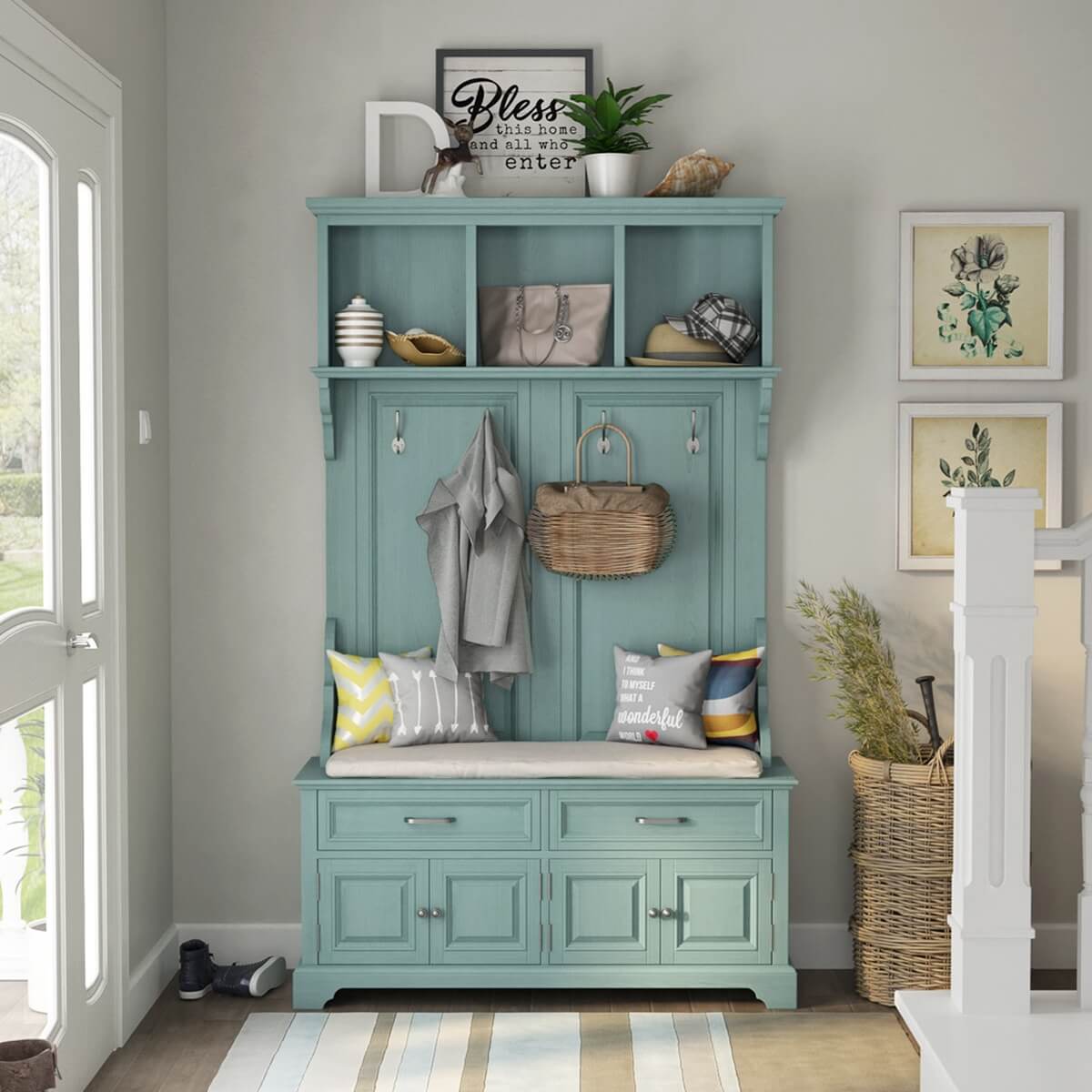
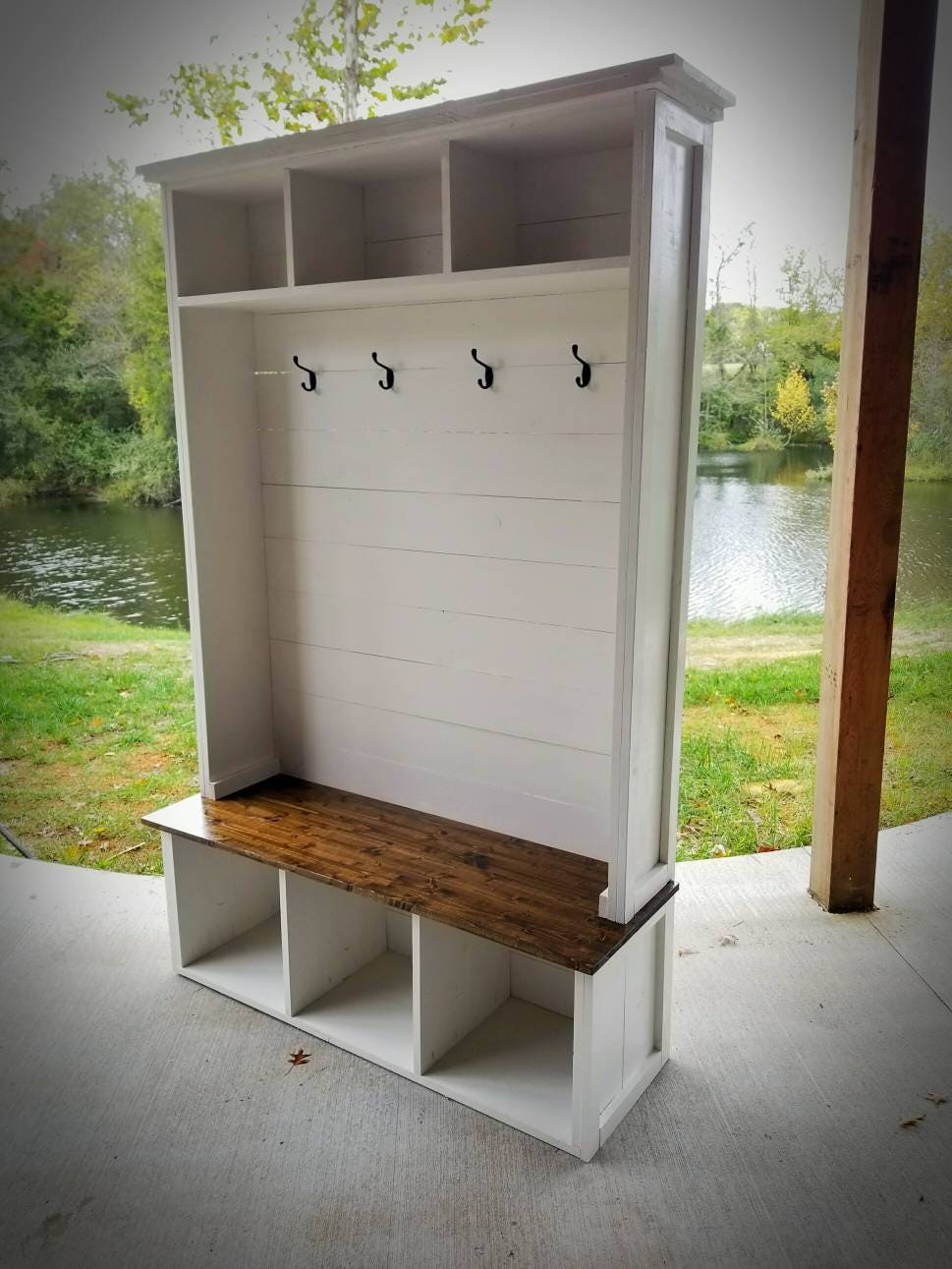
- Coat Hooks and Hat Pegs: These are the most recognizable features, dictating the practical capacity of the unit. Their design – whether robust and industrial, delicate and ornate, or minimalist and concealed – immediately speaks volumes about the space’s functional philosophy and aesthetic preference.
- Seating/Bench: A built-in bench offers a convenient spot for changing shoes or setting down bags, signaling a practical and accommodating environment. The upholstery (leather, fabric, bare wood) or the absence of a bench altogether informs the visitor about the level of comfort and formality the space intends to project.
- Mirror: Strategically placed, a mirror not only serves a practical purpose for personal grooming but also visually expands the space, enhances light, and offers a final self-assessment before one exits or fully enters. The frame of the mirror, its size, and shape are powerful visual cues.
- Storage Solutions: Drawers, cubbies, or shelves integrate discreet organization for smaller items like keys, mail, or gloves. The presence and design of these elements indicate a commitment to tidiness and efficiency, reflecting a meticulous approach to detail.
- Umbrella Stand: Often integrated into the base, an umbrella stand speaks to preparedness and consideration for practical needs, particularly relevant in climates prone to inclement weather.
The interplay of these elements, combined with choices in material (solid wood, engineered wood, metal, mixed media), finish (matte, glossy, distressed), and overall scale, crafts a powerful non-verbal message. A rustic, reclaimed wood hall tree evokes warmth and heritage; a sleek, minimalist metal and glass design suggests modernity and efficiency; a grand, carved oak piece communicates tradition and formality. Each choice contributes to a distinct brand identity.
The Personal Brand Gateway: Reflecting Individual Identity
In personal residences, the entryway, anchored by pieces like a hall tree, serves as the initial physical touchpoint for guests, establishing the home’s character and the homeowner’s personal brand. It is an often-overlooked opportunity to communicate style, values, and an intentional approach to living.
Curating First Impressions at Home
The hall tree in a personal space acts as an immediate visual cue, offering insight into the homeowner’s aesthetic sensibilities and priorities. For guests, it’s the very first curated statement they encounter upon crossing the threshold. A meticulously organized hall tree with carefully selected items conveys a sense of order, attention to detail, and perhaps even a minimalist lifestyle. Conversely, a more eclectic or lived-in hall tree might suggest a free-spirited, bohemian, or family-oriented personality.
The choice of a hall tree is not merely functional; it is a deliberate act of personal branding. Does the homeowner prioritize comfort and warmth, reflected in a sturdy, inviting wooden bench? Or do they lean towards modern elegance, opting for a sleek design with clean lines and metallic accents? These choices are not accidental; they are extensions of an individual’s identity, values, and desired self-presentation, influencing how others perceive their personal space and, by extension, them.
Aesthetics as Autobiography
The design of a hall tree can be seen as a concise autobiography of the homeowner’s aesthetic journey. A vintage, refurbished hall tree might speak to an appreciation for history, sustainability, and unique storytelling. A custom-built piece reflects a desire for bespoke design and a rejection of mass-produced items, highlighting individuality. The materials chosen—a warm cherry wood, a cool industrial steel, or a mixed-media piece incorporating textiles—all contribute to a cohesive narrative.
Furthermore, the items displayed on the hall tree itself can augment this personal branding. A collection of travel-inspired hats, a handcrafted umbrella, or a specific piece of art placed strategically near it can reinforce a personal narrative of adventure, creativity, or cultural appreciation. This careful curation transforms a functional item into a focal point that articulates a homeowner’s personal brand, creating an immediate, non-verbal dialogue with anyone who enters their private domain.
Strategic Touchpoints: Hall Trees in Corporate Identity and Commercial Design
While more commonly associated with residential settings, the principles of entryway design, and by extension, the strategic use of multi-functional furniture akin to hall trees, hold significant weight in reinforcing corporate identity and enhancing commercial environments. In a business context, every physical touchpoint contributes to the brand experience.
Elevating Professional Environments
In corporate settings such as office lobbies, reception areas, or client waiting rooms, the design of the entryway is paramount for establishing a company’s brand image. While a traditional “hall tree” might not be universally present, the concept of a dedicated, aesthetically integrated station for guests’ coats, bags, and temporary belongings is critical. Thoughtfully designed coat racks, storage units with integrated seating, or bespoke entryway systems serve the same fundamental purpose: to offer convenience while subtly communicating the company’s professionalism, attention to detail, and cultural values.
A tech startup might opt for sleek, minimalist, and perhaps modular coat and bag storage solutions that reflect innovation, efficiency, and a forward-thinking brand. A high-end legal firm or financial institution, conversely, might select more traditional, robust, and impeccably finished solid wood pieces that exude gravitas, reliability, and timeless professionalism. These choices are not incidental; they are strategic design decisions that reinforce the corporate identity, shaping client perceptions from the moment they step through the door. The immediate impression of order, sophistication, or accessibility helps to establish trust and align visitor expectations with the brand’s core offerings.
Functionality Meets Corporate Aesthetic
Beyond mere aesthetics, the functionality embedded within entryway furniture in a corporate context directly reflects a brand’s commitment to user experience and operational excellence. A well-designed coat and bag drop-off point signifies consideration for client comfort and convenience. It subtly communicates that the company is organized, anticipatory of needs, and dedicated to providing a seamless experience.
For instance, in a medical office, easily accessible, hygienic storage for personal items can alleviate patient anxiety and contribute to a sense of care and professionalism. In a co-working space, modular and secure personal storage solutions emphasize flexibility, community, and practicality—key tenets of many modern co-working brands. The absence of such thoughtful provisions, or the presence of disorganized, makeshift solutions, can inadvertently signal a lack of attention to detail or a chaotic environment, which can detract from the intended corporate identity. Thus, the practical application of entryway furniture becomes an integral part of the overall brand narrative, demonstrating how a company values its visitors and employees.
Integrating for Impact: A Design Strategy for Cohesion
The true power of a hall tree, or any equivalent entryway furnishing, in branding lies in its cohesive integration into the broader design scheme. It should not exist in isolation but as a harmonious component of a unified visual and experiential strategy.
Materiality, Form, and Brand Synergy
The careful selection of materials and form for a hall tree is paramount to ensuring synergy with the overall brand identity. Materiality communicates quality, durability, and a specific aesthetic. For a brand emphasizing sustainability and organic principles, a hall tree crafted from reclaimed wood or sustainably sourced bamboo, with a natural, unfinished look, would reinforce this message. Conversely, a brand that prides itself on cutting-edge technology and innovation might opt for a hall tree made from polished chrome, glass, or composite materials with a sleek, futuristic design.
The form—its lines, curves, and overall silhouette—also speaks volumes. A minimalist, geometric form aligns with a brand focused on efficiency and clarity. An ornate, traditional form might suit a brand steeped in heritage and artisanal craftsmanship. Every detail, from the type of wood grain to the metallic finish of the hooks, must be deliberately chosen to contribute to a consistent and authentic brand narrative. Inconsistent choices can create dissonance, weakening the overall brand message and potentially confusing the audience.
The Role of Context: Scale, Placement, and Visual Storytelling
Beyond the object itself, its placement and how it interacts with the surrounding environment are crucial for effective brand communication. The scale of the hall tree must be proportionate to the entryway, neither overwhelming nor insignificant. An oversized piece in a small foyer can feel oppressive, while a tiny one in a grand hall can appear lost and irrelevant.
Strategic placement considers traffic flow, natural light, and adjacency to other key design elements. Does the hall tree command attention as a focal point, or does it subtly blend into the background while still performing its function? The arrangement of lighting around it, the artwork on an adjacent wall, or the style of the flooring all contribute to the visual story being told. A well-integrated hall tree acts as a chapter in this story, enhancing the overall message and providing a deeper, more immersive brand experience. It helps to define the spatial narrative, guiding the visitor’s eye and influencing their emotional response from the moment they arrive.
The Enduring Relevance: Hall Trees as Timeless Brand Assets
In a world increasingly dominated by digital interfaces, the physical spaces we inhabit and interact with retain immense power in shaping perceptions and reinforcing brand identities. The hall tree, or its modern equivalents, stands as a testament to this enduring truth. Far from being a mere relic of domestic history, it remains a potent design element capable of articulating a sophisticated and intentional brand message.
Whether in a personal home expressing an individual’s aesthetic values or within a corporate setting communicating professionalism and culture, the hall tree serves as a silent ambassador. It is a carefully considered investment in the first impression, a tangible manifestation of an overarching design strategy that aims for cohesion, functionality, and compelling non-verbal communication. By paying meticulous attention to its selection, design, and integration, both individuals and organizations can leverage this unassuming piece of furniture to craft powerful, memorable, and authentic brand experiences that resonate long after the initial encounter. Its enduring relevance lies in its dual capacity to serve a practical need while simultaneously elevating the aesthetic and communicative power of an entryway, making it a truly timeless asset in the lexicon of design and branding.
aViewFromTheCave is a participant in the Amazon Services LLC Associates Program, an affiliate advertising program designed to provide a means for sites to earn advertising fees by advertising and linking to Amazon.com. Amazon, the Amazon logo, AmazonSupply, and the AmazonSupply logo are trademarks of Amazon.com, Inc. or its affiliates. As an Amazon Associate we earn affiliate commissions from qualifying purchases.