
Understanding the Financial Stakes in Legal Proceedings
In the complex ecosystem of legal litigation, every procedural step carries potential financial weight, directly impacting individuals, businesses, and their financial futures. While many focus on the dramatic aspects of trials—witness testimony, cross-examinations, and opening/closing statements—some of the most critical financial decisions are shaped during less publicized, yet strategically vital, procedural conferences. Among these, the “charge conference” stands out as a pivotal moment where the intricate language of the law is translated into instructions for a jury, instructions that will ultimately dictate how financial liability, damages, and awards are assessed. For anyone involved in a lawsuit, understanding the charge conference from a financial perspective is paramount, as it can significantly alter projected losses or gains, influence settlement negotiations, and recalibrate risk assessments.
The Cost of Litigation and Financial Exposure
Litigation is inherently expensive, encompassing legal fees, court costs, expert witness fees, and potential damage awards. Businesses, in particular, must factor in the opportunity cost of resources diverted to legal battles, alongside the direct financial outlay. A lawsuit can tie up significant capital, impact cash flow, and even deter investors if the potential financial exposure is high and uncertain. Understanding where and how the financial stakes are solidified during a trial is crucial for effective business finance management and personal financial planning. The charge conference, though late in the trial process, is precisely where the framework for the final financial judgment is constructed, making it a critical juncture for reassessing financial exposure.
How Legal Outcomes Impact Balance Sheets and Personal Wealth
The outcome of a legal case, whether a plaintiff’s award or a defendant’s liability, can have profound effects. For businesses, a substantial judgment against them can cripple balance sheets, diminish shareholder value, and even lead to bankruptcy. Conversely, a favorable judgment or a significant award can provide a financial windfall, rectify past losses, or deter future infringements. On a personal level, litigation can impact savings, assets, credit ratings, and future earning potential. Decisions made during a charge conference directly influence how a jury quantifies damages—be they compensatory, punitive, or restitutionary—thereby directly shaping the ultimate financial impact on all parties involved. A clear understanding of how these instructions are formulated helps anticipate the magnitude of potential financial shifts.
The Charge Conference: A Critical Juncture for Financial Strategy
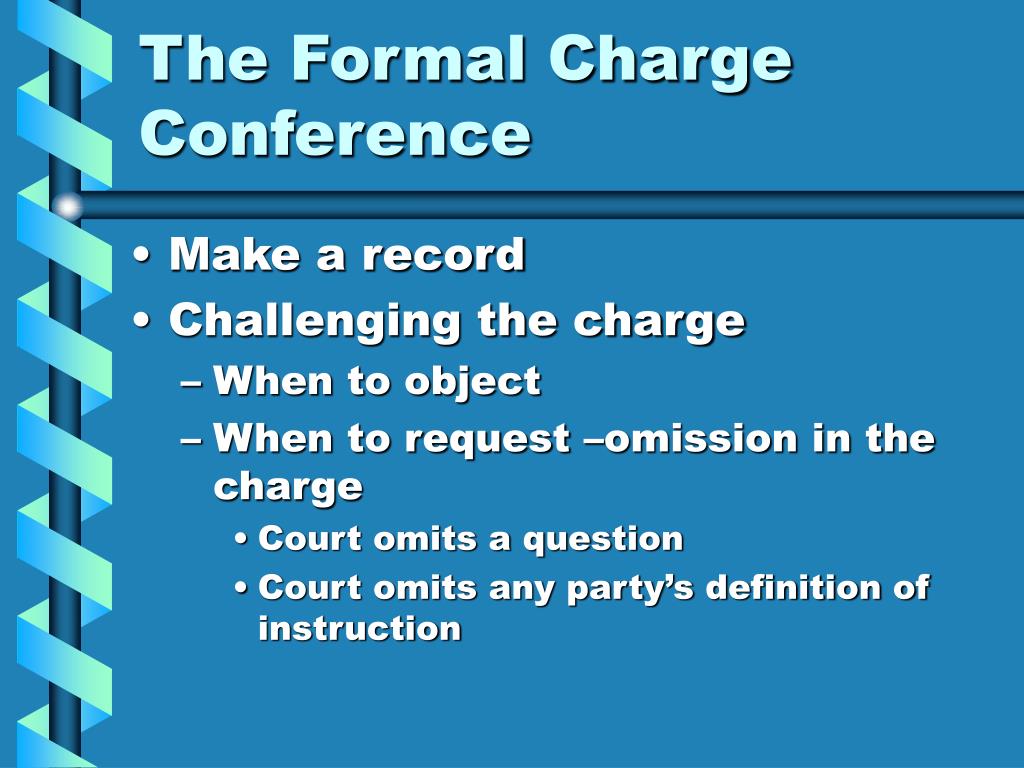
The charge conference is a meeting, typically held outside the presence of the jury, where the judge and attorneys from both sides discuss and finalize the specific instructions that will be given to the jury before they begin deliberations. These instructions, often referred to as “charges,” are legal guidelines that explain the law applicable to the case, define legal terms, and outline the elements that must be proven for a party to prevail on their claims or defenses. While seemingly technical, the precise wording and inclusion or exclusion of certain instructions can have monumental financial consequences.
Defining the “Charge Conference” Through a Financial Lens
From a financial viewpoint, the charge conference is where the legal theory of a case transforms into a concrete methodology for calculating financial outcomes. For instance, in a breach of contract case, the jury instructions will detail what constitutes a breach and, crucially, how damages for that breach are to be calculated. Will the jury consider lost profits, direct costs, consequential damages, or even specific performance? The inclusion or exclusion of instructions related to different damage calculations directly impacts the range of potential financial awards or liabilities. Similarly, in personal injury cases, instructions on pain and suffering, medical expenses, and lost wages dictate the financial framework for compensation. Attorneys leverage this conference to advocate for instructions that most favorably position their client’s financial interests, attempting to maximize awards for plaintiffs or minimize liabilities for defendants.
Preparing for Financial Outcomes During Jury Instruction Deliberations
Attorneys spend considerable time drafting and proposing jury instructions, acutely aware of their financial ramifications. They anticipate how a jury, guided by these instructions, might quantify economic losses, property damage, or future financial burdens. For a business facing potential intellectual property infringement damages, for example, the instructions on how to calculate lost sales, reasonable royalties, or even enhanced damages for willful infringement are paramount. Financial expert witnesses often assist in this phase, providing calculations and methodologies that support the proposed instructions, ensuring that the financial narratives presented during the trial align with the legal framework the jury will be given. This preparation is a strategic financial exercise, mapping potential financial outcomes to specific legal language.
Risk Mitigation Through Precise Legal Framing
The charge conference is a prime opportunity for risk mitigation. By advocating for precise and favorable jury instructions, attorneys can reduce the ambiguity that might lead to an unfavorably large or small financial judgment. If an instruction is unclear or broad, it might allow a jury too much discretion, potentially resulting in an unpredictable financial outcome. Conversely, clear, narrowly tailored instructions can guide a jury towards a financially predictable and justifiable award. For businesses, managing litigation risk includes influencing these instructions to avoid open-ended damage calculations or to ensure that specific statutory caps or limitations on damages are properly conveyed to the jury. This strategic focus on instruction language helps to control the financial narrative that the jury will ultimately consider.
Navigating Potential Financial Liabilities and Awards
The discussions during a charge conference are rarely abstract; they are intensely focused on how the jury’s instructions will translate into dollars and cents. Each proposed instruction is scrutinized for its potential to increase or decrease financial exposure or recovery.
Impact on Business Operations and Investor Confidence
For publicly traded companies, the financial implications of litigation are closely watched by investors. The certainty or uncertainty surrounding potential damage awards can sway stock prices, bond ratings, and access to capital markets. When a charge conference solidifies the method for calculating damages, it can provide greater clarity regarding potential financial liabilities, allowing companies to better estimate reserves for litigation or to update financial forecasts. This transparency, even if it confirms a negative outcome, can sometimes be preferable to prolonged uncertainty, as it allows for better financial planning and investor communication. Conversely, a set of jury instructions that opens the door to expansive damage awards could severely undermine investor confidence and market valuation.
Personal Financial Implications: Asset Protection and Debt
Individuals involved in litigation face similar financial pressures, though often on a more personal scale. A judgment against an individual can lead to asset forfeiture, wage garnishment, or significant personal debt. Conversely, a favorable award could be life-changing, covering medical expenses, lost income, and emotional distress. During the charge conference, attorneys advocating for individuals will fight for instructions that protect their client’s assets or maximize their recovery, ensuring that the jury clearly understands the full scope of financial harm experienced or the specific legal thresholds for liability that must be met to avoid financial penalty. Understanding the nuances of these instructions is critical for personal financial planning and asset protection strategies.
The Role of Expert Witnesses in Quantifying Damages
Financial experts, economists, and forensic accountants play a crucial role leading up to and during the charge conference. Their testimony and reports often form the basis for proposed jury instructions related to damages. They provide the methodologies, data, and calculations that attempt to quantify lost profits, future earnings, diminished business value, or specific economic losses. At the charge conference, attorneys will argue that their expert’s methodologies are legally sound and should be reflected in the jury instructions. The judge’s decision on which expert’s approach or terminology to include in the instructions directly impacts how the jury will approach the financial calculations, making the expert’s input incredibly valuable for shaping the financial outcome.
Strategic Financial Planning Post-Conference
Once the charge conference concludes and the jury instructions are finalized, the financial landscape of the case typically becomes much clearer. This clarity allows for more informed strategic financial planning, whether for a business or an individual.
Assessing the New Financial Landscape
With the jury instructions set, both parties can more accurately assess their maximum potential liability or minimum potential recovery. The specific legal definitions and damage calculation methodologies outlined in the instructions provide a framework that helps predict the range of possible financial outcomes. This post-conference assessment is crucial for financial controllers, CFOs, and personal financial advisors to update their risk models, adjust balance sheet provisions, and plan for potential cash flow impacts. It offers a final opportunity to recalibrate expectations before the jury delivers its verdict.
Settlement Considerations vs. Verdict Risks
The insights gained from the finalized jury instructions can significantly influence last-minute settlement negotiations. If the instructions appear highly favorable to one party, the other might be more inclined to settle to avoid a potentially devastating verdict. Conversely, if the instructions create significant uncertainty or favor a moderate outcome, both parties might see value in reaching a compromise. The charge conference, therefore, becomes a pressure point where the financial risks of proceeding to a verdict are quantified with greater precision, making settlement offers and demands more realistic and strategically informed. Understanding the financial implications of the instructions allows for a clearer cost-benefit analysis of continuing the trial versus settling.

Long-Term Financial Implications of Legal Judgments
Beyond the immediate financial award or liability, legal judgments can have long-term financial implications. For businesses, adverse judgments can impact creditworthiness, future borrowing costs, and even market share. Positive judgments can solidify market position, provide funds for expansion, or deter future competitive infringements. For individuals, judgments can affect retirement plans, real estate holdings, and the ability to secure loans. The instructions hammered out during the charge conference fundamentally shape these long-term outcomes by defining the scope and nature of the financial remedies or penalties. Therefore, comprehending this critical procedural step is not merely about understanding trial mechanics, but about recognizing a pivotal moment where the financial trajectory of a legal dispute is significantly—and often definitively—established.
aViewFromTheCave is a participant in the Amazon Services LLC Associates Program, an affiliate advertising program designed to provide a means for sites to earn advertising fees by advertising and linking to Amazon.com. Amazon, the Amazon logo, AmazonSupply, and the AmazonSupply logo are trademarks of Amazon.com, Inc. or its affiliates. As an Amazon Associate we earn affiliate commissions from qualifying purchases.