
The humble penny, often overlooked in daily transactions, can sometimes hold a surprising financial secret, especially when it hails from a specific era like the mid-20th century. Among these, the 1951 Wheat Penny stands out as a common but intriguing piece for collectors and investors alike. While most of these copper coins circulate with a nominal value, understanding the nuances of numismatics can reveal a far greater worth for particular specimens. For those with a keen eye for detail or a fortunate find in an old jar, delving into the factors that determine its value is essential for accurate financial assessment.
The Enduring Appeal of the Wheat Penny in Numismatics
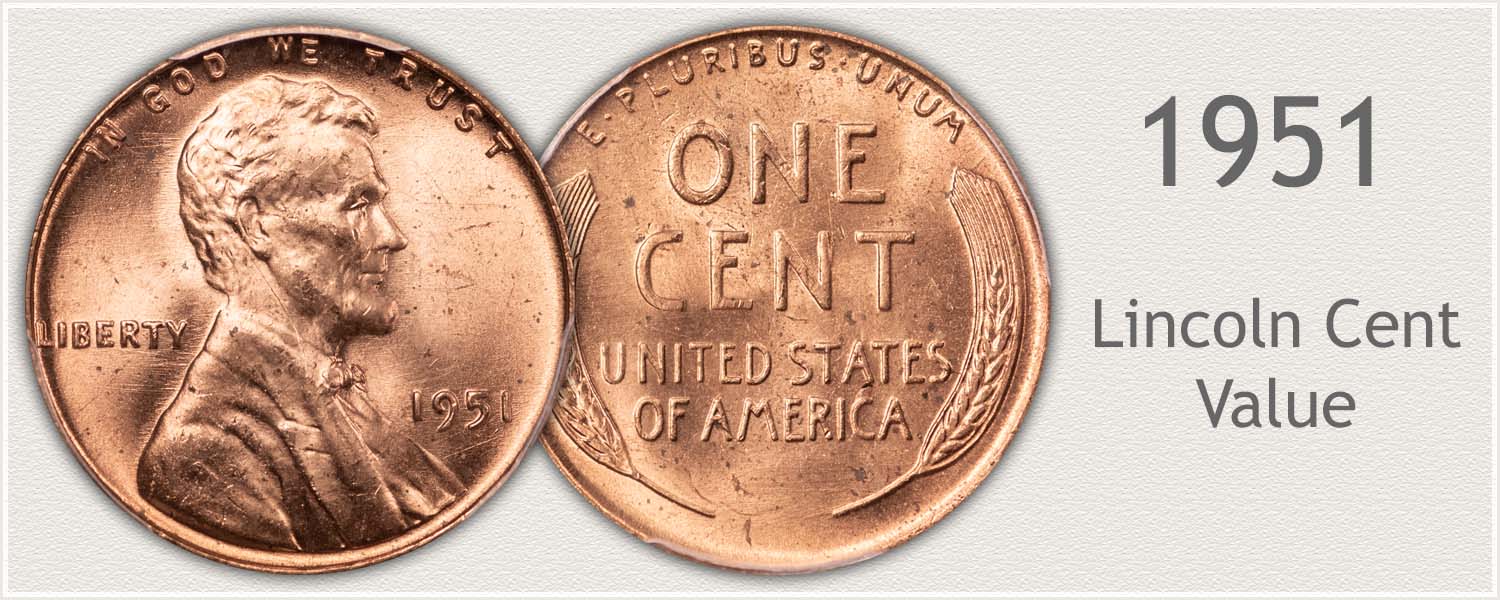
The Lincoln Wheat Cent, produced from 1909 to 1958, is one of the most beloved and widely collected American coins. Its design, featuring Abraham Lincoln on the obverse and two stalks of wheat flanking the denomination on the reverse, resonates deeply with both seasoned numismatists and new enthusiasts. The 1951 edition falls firmly within this cherished series, carrying with it the historical context of post-World War II America and the Cold War era.
A Brief History of the Lincoln Cent Series
Introduced to commemorate Lincoln’s 100th birthday, the Lincoln Cent was the first circulating U.S. coin to feature a real person rather than an allegorical figure. Designed by Victor David Brenner, the coin initially sparked controversy over the inclusion of the designer’s initials on the reverse. The “Wheat Ears” reverse, or Wheat Penny as it became known, remained in production for nearly fifty years until it was replaced by the Lincoln Memorial design in 1959. This long run means that while many Wheat Pennies exist, specific years, mint marks, and conditions can command significant premiums. The 1951 issue represents one of the later years of the series, produced in large quantities as the U.S. economy boomed.
Why the Wheat Penny Captivates Collectors
The appeal of the Wheat Penny lies in its accessibility, historical significance, and the potential for discovering rare variations. For many, it’s an entry point into coin collecting, often sparked by finding an old coin in change. The sheer volume minted allows for relative ease in completing sets by year and mint mark, while the challenge of finding high-grade examples or rare errors keeps the pursuit engaging. From a financial perspective, specific Wheat Pennies have demonstrated substantial appreciation over time, making them a tangible asset for diversification within a personal investment portfolio, particularly for those who appreciate the intersection of history and tangible wealth.
Factors Determining a 1951 Wheat Penny’s Value
Determining the exact worth of a 1951 Wheat Penny requires a meticulous examination of several key factors. Unlike modern currency where face value is fixed, collectible coins derive their value from a complex interplay of condition, rarity, and market demand.
Condition (Grade) is King: Understanding the Sheldon Scale
The most critical determinant of a coin’s value is its condition, or “grade.” Numismatists use the Sheldon grading scale, which ranges from 1 (Poor) to 70 (Perfect Uncirculated). For a 1951 Wheat Penny, the difference between a coin graded “Good” and one graded “Mint State” can be hundreds, if not thousands, of dollars.
- Good (G-4): Worn smooth with major details merged. Only the outline of Lincoln’s bust remains. Minimal decipherable details.
- Fine (F-12): Moderate to considerable wear. Some details are visible, such as Lincoln’s features and the lines in the wheat stalks, but they are soft.
- Very Fine (VF-20): Light to moderate wear on the high points. Most details are sharp, but some flatness may be evident.
- Extremely Fine (EF-40): Light wear on only the highest points. Nearly all design details are sharp and well-defined.
- About Uncirculated (AU-50/58): Traces of wear on only the highest points. Luster may be present in protected areas.
- Uncirculated (MS-60 to MS-70): No wear whatsoever. These coins retain their original mint luster. Higher numbers within the MS range (e.g., MS-65, MS-67) indicate better strike, fewer contact marks, and superior eye appeal.
For a 1951 Wheat Penny, specimens in circulated grades (G-4 to VF-20) will typically command only a slight premium over their copper melt value, often just a few cents to a dollar. However, coins graded AU-50 or higher begin to see a notable increase in value, with truly uncirculated examples (MS-65 and above) fetching significantly higher prices due to their scarcity and desirability.
Mint Mark Significance: Philadelphia, Denver, and San Francisco
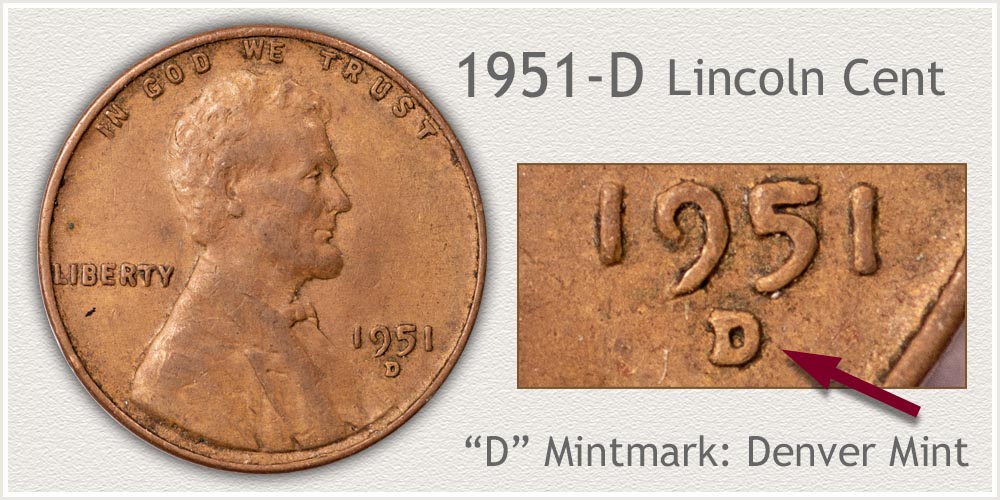
The mint mark indicates where the coin was produced and is a crucial factor in assessing rarity and value. For 1951, Wheat Pennies were struck at three U.S. Mints:
- No Mint Mark (P): Coins minted in Philadelphia do not carry a mint mark.
- “D” Mint Mark: Indicates production at the Denver Mint.
- “S” Mint Mark: Indicates production at the San Francisco Mint.
The mint mark is located below the date on the obverse side of the coin. The production figures for each mint in 1951 were:
- 1951 (Philadelphia): 284,555,000
- 1951-D (Denver): 626,345,000
- 1951-S (San Francisco): 118,505,000
From these figures, it’s clear that the 1951-S penny is the rarest of the three, having the lowest mintage. This relative scarcity generally translates to higher values for comparable grades, especially in uncirculated condition. The 1951-D is the most common, followed by the Philadelphia issue.
Rarity and Production Figures for 1951
While the overall mintage of 1951 Wheat Pennies was high (over a billion combined), the number of coins that survived in pristine, uncirculated condition is far lower. Most of these coins entered circulation, incurring wear and tear. Therefore, true rarity for this year typically refers to the scarcity of high-grade examples, particularly for the San Francisco mint. Any significant errors or varieties would also contribute to rarity, though major ones for 1951 are not widely recognized as a primary factor in overall value for this specific year.
Strike Quality and Eye Appeal
Beyond numerical grade, the quality of a coin’s strike and its overall eye appeal play a vital role in its market value. A coin with a sharp, well-defined strike, showing all design elements clearly, will often be more desirable and command a higher price than a coin of the same numerical grade but with a weaker strike. Luster, toning, and the absence of distracting bag marks or environmental damage also contribute significantly to a coin’s eye appeal and, consequently, its financial worth. For uncirculated coins, “Full Red” (FR) designation indicates that the coin has retained 95% or more of its original red copper color, which is highly sought after and adds a premium.
Market Demand and Economic Factors
Like any asset, the value of a 1951 Wheat Penny is also influenced by the current market demand. Popularity among collectors, economic conditions, and trends within the numismatic community can cause fluctuations in prices. During periods of economic uncertainty, tangible assets like rare coins can sometimes see increased interest as a hedge against inflation or market volatility, influencing their perceived and actual financial value.
Real-World Value: A Price Guide for 1951 Wheat Pennies
To provide a practical understanding, here’s an approximate price guide for 1951 Wheat Pennies across various grades. These values are estimates and can vary based on specific market conditions, dealer premiums, and professional grading.
Common 1951 (P) Pennies
- G-4 (Good): $0.05 – $0.15 (Slightly above copper melt value)
- F-12 (Fine): $0.10 – $0.25
- VF-20 (Very Fine): $0.20 – $0.50
- EF-40 (Extremely Fine): $0.50 – $1.50
- AU-50 (About Uncirculated): $1.00 – $3.00
- MS-60 (Uncirculated): $3.00 – $8.00
- MS-63 (Choice Uncirculated): $8.00 – $15.00
- MS-65 RD (Gem Uncirculated Red): $25.00 – $50.00
- MS-66 RD and higher: $75.00 – $200.00+ (significantly higher for top-tier examples like MS-67 RD)
1951-D (Denver Mint) Pennies
Given its highest mintage, the 1951-D typically has values similar to, or slightly lower than, the Philadelphia mint for comparable grades.
- G-4 (Good): $0.05 – $0.15
- F-12 (Fine): $0.10 – $0.25
- VF-20 (Very Fine):0 $0.20 – $0.50
- EF-40 (Extremely Fine): $0.50 – $1.50
- AU-50 (About Uncirculated): $1.00 – $3.00
- MS-60 (Uncirculated): $3.00 – $8.00
- MS-63 (Choice Uncirculated): $8.00 – $15.00
- MS-65 RD (Gem Uncirculated Red): $20.00 – $45.00
- MS-66 RD and higher: $70.00 – $175.00+
1951-S (San Francisco Mint) Pennies
The 1951-S, with its lowest mintage, is generally the most valuable of the three for most grades.
- G-4 (Good): $0.10 – $0.25
- F-12 (Fine): $0.20 – $0.50
- VF-20 (Very Fine): $0.50 – $1.00
- EF-40 (Extremely Fine): $1.00 – $3.00
- AU-50 (About Uncirculated): $2.00 – $5.00
- MS-60 (Uncirculated): $5.00 – $15.00
- MS-63 (Choice Uncirculated): $15.00 – $30.00
- MS-65 RD (Gem Uncirculated Red): $40.00 – $90.00
- MS-66 RD and higher: $150.00 – $500.00+ (top examples fetching much more, potentially thousands for MS-67/68 RD)
Notable Varieties and Errors
While the 1951 Wheat Penny is not widely known for major, high-value errors like double dies or significant repunched mint marks (RPMs) compared to other years, minor varieties can still exist. Collectors always search for subtle anomalies. These can include:
- Minor Die Breaks/Cracks: Small raised lines on the coin’s surface.
- Minor Repunched Mint Marks (RPMs): Where the mint mark was punched more than once, creating a slight overlap or shadow.
- BIE Errors: A small die break between the B and E in LIBERTY that resembles an “I”.
While not typically adding substantial value to a 1951 penny unless exceptionally prominent, identifying such errors can still be a gratifying aspect of collecting and might slightly enhance a coin’s appeal to specialized collectors.
Maximizing Your Penny’s Value: Tips for Collectors and Sellers
For those looking to understand or enhance the financial potential of their 1951 Wheat Penny, several strategies are paramount.
Proper Handling and Storage
Preserving a coin’s condition is fundamental to its value. Avoid cleaning coins, as this almost always diminishes their numismatic value, often severely. Handle coins by their edges to prevent transferring oils from your skin, which can cause discoloration over time. Store coins in inert, archival-safe holders, such as Mylar flips or certified coin slabs, to protect them from environmental damage and physical wear.
Professional Grading Services
For coins in potentially high grades (VF and above, especially AU and MS), professional grading by reputable third-party services like PCGS (Professional Coin Grading Service) or NGC (Numismatic Guaranty Corporation) is highly recommended. These services authenticate, grade, and encapsulate coins, providing an impartial assessment of condition that is widely recognized and trusted in the market. A professionally graded coin often commands a higher price and provides greater liquidity compared to raw coins. The cost of grading should be weighed against the potential increase in value, making it more worthwhile for specimens likely to grade well.
Where to Buy and Sell: Online Marketplaces, Coin Dealers, Auctions
The market for collectible coins is robust. If you’re selling, consider:
- Local Coin Dealers: Good for quick sales, but they often buy below market value to ensure their profit margin.
- Online Marketplaces (e.g., eBay): Offers broad reach but requires careful photography, description, and knowledge of shipping/payment processes. Be aware of seller fees.
- Coin Shows: Opportunities to connect directly with collectors and dealers, potentially getting a fair price.
- Auction Houses: For higher-value, professionally graded coins, reputable numismatic auction houses can provide access to serious collectors and achieve strong results, though they charge commissions.
If you’re buying, similar venues apply. Always conduct due diligence, research prevailing prices, and consider purchasing from reputable sources to avoid counterfeits or overpaying.
Research and Education: Knowing Your Niche
Continual learning is key in numismatics. Familiarize yourself with current market trends, specific varieties, and pricing guides (e.g., PCGS Price Guide, NGC Price Guide, Red Book/Guide Book of United States Coins). Understanding the nuances of coin grading, mintages, and historical context will empower you to make informed decisions, whether you’re evaluating a recent find or strategically building a collection as a tangible asset.
In conclusion, while a 1951 Wheat Penny in circulated condition might only be worth a few cents, exceptional examples, particularly those from the San Francisco Mint and in high, uncirculated grades, can represent a surprisingly valuable financial asset. Diligence in examination, understanding numismatic principles, and prudent financial decisions are critical to realizing their full potential worth.
aViewFromTheCave is a participant in the Amazon Services LLC Associates Program, an affiliate advertising program designed to provide a means for sites to earn advertising fees by advertising and linking to Amazon.com. Amazon, the Amazon logo, AmazonSupply, and the AmazonSupply logo are trademarks of Amazon.com, Inc. or its affiliates. As an Amazon Associate we earn affiliate commissions from qualifying purchases.