
ZeroWater filters have carved a distinct niche in the water filtration market by promising and delivering water with “000” total dissolved solids (TDS). This bold claim immediately distinguishes them from many conventional filters, which often focus on specific contaminants but don’t aim for complete deionization. Understanding precisely what ZeroWater filters remove requires a detailed look into their proprietary multi-stage filtration system and the science underpinning their performance.
The Core Technology: Understanding ZeroWater’s 5-Stage Filtration
Unlike standard activated carbon filters, ZeroWater employs a sophisticated five-stage filtration process designed to tackle a broad spectrum of impurities, culminating in water that registers zero on a TDS meter. Each stage plays a critical role in achieving this level of purity.

Stage 1 & 2: Preliminary Filtration
The initial stages of a ZeroWater filter focus on removing larger particles and preparing the water for more intensive purification. The first stage typically involves a coarse filter screen, designed to trap sediment and suspended solids such as dust, rust, and dirt. This physical barrier prevents larger debris from clogging subsequent, finer filtration stages, thus extending the life and efficiency of the filter. Following this, a foam distributor may be present, which helps to evenly disperse the water across the entire filter medium, optimizing contact time and ensuring uniform filtration. While seemingly simple, these preliminary steps are crucial for effective overall system performance.
Stage 3 & 4: Ion Exchange Resin
This is where the ZeroWater system truly differentiates itself. The third and fourth stages are dedicated to advanced ion exchange filtration, comprising a blend of activated carbon and specialized ion exchange resins. The activated carbon component is highly effective at adsorbing organic contaminants, including chlorine, chloramines, herbicides, pesticides, volatile organic compounds (VOCs), and other chemicals that can impart unpleasant tastes and odors to water.
Crucially, the ion exchange resin works to remove inorganic compounds. Water contains numerous dissolved inorganic salts, metals, and minerals, which are collectively measured as TDS. The mixed-bed ion exchange resin effectively “swaps” unwanted positively and negatively charged ions (like calcium, magnesium, lead, zinc, nitrates, and sulfates) with hydrogen (H+) and hydroxide (OH-) ions. These H+ and OH- ions then combine to form pure H2O, or water. This process is essentially a form of deionization, stripping the water of most of its dissolved mineral content.
Stage 5: Non-Woven Membrane
The final stage of the ZeroWater filtration system involves an ultra-fine non-woven membrane. This dense layer acts as a last line of defense, capturing any remaining suspended particles or fine contaminants that may have escaped the previous stages. It helps to ensure that no filter media particles leach into the purified water and provides a final polish, guaranteeing the ultra-pure quality for which ZeroWater is known. This stage is vital for delivering the “000” TDS reading, as even microscopic particulate matter can contribute to a TDS count.
A Comprehensive List of Removed Contaminants
ZeroWater’s multi-stage approach, particularly its reliance on ion exchange resin, allows it to remove a significantly wider array of contaminants compared to basic activated carbon filters. The stated goal is to remove virtually all total dissolved solids (TDS), which encompasses a vast range of impurities.
Total Dissolved Solids (TDS) – The ZeroWater Promise
The defining feature of ZeroWater is its ability to reduce TDS to “000 ppm” (parts per million). TDS refers to the inorganic salts and some organic matter dissolved in water. Common inorganic components include calcium, magnesium, potassium, sodium, bicarbonates, chlorides, and sulfates. While some minerals are beneficial, high TDS levels can indicate other issues and can affect taste. ZeroWater’s focus on eliminating TDS means it removes these common mineral ions along with other undesirable dissolved substances.
Heavy Metals and Inorganic Contaminants
One of the most significant benefits of ZeroWater’s ion exchange technology is its efficacy against heavy metals and other harmful inorganic contaminants. These include:
- Lead: A highly toxic metal that can cause serious health problems, especially in children.
- Chromium-6: A known human carcinogen.
- Mercury: A neurotoxin.
- Arsenic: A toxic metalloid linked to various cancers and other health issues.
- Aluminum: Though naturally occurring, high levels can be a concern.
- Fluoride: While often added to water for dental health, many prefer to remove it.
- Nitrates and Nitrites: Particularly concerning for infants.
- Copper and Zinc: While essential in trace amounts, high levels can cause health issues.
The ion exchange resins are specifically engineered to capture these charged metallic ions and replace them with hydrogen ions, effectively removing them from the water stream.
Organic Contaminants and Chemicals
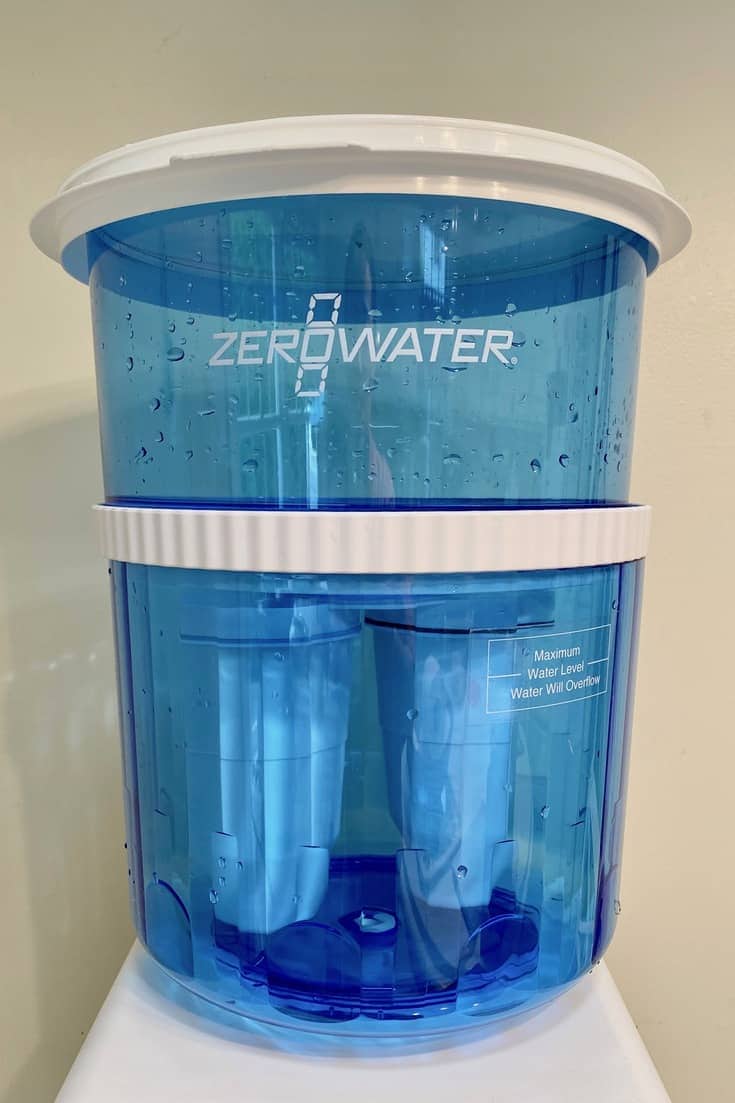
The activated carbon component of the ZeroWater filter is highly effective at adsorbing a wide range of organic contaminants, many of which are prevalent in municipal tap water. These include:
- Chlorine and Chloramines: Used as disinfectants in municipal water, they can impart unpleasant tastes and odors and form harmful byproducts.
- Herbicides and Pesticides: Chemicals used in agriculture that can leach into water sources.
- Volatile Organic Compounds (VOCs): A broad category of organic chemicals, some of which are harmful, like benzene, trichloroethylene, and industrial solvents.
- Pharmaceuticals: Trace amounts of medications can end up in water supplies.
- Industrial Pollutants: Various chemical byproducts from manufacturing processes.
The porous structure of activated carbon provides a massive surface area to trap these organic molecules, rendering the water much cleaner and improving its taste and smell.
Emerging Contaminants of Concern
As scientific understanding evolves, new categories of contaminants are identified. ZeroWater’s broad-spectrum approach positions it well to address some of these emerging concerns, particularly those that are either organic compounds or dissolve as ions. While specific certifications for every emerging contaminant are constantly evolving, the comprehensive nature of the 5-stage filter means it likely reduces many substances such as certain PFAS (Per- and polyfluoroalkyl substances) and microplastics, though the degree of removal can vary depending on the specific compound and concentration. The activated carbon can adsorb PFAS, and the final membrane can physically block microplastics.
The Science Behind Purity: How ZeroWater Achieves “000” TDS
Achieving a “000” TDS reading is not just a marketing claim; it’s a direct result of the deionization process central to ZeroWater’s technology. This level of purity is comparable to distilled water or water produced by reverse osmosis systems with a deionization post-filter.
The Role of Deionization
Deionization (DI) is the process of removing all ionized minerals and salts from water. ZeroWater utilizes a mixed-bed ion exchange resin, which contains both cation (positively charged) and anion (negatively charged) exchange resins. As water passes through, positively charged ions (like Ca²⁺, Mg²⁺, Pb²⁺) are exchanged for H⁺ ions, and negatively charged ions (like Cl⁻, SO₄²⁻, NO₃⁻) are exchanged for OH⁻ ions. The H⁺ and OH⁻ then combine to form H₂O, effectively creating highly purified water. This is what allows ZeroWater to reduce TDS levels to non-detectable levels using a standard handheld TDS meter.
Limitations and Considerations of Ultra-Pure Water
While “000” TDS sounds universally desirable, it’s important to understand the implications of ultra-pure water. Deionized water is essentially stripped of all minerals, including beneficial ones like calcium and magnesium. For most individuals, the trace minerals obtained from drinking water are a minor contribution to overall dietary intake, which primarily comes from food. Therefore, removing them is generally not considered a health concern.
However, deionized water has a very low ionic strength, making it aggressive and capable of leaching minerals from anything it contacts, including plumbing pipes or certain containers. For typical household use and consumption from the ZeroWater pitcher, this effect is negligible. The primary “limitation” is that the filter media will exhaust quickly in areas with very high TDS levels, as the ion exchange resins have a finite capacity for ion removal. Users will notice a rise in TDS readings (and often a change in taste) when the filter is nearing the end of its life, signaling it’s time for a replacement.
Comparing ZeroWater to Other Filtration Methods
Understanding ZeroWater’s place in the market requires comparing it to other common water filtration technologies. Each method has its strengths, weaknesses, and ideal applications.
Reverse Osmosis vs. ZeroWater
Reverse Osmosis (RO) systems are widely regarded for their ability to remove a very high percentage of contaminants, including dissolved solids, heavy metals, chemicals, and even some bacteria and viruses. RO systems work by forcing water through a semi-permeable membrane, which blocks impurities while allowing pure water to pass through. Like ZeroWater, RO also significantly reduces TDS. However, RO systems typically require installation under the sink, produce wastewater, and operate more slowly. ZeroWater, being a pour-through pitcher filter, offers a portable and immediate solution without plumbing or wastewater, making it more convenient for many users seeking high purity without the commitment of an RO system. While an RO system can often achieve 90-99% TDS reduction, ZeroWater consistently delivers “000” due to its specific deionization stage.
Activated Carbon Filters vs. ZeroWater
Standard activated carbon filters, common in many pitcher filters and refrigerator filters, are excellent at improving the taste and odor of water by removing chlorine, chloramines, and many organic compounds. They are also effective against some pesticides and herbicides. However, activated carbon filters do not significantly reduce total dissolved solids, heavy metals, or inorganic contaminants like fluoride, nitrates, and many mineral salts. A TDS meter reading for water filtered through an activated carbon filter will typically show little change from the tap water reading, because the minerals remain. ZeroWater’s advantage here is its comprehensive removal of nearly all dissolved solids, which goes far beyond what activated carbon alone can achieve.
When is ZeroWater the Right Choice?
ZeroWater is an ideal choice for consumers who prioritize ultra-pure water with virtually no dissolved solids. This includes individuals who:
- Are concerned about a wide range of contaminants, including heavy metals, chemicals, and pharmaceuticals.
- Prefer the taste of highly purified water, often described as “clean” or “neutral.”
- Want to use deionized water for specific applications like humidifiers, irons (to prevent mineral buildup), or even pet water bowls.
- Seek a convenient, non-installed solution that provides a high level of filtration comparable to more complex systems.
- Live in areas with high TDS levels and want a practical way to significantly reduce them without an RO system.
By understanding its 5-stage filtration and the comprehensive list of contaminants it targets, it becomes clear that ZeroWater offers a powerful, accessible solution for achieving exceptionally pure drinking water.
aViewFromTheCave is a participant in the Amazon Services LLC Associates Program, an affiliate advertising program designed to provide a means for sites to earn advertising fees by advertising and linking to Amazon.com. Amazon, the Amazon logo, AmazonSupply, and the AmazonSupply logo are trademarks of Amazon.com, Inc. or its affiliates. As an Amazon Associate we earn affiliate commissions from qualifying purchases.