
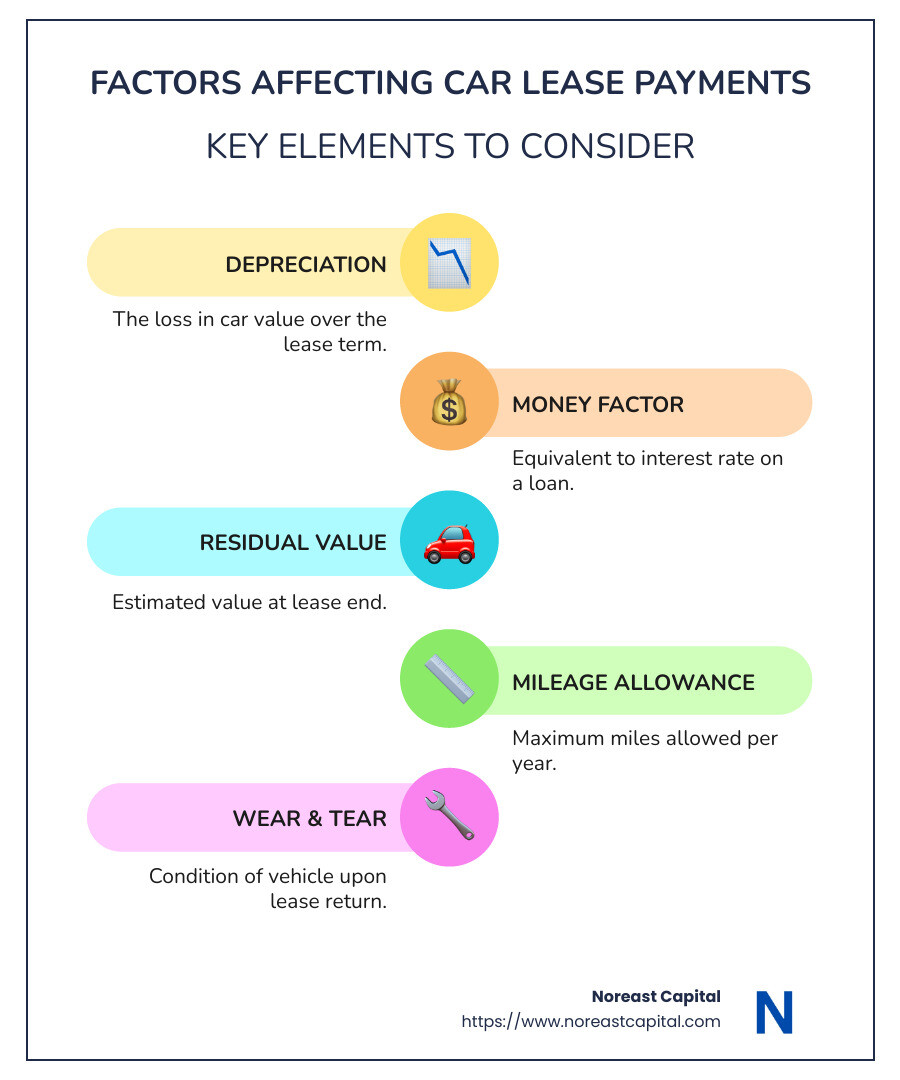
When considering a car lease, many prospective drivers focus intently on the monthly payment, the down payment, and perhaps the capitalized cost. However, a crucial, yet often misunderstood, element that significantly impacts the total cost of a lease is the “money factor.” Often overlooked because of its somewhat opaque nature, understanding the money factor is paramount to negotiating a favorable lease agreement and ensuring you’re getting a good deal. Essentially, the money factor is the interest rate equivalent on a car lease, representing the cost of borrowing the money to finance the depreciation of the vehicle over the lease term.

Understanding the Core Concept of Money Factor
The money factor, sometimes referred to as the “lease factor,” “lease rate,” or “lease charge,” is a decimal figure that a lender uses to calculate the finance charge portion of your monthly lease payment. Unlike a traditional auto loan where you see a clear annual percentage rate (APR), the money factor is presented as a small decimal number, such as 0.00250 or 0.00315. This format can make it seem less impactful than it truly is, often leading lessees to focus solely on the vehicle’s price and residual value.
Money Factor vs. Interest Rate
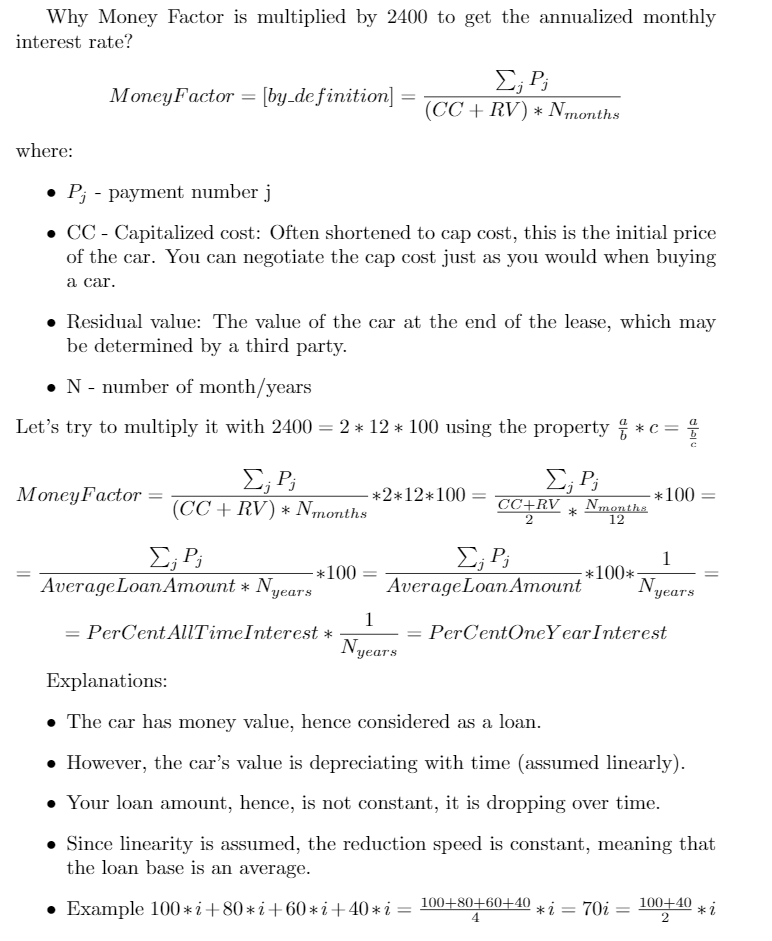
It’s common for consumers to get confused by the money factor because it doesn’t look like a standard interest rate percentage. While an auto loan might advertise an APR of 4.5%, a comparable money factor for a lease would be 0.001875. This difference in presentation doesn’t diminish its significance; it merely requires a simple conversion to understand its true cost. To convert a money factor into an approximate annual interest rate, you simply multiply it by 2,400. Using our example, 0.001875 x 2400 = 4.5%. This conversion instantly clarifies the financial weight of the money factor, making it easier to compare lease offers with financing options or with other lease terms.
The reason for using a money factor instead of an APR in leasing is largely historical and tied to the way lease payments are structured. Lease payments are divided into two primary components: the depreciation charge and the finance charge. The money factor specifically applies to the finance charge, which is calculated based on the average outstanding balance of the capitalized cost and residual value over the lease term.
How Dealers Express Money Factor
Dealers typically present the money factor as a five-digit decimal number (e.g., 0.00275). It’s crucial to explicitly ask for this number when discussing a lease. Dealers are legally obligated to disclose it, but they might not volunteer the information upfront, sometimes preferring to focus on the appealing monthly payment. A lower money factor means a lower financing cost over the life of the lease, directly translating to reduced monthly payments and overall expenditure. Conversely, even a seemingly small increase in the money factor can add hundreds, if not thousands, of dollars to the total lease cost.
How Money Factor Impacts Your Lease Payments
The money factor is one of three primary variables that determine your monthly lease payment, alongside the capitalized cost (the agreed-upon price of the vehicle) and the residual value (the estimated value of the car at the end of the lease term). Understanding how these elements interact is key to dissecting your lease proposal.
The Lease Payment Formula (Simplified)
A car lease payment is essentially composed of two main parts:
- Depreciation Charge: This covers the vehicle’s estimated loss in value over the lease term. It’s calculated by subtracting the residual value from the capitalized cost and then dividing that amount by the number of months in the lease.
- Formula: (Capitalized Cost – Residual Value) / Lease Term (in months)
- Finance Charge: This is the cost of borrowing the money and is where the money factor comes into play. It’s calculated by adding the capitalized cost and the residual value, and then multiplying that sum by the money factor.
- Formula: (Capitalized Cost + Residual Value) x Money Factor
Your total monthly lease payment is the sum of these two charges, plus any applicable sales tax and fees.
The Relationship Between Money Factor, Residual Value, and Capitalized Cost
A low money factor is desirable, but it’s essential to view it in the context of the other variables. A low money factor might be offered on a vehicle with a high capitalized cost (meaning you didn’t negotiate the car’s price down effectively) or a low residual value (meaning the car is expected to depreciate heavily), either of which could negate the benefit of a favorable money factor.
- Capitalized Cost: This is the negotiated selling price of the car. The lower you can get this number, the less you’ll pay in depreciation and finance charges. Every dollar saved on the capitalized cost reduces both components of your lease payment.
- Residual Value: This is set by the leasing company (often dictated by the manufacturer’s captive finance arm) and represents the vehicle’s estimated value at the end of the lease term. A higher residual value means less depreciation to cover over the lease, leading to lower monthly payments.
- Money Factor: As established, this is your finance charge. A lower money factor directly reduces the finance portion of your monthly payment.
It’s critical to negotiate all three of these components simultaneously. A dealer might offer an attractive money factor but inflate the capitalized cost, or vice versa. Therefore, focusing on the overall monthly payment and the total cost over the lease term, while understanding each contributing factor, is the most financially prudent approach.
Strategies to Lower Your Money Factor
Just as you can negotiate the selling price of a car, the money factor is often negotiable within certain limits. Knowing how to approach this negotiation can save you a significant amount over your lease term.
Improving Your Credit Score
Your credit score is arguably the most significant determinant of the money factor you’ll be offered. Lenders use your credit history and score to assess the risk of lending to you. Individuals with excellent credit (typically FICO scores of 720 or higher) are seen as lower risk and are usually eligible for the lowest money factors available. Before you even start shopping for a lease, it’s wise to check your credit report, correct any inaccuracies, and work to improve your score if necessary. A few points increase can sometimes move you into a better tier, qualifying you for a substantially lower money factor.
Comparing Offers from Multiple Lenders
Don’t assume that the first lease offer you receive is the best one. Different leasing companies, including captive finance companies (like Toyota Financial Services or Honda Financial Services) and independent banks or credit unions, will have varying money factors. It’s beneficial to shop around and get quotes from several sources. This not only allows you to compare money factors directly but also provides leverage in negotiations with the dealer’s preferred lender.
Negotiating the Money Factor
While not always as flexible as the capitalized cost, the money factor is often negotiable. Dealers typically have some leeway between the “buy rate” (the lowest money factor the leasing company will offer) and the “sell rate” (the rate they present to the customer). The difference represents a potential profit margin for the dealer. By knowing the typical money factors for your credit tier and the specific vehicle you’re interested in (information often found on forums or auto lease websites), you can push for a rate closer to the buy rate. Always ask the dealer for the “buy rate” directly.
Manufacturer Promotions and Special Programs
Manufacturers frequently offer special lease programs designed to boost sales of specific models. These promotions often include “subsidized” money factors, which are significantly lower than standard rates, sometimes even approaching 0%. These rates are effectively discounted by the manufacturer to make the lease more attractive. Staying informed about these manufacturer incentives can lead to substantial savings. Check manufacturer websites and local dealership ads for current offers.
Calculating and Verifying Your Money Factor
Being able to calculate and verify the money factor yourself is a powerful tool in your negotiation arsenal. It allows you to scrutinize the dealer’s numbers and ensure transparency.
Deriving Money Factor from Monthly Payment
Once you have the proposed monthly payment, capitalized cost, residual value, and lease term, you can work backward to calculate the money factor the dealer is using.
- Calculate the Depreciation Charge: (Capitalized Cost – Residual Value) / Lease Term (months)
- Subtract Depreciation Charge from Monthly Payment: Monthly Payment – Depreciation Charge = Finance Charge (before tax)
- Calculate the Average Outstanding Balance: (Capitalized Cost + Residual Value)
- Derive the Money Factor: Finance Charge / Average Outstanding Balance
If your calculated money factor differs significantly from what the dealer states (or if they are unwilling to disclose it), it’s a red flag. This exercise empowers you to identify any discrepancies and negotiate from an informed position.
Essential Questions to Ask the Dealer
To avoid surprises and ensure you have all the necessary information, always ask these direct questions when discussing a lease:
- “What is the exact capitalized cost of the vehicle?”
- “What is the residual value of the car at the end of the lease?”
- “What is the money factor you are using?”
- “Are there any additional fees, such as acquisition fees, disposition fees, or security deposits?”
- “What is the total of all payments over the lease term?”
These questions will give you the core figures needed to evaluate the lease and verify the money factor.
The Broader Financial Picture of Leasing
While understanding the money factor is critical for a favorable lease deal, it’s also important to step back and evaluate whether leasing aligns with your broader financial goals and lifestyle.
When Leasing Makes Financial Sense
Leasing can be a financially savvy choice for certain individuals and businesses. It’s often preferred by those who:
- Enjoy driving a new car every few years: Leasing allows you to regularly upgrade to the latest models without the hassle of selling or trading in a purchased vehicle.
- Want lower monthly payments: Lease payments are typically lower than loan payments for the same vehicle because you’re only financing the depreciation, not the entire purchase price.
- Drive a consistent, predictable number of miles: Lease agreements come with mileage limits. If your driving habits are consistent and fall within these limits, leasing can be cost-effective.
- Prefer to avoid the burden of major maintenance or depreciation risk: Most leases cover the car during its prime years, often under the manufacturer’s warranty, minimizing unexpected repair costs. You also avoid the risk of significant depreciation, as the residual value is set at the outset.
- Utilize a vehicle for business: Businesses can often deduct lease payments as an operating expense, offering potential tax advantages.
Lease-End Options and Their Costs
Understanding your options at the end of the lease and their associated costs is another crucial financial consideration. Typically, you have three choices:
- Return the Vehicle: The most common option. You simply return the car to the dealership. Be prepared for potential charges for excessive wear and tear or mileage overage. A “disposition fee” is also standard.
- Purchase the Vehicle: If you love the car and the buyout price (which is the residual value plus any purchase option fee) is favorable, you can buy the car. This eliminates mileage or wear-and-tear penalties.
- Lease a New Vehicle: You can trade in your current leased vehicle for a new one. Sometimes, if the car’s market value is higher than its residual value, you might even have “equity” that can be applied to your new lease or purchase.
Each option has financial implications, and considering them upfront helps you make a more informed decision when your lease term approaches its end. By mastering the nuances of the money factor and considering the full financial scope of leasing, you can approach the dealership with confidence, secure a better deal, and make a decision that aligns perfectly with your financial well-being.
aViewFromTheCave is a participant in the Amazon Services LLC Associates Program, an affiliate advertising program designed to provide a means for sites to earn advertising fees by advertising and linking to Amazon.com. Amazon, the Amazon logo, AmazonSupply, and the AmazonSupply logo are trademarks of Amazon.com, Inc. or its affiliates. As an Amazon Associate we earn affiliate commissions from qualifying purchases.