
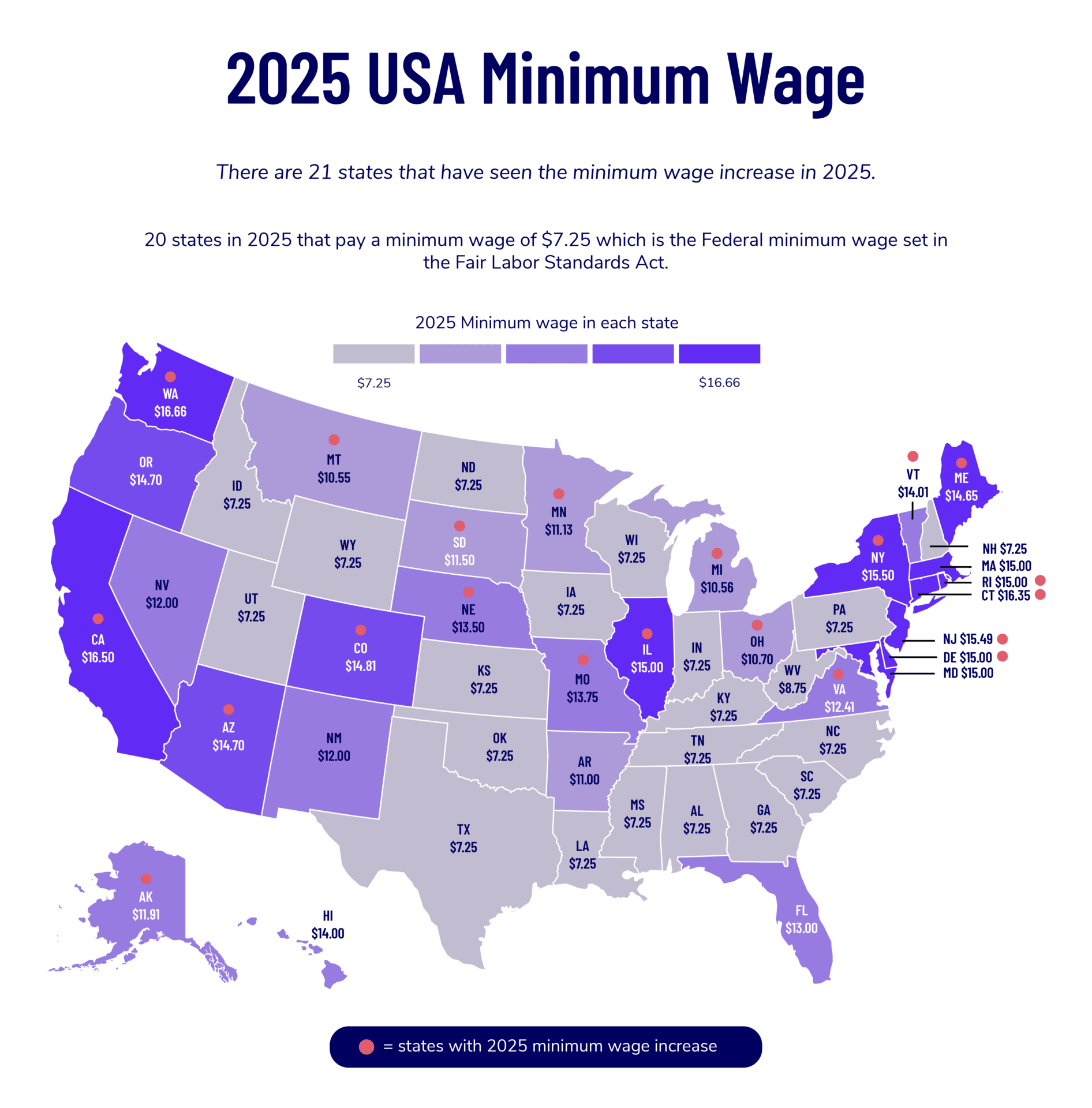
Understanding the minimum wage in any state is a crucial aspect of personal financial planning, business operations, and the broader economic landscape. For residents and employers in Utah, the question “what is minimum wage in Utah 2024?” often arises with significant financial implications. As of 2024, the minimum wage in Utah remains aligned with the federal standard, standing at $7.25 per hour. This figure has been consistent since 2009, reflecting a long-standing adherence to national guidelines rather than the implementation of a separate state-mandated minimum.
This adherence means that, unlike many other states that have enacted their own higher minimum wages to address local cost-of-living increases, Utah’s lowest legally permissible hourly wage for most workers remains at the federal floor. While there are exceptions for certain types of employees, such as tipped workers (where a direct cash wage of $2.13 per hour is permitted as long as tips bring the total to at least $7.25 per hour) and those under specific youth or training wage provisions, the $7.25 rate is the foundational benchmark for the vast majority of non-exempt laborers in the state.

This article delves into the financial realities and considerations surrounding Utah’s minimum wage in 2024, exploring its impact on personal finance, business viability, and the overall economic health of the state.
Navigating Personal Finance on Utah’s Minimum Wage
For individuals earning Utah’s minimum wage, effective personal finance management is not merely advisable; it is absolutely essential for maintaining financial stability and pursuing economic advancement. The $7.25 per hour rate, translating to approximately $1,256 gross per month for a full-time worker (40 hours/week, 52 weeks/year), presents significant budgeting challenges in a state where the cost of living, particularly in urban areas, continues to rise.
Budgeting Strategies for Minimum Wage Earners
Creating and strictly adhering to a budget is the cornerstone of managing finances on a minimum wage income. This involves a meticulous tracking of all income and expenses to ensure that outgoings do not exceed incomings. Key components of such a budget should include:
- Necessities First: Prioritizing essential expenses such as housing, utilities, food, transportation, and healthcare. For minimum wage earners, these categories often consume a substantial portion of their income. Exploring affordable housing options, utilizing public transport where available, and seeking out food assistance programs or community resources can be critical.
- Fixed vs. Variable Expenses: Differentiating between fixed costs (rent, loan payments) and variable costs (groceries, entertainment). While fixed costs are harder to adjust in the short term, variable expenses offer opportunities for significant savings through careful planning and conscious choices. Meal planning, buying generic brands, and reducing discretionary spending are practical steps.
- Emergency Fund (Even Small): Even with a tight budget, striving to set aside a small amount regularly for an emergency fund is vital. Unexpected expenses, such as car repairs or medical bills, can quickly derail financial stability. Starting with just $10 or $20 a month can build a crucial safety net over time.
- Debt Management: Avoiding high-interest debt, such as credit card debt, is paramount. If existing debt is present, developing a clear plan for repayment, prioritizing high-interest debts, can prevent a cycle of increasing financial burden. Exploring debt consolidation or financial counseling services might be beneficial for those struggling.
Understanding the Cost of Living in Utah
While the minimum wage is uniform across the state, the cost of living in Utah varies significantly by region. Major metropolitan areas like Salt Lake City, Provo, and Ogden typically have higher housing costs, which is often the largest expense for households. Rural areas may offer lower housing costs but might present challenges with access to well-paying jobs and essential services, potentially increasing transportation costs.
This disparity underscores the financial strain on minimum wage earners, particularly those in urban centers, where the current wage often falls short of a living wage—the income required to afford basic necessities. Awareness of local market rents, utility averages, and grocery prices is crucial for individuals to realistically assess their financial position and make informed decisions about where to live and work.
Leveraging Financial Tools and Resources
Several financial tools and resources can aid minimum wage earners:
- Budgeting Apps: Digital tools like Mint, YNAB (You Need A Budget), or simple spreadsheet templates can help track spending, categorize expenses, and visualize financial flow, making budgeting more manageable and less abstract.
- Government Assistance Programs: Utah offers various state and federal programs designed to support low-income individuals and families, including SNAP (food stamps), Medicaid, housing assistance, and utility assistance programs. Exploring eligibility for these programs can significantly alleviate financial pressure on essential needs.
- Community Resources: Local non-profits, food banks, and community centers often provide support, guidance, and direct assistance with food, clothing, and sometimes even financial counseling or job placement services.
- Financial Literacy Education: Investing time in learning about personal finance, saving, and smart spending can empower individuals to make better financial decisions. Many community colleges, credit unions, and non-profits offer free or low-cost financial literacy workshops.
Economic Implications for Utah Businesses
The minimum wage also has profound implications for businesses operating in Utah, particularly small and medium-sized enterprises (SMEs). While a lower minimum wage might be perceived as a benefit to business owners by reducing labor costs, its broader economic effects are complex and multifaceted, influencing hiring practices, pricing strategies, and overall profitability.
Labor Costs and Operational Budgets
For businesses employing minimum wage workers, the $7.25 per hour rate directly impacts their operational budgets. This fixed cost is a significant factor in industries such as retail, hospitality, food service, and entry-level manufacturing. Keeping labor costs low can enable businesses to:
- Maintain Competitive Pricing: By minimizing wage expenses, businesses may be able to offer more competitive prices for their goods and services, potentially attracting more customers and increasing market share.
- Invest in Other Areas: Savings on wages might be reallocated to other business investments, such as technology upgrades, marketing, or expansion, theoretically boosting productivity or growth.
- Increase Profit Margins: For some businesses, lower labor costs directly translate into higher profit margins, which can be critical for survival and growth, especially for startups or businesses with thin margins.
However, the flip side is that a wage that is not competitive with other states or a living wage can lead to other challenges.
Employee Turnover and Productivity
While low wages save money upfront, they can contribute to higher employee turnover rates. Employees earning the minimum wage may be more inclined to seek better-paying opportunities, leading to:
- Increased Recruitment Costs: Constantly hiring and training new staff is expensive, involving advertising, interviewing, onboarding, and reduced productivity during the training period. These indirect costs can often offset the direct savings from lower wages.
- Reduced Employee Morale and Productivity: Employees who feel undervalued or struggle to make ends meet on their wages may exhibit lower morale, less engagement, and reduced productivity. This can impact customer service quality, operational efficiency, and overall business performance.
- Difficulty Attracting Talent: In a competitive job market, businesses offering only the minimum wage may struggle to attract and retain the most skilled or dedicated employees, especially when competing with companies in states with higher minimums or those offering better compensation packages locally.
Pricing Strategies and Consumer Spending
Businesses must also consider the interplay between wages, pricing, and consumer spending. While lower wages might allow for lower prices, if a significant portion of the consumer base earns minimum wage, their purchasing power is inherently limited.
- Limited Local Demand: A large segment of the population struggling financially due to low wages may translate to reduced consumer spending within the local economy, impacting businesses that rely on local patronage.
- Inflationary Pressures: While raising minimum wage is sometimes linked to inflationary concerns, the cost of living (rent, food, gas) has increased significantly even with a stagnant minimum wage, putting a squeeze on both consumers and businesses who face higher input costs. Businesses may need to adjust their pricing regardless of wage levels to cover these rising operational expenses, which then further impacts minimum wage earners’ budgets.
For Utah businesses, strategic financial planning involves not just adhering to the minimum wage but also considering the broader economic ecosystem. Offering competitive wages, even above the legal minimum, can be a strategic investment in employee retention, productivity, and long-term business success. Exploring employee benefits, professional development opportunities, or performance-based incentives can also foster a more stable and motivated workforce.
The Broader Economic Landscape and Future Outlook
Utah’s consistent adherence to the federal minimum wage of $7.25 per hour has broader implications for the state’s economic structure, income inequality, and workforce development. While some argue that maintaining a low minimum wage supports business growth by reducing labor costs, others contend that it exacerbates income disparities and hinders overall economic prosperity by limiting consumer purchasing power.
Income Inequality and Economic Mobility
A stagnant minimum wage in the face of rising living costs can contribute to increased income inequality. Individuals and families relying solely on minimum wage earnings may find it increasingly difficult to move up the economic ladder, save for the future, or invest in education and skills development. This can create a multi-tiered economy where a segment of the population struggles to keep pace with economic growth experienced by higher-income earners.
Utah has a robust and growing economy, particularly in sectors like tech, finance, and tourism. However, the benefits of this growth may not be evenly distributed if entry-level wages remain at a level that does not align with the actual cost of living. Addressing this can involve:
- Investment in Education and Training: Programs that help minimum wage earners acquire in-demand skills can enable them to transition into higher-paying jobs, improving their economic mobility.
- Support for Small Businesses: Policies that help small businesses thrive can lead to more opportunities for better-paying jobs, as these businesses are often significant employers in local communities.
- Consideration of Local Wage Ordinances: While Utah has no statewide minimum wage higher than the federal, local municipalities could theoretically explore their own ordinances, though this is not a common practice in the state.
Advocacy and Potential for Change
The discussion around minimum wage is ongoing at both federal and state levels. Advocates for a higher minimum wage often point to the concept of a “living wage” and argue that increasing the minimum can boost consumer spending, reduce poverty, and improve worker morale and productivity. Conversely, opponents often express concerns about potential job losses, inflation, and the burden on small businesses.
In Utah, while there have been discussions and proposals for increasing the state’s minimum wage over the years, none have advanced to become law. The prevailing sentiment has been to maintain alignment with federal standards. However, the economic landscape is dynamic, and ongoing debates about inflation, cost of living, and workforce challenges could potentially reignite these discussions in the future.
For individuals and businesses in Utah, understanding the current minimum wage of $7.25 per hour in 2024 is the starting point for financial planning and strategic decision-making. For individuals, it emphasizes the critical need for meticulous budgeting, leveraging available resources, and exploring opportunities for skill development and income enhancement. For businesses, it highlights the balance between managing labor costs and fostering a productive, stable workforce, with a recognition that investing in employees can yield long-term benefits beyond statutory compliance. The financial success of both individuals and businesses within Utah’s economy is inextricably linked to how they navigate and adapt to this foundational wage standard.
aViewFromTheCave is a participant in the Amazon Services LLC Associates Program, an affiliate advertising program designed to provide a means for sites to earn advertising fees by advertising and linking to Amazon.com. Amazon, the Amazon logo, AmazonSupply, and the AmazonSupply logo are trademarks of Amazon.com, Inc. or its affiliates. As an Amazon Associate we earn affiliate commissions from qualifying purchases.