
Material balance is a foundational principle, often overlooked by non-technical stakeholders, yet it holds immense power in optimizing business finance, operational efficiency, and long-term profitability. At its core, material balance is an accounting of all physical substances entering, leaving, accumulating within, or being generated/consumed by a defined system. While it sounds like a concept from a science textbook, its practical application is a critical tool for any business dealing with physical raw materials, manufacturing, waste generation, or resource consumption. For businesses, mastering material balance isn’t just about understanding a scientific law; it’s about gaining granular control over costs, enhancing resource utilization, minimizing losses, and making financially sound strategic decisions.
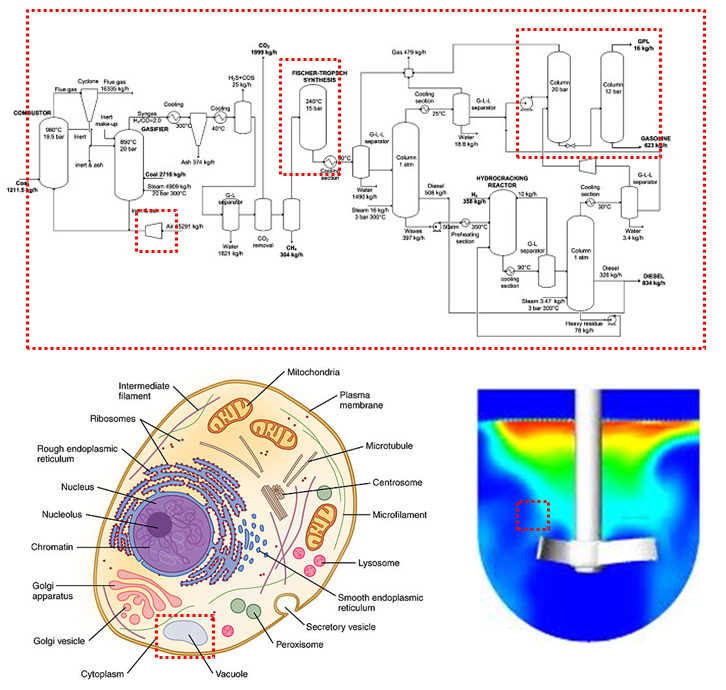
The Fundamental Principle in Business Operations
At its heart, material balance applies the law of conservation of mass to a business’s operations. This seemingly simple concept becomes a powerful analytical framework when applied systematically to a company’s financial and operational streams.
The Conservation of Mass in Practice
The immutable law of conservation of mass states that mass cannot be created or destroyed in an isolated system. In the context of business, this translates to: “What goes in must either come out, accumulate, or be consumed/generated within the process.” For a financial professional or business owner, this means every dollar spent on raw materials, energy, or by-products must be accounted for in the final product, waste stream, or inventory changes.
Consider a manufacturing facility. Raw materials (inputs) enter the system. Within the system, these materials are transformed, leading to finished products (outputs), by-products (outputs), and sometimes waste (outputs). Some materials might accumulate as work-in-progress (accumulation) or be consumed in a reaction (consumption). A material balance equation quantifies this:
Input – Output + Generation – Consumption = Accumulation
Applying this equation to key materials allows businesses to track the flow of financial value throughout their operations, identifying where valuable resources are lost, wasted, or inefficiently used. It provides a quantitative basis for understanding the actual cost of production, beyond just simple input costs.
System Boundaries and Inputs/Outputs
The utility of material balance in financial analysis hinges on the careful definition of “the system.” A system boundary is an imaginary envelope around the process or operation being analyzed. This could be an entire factory, a single production line, a specific chemical reactor, or even a waste treatment plant. Defining clear boundaries is crucial because it dictates what is considered an “input” and what is an “output,” directly impacting the financial scope of the analysis.
For instance, a system boundary around a single product manufacturing line allows for a detailed financial breakdown of that product’s specific material costs, waste generation, and efficiency. Expanding the boundary to encompass the entire plant provides a broader view of overall resource consumption, utility costs, and cumulative waste streams, which are vital for plant-wide budget planning and environmental compliance cost estimations. Clearly delineating these boundaries ensures that all relevant financial inflows (raw material purchases, utility bills) and outflows (product sales, waste disposal fees) are properly accounted for within the chosen scope of analysis.
Why Material Balance is Critical for Business Finance
Material balance directly impacts a company’s bottom line by revealing hidden inefficiencies, enabling precise cost control, and optimizing resource allocation. Its insights are invaluable for robust business finance.
Cost Control and Waste Reduction
One of the most immediate financial benefits of applying material balance is its ability to pinpoint sources of material loss and waste. Every gram of raw material that doesn’t end up in a salable product, and every unit of energy that doesn’t contribute to value creation, represents a direct financial loss. By performing a material balance, businesses can identify:
- Yield Losses: How much raw material is being lost during processing (e.g., spillage, evaporation, unreacted reactants).
- Scrap Generation: The quantity and composition of materials ending up as scrap.
- By-product Value: Opportunities to recover or sell valuable by-products that might otherwise be discarded.
- Utility Consumption: The exact energy (electricity, steam, fuel) required per unit of output, highlighting inefficiencies.
Quantifying these losses allows management to assign a monetary value to them, making a compelling case for investment in process improvements, employee training, or equipment upgrades designed to reduce waste. For example, knowing that 5% of a high-value raw material is consistently lost in a particular processing step (which material balance reveals) can justify capital expenditure on better mixing equipment or recovery systems, leading to substantial cost savings over time.
Optimizing Resource Utilization
Beyond reducing waste, material balance helps optimize the use of all resources, directly impacting profitability. In industries with high raw material costs or limited resources, efficiency gains are paramount. By understanding the precise flow of materials, businesses can:
- Minimize Over-purchasing: Buy only what is truly needed, reducing working capital tied up in excess inventory and avoiding spoilage or obsolescence costs.
- Maximize Product Yield: Improve processes to convert more raw material into desired product, boosting revenue per unit of input.
- Identify Bottlenecks: Pinpoint areas where material flow is restricted, leading to delays and underutilization of other assets. Addressing bottlenecks can significantly increase throughput and revenue.
- Energy Efficiency: For processes involving heat or chemical reactions, a material and energy balance can reveal where energy is being wasted, enabling targeted investments in insulation, heat exchangers, or more efficient machinery, leading to reduced utility bills.
This optimization translates directly to improved gross margins and better capital efficiency, crucial metrics for financial health.
Inventory Management and Valuation
Accurate inventory valuation is a cornerstone of sound financial reporting and strategic planning. Material balance provides the factual basis for precise inventory tracking, especially for work-in-progress (WIP) and materials that undergo transformation.
- WIP Valuation: In complex multi-stage manufacturing, material balance allows for an accurate assessment of the value of partially processed goods at any given time. This is essential for balance sheet accuracy and for understanding the true cost of goods manufactured (COGM).
- Loss Detection: Discrepancies between material balance calculations and physical inventory counts can signal theft, spoilage, or errors in data entry, prompting immediate investigation and resolution to prevent financial leakage.
- Reorder Point Optimization: By understanding consumption rates through material balance, businesses can fine-tune reorder points and quantities, reducing the risk of stockouts (lost sales) or overstocking (carrying costs).

An accurate understanding of inventory through material balance ensures that financial statements reflect the true value of assets and liabilities, providing a reliable basis for external reporting and internal financial control.
Material Balance for Strategic Decision-Making
Beyond day-to-day operations and financial reporting, material balance offers crucial insights that inform strategic business decisions, from production planning to capital investments and sustainability initiatives.
Production Planning and Efficiency
Strategic production planning requires a clear understanding of process capabilities and material requirements. Material balance provides the data needed to:
- Forecast Raw Material Needs: Accurately predict how much raw material will be needed for a given production target, enabling better procurement contracts and inventory planning, potentially leading to volume discounts and reduced logistical costs.
- Assess Production Capacity: Determine the maximum output achievable with current inputs and processes, informing decisions about scaling up or down operations, and managing customer expectations.
- Evaluate New Product Feasibility: Before launching a new product, material balance can model the required inputs, expected outputs, and potential waste streams, providing an early financial viability assessment and identifying potential cost challenges.
- Optimize Batch Sizes: Determine the most financially efficient batch sizes for production, considering material losses during startup/shutdown and fixed costs per batch.
These insights allow businesses to plan production schedules that are not only operationally feasible but also financially optimal, maximizing throughput and profitability.
Environmental Compliance and Sustainability
Environmental regulations are becoming increasingly stringent, imposing significant financial burdens through fines, carbon taxes, and disposal costs. Material balance is an indispensable tool for managing these costs and advancing sustainability goals.
- Waste Stream Characterization: Precisely quantify and characterize all waste streams (solid, liquid, gaseous), which is essential for accurate reporting to regulatory bodies and for identifying opportunities to reduce, reuse, or recycle. This directly impacts waste disposal costs and potential regulatory fines.
- Emissions Tracking: For industries with significant air or water emissions, a material balance on specific pollutants allows companies to track their environmental footprint, demonstrate compliance, and identify cost-effective strategies for emissions reduction.
- Resource Footprint Analysis: Evaluate the overall material and energy footprint of products, which is increasingly important for brand image, consumer preference, and securing “green” certifications that can open new markets or command premium pricing.
- Circular Economy Initiatives: Material balance is foundational for implementing circular economy principles, identifying opportunities to recover valuable materials from waste streams and reintroduce them into the production cycle, creating new revenue streams or reducing raw material expenses.
By proactively managing environmental impact through material balance, businesses can mitigate financial risks associated with non-compliance and unlock new opportunities linked to sustainability.
Capital Expenditure and Process Improvement
Major capital expenditure decisions, such as investing in new equipment or constructing a new plant, carry significant financial risk. Material balance provides the data to de-risk these investments.
- Justifying Investments: Quantify the financial returns of proposed process improvements or new technologies by demonstrating how they will reduce material losses, increase yields, or lower energy consumption. This data is critical for securing funding and justifying ROI.
- Technology Evaluation: Compare different technological options based on their material efficiency, waste generation, and resource requirements, enabling selection of the most financially and operationally advantageous solution.
- De-bottlenecking Projects: Identify where investment in equipment could alleviate material flow bottlenecks, leading to increased overall production capacity and revenue potential.
- Expansion Planning: For plant expansions, material balance models are used to ensure that the new capacity is designed efficiently, minimizing startup losses and optimizing resource flows from day one, thereby protecting initial investment and accelerating profitability.
Strategic investments backed by material balance calculations are more likely to achieve their intended financial and operational objectives, fostering sustainable growth.
Implementing Material Balance in Your Business
Effective implementation of material balance requires a systematic approach, leveraging data and appropriate tools to translate theoretical concepts into tangible financial benefits.
Data Collection and Measurement
The accuracy of any material balance calculation is directly dependent on the quality of the input data. Businesses must invest in robust data collection systems. This includes:
- Accurate Weighing Systems: Calibrated scales for raw materials, finished products, and waste streams.
- Flow Meters: For liquids, gases, and slurries to measure input and output rates.
- Compositional Analysis: Regular sampling and analysis of materials, including raw materials, intermediates, products, and waste, to determine their precise chemical makeup and purity.
- Production Records: Detailed logs of batch sizes, processing times, and operating conditions.
- Utility Meters: Monitoring electricity, water, steam, and fuel consumption for energy balance considerations.
Reliable, real-time data is the backbone of an effective material balance strategy, providing the necessary inputs for financial analysis and operational adjustments.
Software and Tools for Analysis
While simple material balances can be done with spreadsheets, complex processes benefit immensely from specialized software and digital tools. These tools enhance accuracy, speed, and the ability to model various scenarios:
- Process Simulation Software: Tools like Aspen Plus, HYSYS, or gPROPS allow engineers to build digital models of entire processes, perform detailed material and energy balances, and simulate the impact of changes on yields, waste, and utility consumption. These provide critical data for financial projections of process changes.
- Enterprise Resource Planning (ERP) Systems: Modern ERP systems often integrate production data, inventory management, and financial accounting modules. When configured correctly, they can track material movements, costs, and inventory values in near real-time, providing the financial data necessary for material balance reconciliation.
- Manufacturing Execution Systems (MES): These systems provide real-time visibility into production processes, collecting data on material consumption, production rates, and waste generation directly from the plant floor, feeding into material balance calculations and enabling immediate operational and financial adjustments.
- Advanced Analytics and Business Intelligence (BI) Tools: These can be used to analyze large datasets from various sources, identifying trends in material losses, predicting consumption patterns, and generating financial reports that highlight the impact of material efficiency on profitability.
The right software infrastructure transforms raw data into actionable financial insights, allowing businesses to model “what-if” scenarios and optimize their operations for maximum financial return.

Continuous Monitoring and Improvement
Material balance is not a one-time exercise; it’s an ongoing commitment to operational and financial excellence. Implementing a system for continuous monitoring and improvement involves:
- Regular Reconciliation: Periodically compare theoretical material balance calculations with actual measured inputs, outputs, and inventory changes. Significant discrepancies signal problems that need investigation.
- Performance Indicators: Establish key performance indicators (KPIs) related to material efficiency, such as yield percentages, waste per unit of product, or specific energy consumption, and monitor these against financial targets.
- Feedback Loops: Use insights from material balance analyses to inform process adjustments, training programs, and equipment maintenance schedules.
- Root Cause Analysis: When material losses or inefficiencies are identified, conduct thorough root cause analysis to address underlying issues, rather than just treating symptoms.
- Benchmarking: Compare material efficiency metrics against industry best practices to identify areas for competitive improvement and financial advantage.
By embedding material balance into the continuous improvement culture of a business, companies can ensure ongoing cost control, resource optimization, and sustainable financial performance. It transforms an engineering principle into a powerful financial management strategy, driving profitability and competitiveness in resource-intensive industries.
aViewFromTheCave is a participant in the Amazon Services LLC Associates Program, an affiliate advertising program designed to provide a means for sites to earn advertising fees by advertising and linking to Amazon.com. Amazon, the Amazon logo, AmazonSupply, and the AmazonSupply logo are trademarks of Amazon.com, Inc. or its affiliates. As an Amazon Associate we earn affiliate commissions from qualifying purchases.