
The L-1 visa is a non-immigrant visa category specifically designed to facilitate the intra-company transfer of certain employees from a foreign entity to a qualifying parent, branch, affiliate, or subsidiary in the United States. For businesses with international operations, particularly those looking to expand into the U.S. market or transfer critical talent and specialized knowledge, the L-1 visa represents a vital strategic and financial instrument. It underpins the ability of global enterprises to maintain continuity in leadership, leverage proprietary expertise, and seamlessly integrate operations across borders, all of which have profound implications for business finance, operational efficiency, and market competitiveness.

Understanding the L-1 Visa: A Gateway for Global Business Finance
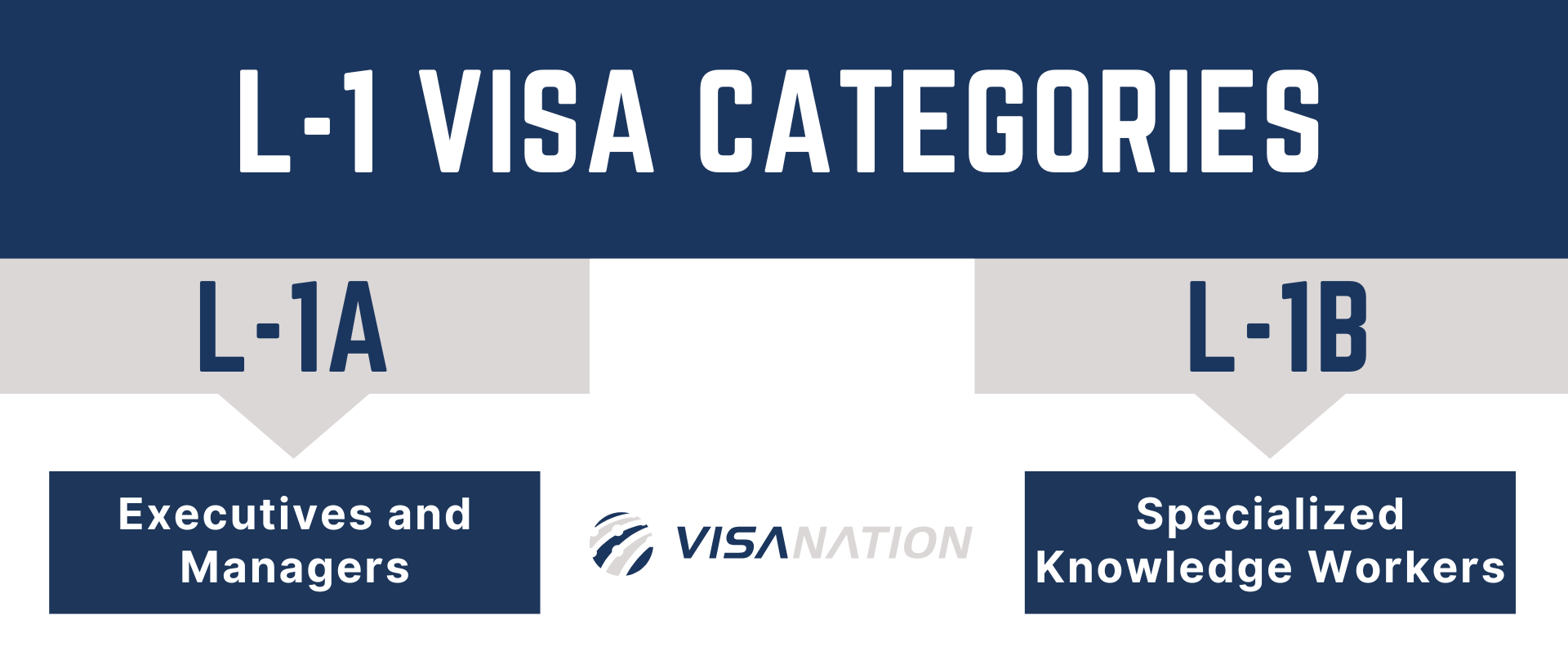
At its core, the L-1 visa serves as a critical mechanism for multinational corporations to strategically deploy human capital, ensuring that key personnel and their invaluable institutional knowledge are accessible wherever they are needed most within the global organizational structure. This direct ability to transfer employees helps businesses optimize their operational finance, avoid costly hiring and training processes for specialized roles in the U.S., and accelerate market entry or expansion. The visa is bifurcated into two primary classifications, each catering to distinct, yet equally vital, segments of a company’s workforce:
L-1A for Executives and Managers
The L-1A visa is designated for executives and managers who are being transferred to a U.S. office. An executive typically directs the management of an organization or a major component or function, establishes goals and policies, exercises wide latitude in discretionary decision-making, and receives only general supervision from higher-level executives, the board of directors, or stockholders. A manager, on the other hand, primarily manages the organization, department, subdivision, function, or component; supervises and controls the work of other supervisory, professional, or managerial employees, or manages an essential function within the organization, or a department or subdivision of the organization; has the authority to hire and fire or recommend personnel actions; and exercises discretion over day-to-day operations.
For businesses, the L-1A visa is instrumental in ensuring leadership continuity and strategic direction during international expansion or restructuring. The ability to transfer proven leaders who understand the company’s culture, objectives, and financial strategies minimizes the risks associated with new ventures and maximizes the chances of achieving financial milestones in a new market. This classification also allows for the establishment of a “new office” in the U.S., providing a crucial pathway for foreign companies to gain an initial foothold in the American economy, contingent on demonstrating sufficient financial resources and a viable business plan.
L-1B for Specialized Knowledge Professionals
The L-1B visa category is for professionals who possess “specialized knowledge.” This is defined as knowledge pertaining to the petitioning organization’s product, service, research, equipment, techniques, management, or other interests and its application in international markets, or an advanced level of knowledge or expertise in the organization’s processes and procedures. Essentially, these are individuals whose expertise is proprietary and critical to the company’s operations, products, or services.
From a financial perspective, retaining and transferring specialized knowledge professionals via an L-1B visa is a strategic investment. These individuals often hold unique skills that are not readily available in the U.S. labor market or would require significant time and expense to develop in a new hire. Their expertise can directly contribute to product development, operational efficiency, cost reduction, and competitive advantage, all of which directly impact a company’s financial performance. For instance, a software engineer with intimate knowledge of a company’s proprietary algorithms or a financial analyst deeply embedded in a specific international market’s financial regulatory framework would fall under this category, protecting invaluable intellectual capital and ensuring consistent operational execution.
Eligibility Criteria and Application Process: Navigating Business Investment
Securing an L-1 visa involves meeting specific eligibility requirements for both the petitioning employer and the beneficiary employee, along with navigating a structured application process. Understanding these criteria and the associated procedural steps is vital for businesses to accurately project the financial and logistical investment required.
Employer Requirements
The petitioning U.S. employer must have a qualifying relationship with a foreign company (parent, branch, affiliate, or subsidiary) and must currently be, or will be, doing business as an employer in the U.S. and in at least one other country directly or through a qualifying organization for the duration of the beneficiary’s stay. “Doing business” implies the regular, systematic, and continuous provision of goods and/or services, not just the mere presence of an agent or office. For a “new office” L-1A petition, the employer must demonstrate sufficient physical premises, financial ability to commence business, and the likelihood of supporting the executive or managerial position within one year. This initial investment in infrastructure and demonstrable financial backing is a crucial prerequisite.
Employee Requirements
The employee must have been employed abroad by a qualifying organization for at least one continuous year within the three years immediately preceding their application for admission into the U.S. This employment must have been in a managerial, executive, or specialized knowledge capacity. The employee must also be entering the U.S. to provide services in a managerial, executive, or specialized knowledge capacity for a qualifying organization. The continuity of employment and the nature of the role are key indicators for USCIS, emphasizing the pre-existing, valuable relationship between the employee and the multinational entity.
The Petition Process and Associated Costs
The L-1 visa process typically begins with the U.S. employer filing Form I-129, Petition for a Nonimmigrant Worker, with U.S. Citizenship and Immigration Services (USCIS). This petition must be accompanied by extensive documentation proving the qualifying relationship between entities, the employee’s eligibility, and the bona fides of the U.S. operation.
The financial implications of this process are significant. Filing fees alone can range from several hundred to thousands of dollars, depending on premium processing requests (which expedite adjudication for an additional fee). Beyond government fees, businesses often incur substantial legal fees for immigration attorneys who specialize in L-1 petitions, ensuring meticulous preparation and compliance. These legal costs represent an investment in expertise to navigate complex regulations and maximize the chances of a successful outcome, thereby avoiding potential financial losses from delays or denials.
Financial Implications and Strategic Advantages for Businesses
The L-1 visa category offers several distinct financial and strategic advantages that make it an attractive option for multinational corporations, extending beyond mere compliance to genuine business growth and competitive edge.

Cost-Benefit Analysis of an L-1 Transfer
When evaluating the decision to transfer an employee via an L-1 visa versus hiring locally, companies perform a crucial cost-benefit analysis. While there are upfront costs associated with the L-1 petition (filing fees, legal fees, relocation expenses), these are often offset by avoiding the expenses related to recruiting, interviewing, and training a new employee for a specialized or executive role in the U.S. Furthermore, transferring an existing employee who is already fully integrated into the company’s systems, culture, and specific projects can significantly reduce the learning curve and time-to-productivity, leading to faster realization of financial returns on projects or market entry. The retention of institutional knowledge and specific skill sets directly translates into reduced operational risks and enhanced efficiency.
Facilitating Market Expansion and Global Competitiveness
For businesses eyeing expansion into the lucrative U.S. market, the L-1 visa is an indispensable tool. It allows foreign companies to send key personnel to establish and manage new U.S. operations, ensuring that the initial setup aligns with global corporate strategies and financial objectives. This controlled expansion mitigates risks and enables quicker market penetration. By leveraging internal talent, companies can maintain consistent quality, brand identity, and operational standards across their international footprint, bolstering their global competitive posture and securing their financial stake in new territories.
Retaining Institutional Knowledge and Talent
The financial value of institutional knowledge cannot be overstated. When a highly skilled or experienced employee leaves an organization, there is an implicit financial loss in terms of proprietary information, established client relationships, and specific operational methodologies. The L-1 visa allows companies to retain this invaluable asset by transferring employees rather than losing them due to international assignment needs. This preserves intellectual capital, ensures project continuity, and protects the significant investment made in developing these employees over time. It’s a strategic move to safeguard a company’s long-term financial health and operational integrity.
Duration, Extensions, and Pathways: Long-Term Financial Planning
The L-1 visa is not merely a short-term solution but can be a foundation for long-term strategic planning for both businesses and individuals, offering pathways for extended stays and even permanent residency.
Initial Validity and Extension Periods
An initial L-1A visa for a new office is generally granted for one year. For existing offices, both L-1A and L-1B visas are initially granted for up to three years. Critically, these visas are eligible for extensions. L-1A visa holders can typically extend their status in two-year increments, up to a maximum stay of seven years. L-1B visa holders can also extend in two-year increments, but their maximum stay is limited to five years. These extension provisions are crucial for businesses to ensure continuity of operations, manage long-term projects, and fully realize the financial return on their investment in transferred talent. Strategic planning around these maximum limits is essential for workforce management and ensuring seamless transitions.
Spousal and Dependent Benefits (L-2 Visa)
A significant financial benefit associated with the L-1 visa is the provision for dependents. Spouses and unmarried children under the age of 21 of L-1 visa holders are eligible for L-2 visas. Importantly, L-2 spouses are eligible to apply for an Employment Authorization Document (EAD), allowing them to work in the U.S. This provision can significantly enhance the financial well-being of the family unit, making the L-1 transfer more attractive to employees and easing potential financial burdens associated with relocation. For companies, it also makes the L-1 visa a more competitive offering for attracting and retaining top international talent.
Path to Permanent Residency (EB-1C)
For L-1A executives and managers, the L-1 visa can serve as a direct pathway to permanent residency in the U.S. through the EB-1C multinational executive or manager immigrant visa category. This is often an attractive option for businesses that wish to retain their top-tier leadership on a long-term basis within their U.S. operations, providing stability for the company and the individual. The ability to transition directly from L-1A to EB-1C without the need for a labor certification process (PERM) streamlines the green card application, reducing both time and significant financial costs associated with other employment-based green card categories. This long-term stability and reduced cost make EB-1C a valuable component of an overall talent management and financial strategy.
Potential Pitfalls and Best Practices for a Successful L-1 Petition
While the L-1 visa offers substantial benefits, the application process is complex and demands meticulous attention to detail. Awareness of common pitfalls and adherence to best practices are essential for a successful outcome, safeguarding both time and financial resources.
Common Reasons for Denials
Denials often stem from insufficient evidence of a qualifying relationship between entities, inadequate proof of the employee’s executive, managerial, or specialized knowledge capacity, or failure to demonstrate that the U.S. entity is “doing business” or, for new offices, has sufficient financial viability. For L-1B petitions, a common challenge is proving that the specialized knowledge is truly proprietary or unique and not general knowledge readily available in the industry. Misinterpreting USCIS definitions for “executive” or “manager” can also lead to rejections, highlighting the nuanced nature of the requirements. Each denial represents wasted time, significant legal and filing fees, and delayed business objectives.
Importance of Comprehensive Documentation
The success of an L-1 petition hinges heavily on the quality and comprehensiveness of the submitted documentation. This includes detailed organizational charts, financial statements for both the foreign and U.S. entities, detailed job descriptions, evidence of the employee’s past and proposed U.S. duties, educational and employment records, and a robust business plan for new offices. Every claim made in the petition must be substantiated by clear and convincing evidence. Investing time and resources upfront to gather and organize this documentation meticulously can prevent Requests for Evidence (RFEs), delays, and potential denials, ultimately saving significant financial outlay in the long run.
Engaging Expert Legal Counsel
Given the complexities and strict interpretations of immigration law, engaging experienced immigration legal counsel is not merely advisable but often a financial necessity for businesses. Expert attorneys can provide invaluable guidance on structuring the petition, ensuring all eligibility criteria are met, and crafting a compelling narrative supported by appropriate documentation. They can anticipate potential challenges, provide strategic advice on navigating RFEs, and represent the company throughout the adjudication process. While legal fees represent an investment, the cost of a denied petition – including delays in business operations, potential re-filing fees, and lost productivity – far outweighs the initial expense of professional legal assistance. It’s a proactive financial decision to secure a critical business objective.
aViewFromTheCave is a participant in the Amazon Services LLC Associates Program, an affiliate advertising program designed to provide a means for sites to earn advertising fees by advertising and linking to Amazon.com. Amazon, the Amazon logo, AmazonSupply, and the AmazonSupply logo are trademarks of Amazon.com, Inc. or its affiliates. As an Amazon Associate we earn affiliate commissions from qualifying purchases.