
The Core Function: Mitigating Automotive Emissions
The catalytic converter, a ubiquitous component in modern vehicles, represents a cornerstone of automotive technology designed to address a critical environmental challenge: reducing harmful exhaust emissions. Far from a simple muffler, this sophisticated device orchestrates complex chemical reactions to transform toxic byproducts of internal combustion into less noxious substances before they are released into the atmosphere. Understanding its internal mechanisms is key to appreciating its pivotal role in environmental protection and the ongoing evolution of automotive engineering.
The Environmental Imperative
Before the widespread adoption of catalytic converters, vehicle exhaust was a significant contributor to air pollution, directly impacting public health and environmental quality. Unburnt hydrocarbons, carbon monoxide, and nitrogen oxides are potent pollutants that contribute to smog formation, acid rain, respiratory illnesses, and global warming. Governments and environmental agencies worldwide recognized the urgent need for technological interventions, leading to stringent emission standards that necessitated the development and refinement of devices like the catalytic converter. Its invention and subsequent integration into virtually every gasoline-powered vehicle manufactured since the mid-1970s marked a monumental shift in automotive design philosophy, prioritizing environmental responsibility alongside performance.
How Combustion Byproducts Harm
Internal combustion engines, while efficient at converting fuel into kinetic energy, are inherently imperfect. The combustion process, even in optimized engines, produces a range of gaseous compounds that are detrimental. Carbon monoxide (CO) is a colorless, odorless, and highly toxic gas that impairs the blood’s ability to carry oxygen. Hydrocarbons (HC), essentially unburnt fuel particles, contribute to ground-level ozone (smog) and are known carcinogens. Nitrogen oxides (NOx), formed under high-temperature combustion conditions, are a primary precursor to smog and acid rain, and also contribute to respiratory problems. The catalytic converter’s singular purpose is to intercept these harmful gases and chemically alter them into safer compounds like carbon dioxide (CO2), water vapor (H2O), and nitrogen gas (N2), significantly reducing their ecological footprint.
A Deep Dive into the Internal Architecture
Beneath its unassuming stainless steel exterior, a catalytic converter houses a meticulously engineered structure designed to maximize surface area and facilitate chemical reactions. This intricate design is critical for its effectiveness and longevity, combining robust materials with sensitive chemical coatings.
The Casing and Monolith Substrate
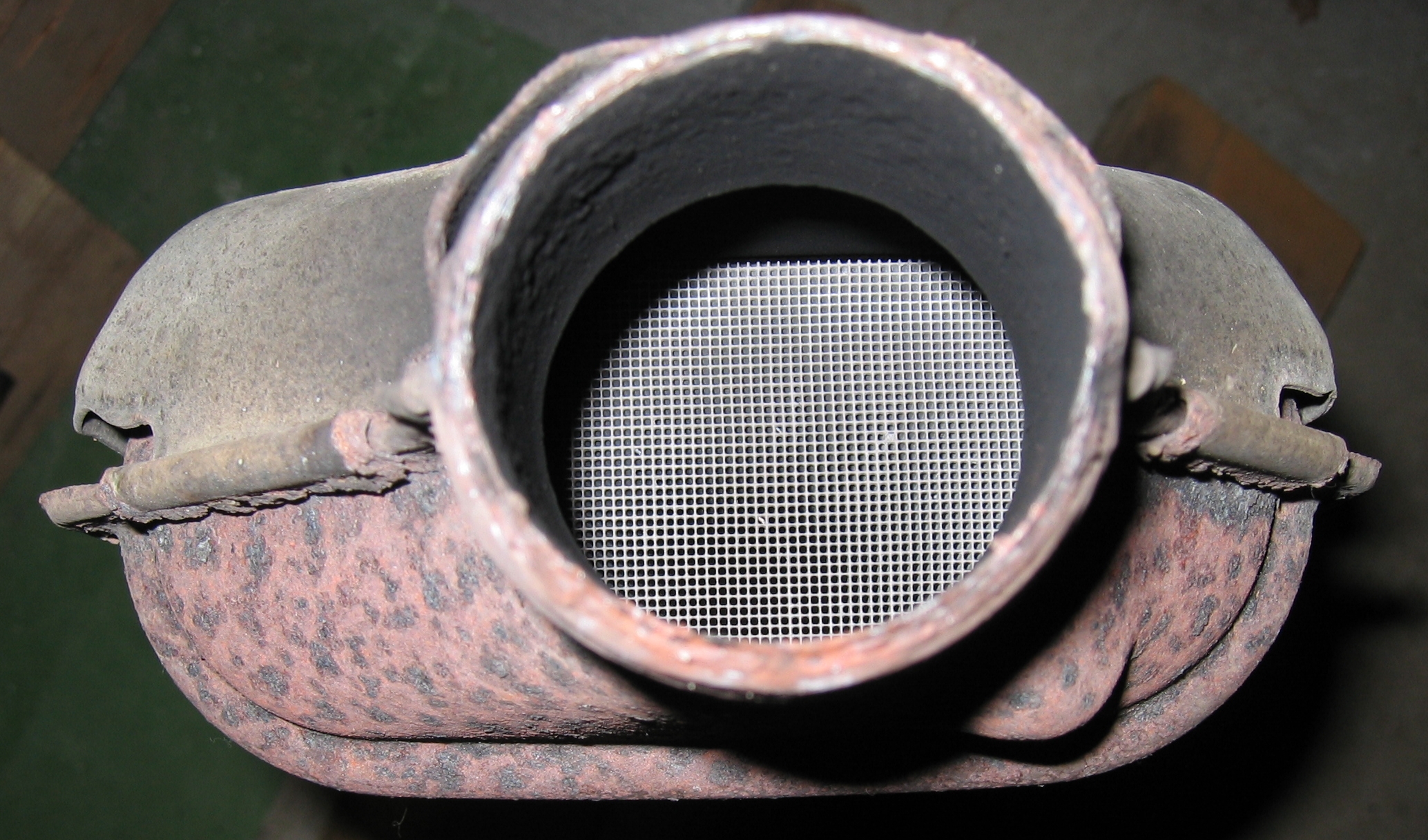
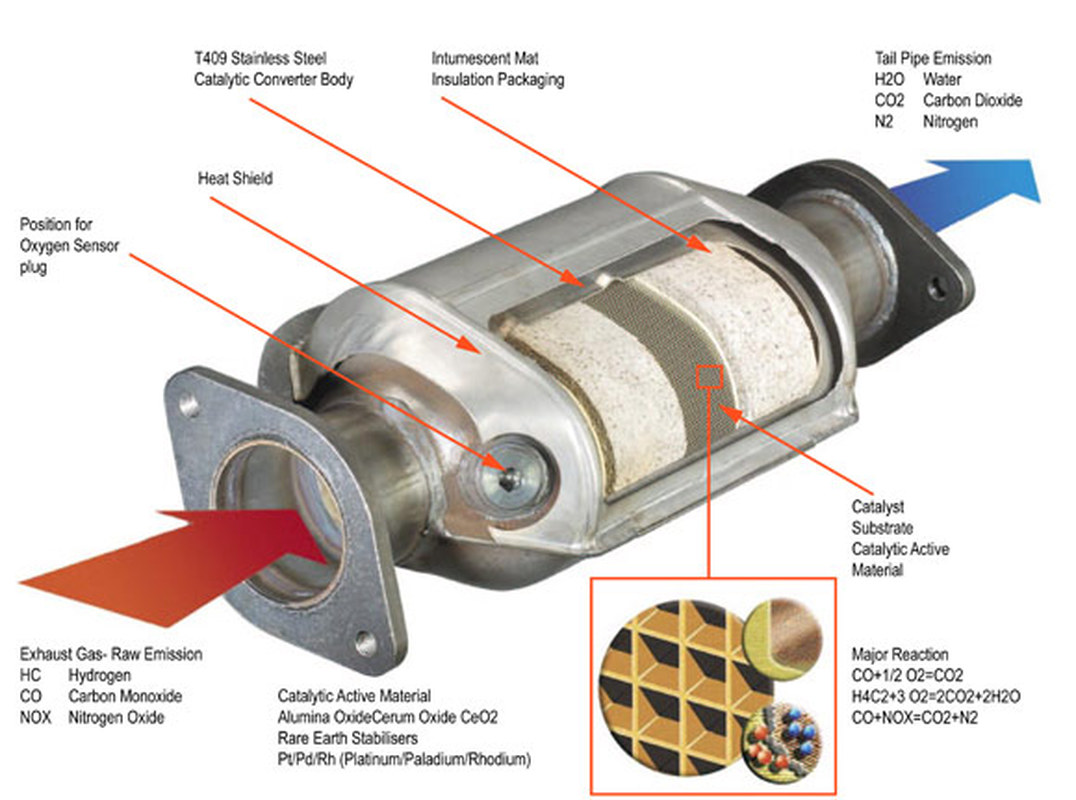
The external casing of a catalytic converter is typically made from stainless steel, chosen for its durability, corrosion resistance, and ability to withstand the extreme temperatures of exhaust gases, which can reach up to 900°C (1650°F). Inside this casing lies the heart of the converter: the monolith substrate. This substrate is almost universally a ceramic honeycomb structure, though some early designs used metallic foils. The ceramic monolith, usually made from cordierite, features thousands of tiny, parallel channels running through its length. These channels create an enormous internal surface area, often equivalent to several football fields, within a relatively compact volume. This vast surface area is absolutely crucial because it provides ample space for exhaust gases to interact with the catalytic materials, accelerating the necessary chemical transformations. Without this extensive surface area, the conversion efficiency would be drastically reduced. The ceramic is also chosen for its excellent thermal stability and low thermal expansion, essential for surviving the harsh automotive environment.
The Washcoat Layer: A Microscopic Marvel
Directly applied to the surfaces of the ceramic monolith’s channels is a thin, porous layer known as the “washcoat.” This washcoat is typically composed of aluminum oxide (alumina), often blended with other metal oxides like ceria or zirconia. The primary functions of the washcoat are twofold: first, to further increase the effective surface area available for catalytic reactions, as its porous structure provides additional microscopic nooks and crannies; and second, to act as a stable carrier for the active catalytic materials. Alumina is particularly effective due to its high thermal stability and ability to maintain a large surface area even at elevated temperatures. The washcoat’s texture and chemical composition are meticulously optimized to ensure maximum dispersion and stability of the precious metals that are subsequently deposited upon it. Some washcoats also incorporate oxygen storage compounds, like cerium oxide, which can absorb oxygen during lean engine operation and release it during rich conditions, helping to maintain optimal catalytic efficiency across varying engine loads.
The Precious Metal Catalysts: Platinum, Palladium, Rhodium
The true workhorses of the catalytic converter are the precious metals impregnated into the washcoat: platinum (Pt), palladium (Pd), and rhodium (Rh). These noble metals are selected for their exceptional catalytic properties, meaning they can facilitate chemical reactions without being consumed in the process. Each metal plays a specific, vital role:
- Platinum (Pt): Primarily functions as an oxidation catalyst, efficiently converting carbon monoxide (CO) into carbon dioxide (CO2) and unburnt hydrocarbons (HC) into CO2 and water (H2O).
- Palladium (Pd): Also an excellent oxidation catalyst, often used in conjunction with or as a partial substitute for platinum, especially for hydrocarbon oxidation. Modern converters often contain more palladium than platinum due to cost-effectiveness and comparable performance in certain applications.
- Rhodium (Rh): Is the key reduction catalyst. Its primary role is to break down nitrogen oxides (NOx) into harmless nitrogen gas (N2) and oxygen (O2).
The precise ratio and distribution of these precious metals are proprietary secrets of catalytic converter manufacturers, optimized for specific engine types and emission targets. These metals are extremely expensive, which is why catalytic converters are high-value components and unfortunately, targets for theft. However, their unparalleled efficiency in facilitating these critical chemical transformations makes them indispensable for emission control technology.
The Chemical Transformations at Play
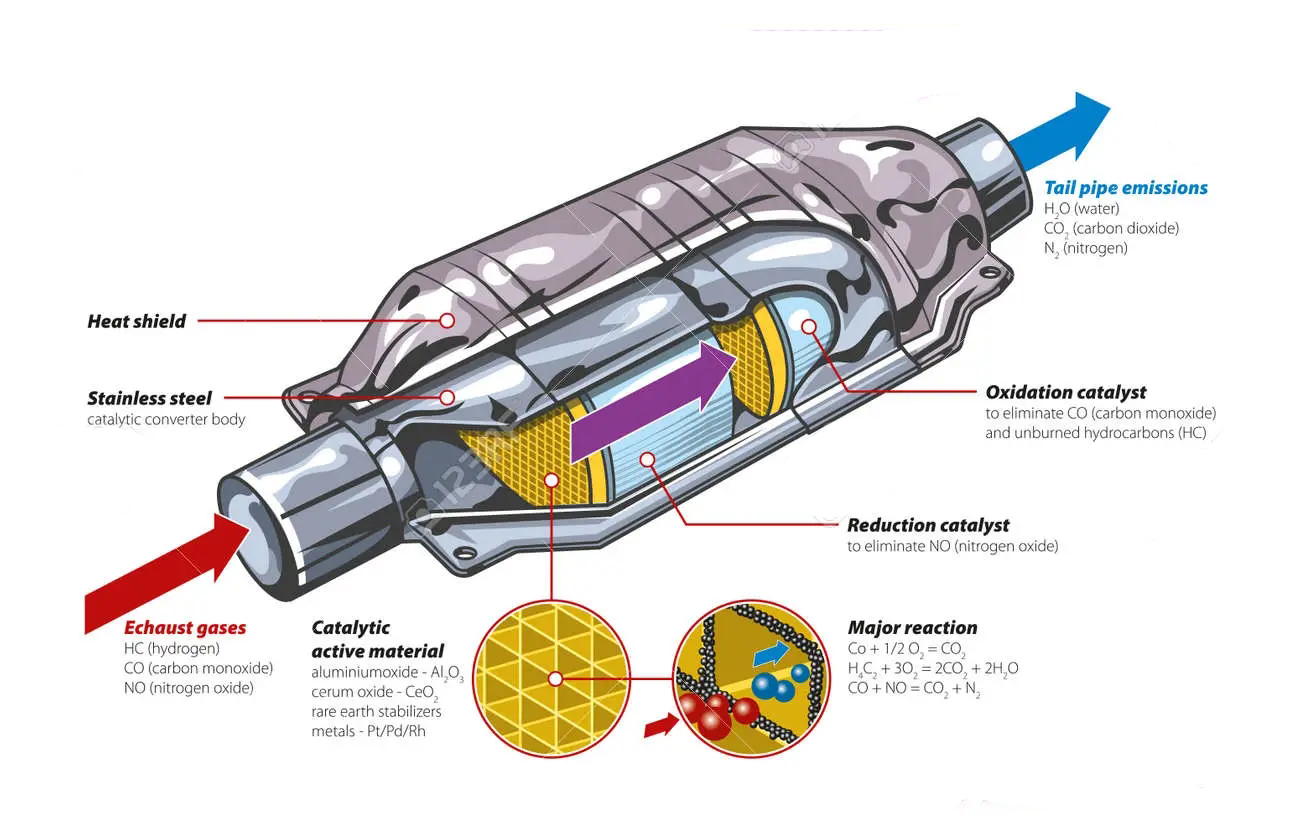
The magic of the catalytic converter lies in its ability to simultaneously perform multiple chemical reactions. Modern converters are known as “three-way” catalysts because they tackle three main pollutants: unburnt hydrocarbons, carbon monoxide, and nitrogen oxides, through both oxidation and reduction processes.
Oxidation Catalyst: Carbon Monoxide and Hydrocarbons
As exhaust gases containing carbon monoxide (CO) and unburnt hydrocarbons (HC) flow over the platinum and palladium-coated surfaces, these metals act as catalysts. They lower the activation energy required for these compounds to react with available oxygen (O2) in the exhaust stream.
- Carbon Monoxide Oxidation: 2CO + O2 → 2CO2
- Hydrocarbon Oxidation: For example, CnHm + (n + m/4)O2 → nCO2 + (m/2)H2O
These oxidation reactions convert the toxic CO into carbon dioxide (a greenhouse gas, but significantly less toxic than CO directly) and transform the harmful hydrocarbons into carbon dioxide and water vapor, both relatively benign end products.
Reduction Catalyst: Nitrogen Oxides
Simultaneously, the rhodium component within the converter facilitates the reduction of nitrogen oxides (NOx). Nitrogen oxides are formed when nitrogen and oxygen from the air react under the high-temperature and high-pressure conditions inside the engine’s combustion chambers.
- Nitrogen Oxide Reduction: 2NOx → xO2 + N2 (e.g., 2NO → N2 + O2; 2NO2 → N2 + 2O2)
Rhodium helps strip oxygen atoms from the NOx molecules, releasing molecular nitrogen (N2), which is the primary component of the air we breathe, and oxygen (O2). This process is crucial because NOx compounds are significant contributors to smog and acid rain.
The Three-Way Catalyst System Explained
The brilliance of the three-way catalyst lies in its synchronized operation. It performs both oxidation and reduction reactions almost simultaneously within the same device, or sometimes within separate but consecutive stages. To achieve optimal efficiency, the engine’s air-fuel mixture must be precisely controlled, often monitored by oxygen sensors (lambda sensors) both before and after the catalytic converter. The ideal operational window for a three-way catalyst is at the stoichiometric point, where there is just enough oxygen to burn all the fuel completely. Slight deviations from this precise air-fuel ratio can significantly impact the converter’s efficiency, highlighting the tight integration of the converter with the engine’s electronic control unit (ECU) and its sensor array. This intricate chemical dance allows the catalytic converter to achieve remarkable conversion rates, often exceeding 90-95% for all three major pollutants, making it one of the most effective environmental technologies ever widely deployed in transportation.
Technological Evolution and Modern Innovations
The catalytic converter has not remained static since its introduction. Continuous research and development have led to significant improvements in its design, efficiency, and integration with advanced engine technologies.
From Two-Way to Three-Way
Early catalytic converters, introduced in the mid-1970s, were primarily “two-way” catalysts. These units focused on oxidizing carbon monoxide and hydrocarbons but lacked the capability to reduce nitrogen oxides. They typically used platinum and palladium to facilitate the oxidation reactions. The major breakthrough came in 1981 with the widespread adoption of the “three-way” catalyst, which incorporated rhodium to also tackle NOx emissions. This marked a profound leap in emission control technology, allowing vehicles to meet increasingly stringent air quality standards by simultaneously addressing all three primary pollutants. The development of advanced materials and better understanding of catalytic processes made this multi-functional design possible, revolutionizing automotive environmental performance.
Close-Coupled Converters and Lean NOx Traps
Modern engine designs often feature “close-coupled” catalytic converters. These converters are positioned much closer to the engine manifold, where exhaust gases are hottest. Placing the converter closer to the engine allows it to reach its optimal operating temperature (light-off temperature) much faster after a cold start. This is critical because converters are largely ineffective when cold, and a significant portion of a vehicle’s total emissions occurs during the initial minutes of operation. By minimizing the “cold start” period, close-coupled designs dramatically reduce overall emissions.
For diesel engines and some gasoline direct injection (GDI) engines that operate with lean air-fuel mixtures (more air than needed for combustion), traditional three-way catalysts are less effective at reducing NOx due to the abundance of oxygen. For these applications, technologies like Lean NOx Traps (LNTs) or Selective Catalytic Reduction (SCR) systems are employed. LNTs absorb NOx during lean operation and then release it during brief rich periods (achieved by injecting extra fuel), allowing a conventional catalyst to reduce it. SCR systems inject a urea-water solution (AdBlue or Diesel Exhaust Fluid) into the exhaust stream, which then reacts with NOx over a dedicated catalyst to convert it into nitrogen and water. These innovations highlight the ongoing technological push to address specific challenges posed by different engine types and operational cycles.
Monitoring and Diagnostics: The Role of Sensors
The efficiency and proper functioning of the catalytic converter are constantly monitored by the vehicle’s onboard diagnostic (OBD) system. This is primarily achieved through oxygen sensors, often referred to as O2 sensors or lambda sensors. At least two O2 sensors are typically installed: one upstream of the catalytic converter (before the catalyst) and one downstream (after the catalyst). The upstream sensor measures the oxygen content in the exhaust entering the converter, providing critical feedback to the engine’s ECU to maintain the optimal air-fuel ratio. The downstream sensor measures the oxygen content leaving the converter. By comparing the readings from both sensors, the ECU can determine the converter’s oxygen storage capacity and overall efficiency. A malfunctioning converter will show similar oxygen levels before and after, indicating it is no longer effectively storing oxygen or performing its chemical transformations. This would trigger a “Check Engine” light, alerting the driver to an emission system issue, demonstrating the sophisticated integration of sensor technology with emissions control.
Maintenance, Lifespan, and Common Issues
While designed for durability, catalytic converters are not immune to wear and tear. Their performance can degrade over time due to various factors, and understanding these can help prolong their life and maintain vehicle compliance.
Factors Affecting Longevity
The lifespan of a catalytic converter is typically designed to match the lifespan of the vehicle, often exceeding 100,000 miles. However, several factors can accelerate its degradation:
- Fuel Contaminants: Lead was a notorious catalyst poison, which is why unleaded gasoline became mandatory. Even modern fuels can contain trace contaminants that can coat the catalyst surfaces, reducing their effectiveness.
- Engine Misfires: A misfiring spark plug can send unburnt fuel into the exhaust system, which then ignites inside the converter dueaching the catalyst to extremely high temperatures. This “meltdown” can permanently damage the ceramic substrate, causing it to block exhaust flow.
- Oil and Coolant Leaks: Leaking engine oil or coolant into the combustion chamber results in these fluids burning and depositing residues on the catalyst surface, essentially “clogging” the precious metal sites and reducing efficiency.
- Oxygen Sensor Failures: A faulty O2 sensor can cause the engine to run excessively rich or lean, pushing the catalytic converter outside its optimal operating window and leading to premature failure due to overheating or inefficient operation.
- Physical Damage: While robust, severe impacts or road debris can damage the converter’s casing or internal structure, affecting its performance or causing leaks.
Signs of a Failing Converter
A failing catalytic converter can manifest in several ways:
- Check Engine Light: The most common indicator, triggered by the downstream O2 sensor detecting inefficient operation.
- Reduced Engine Performance: A clogged converter restricts exhaust flow, leading to noticeable power loss, poor acceleration, and decreased fuel economy.
- Sulphur or Rotten Egg Smell: This distinct odor indicates that the converter is failing to process hydrogen sulfide (a byproduct of combustion) into less odorous compounds.
- Rattling Noises: If the internal ceramic monolith breaks apart, it can rattle within the casing, especially when the engine is running or when hitting bumps.
- Failed Emissions Test: Ultimately, if the converter isn’t performing its job, the vehicle will fail required emissions inspections.
Theft and Recycling: The Dark Side of Precious Metals
The high concentration of platinum, palladium, and rhodium within catalytic converters makes them an attractive target for thieves. These precious metals have significant scrap value on the black market, leading to a global problem of converter theft. This unfortunate reality underscores the intrinsic value of the technology not just for environmental protection, but also due to the rare and valuable materials embedded within. Beyond theft, end-of-life catalytic converters are highly recyclable. Specialized facilities recover the precious metals through complex chemical processes, demonstrating a circular economy approach to these critical components and reinforcing their significance in the global economy and technological landscape.
aViewFromTheCave is a participant in the Amazon Services LLC Associates Program, an affiliate advertising program designed to provide a means for sites to earn advertising fees by advertising and linking to Amazon.com. Amazon, the Amazon logo, AmazonSupply, and the AmazonSupply logo are trademarks of Amazon.com, Inc. or its affiliates. As an Amazon Associate we earn affiliate commissions from qualifying purchases.