
In the vast and intricate world of audio technology, few concepts are as ubiquitous and fundamental as the decibel, or dB. Far from being just another technical acronym, understanding dB is crucial for anyone working with sound, whether you’re an aspiring music producer, a live sound engineer, an audiophile, or simply someone trying to get the best sound from their home theater system. The decibel provides a standardized, logarithmic way to measure the ratio of two power or intensity values, making it an indispensable tool for quantifying everything from the loudness of a sound to the gain of an amplifier or the level of a digital audio signal.
The Foundational Concept of Decibels (dB)
At its core, a decibel is a unit of measurement that expresses the ratio of a physical quantity (usually power or intensity) relative to a reference level, on a logarithmic scale. This logarithmic nature is key to its utility in audio. The human ear perceives sound loudness in a non-linear fashion; doubling the sound pressure does not sound twice as loud to us. Instead, our perception of loudness aligns more closely with a logarithmic scale. This makes the decibel a perfectly tailored unit for describing sound levels in a way that correlates with human hearing.
The formula for decibels is typically expressed as:
dB = 10 * log10 (P1 / P0) for power ratios, or
dB = 20 * log10 (V1 / V0) for voltage ratios (since power is proportional to the square of voltage).
Here, P1 (or V1) is the measured value, and P0 (or V0) is the reference value. This ratio-based approach allows dB to represent enormous ranges of values concisely. For instance, a sound that is 10 times more powerful than another is +10 dB, while a sound 100 times more powerful is +20 dB, and 1,000,000 times more powerful is +60 dB.
The Human Ear and Logarithms: Why dB Makes Sense
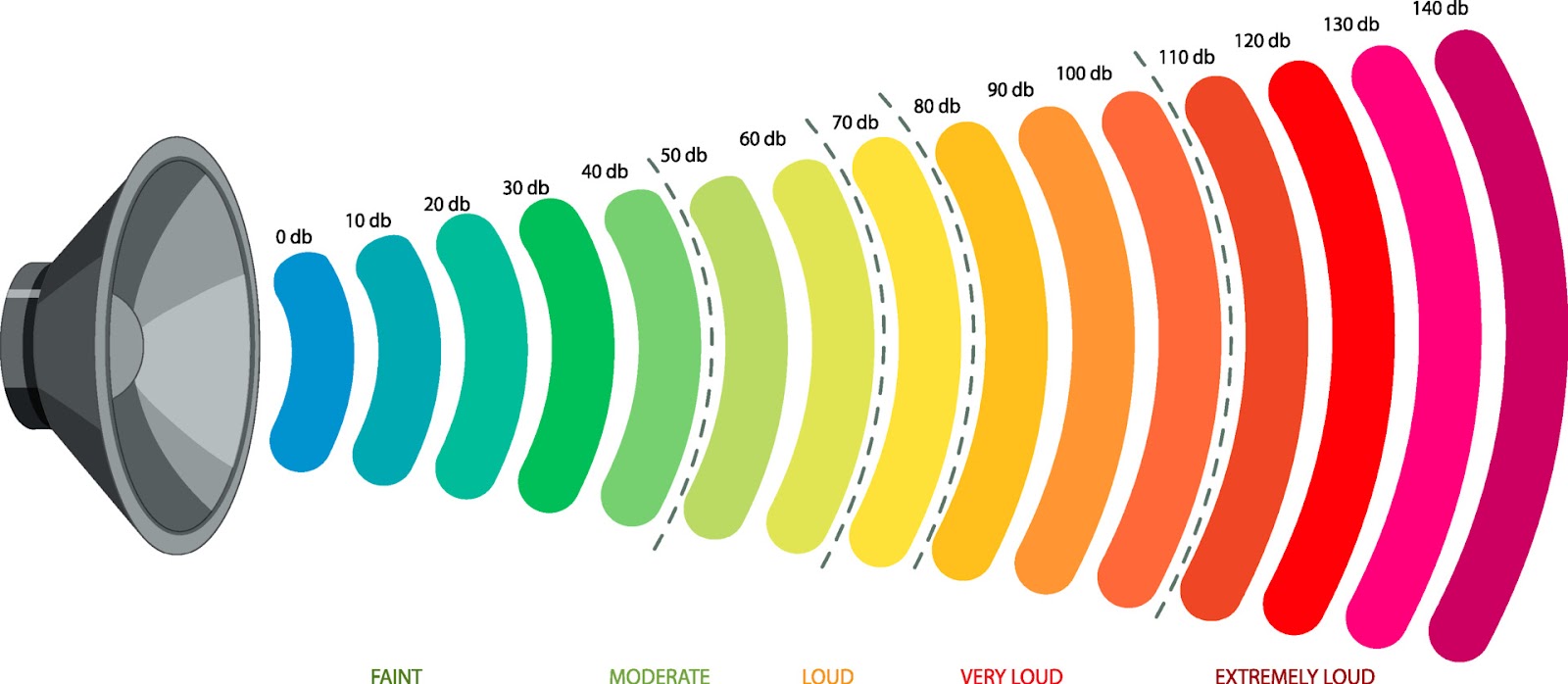
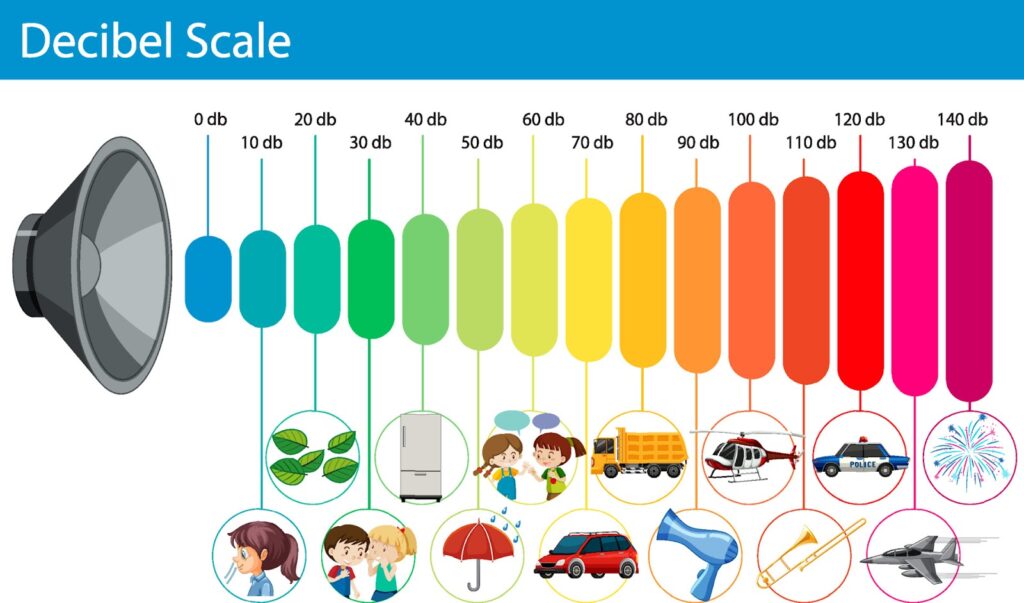
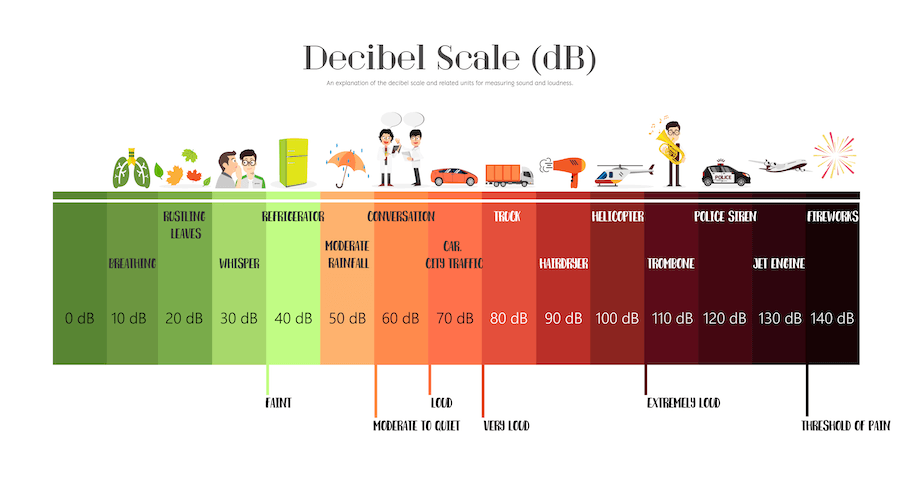
The dynamic range of human hearing is extraordinary, spanning from the faint rustle of leaves (around 0 dB SPL) to the deafening roar of a jet engine (around 120-140 dB SPL). To represent such a vast range with linear units would be cumbersome and impractical. A logarithmic scale compresses this immense range into a more manageable one, mirroring our auditory system’s response. A small change in decibels at low levels can be perceived as significant, while the same dB change at high levels might be less noticeable, reflecting how our ears work. This inherent characteristic makes dB not just a technical unit, but a psychoacoustic one, directly bridging the gap between objective measurement and subjective perception of loudness.
Absolute vs. Relative dB: Understanding dB SPL vs. dBFS vs. dBu/dBV
It’s crucial to understand that “dB” isn’t a standalone unit like meters or kilograms. It always implies a ratio. To make it an absolute measurement, a specific reference point must be defined, leading to various dB scales used in audio:
- dB SPL (Sound Pressure Level): This measures the absolute sound pressure in the air. The reference point (0 dB SPL) is defined as 20 micropascals (µPa), which is roughly the quietest sound an average human ear can detect at 1 kHz. When you talk about the loudness of a concert or ambient noise, you’re usually referring to dB SPL.
- dBFS (Decibels Full Scale): This is the standard for digital audio. 0 dBFS represents the maximum possible digital level before clipping or distortion occurs. All other levels in dBFS are negative, meaning they are below this maximum. For example, -6 dBFS means the signal is 6 dB below the maximum digital level. Going above 0 dBFS is impossible in digital systems and results in destructive clipping.
- dBu/dBV: These units are used in analog audio systems to measure voltage levels.
- dBu references 0.775 volts RMS (Root Mean Square) unloaded. This comes from the historical reference of 1 milliwatt into a 600-ohm load.
- dBV references 1 volt RMS.
These are vital for ensuring proper gain staging between different pieces of analog equipment, matching professional (+4 dBu) and consumer (-10 dBV) line levels, and avoiding noise or distortion in analog signal chains.
dB in Practice: Common Audio Applications
The application of decibels permeates every facet of audio. From capturing sound to its final playback, dB is the language that defines signal levels and dynamics.
Measuring Sound Pressure Level (SPL): Environment, Noise
In acoustics, dB SPL is the go-to unit for assessing environmental noise, calibrating monitoring systems, and measuring the output of loudspeakers. Sound level meters, commonly used by audio professionals, provide readings in dB SPL to quantify the loudness of a specific acoustic environment. This helps determine safe listening levels, compliance with noise regulations, or simply the perceived loudness of a sound event.
Digital Audio Workstations (DAWs) and dBFS: Headroom, Clipping
In the digital domain, every mixer, meter, and fader in a Digital Audio Workstation (DAW) operates using dBFS. Understanding dBFS is crucial for recording and mixing. Maintaining adequate headroom—the space between your average or peak signal level and 0 dBFS—is paramount. Too little headroom risks clipping, where the digital signal attempts to exceed 0 dBFS and results in harsh, unrecoverable distortion. Good practice often involves tracking and mixing with peaks around -6 dBFS to -3 dBFS, leaving plenty of room for processing and mastering without digital overs.
Analog Audio Gear and dBu/dBV: Interfacing, Gain Staging
Analog equipment like microphones, preamps, compressors, and mixing consoles rely on dBu or dBV for their input and output levels. Proper gain staging—optimizing the signal level at each stage of the audio chain—is critical to maximize signal-to-noise ratio and prevent analog clipping. Mismatching professional (+4 dBu) and consumer (-10 dBV) equipment can lead to either weak, noisy signals or signals that are too hot and cause distortion. Converters between analog and digital often have configurable reference points (e.g., +4 dBu = -18 dBFS) to ensure smooth transitions.
Signal-to-Noise Ratio (SNR) and Dynamic Range
Decibels are also used to quantify critical performance metrics of audio equipment:
- Signal-to-Noise Ratio (SNR): This is the ratio, in dB, of the desired signal power to the unwanted noise power. A higher SNR indicates a cleaner signal with less background noise.
- Dynamic Range: This represents the difference, in dB, between the loudest and quietest sounds a system can reproduce. A wider dynamic range allows for more expressive and natural-sounding audio.
Understanding Gain Staging and Level Management
Effective gain staging is arguably one of the most important practical applications of understanding decibels. It’s the process of setting the gain of each audio component in a signal chain to achieve the optimal level. The goal is to maximize the signal-to-noise ratio at every stage without introducing unwanted distortion.
The Importance of Headroom
Headroom refers to the difference between the operating level of your signal and the maximum level the equipment or system can handle before clipping. In analog systems, pushing levels too high results in harmonic distortion which can sometimes be desirable (e.g., tube saturation), but often leads to an undesirable, gritty sound. In digital systems, exceeding 0 dBFS results in hard clipping, which is almost always detrimental to sound quality. Always leaving sufficient headroom, especially during recording, provides flexibility for mixing and mastering, allowing for boosts in EQ or compression without immediately running into distortion.
Avoiding Clipping and Distortion
Clipping occurs when an audio signal attempts to exceed the maximum amplitude a system can handle. As mentioned, digital clipping is unforgiving. Analog clipping can be softer or harder depending on the circuit design, but excessive analog clipping also degrades audio quality. By monitoring meters and understanding dB levels, audio engineers can make informed decisions about gain settings, ensuring that signals remain robust without being overdriven.
Optimizing Signal Flow
An optimized signal flow means that the signal level is consistent and appropriate from one piece of gear to the next. If the signal is too low at an input, you’ll need to boost it later, amplifying any inherent noise along with it. If it’s too high, you risk overloading the input of the next device, leading to distortion. Using dBu/dBV for analog and dBFS for digital, professionals can meticulously manage these levels, ensuring clarity and fidelity throughout the entire production chain.
Key dB Reference Points and Their Significance
Specific dB values often serve as critical benchmarks in professional audio. Knowing these helps in setting up equipment and making mixing decisions.
0 dBFS: The Digital Ceiling
This is the absolute maximum level in a digital system. It’s the point of no return. Any signal attempting to exceed 0 dBFS will be clipped, resulting in permanent digital distortion. While some mastering engineers might push peak levels very close to 0 dBFS, it’s generally recommended to maintain a slight buffer (e.g., -0.1 dBFS to -0.3 dBFS) for safety, especially considering potential inter-sample peaks during playback.
-6 dBFS, -12 dBFS: Typical Mixing Headroom
When mixing, it’s common practice to keep individual tracks and the main stereo bus peaking well below 0 dBFS. Peaks around -6 dBFS to -3 dBFS on individual tracks, and keeping the main mix bus around -6 dBFS to -3 dBFS during the mixing stage (before final limiting/mastering), provide ample headroom. This prevents internal clipping within the DAW’s processing and allows the mastering engineer room to apply their tools effectively without fighting an already over-loud mix.
85 dB SPL: Standard Monitoring Level
Many professional studios calibrate their monitoring systems to deliver 85 dB SPL (C-weighted, slow response) at the listening position when pink noise is played back at a specific reference level (often -20 dBFS in the digital domain). This standard, derived from psychoacoustic research, provides an optimal listening level for critical decision-making, as it approximates the human ear’s flattest frequency response and allows for prolonged listening without excessive fatigue.
+4 dBu vs. -10 dBV: Professional vs. Consumer Line Levels
These are standard operating levels for analog equipment.
- +4 dBu: This is the professional line level standard. Equipment designed for studios, live sound, and broadcast typically operates at this level.
- -10 dBV: This is the consumer line level standard, found on many home audio systems, some semi-pro gear, and older consumer electronics.
A difference of about 12 dB exists between these two standards. Connecting a -10 dBV output to a +4 dBu input may result in a weak, noisy signal, while connecting a +4 dBu output to a -10 dBV input can lead to input overload and distortion. Understanding these differences is crucial for proper interfacing.
dB and Audio Quality
Ultimately, a solid grasp of decibels translates directly into improved audio quality. It’s not just about numbers; it’s about making informed decisions that shape the sonic output.
Achieving Optimal Loudness without Sacrificing Dynamics
The “loudness war” has often pushed music levels to their absolute limits, sacrificing dynamic range for perceived loudness. Understanding dB allows engineers to navigate this challenge, finding the sweet spot where a track is competitive in loudness yet retains its punch, impact, and emotional dynamics. This involves careful use of compressors, limiters, and gain staging to control peaks and raise the overall perceived level without crushing the life out of the audio.
Troubleshooting Noise and Hum
Many audio problems, such as hiss, hum, or buzz, can be traced back to improper gain staging or level mismatches. By understanding how dB applies to signal-to-noise ratios and proper impedance matching, professionals can systematically troubleshoot and eliminate these unwanted artifacts, leading to cleaner, more pristine recordings and mixes.
Making Informed Equipment Choices
Whether it’s evaluating a microphone’s self-noise (specified in dB), an amplifier’s power output (in watts, which relates to dB), or an audio interface’s dynamic range (in dB), knowledge of decibels empowers you to interpret specifications accurately. This allows for informed decisions when purchasing or integrating new gear into your audio setup, ensuring compatibility and optimal performance.
In conclusion, the decibel is far more than a mathematical construct; it is the lingua franca of audio. Mastering its various forms and applications is an essential skill set for anyone serious about sound, enabling precise control, effective troubleshooting, and ultimately, superior audio production.
aViewFromTheCave is a participant in the Amazon Services LLC Associates Program, an affiliate advertising program designed to provide a means for sites to earn advertising fees by advertising and linking to Amazon.com. Amazon, the Amazon logo, AmazonSupply, and the AmazonSupply logo are trademarks of Amazon.com, Inc. or its affiliates. As an Amazon Associate we earn affiliate commissions from qualifying purchases.