
Selecting the correct drill bit for tapping operations is a foundational skill in manufacturing, fabrication, and repair. An improperly sized pilot hole can lead to weak threads, damaged workpieces, or broken taps, costing time and resources. For a 10-32 tap, a common size used in various mechanical and electronic assemblies, precision in drill selection is paramount. This guide delves into the specifics of determining the optimal drill size, exploring the underlying technical principles, and outlining best practices for successful tapping.
Understanding Tap and Drill Sizing Standards
The process of creating internal threads requires a pre-drilled pilot hole that is slightly smaller than the tap’s major diameter. This allows the tap’s cutting edges to form the threads within the material. The precision of this hole directly influences the strength and integrity of the final thread.
The Unified Thread Standard (UTS)
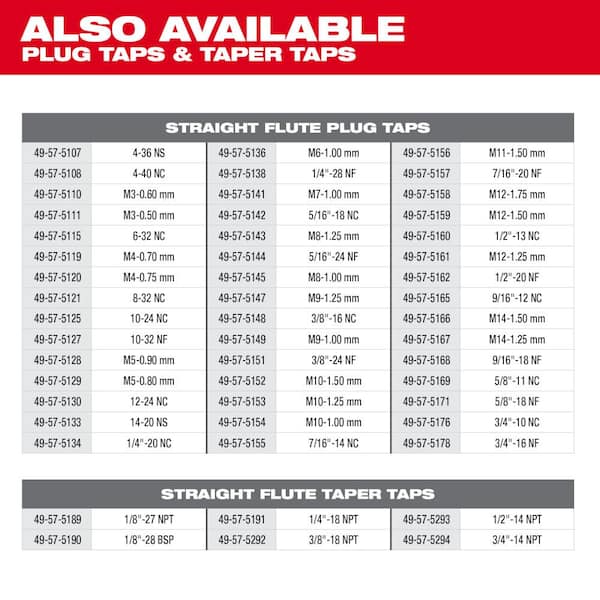
The 10-32 tap refers to a thread form defined by the Unified Thread Standard (UTS), prevalent in the United States and Canada. The “10” indicates the nominal major diameter of the thread, which is approximately 0.190 inches (or 4.826 mm). This number is part of a standardized series for machine screws, where smaller numbers (e.g., 0, 2, 4, 6, 8, 10, 12) represent increasing diameters before switching to fractional inch sizes (e.g., 1/4″, 5/16″, 3/8″). The “32” signifies the threads per inch (TPI), indicating that there are 32 full threads within one linear inch of the screw or bolt. The “UNF” (Unified National Fine) designation is often implied for 32 TPI on a #10 screw, indicating a fine thread series suitable for applications requiring high strength in thin-walled material or fine adjustments.
Tap Drills vs. Clearance Drills
It is crucial to distinguish between tap drills and clearance drills. A tap drill creates the pilot hole for tapping threads; its size is critical for thread engagement. A clearance drill, on the other hand, creates a hole large enough for a screw to pass through without engaging the threads, often used when fastening two components together with a bolt and nut, or when creating a through-hole for a threaded fastener to simply pass through the first component to thread into a second. For a #10 screw, a common clearance drill size is a #9 (0.196 inches) or 3/16″ (0.1875 inches) for close fits, or often a #19 or 13/64″ (0.2031 inches) for a normal fit. These are not suitable for tapping.
The Role of Thread Engagement
The concept of thread engagement is central to tap drill sizing. Thread engagement refers to the percentage of material that the internal threads engage with the external threads of a fastener. A 100% thread engagement would mean the internal thread form is complete to its theoretical maximum depth. However, achieving 100% engagement is impractical and often undesirable.
- Too much engagement (undersized drill hole): This results in an excessively high percentage of thread engagement. While seemingly stronger, it significantly increases the torque required to turn the tap, making tapping more difficult, increasing friction and heat, and dramatically raising the risk of tap breakage, especially in harder materials. The extra material doesn’t necessarily translate to proportional strength gains beyond a certain point.
- Too little engagement (oversized drill hole): This leads to a low percentage of thread engagement. The resulting threads will be weaker and more susceptible to stripping or shearing under load. This is a common issue when using an imperial drill that is close but not exact to the recommended size.
The optimal thread engagement for most applications is typically between 60% and 82%. A 75% thread engagement is widely accepted as the industry standard, providing an excellent balance between thread strength and ease of tapping. For applications involving harder materials or extremely deep holes, a lower engagement (e.g., 60-65%) might be preferred to reduce tap stress. Conversely, softer materials might tolerate higher engagement percentages.
Determining the Correct Drill Bit for a 10-32 Tap
The definitive size for a tap drill is not merely an arbitrary number but is derived from the thread’s major diameter, pitch, and the desired percentage of thread engagement.
The Standard Formula and Lookup Tables
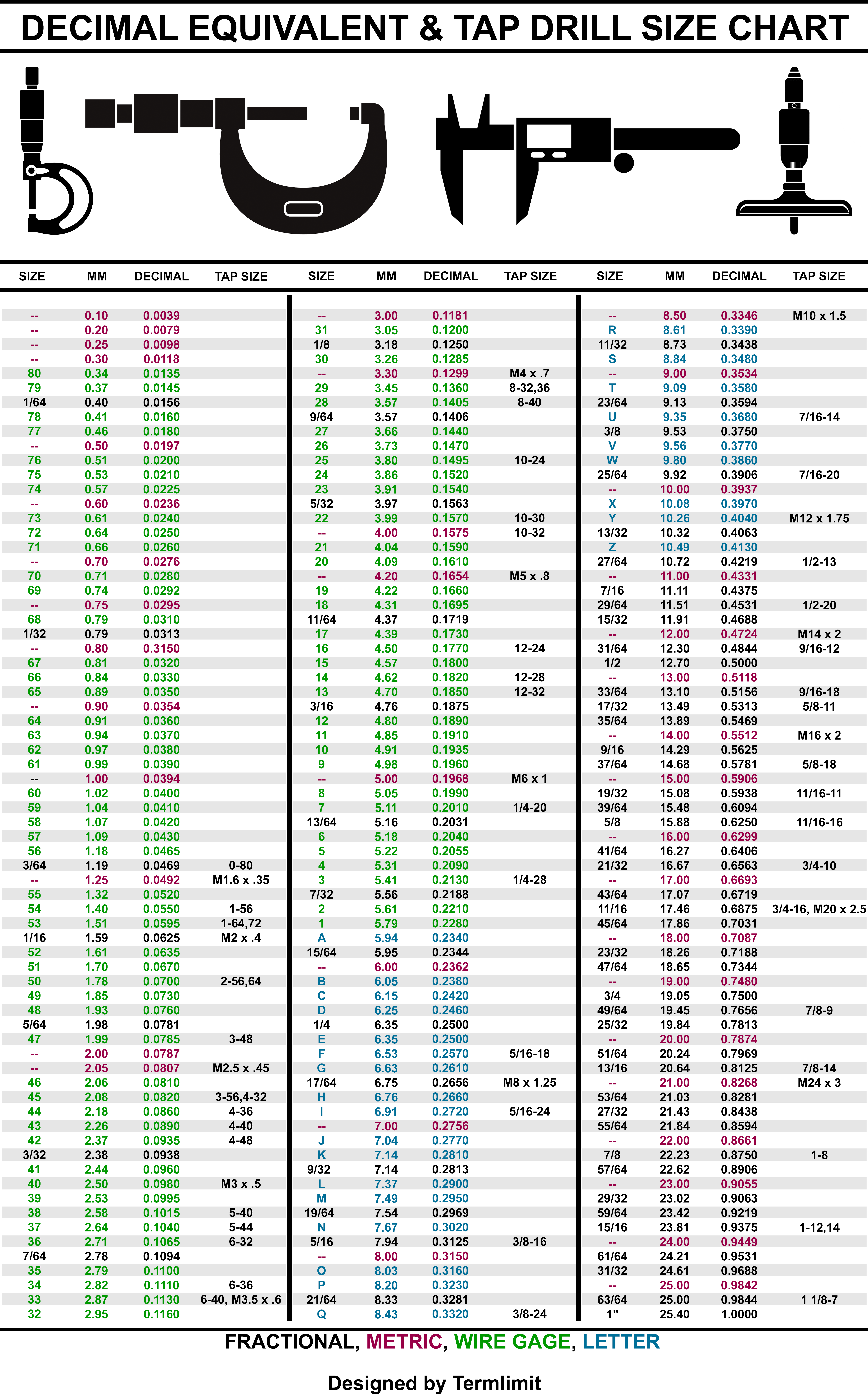
While comprehensive tap drill charts are readily available, understanding the underlying formula provides valuable insight. The approximate basic tap drill size (in inches) can be calculated using the following formula:
Tap Drill Diameter = Major Diameter - (1 / Threads Per Inch)
For a 10-32 tap:
- Major Diameter for a #10 screw is 0.190 inches.
- Threads Per Inch (TPI) is 32.
Plugging these values into the formula gives:
Tap Drill Diameter = 0.190 - (1 / 32) = 0.190 - 0.03125 = 0.15875 inches
This calculation typically yields a drill size that provides approximately 75% thread engagement, which is the industry standard.
Recommended Drill Sizes for 10-32 Tap
Based on the standard 75% thread engagement, the most commonly recommended and preferred drill size for a 10-32 tap is:
- #21 Drill Bit (0.1590 inches)
The #21 drill bit is precisely matched to provide optimal thread engagement and strength for a 10-32 tap in most materials. This is the go-to size for professional results.
However, depending on specific material properties, depth of thread, and desired thread engagement, other sizes may be considered:
- 5/32″ (0.15625 inches): This fractional size is slightly smaller than #21. It will result in a higher thread engagement (closer to 80-82%), which can be beneficial in softer materials where maximum strength is desired, or when working with materials prone to tearing. However, it will require more tapping torque and increases the risk of tap breakage in harder materials.
- 11/64″ (0.171875 inches): This fractional size is notably larger than #21. It would result in a lower thread engagement (closer to 60-65%). This might be acceptable or even preferable in very hard or abrasive materials where tap breakage is a major concern, or in applications where the full thread strength is not required. The resulting threads will be weaker but easier to form.
Always consult a reliable tap drill chart, as manufacturers may have slight variations or specific recommendations for their taps or for particular materials.
Why Different Drill Sizes Exist (65%, 75%, 82% Thread Engagement)
The existence of multiple “correct” drill sizes for a single tap stems from the flexibility offered by thread engagement percentages. Each percentage serves a specific purpose:
- 75% Thread Engagement (e.g., #21 drill): This is the industry sweet spot. It offers excellent thread strength while minimizing the torque required for tapping, reducing tap wear and breakage. It’s suitable for a vast majority of applications in various materials, from aluminum to steel.
- 60-65% Thread Engagement (e.g., 11/64″ drill): This lower percentage is typically chosen for very hard, brittle, or abrasive materials (like certain stainless steels, cast iron, or hardened tool steels) where tap breakage is a significant concern. The reduced material to cut lowers the stress on the tap, making the process easier and prolonging tap life. While threads are slightly weaker, they are often still sufficient for the application, and the trade-off prevents costly tap failures.
- 80-85% Thread Engagement (e.g., 5/32″ drill): This higher percentage is generally reserved for very soft, ductile materials (like soft aluminum, plastics, or brass) where maximum thread strength is desired, or where the material might be prone to stripping if not fully engaged. In these materials, the higher engagement typically doesn’t lead to excessive tap stress. However, caution is still advised as it can increase tap torque and potential for breakage if not properly lubricated or if the material has unexpected hardness.
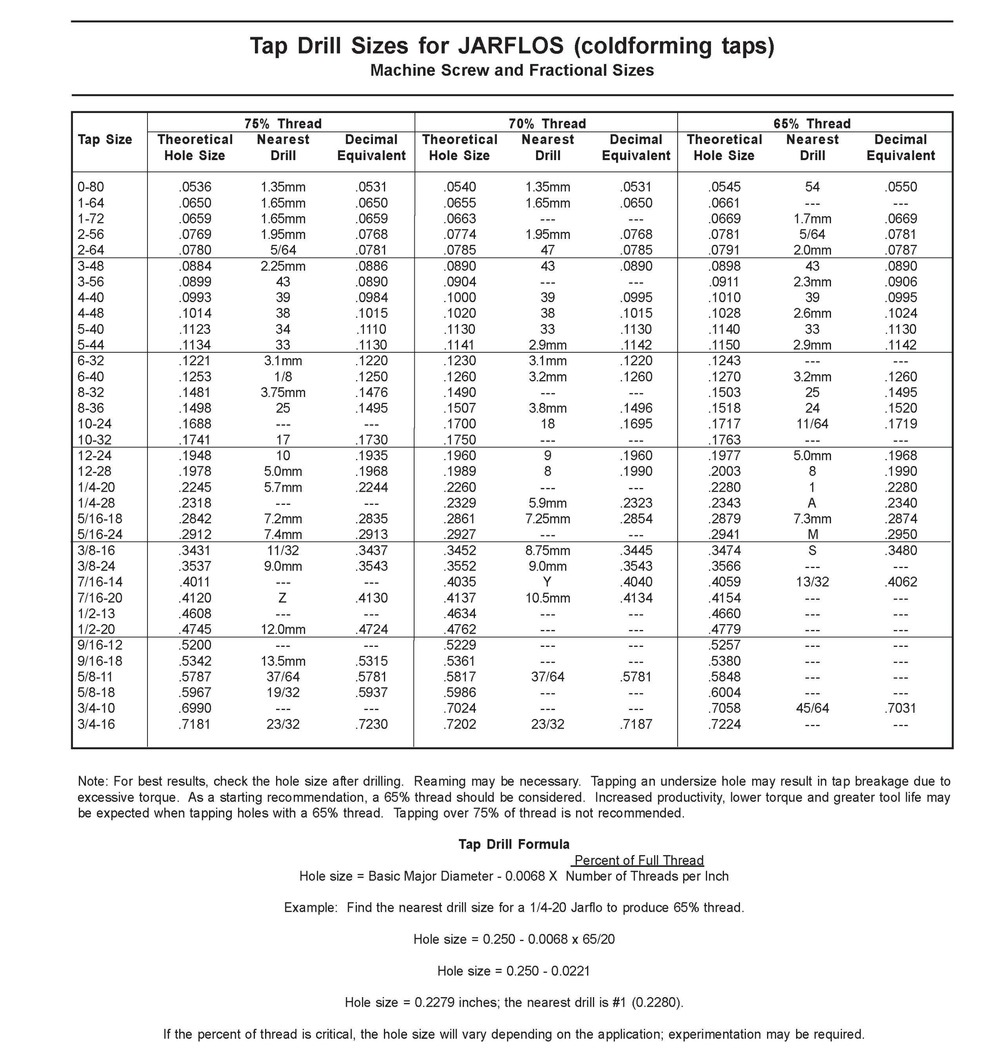
Choosing the right percentage depends on a thorough understanding of the material, the tap’s capabilities, and the required strength of the final assembly.
Best Practices for Successful Tapping
Beyond selecting the correct drill bit, several best practices ensure clean, strong threads and prevent tool damage.
Material Considerations
The material being tapped significantly impacts the tapping process. Softer materials like aluminum or brass are easier to tap but can lead to galling or chip buildup. Harder materials like steel or stainless steel require more force and are prone to tap breakage. Very abrasive materials can quickly dull taps. Always research material-specific recommendations for tap type (e.g., spiral point, spiral flute), lubrication, and speed.
Proper Lubrication and Cutting Fluids
Using an appropriate cutting fluid is non-negotiable for successful tapping. Lubricants reduce friction and heat, flush out chips, prevent galling, and extend tap life. The type of lubricant should match the material:
- Aluminum: Kerosene, specialized aluminum tapping fluids.
- Steel/Stainless Steel: Sulfurized cutting oil, heavy-duty tapping fluids.
- Cast Iron/Brass: Often tapped dry, or with light oil, as chips are brittle.
- Plastics: Sometimes require no lubricant, or a light oil if heat buildup is an issue.
Technique for Drilling and Tapping
- Secure the Workpiece: Always clamp the workpiece firmly to prevent movement during drilling and tapping.
- Drill Accurately: Use a drill press whenever possible to ensure the pilot hole is perfectly straight and perpendicular to the workpiece surface. Hand drilling increases the risk of off-center or angled holes, leading to crooked threads or tap breakage.
- Clear Chips: For deep holes, withdraw the drill bit frequently to clear chips and prevent heat buildup and jamming.
- Chamfer the Hole: After drilling, use a countersink or a larger drill bit to lightly chamfer the edge of the hole. This removes burrs, helps guide the tap squarely, and creates a clean start for the threads.
- Use a Tap Wrench: A proper tap wrench provides even pressure and leverage. Avoid using adjustable wrenches or pliers, which can lead to off-center tapping or excessive torque.
- Start Straight: Crucially, ensure the tap enters the hole perfectly perpendicular to the surface. Use a tapping guide, a drill press (with the machine off and the tap held in the chuck), or a square to check alignment from multiple angles.
- Turn and Reverse: For most materials, particularly steel, turn the tap forward 1/2 to 1 full turn, then reverse it about a 1/4 to 1/2 turn to break chips and clear them from the cutting edges. Repeat this sequence until the desired thread depth is reached. This chip-breaking action is vital for preventing tap binding and breakage.
- Consistent Pressure: Apply light, even downward pressure initially to get the tap started. Once the tap begins to cut threads, it will pull itself into the material, and minimal downward pressure is needed. Let the tap do the work.
Pilot Hole Precision and Deburring
The quality of the pilot hole directly dictates the success of the tapping operation. A clean, accurately sized, and deburred hole is essential. Burrs around the hole can interfere with the tap’s entry, damage the starting threads, or lead to uneven cutting. Deburring tools, reamers, or even a larger drill bit can be used to remove these sharp edges.
Common Pitfalls and Troubleshooting
Even with the correct drill size, issues can arise during tapping. Understanding common problems helps in troubleshooting and prevention.
Tap Breakage Prevention
Tap breakage is a frustrating and costly problem. It often results from:
- Incorrect Tap Drill Size: Too small a hole (too much thread engagement).
- Misalignment: Tap not entering squarely.
- No or Insufficient Lubrication: Excessive friction and heat.
- Improper Chip Clearing: Chips packing in the flutes.
- Dull Tap: Increased cutting resistance.
- Too Much Force: Forcing a dull or binding tap.
- Hard Material: Tapping materials beyond the tap’s capacity without proper technique or specialized taps.
To prevent breakage, always use the correct drill size, proper lubrication, maintain alignment, and employ the turn-and-reverse method for chip clearance. Use high-quality taps appropriate for the material.
Stripped Threads and Oversized Holes
Stripped threads mean the internal threads have been damaged or sheared away, often due to an oversized pilot hole or excessive torque on the fastener after tapping. An oversized drill hole is the primary culprit, leading to insufficient thread engagement and weak threads. Using an imperial drill bit that is close but slightly larger than the metric or number drill equivalent is a common cause. Always verify drill sizes with a caliper or micrometer if unsure, and refer to a tap drill chart.
When to Choose a Helical Insert (e.g., Helicoil)
If a hole is tapped incorrectly (e.g., stripped threads, off-center), or if extremely high-strength threads are required in soft materials, a helical insert (like a Helicoil or similar brand) can be an excellent solution. These involve drilling out the damaged hole to a larger, specific size, tapping it for the insert, and then screwing in a stainless steel coil that provides new, strong threads of the original size. This technique is also used for thread repair or for original equipment manufacturing where robust threads in soft alloys are critical.
Essential Tools and Safety
Executing precise drilling and tapping requires not only knowledge but also the right equipment and adherence to safety protocols.
Quality Drill Bits and Taps
Invest in high-quality, sharp drill bits (HSS, cobalt, or carbide depending on the material) and taps. Dull tools cause more friction, heat, and effort, leading to poor results and increased risk of breakage. Taps are available in various materials and geometries (e.g., high-speed steel, cobalt, with different flute types) suitable for different materials and hole types (through-hole, blind hole).
Measuring Tools
A set of calipers or a micrometer is indispensable for verifying drill bit diameters, especially when working with unlabeled bits or trying to match existing fasteners. A tap drill gauge can also quickly identify appropriate drill sizes.
Personal Protective Equipment
Always wear safety glasses to protect against flying chips and debris. Gloves may be used for handling oil but should be removed when operating rotating machinery like drill presses where they could get caught. Ensure the workspace is well-lit and free of obstructions.
By adhering to these guidelines and understanding the nuances of tap drill sizing and best practices, individuals can confidently and successfully create strong, reliable threads with a 10-32 tap, minimizing errors and maximizing efficiency in their technical endeavors.
aViewFromTheCave is a participant in the Amazon Services LLC Associates Program, an affiliate advertising program designed to provide a means for sites to earn advertising fees by advertising and linking to Amazon.com. Amazon, the Amazon logo, AmazonSupply, and the AmazonSupply logo are trademarks of Amazon.com, Inc. or its affiliates. As an Amazon Associate we earn affiliate commissions from qualifying purchases.