
The allure of silver dollars transcends mere monetary worth; these historical artifacts represent a tangible connection to America’s past, embodying economic shifts, artistic endeavors, and the enduring value of precious metals. For investors and collectors alike, identifying which silver dollars are genuinely valuable requires a nuanced understanding of both intrinsic metal content and numismatic rarity. This deep dive explores the financial aspects, historical context, and key valuation criteria that determine the worth of these iconic coins in the modern market.
The Enduring Allure of Silver Dollars as Investments
Investing in silver dollars is a strategy that appeals to individuals seeking to diversify their portfolios with hard assets, hedge against inflation, or simply indulge in the fascinating world of numismatics. Their value is derived from a dual nature: the intrinsic worth of their silver content and their numismatic premium, which is influenced by rarity, historical significance, and condition.

Historical Significance and Scarcity
The United States has minted various silver dollars throughout its history, each series telling a unique story. From the early Draped Bust and Seated Liberty designs to the more widely recognized Morgan and Peace dollars, these coins circulated during pivotal periods of American expansion and economic development. Their production runs varied significantly, and many were melted down for their silver content during times of economic hardship or policy changes. This scarcity, particularly for specific dates and mint marks, forms the bedrock of their numismatic value. Early issues, predating the large-scale production of Morgan dollars, are exceedingly rare and often command six or even seven figures.
The Intrinsic Value of Silver
All U.S. silver dollars produced for circulation before 1965 (with the exception of some proof issues and specific programs) contain a substantial amount of silver. For instance, Morgan and Peace dollars are composed of 90% silver and 10% copper, weighing approximately 26.73 grams, meaning each coin contains about 0.77344 troy ounces of pure silver. This intrinsic metal value provides a floor for their price. When silver prices rise, even common-date silver dollars see an increase in their “melt value,” making them attractive as a form of precious metal bullion. However, the true financial advantage of specific silver dollars often lies far beyond their melt value, in their numismatic premium.
Numismatic vs. Bullion Value
Understanding the distinction between numismatic value and bullion value is crucial. Bullion value is purely the worth of the precious metal content at current market prices. Numismatic value, on the other hand, is the premium collectors are willing to pay above the bullion value due to the coin’s rarity, historical significance, condition, and aesthetic appeal. For most high-value silver dollars, the numismatic premium far outweighs the intrinsic silver content. A common-date Morgan dollar in worn condition might trade for a small premium over its melt value, while a rare-date Morgan in pristine condition could be worth hundreds of thousands of dollars, despite having the same silver content. This distinction underscores why a targeted approach to collecting and investing in specific silver dollar issues is essential for maximizing financial returns.
Key Factors Determining Silver Dollar Value
The valuation of any collectible, particularly coins, is a multi-faceted process. For silver dollars, several critical factors coalesce to determine their market worth, making careful analysis indispensable for investors.
Condition (Grade) and Rarity
The condition, or “grade,” of a silver dollar is arguably the most significant factor influencing its value. Coins are graded on a 70-point scale, where 1 represents a “Poor” condition and 70 signifies a “Perfect Mint State” (MS-70). Most valuable silver dollars fall into the uncirculated (Mint State, MS) or About Uncirculated (AU) categories. Even a slight difference in grade can translate into thousands, if not tens of thousands, of dollars in value for rare issues.
- Professional Grading Services: For any silver dollar believed to be valuable, professional authentication and grading by reputable services like the Professional Coin Grading Service (PCGS) or the Numismatic Guaranty Corporation (NGC) are paramount. These services encapsulate coins in tamper-evident holders with a unique serial number and a definitive grade, providing confidence to buyers and sellers. An uncirculated 1893-S Morgan dollar, for example, might be worth $50,000 in MS-60, but an MS-65 example could fetch well over $500,000.
- Rarity: The fewer examples of a particular coin that exist, especially in high grades, the more valuable it becomes. Rarity is often a combination of low mintage figures and a low survival rate in good condition.
Mint Mark and Date
The year a coin was minted and the mint where it was produced (indicated by a small letter, or “mint mark,” usually on the reverse) are crucial identifiers. Different mints had varying production numbers, and some mints operated only for specific periods. For instance, the Carson City (CC) mint mark on Morgan dollars often signifies greater rarity due to its limited operational years and lower mintages compared to Philadelphia (no mint mark), San Francisco (S), or New Orleans (O). Identifying key dates and mint marks requires thorough research using numismatic resources.
Die Varieties and Errors
Beyond standard dates and mint marks, specific die varieties and errors can dramatically enhance a silver dollar’s value. These are often subtle manufacturing anomalies that occurred during the minting process.
- VAM Numbers: For Morgan and Peace dollars, “VAM numbers” (named after Leroy Van Allen and A. George Mallis, who cataloged them) identify specific die varieties. Some VAM varieties, like the 1878 7/8 Tailfeathers Morgan dollar (VAM-20) or the 1922 High Relief Peace dollar (VAM-1A), are highly sought after by specialists and can command substantial premiums.
- Error Coins: True error coins, such as doubled dies (where the design appears doubled), repunched mint marks, or off-center strikes, are often unique and highly prized. For example, a significant doubled die on a rare date could make an already valuable coin astronomically expensive. However, one must distinguish between genuine errors and post-mint damage.
Provenance and Market Demand
The history of ownership, or “provenance,” can sometimes add to a coin’s appeal, especially if it was part of a famous collection. Ultimately, market demand plays a significant role. Trends in collecting, economic conditions, and the popularity of specific series can all influence prices. A strong, consistent demand from a dedicated collector base tends to stabilize and increase values over time for genuinely rare and desirable issues.
Identifying High-Value Silver Dollars: A Numismatic Overview

While all U.S. silver dollars have some intrinsic value, certain series and specific issues within those series stand out as particularly valuable due to a confluence of rarity, demand, and historical significance.
Morgan Silver Dollars (1878-1921)
Morgan dollars are perhaps the most popular and widely collected U.S. silver dollars. Designed by George T. Morgan, they were minted from 1878 to 1904 and then for a final year in 1921.
- Key Dates/Mint Marks:
- 1893-S: The undisputed king of Morgan dollars, with an extremely low mintage and even fewer surviving in high grades. Examples can exceed $500,000 in uncirculated condition.
- 1889-CC: Another legendary rarity from the Carson City Mint, especially in high grades.
- 1895-O and 1895-S: Low mintage issues from New Orleans and San Francisco, respectively, are highly coveted.
- 1895 Proof: No regular issue business strikes exist for 1895. The only known 1895 dollars are proof issues, making this coin an extreme rarity, often valued at over $100,000 even for lower-grade proofs.
- Factors Driving Value: Their iconic design, historical significance in the American West, and the hunt for specific mint mark and date combinations drive robust collector demand. Many VAM varieties also add significant value.
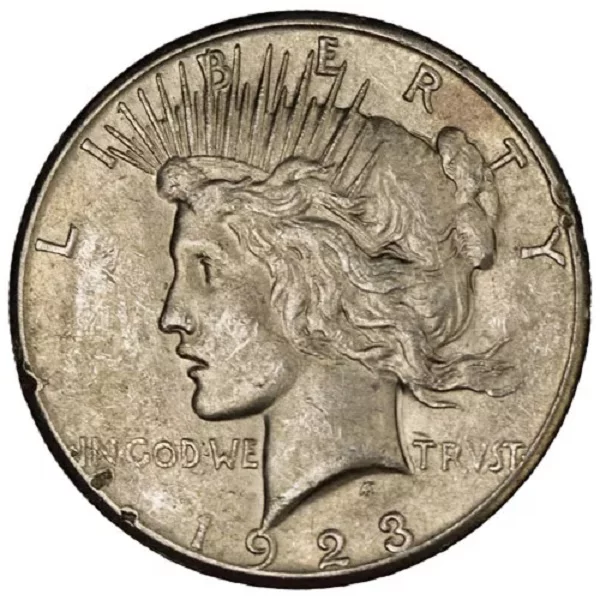
Peace Silver Dollars (1921-1935)
Commemorating the end of World War I, the Peace dollar, designed by Anthony de Francisci, was minted from 1921 to 1935. It represents the last silver dollar minted for circulation in the U.S.
- Key Dates/Mint Marks:
- 1921 High Relief: The first year of issue features a striking high-relief design that proved difficult to strike and was quickly changed. This initial issue is highly sought after, particularly in high grades.
- 1928-S: A low mintage issue from San Francisco, making it a key date.
- 1934-S: Another low mintage coin that is difficult to find in high uncirculated grades.
- Factors Driving Value: While generally more common than Morgan dollars, certain Peace dollar dates and specific varieties (like the 1921 high relief) in top condition command substantial premiums.
Seated Liberty Silver Dollars (1840-1873)
The Seated Liberty dollar, designed by Christian Gobrecht, was produced from 1840 to 1873. These coins are significantly older and rarer than Morgan or Peace dollars.
- Key Dates:
- 1870-S: An extreme rarity; only a handful are known to exist.
- 1873-CC (No Arrows): Another low-mintage Carson City issue from the final year of the series before the Trade Dollar’s introduction.
- Factors Driving Value: Their age, extremely low mintages for many years, and the challenges of survival in a time before widespread numismatic appreciation make all Seated Liberty dollars inherently valuable, with key dates fetching astronomical prices.
Trade Dollars (1873-1885)
Initially minted to facilitate trade with Asia, Trade Dollars were designed by William Barber. While technically silver dollars, they were unique in their purpose. Many circulated heavily in the Far East.
- Key Dates:
- 1884 and 1885: These are extreme rarities, with only 10 and 5 examples known, respectively, as they were proof-only issues (except for the 1884 that one single business strike survived, making it unique). They are among the most valuable U.S. coins.
- 1878-CC: A lower mintage issue from the Carson City Mint.
- Factors Driving Value: Their unique historical role, the challenges of repatriating them from Asia (leading to extensive wear for many), and the extreme rarity of later proof issues make Trade Dollars a specialized and valuable area of collecting. High-grade examples of even common dates are prized.
Strategic Considerations for Investing in Valuable Silver Dollars
For those looking to invest in valuable silver dollars, a structured and informed approach is crucial. It’s not merely about acquiring coins but about making strategic decisions that protect and grow your investment.
Due Diligence and Education
Before making any significant purchases, dedicate time to educating yourself. Read numismatic books, consult reputable online databases, and study auction results. Understand market trends, historical pricing, and the specific nuances of the series you are interested in. Joining numismatic clubs or forums can also provide invaluable insights and networking opportunities. Knowledge is your strongest asset in this market.
Authentication and Grading Services
As previously mentioned, professional grading by PCGS or NGC is non-negotiable for high-value silver dollars. These services provide expert opinions on authenticity and condition, which are critical for establishing a coin’s market value. Raw (ungraded) coins, especially those valued at more than a few hundred dollars, carry inherent risks of counterfeiting or over-grading by amateur assessments. The cost of grading is a small price to pay for the security and liquidity it provides.
Storage and Preservation
The long-term value of a silver dollar is inextricably linked to its condition. Proper storage is paramount. Graded coins are sealed in inert plastic holders, offering excellent protection. For ungraded coins, use archival-safe holders like non-PVC flips or slabs designed for coin preservation. Store your collection in a stable environment, away from extreme temperature fluctuations, humidity, and direct sunlight. Consider a home safe or a bank safe deposit box for security. Accidental damage or environmental degradation can severely diminish a coin’s value.
Market Dynamics and Liquidity
Understand that the numismatic market, while generally stable for key rarities, can have its own dynamics. Liquidity for extremely high-value coins can be slower than for more common items. Be prepared for potentially longer holding periods. When buying or selling, work with established, reputable dealers who offer fair prices and transparency. Familiarize yourself with typical buy/sell spreads and auction fees. A well-researched and professionally graded valuable silver dollar can be a robust long-term investment, offering both a hedge against economic uncertainty and the satisfaction of owning a piece of history.
aViewFromTheCave is a participant in the Amazon Services LLC Associates Program, an affiliate advertising program designed to provide a means for sites to earn advertising fees by advertising and linking to Amazon.com. Amazon, the Amazon logo, AmazonSupply, and the AmazonSupply logo are trademarks of Amazon.com, Inc. or its affiliates. As an Amazon Associate we earn affiliate commissions from qualifying purchases.