
In the intricate world of technology, batteries serve as the lifeblood for an astonishing array of devices, from the smartphones in our pockets to the electric vehicles silently cruising our roads. Understanding how battery capacity is measured is fundamental for both consumers seeking to make informed purchasing decisions and engineers designing the next generation of gadgets. Among the various metrics, “Ah,” or Ampere-hour, stands out as a primary indicator of a battery’s stored electrical charge. Far more than just a label, Ah provides critical insight into a device’s potential operational duration and power delivery capabilities.
Understanding Ampere-hour (Ah) as a Core Battery Metric
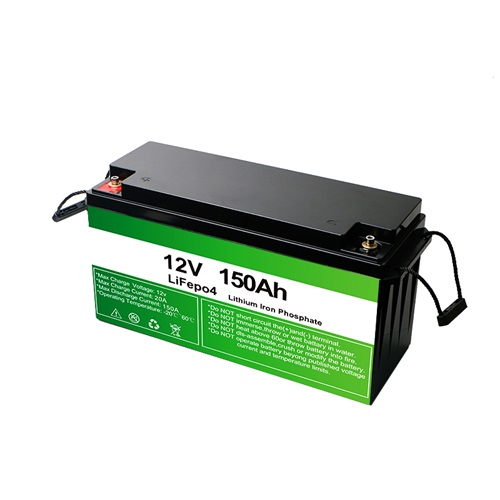
Ampere-hour (Ah) is a unit of electric charge, representing the capacity of a battery to deliver a certain current over a specific period. It is a foundational concept in battery technology, directly influencing how long a device can run before needing a recharge.
The Fundamental Definition of Ah
At its core, “Ah” combines two fundamental electrical concepts: Ampere (A) and hour (h). An Ampere is the unit of electric current, measuring the rate of electron flow. An hour is, of course, a unit of time. Therefore, an Ampere-hour quantifies the amount of electrical charge that can flow from the battery. A battery with a rating of 1 Ah theoretically has the capacity to deliver a current of 1 Ampere for 1 hour, or 0.5 Amperes for 2 hours, or 2 Amperes for 0.5 hours. It serves as a direct indicator of the total charge stored within the battery, analogous to the volume of a fuel tank.
It’s crucial to understand that Ah describes the amount of charge a battery can hold, not the power it can deliver at any given instant. While related to power, Ah itself is a measure of capacity. For example, a 10 Ah battery stores the same amount of charge whether it’s a 3.7V smartphone battery or a 12V lead-acid battery, but the energy stored (and thus the power capabilities) would be vastly different due to voltage.
How Ah Relates to Current and Time
The relationship between Ah, current, and time is direct and intuitive. If you know the Ah rating of a battery and the average current draw of a device, you can estimate the theoretical runtime. For instance, if a portable speaker draws an average of 0.5 Amperes (500 mA) and is powered by a 2 Ah battery, it could theoretically operate for 4 hours (2 Ah / 0.5 A = 4 h). This linear relationship provides a quick way to compare the longevity potential of different batteries, assuming similar load conditions and efficiencies. However, real-world performance can deviate due to various factors, which we will explore later.
Distinguishing Ah from Voltage (V) and Watt-hours (Wh)
While Ah is an essential metric, it doesn’t tell the whole story of a battery’s energy content or capabilities. It’s often misunderstood in isolation from Voltage (V) and Watt-hours (Wh).
- Voltage (V): Voltage is the electrical potential difference or “pressure” that drives the current. A higher voltage means more power can be delivered for the same current. A 10 Ah, 12V battery stores significantly more total energy than a 10 Ah, 3.7V battery.
- Watt-hours (Wh): Watt-hours provide the most comprehensive measure of a battery’s total energy storage. Wh is calculated by multiplying Ah by Voltage (Wh = V x Ah). This metric accounts for both the charge capacity and the electrical potential. For example, a 10 Ah, 12V battery stores 120 Wh of energy, while a 10 Ah, 3.7V battery stores only 37 Wh. For comparing batteries across different voltage platforms (e.g., laptop battery vs. an electric scooter battery), Wh is a far more accurate and useful metric than Ah alone, as it directly relates to the total work the battery can do.
Despite the comprehensive nature of Wh, Ah remains a vital specification, particularly when comparing batteries of the same voltage (e.g., two 12V car batteries) or when the voltage is implicitly understood for a specific device type (e.g., most mobile phones operate around 3.7V to 4.2V per cell).
Practical Implications of Ah in Different Battery Applications
The Ah rating takes on different levels of significance and scales depending on the application, dictating everything from device portability to critical infrastructure reliability.
Small Gadgets and Portable Electronics (mAh vs. Ah)
For most small portable electronics like smartphones, smartwatches, wireless earbuds, and drones, battery capacity is typically expressed in milliampere-hours (mAh) rather than Ah. A milliampere-hour is one-thousandth of an Ampere-hour (1000 mAh = 1 Ah). This unit is used because the current draws and capacities of these devices are relatively small, making mAh a more convenient and readable number.
A higher mAh rating in a portable device directly translates to longer usage times between charges, assuming comparable power consumption from the device’s components. For consumers, this is a key factor in choosing a phone or tablet, directly influencing their daily convenience and interaction with the tech. Manufacturers constantly strive to integrate higher mAh batteries without compromising device size or weight, pushing innovations in battery chemistry and packaging.
Electric Vehicles (EVs) and Energy Storage Systems
In electric vehicles and large-scale energy storage systems (ESS) for homes or grids, battery capacities are often expressed in kilowatt-hours (kWh), which is 1000 Wh. While kWh is the common marketing metric for total energy, Ah still plays a critical role in the design and specification of the individual battery cells and modules that make up these large packs. For instance, a single lithium-ion cell in an EV battery pack might have an Ah rating, and engineers combine many such cells in series and parallel to achieve the desired voltage and kWh capacity for the vehicle’s range.
A higher Ah rating at the cell level, combined with a suitable voltage configuration, allows for greater range in an EV or more energy reserves in an ESS. This directly addresses “range anxiety” for EV drivers and ensures energy resilience for grid operators. The development of higher Ah cells is a continuous goal in battery research, aiming to improve energy density and reduce cost.
UPS Systems and Backup Power
Uninterruptible Power Supply (UPS) systems are critical technology components designed to provide temporary power to essential equipment during outages. These systems commonly rely on lead-acid or lithium-ion batteries, and their capacity is almost universally specified in Ah. For a data center, hospital, or even a home office, the Ah rating of a UPS battery bank determines how long it can power servers, medical devices, or essential network equipment after the main power fails.
System architects meticulously calculate the required Ah capacity based on the total load (in Amps) of the devices to be protected and the desired backup duration. A higher Ah rating means longer uptime, which is paramount for maintaining digital security, preventing data loss, and ensuring business continuity. Understanding Ah is thus crucial for designing robust and reliable backup power solutions in various technological environments.
Factors Influencing a Battery’s Effective Ah Rating

While a battery comes with a nominal Ah rating, its actual usable capacity can vary significantly based on several operational and environmental factors. These nuances are critical for tech users and developers to understand for optimal performance and longevity.
Discharge Rate and Peukert’s Law
The rate at which a battery is discharged (the current drawn from it) has a profound impact on its effective capacity. If a battery is discharged very quickly (at a high current), its usable Ah capacity will be lower than its nominal rating, often specified for a much slower discharge rate (e.g., C/20, meaning the capacity discharged over 20 hours). This phenomenon is described by Peukert’s Law, which states that as the discharge rate increases, the available capacity decreases.
This effect occurs because internal resistance in the battery causes a voltage drop and heat generation, reducing the energy available externally. For devices that experience high peak current demands, such as power tools or high-performance drones, understanding this limitation is key. Engineers must select batteries with sufficient head-room in their Ah rating or employ battery chemistries better suited for high discharge rates to meet performance targets.
Temperature Effects on Capacity
Temperature significantly influences a battery’s performance and effective Ah capacity.
- Cold Temperatures: Low temperatures drastically reduce the chemical reactions within a battery, leading to a substantial decrease in effective Ah capacity and an increase in internal resistance. A battery rated for 10 Ah at room temperature might only deliver 6-7 Ah at freezing temperatures. This is why devices often perform poorly or have much shorter battery life in cold environments.
- Hot Temperatures: While moderate heat can sometimes slightly increase initial capacity by improving chemical kinetics, prolonged exposure to high temperatures accelerates battery degradation, permanently reducing its overall lifespan and maximum Ah capacity over time. For tech gadgets, effective thermal management systems are vital to protect the battery and maintain its rated performance.
Battery Age and Cycle Life Degradation
Like all consumable components, batteries degrade over time and through repeated charge/discharge cycles. Each cycle causes irreversible chemical changes within the battery, leading to a gradual reduction in its maximum usable Ah capacity. This is known as capacity fade. A battery initially rated at 3 Ah might only be able to deliver 2.5 Ah after 500 charge cycles, for example.
Battery Management Systems (BMS) in modern tech devices play a crucial role in monitoring battery health, managing charge cycles, and extending the overall lifespan by preventing overcharging, over-discharging, and excessive temperatures. Users experience this degradation as their once long-lasting device requiring more frequent recharges.
Internal Resistance and Efficiency
Every battery possesses internal resistance, which opposes the flow of current. When a battery discharges, this resistance causes a portion of the energy to be lost as heat rather than being delivered to the device. Higher internal resistance means greater energy loss and a lower effective Ah delivered, especially under heavy loads. It also impacts the battery’s ability to provide high currents efficiently. As batteries age, their internal resistance typically increases, further contributing to capacity fade and reduced power output. Efficient battery design and chemistry aim to minimize internal resistance to maximize the usable Ah and overall energy transfer efficiency.
Calculating and Comparing Battery Life Using Ah
While the nominal Ah rating provides a baseline, a realistic assessment of battery life in any tech product requires considering the device’s actual power consumption and overall system efficiency.
Estimating Runtime for a Device
The most straightforward way to estimate a device’s runtime using Ah is through a simple formula:
Runtime (hours) = Battery Capacity (Ah) / Average Current Draw (Amps)
For example, if a handheld gaming console has a 4000 mAh (4 Ah) battery and draws an average of 0.8 Amps (800 mA) during gameplay, the theoretical runtime would be 4 Ah / 0.8 A = 5 hours. This calculation offers a useful starting point for understanding battery endurance.
However, this is a simplified estimate. In practice, the current draw of most complex electronic devices is rarely constant.
The Importance of Load and Consumption
The “average current draw” is a highly variable factor. A smartphone, for instance, consumes significantly more current when running graphics-intensive games, streaming video, or actively searching for a network signal, compared to when it’s idle or performing basic tasks. Screen brightness, CPU load, Wi-Fi/cellular usage, and peripheral connectivity all contribute to fluctuating power demands.
Because of this dynamic load, real-world battery life often falls short of theoretical calculations based on a single average current. Tech manufacturers conduct extensive testing under various usage scenarios to provide more realistic battery life estimates, often specifying “up to X hours of video playback” or “Y hours of web browsing.”
Software optimizations also play a massive role. Modern operating systems and apps incorporate sophisticated power management features, dynamically adjusting CPU frequencies, dimming screens, and suspending background processes to minimize current draw and extend runtime.
Beyond Ah: Considering Overall System Efficiency
While Ah is a crucial starting point, a comprehensive understanding of battery life extends beyond this single metric to encompass the entire system’s efficiency.
- Voltage Conversion: Many devices require different voltages for various internal components. DC-DC converters within a device transform the battery’s voltage to the required levels. These converters are not 100% efficient; some energy is always lost as heat.
- Standby Power: Even when seemingly “off,” many devices consume a small amount of power (quiescent current) for functions like maintaining a clock, listening for wake commands, or keeping memory alive.
- Software Overhead: The efficiency of the operating system and applications themselves can impact battery drain. Poorly optimized software can consume more power than necessary, effectively reducing the usable Ah.
- Environmental Factors: As discussed, temperature directly impacts chemical efficiency.
Ultimately, while the Ah rating quantifies the raw charge capacity, the true “battery life” experienced by a user is a product of the battery’s nominal capacity, its effective capacity under load and conditions, and the intricate dance of hardware and software efficiencies within the device. For both innovators and end-users in the tech landscape, grasping the meaning and implications of Ah is a vital step toward a deeper appreciation of the power that drives our digital world.
aViewFromTheCave is a participant in the Amazon Services LLC Associates Program, an affiliate advertising program designed to provide a means for sites to earn advertising fees by advertising and linking to Amazon.com. Amazon, the Amazon logo, AmazonSupply, and the AmazonSupply logo are trademarks of Amazon.com, Inc. or its affiliates. As an Amazon Associate we earn affiliate commissions from qualifying purchases.