
Deconstructing a Classic Gadget’s Hidden Feature
The tape measure, in its myriad forms, remains an indispensable gadget in the toolkit of professionals and DIY enthusiasts alike. From architects sketching grand designs to homeowners tackling minor repairs, this simple, yet profoundly effective, mechanical device has endured for centuries, undergoing only subtle refinements. Its enduring presence in a world increasingly dominated by digital solutions speaks volumes about its fundamental utility and robust design. Yet, for many, a particular marking on this classic tool often goes unnoticed or misunderstood: the enigmatic “black diamond.” This isn’t an arbitrary aesthetic choice or a random manufacturer’s stamp; it’s a deliberate, functional design element, a testament to thoughtful engineering aimed at optimizing construction processes. Understanding this hidden feature transforms the humble tape measure from a mere length-measuring instrument into a sophisticated, analog computing aid for specific building applications.

The Tape Measure: An Enduring Mechanical Device
At its core, a tape measure is a low-tech marvel, a coiled ribbon of metal or fabric meticulously marked with incremental units. Its genius lies in its simplicity and portability, allowing for rapid and accurate measurements over varying distances. The evolution of the tape measure, from early linen and steel versions to today’s durable nylon-coated blades, reflects a continuous drive towards enhanced precision, longevity, and user-friendliness. Features like the movable end hook, the blade lock, and impact-resistant casings all represent iterations of design intelligence focused on improving the tool’s performance in demanding environments. Even without microprocessors or digital displays, the tape measure embodies principles of effective tool design: reliability, accuracy, and intuitive functionality. Its integration into countless workflows highlights its status not just as a tool, but as a foundational gadget in the practical application of design and engineering.
Identifying the “Black Diamond” Mark: A Legacy of Practical Engineering
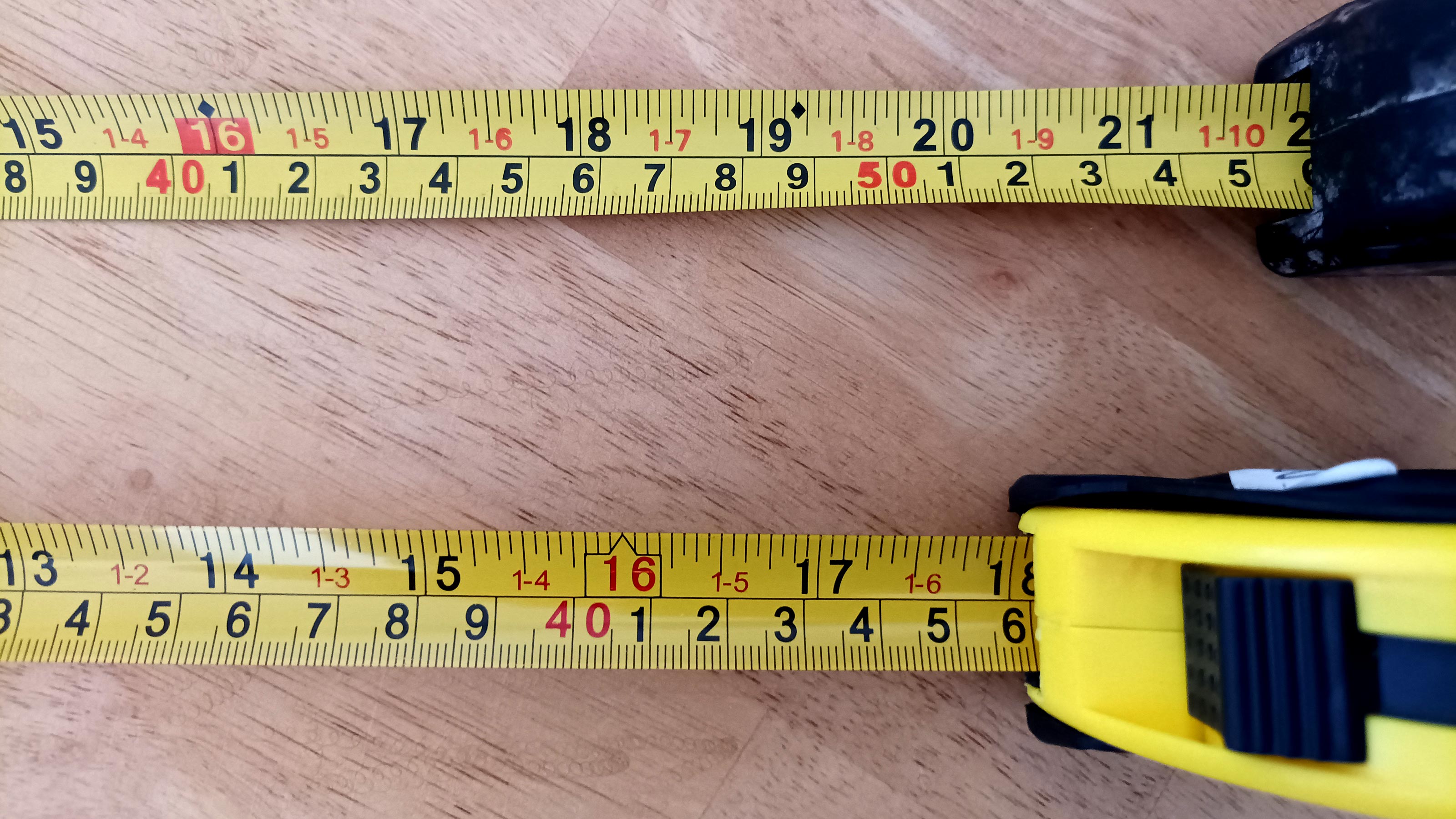
The “black diamond” marks appear at regular intervals along the tape measure blade, often alternating with standard stud marks (which typically fall at 16-inch increments, marked by a red square or bold numbering). These diamond symbols are strategically placed at 19.2-inch intervals. While seemingly obscure, this precise spacing is a critical clue to its purpose. It’s a prime example of “design for manufacturability” and “design for assembly” embedded directly into a common tool. The decision to include these markings wasn’t made on a whim but stems from a deep understanding of construction standards and material dimensions. It serves as a visual shortcut, a pre-computed data point for specific structural layouts, reducing the need for manual calculations and potential errors on the job site. This subtle yet powerful feature underscores how even the simplest mechanical gadgets can incorporate sophisticated engineering logic to streamline complex tasks, reflecting a legacy of practical innovation that persists even in an age of smart tools.
The “Black Diamond” as a System Optimization Marker
The “black diamond” on a tape measure is not merely a curious graphic; it is a critical system optimization marker, particularly for framing and subflooring applications. Its placement at 19.2-inch intervals directly relates to the efficient use of standard building materials, representing a clever analogue solution to a common construction challenge. This specific spacing allows for an equitable distribution of load when using sheets of plywood, OSB, or other paneling materials that typically come in 4-foot by 8-foot (48-inch by 96-inch) dimensions. By understanding and utilizing these marks, builders can significantly enhance the structural integrity of a project while simultaneously optimizing material consumption and reducing labor time. It’s a testament to how intelligent, subtle features on conventional gadgets can yield substantial returns in efficiency and accuracy within established workflows.
Understanding Standardized Construction Modularity
Modern construction heavily relies on modularity, where standardized components are designed to fit together seamlessly. Plywood and oriented strand board (OSB) panels are primary examples, almost universally produced in 4×8-foot sheets. The challenge for framers is to create a supporting structure (studs for walls, joists for floors/ceilings) that evenly supports these panels, preventing sagging and ensuring stability. Standard wall studs are often spaced at 16 inches on center. While effective for vertical framing, a 16-inch on-center spacing doesn’t align perfectly with the 48-inch width of a panel if one needs to maintain an optimal number of support points across the panel’s width, especially when considering the overlap for joining multiple panels. The 19.2-inch interval addresses this by creating a different kind of modularity that perfectly divides the 96-inch length of a panel into five equal sections (5 x 19.2 inches = 96 inches), rather than the six sections (6 x 16 inches = 96 inches) created by 16-inch spacing. This alternative spacing becomes crucial for specific structural layouts.
The 19.2-inch Rule: Optimizing Material Usage and Structural Integrity
The 19.2-inch rule, denoted by the black diamond, is primarily used for floor joists and ceiling trusses, though it can sometimes be seen in wall framing in specific contexts. When joists or trusses are spaced at 19.2 inches on center, a 48-inch wide panel will span exactly three joists (the starting joist, one at 19.2 inches, and another at 38.4 inches, with the fourth joist starting the next panel at 57.6 inches from the origin, meaning the 48-inch panel edge lands halfway between joists number 3 and 4 relative to start). Crucially, a 96-inch long panel will be supported by five joists or trusses (at 0, 19.2, 38.4, 57.6, and 76.8 inches). This configuration ensures robust support across the entire length of the panel. While 16-inch spacing also provides good support, 19.2-inch spacing allows for fewer joists/trusses over the same span, translating directly into material savings without compromising structural integrity in many residential applications. It’s a clever engineering compromise, balancing material economy with load-bearing requirements, facilitated by a simple mark on a manual tool.
Streamlining Framing Workflows: A Tutorial in Efficiency
For builders, efficiency translates directly into cost savings and project acceleration. The black diamond marks on a tape measure provide an immediate, visual guide for laying out joists or trusses, eliminating the need for constant arithmetic and remarking. Instead of calculating each 19.2-inch increment, a framer simply extends the tape measure and marks at each diamond. This streamlines the entire layout process, reducing the potential for human error and speeding up the critical framing stage. This feature is particularly valuable when working with repetitive elements like floor systems, where consistent spacing is paramount. In essence, the tape measure, with its black diamond, acts as a specialized computational tool, pre-programmed with a specific architectural standard to optimize a common construction task. It represents the pinnacle of intuitive gadget design: complex information distilled into a simple, actionable visual cue.
Advanced Applications and The Intersection of Analog and Digital Measurement Tech
While the primary function of the black diamond marks on a tape measure is rooted in conventional residential framing, their underlying principle—optimizing structural layouts for standardized materials—extends into more advanced construction methodologies. These markings exemplify how fundamental design intelligence, even in analog gadgets, can streamline complex processes. In today’s construction landscape, where digital tools are increasingly prevalent, understanding these traditional features allows for a more integrated and efficient workflow, leveraging both time-tested mechanical precision and cutting-edge digital capabilities. The tape measure, with its black diamonds, stands as a bridge between the old and new, demonstrating how smart design transcends technological eras.
Beyond Walls: Integrating with Engineered Truss and Joist Systems
The 19.2-inch spacing becomes particularly relevant when integrating with engineered wood products such as I-joists and open-web trusses. These manufactured components are designed for specific load-bearing capacities and spans, often allowing for greater distances between supports compared to traditional dimensional lumber. When architects and engineers specify 19.2-inch on-center spacing for such systems, the black diamond marks on the tape measure become invaluable. They ensure accurate and consistent placement of these engineered components, which is critical for maintaining the structural integrity and performance of the floor or roof system. Misplacing even a few joists can compromise the entire structure, leading to costly rework or, worse, structural failure. The analog precision offered by these marks directly supports the high-performance requirements of modern engineered systems, proving that basic tools remain vital even in complex builds.

Precision in Layout: Mitigating Errors in Complex Builds
In any construction project, particularly those with intricate designs or demanding specifications, precision is paramount. The black diamond markers help to mitigate common errors associated with repetitive measurements and human fatigue. Instead of relying on a calculator or mental arithmetic for each joist or truss placement, a builder can simply align with the pre-marked diamonds. This reduces the cognitive load, speeds up the layout phase, and ensures that the structural elements are perfectly aligned to receive the subsequent layers of flooring, sheathing, or roofing. This direct visual guide minimizes the chance of cumulative errors that can quickly propagate through a large project, affecting everything from material waste to the fit and finish of interior elements. It’s a low-tech error-proofing mechanism that continues to deliver high-value results in a high-stakes industry.
The Complementary Role of Laser Measures and Digital Interfaces
While tape measures with black diamond marks provide invaluable analog support, the modern construction site often incorporates advanced digital measurement tools. Laser distance measures offer instantaneous, highly accurate readings over long distances, and their integration with CAD software or BIM (Building Information Modeling) platforms allows for sophisticated digital layout planning. However, digital tools often require an initial physical reference or a series of calibration points. Here, the traditional tape measure, with its intuitive markings, still plays a crucial role. For setting initial benchmarks, transferring specific layout points from digital plans to physical space, or verifying measurements in confined areas where lasers might struggle, the manual tape measure remains indispensable. The black diamonds can even serve as quick reference points when programming a digital layout tool or verifying a laser’s projection. This synergy—where digital technology aids in complex planning and high-speed data acquisition, while analog tools provide tactile verification and quick, reliable manual layout—represents the optimal approach to maximizing efficiency and accuracy in contemporary construction projects.
The Intelligence of Simple Design: Enhancing Productivity in Manual Tasks
The black diamond on a tape measure serves as a compelling case study in the intelligence of simple design. In an era where “smart” often implies a digital interface and connectivity, this unassuming mark proves that profound technological advantage can be embedded in the most basic of gadgets. It epitomizes how thoughtful engineering can amplify human productivity in manual tasks, transforming repetitive operations into efficient, error-reduced processes. The enduring relevance of such a subtle feature highlights a critical principle: effective tool design isn’t solely about adding new capabilities, but often about intelligently simplifying existing ones.
Data-Driven Layout: From Blueprints to Physical Implementation
At its heart, the black diamond facilitates a form of “data-driven layout” for manual construction. Architects and engineers, through their blueprints, define the structural spacing requirements. The black diamond takes this data—specifically, the 19.2-inch on-center spacing—and pre-programs it directly onto the measurement tool. This eliminates the manual interpretation and calculation steps for the worker, translating complex engineering specifications into a direct visual guide. It bridges the gap between abstract design data and tangible physical implementation, ensuring that the structural framework aligns precisely with the design intent. This kind of “embedded intelligence” in a mechanical device significantly reduces the time spent on layout and verification, allowing skilled labor to focus on execution rather than repeated measurement calculations.
Ergonomics and User Experience: Design for Practicality
Good design is often invisible. The black diamond is a prime example of ergonomic design applied not to the physical form of the tool, but to its informational content. It enhances the user experience by reducing cognitive load and physical strain. A framer no longer needs to squint at small numbers or perform mental math repeatedly. A quick glance at the blade is all it takes to identify the next mark. This intuitive visual cue makes the job site safer by minimizing distractions and more efficient by accelerating the marking process. It’s a feature designed for practicality, directly addressing the real-world needs of users who operate under time pressure and often in challenging environmental conditions. This focus on simplifying complex tasks through intelligent markings underscores a user-centric design philosophy, a hallmark of excellent gadget development.
Future-Proofing Fundamental Tools: The Enduring Value of Smart Markings
While the construction industry increasingly adopts sophisticated digital tools, the black diamond’s continued presence on tape measures speaks to the enduring value of well-conceived analog solutions. It demonstrates how fundamental tools can be “future-proofed” not by adding new electronic components, but by perfecting their core functionality and integrating intelligent design elements. The principles it embodies—optimization, efficiency, and error reduction through pre-computed data—are timeless. As technology evolves, some tasks will inevitably be automated or augmented by AI, but the need for direct, precise physical measurement and layout will always remain. Tools like the tape measure, with its subtle yet powerful black diamond, serve as a reminder that innovative design often lies in simplifying, rather than complicating, the path to productivity. These smart markings ensure that even the most basic gadgets continue to play a vital, active role alongside their high-tech counterparts.
Maximizing Your Tech Toolkit: From Handheld to High-Tech
Understanding the “black diamond” on a tape measure is more than just appreciating a clever piece of design; it’s about unlocking the full potential of your measurement toolkit, regardless of its technological sophistication. In an ecosystem of tools ranging from the most rudimentary to the hyper-digital, optimizing performance often means understanding how each piece of equipment contributes to accuracy, efficiency, and project success. Integrating knowledge of traditional analog features with the capabilities of modern digital instruments creates a powerful synergy, ensuring that every measurement, whether for a simple DIY task or a complex engineering project, is executed with maximum precision and productivity.
Calibrating for Accuracy: Best Practices for All Measurement Devices
Whether you’re using a classic steel tape measure or a state-of-the-art laser distance meter, the fundamental principle of calibration for accuracy remains paramount. For tape measures, this involves periodically checking the integrity of the end hook—ensuring it moves freely but accurately accounts for both push and pull measurements. For digital devices, this means routine calibration checks against known standards and understanding the manufacturer’s specifications for environmental conditions (temperature, humidity, reflective surfaces) that might affect readings. A precise layout using the black diamond marks, for instance, is only as good as the accuracy of the tape measure itself. Similarly, a laser measure integrated with planning software still requires careful setup and understanding of its operational limits. Maximizing your toolkit’s potential starts with respecting the inherent characteristics and maintenance requirements of each device, ensuring consistent and reliable data acquisition across all platforms.
Integrating Analog Precision with Digital Planning Software
Modern construction and design often rely heavily on digital planning software, such as CAD, BIM, and various project management applications. These platforms allow for meticulous design, material calculations, and virtual walkthroughs. The challenge lies in accurately transferring these digital plans to the physical world. This is where analog precision, exemplified by the black diamond, becomes an invaluable asset. While laser measures can project points from digital layouts, using a tape measure for final verification or for setting initial physical benchmarks can bridge the gap. For example, after a digital layout determines critical points, a physical tape measure can be used to mark the intermediate 19.2-inch joist spacing quickly and accurately, leveraging the embedded intelligence of its black diamonds. This integration means digital tools define the macro-level plan, and analog tools provide the micro-level, on-the-ground precision and verification, creating a robust, multi-layered approach to measurement and layout.
Continuous Learning: Unlocking the Full Potential of Your Tools
The discovery of the black diamond’s purpose highlights a broader truth in the world of tools and gadgets: continuous learning about their features and optimal use is key to unlocking their full potential. Just as software updates reveal new functionalities, understanding the nuances of a physical tool can significantly enhance productivity. Engaging with product tutorials, manufacturer guides, and expert communities allows users to move beyond basic operation and master advanced techniques. For instance, knowing when to use 16-inch spacing versus 19.2-inch spacing, or how to combine a traditional tape measure’s capabilities with a new digital caliper or smart level, transforms mere tool ownership into strategic gadget utilization. Embracing this mindset ensures that users are always leveraging the most efficient, accurate, and intelligent methods available, maximizing their investment in both traditional and cutting-edge technology.
aViewFromTheCave is a participant in the Amazon Services LLC Associates Program, an affiliate advertising program designed to provide a means for sites to earn advertising fees by advertising and linking to Amazon.com. Amazon, the Amazon logo, AmazonSupply, and the AmazonSupply logo are trademarks of Amazon.com, Inc. or its affiliates. As an Amazon Associate we earn affiliate commissions from qualifying purchases.