
Leveraging Digital Tools for a Structured Bible Reading Experience
The age-old question of “what is the best order to read the Bible” has taken on new dimensions with the advent of sophisticated digital tools and platforms. While the intrinsic value of the sacred text remains timeless, the methodology for engaging with it has been profoundly transformed by technology. Modern Bible apps, dedicated software, and intelligent online platforms offer an unparalleled array of reading plans and study aids, effectively democratizing access to diverse approaches to the Scriptures. For anyone seeking to embark on a systematic reading journey, understanding how to leverage these technological advancements is crucial to identifying an order that resonates with their personal goals and learning style.

These digital innovations move beyond simple digitized text, offering features like daily reminders, progress tracking, and integration across multiple devices. The convenience of having an entire library of biblical knowledge and various reading frameworks in one’s pocket or on a desktop allows for flexibility that traditional physical books simply cannot match. Whether one prefers a chronological journey through biblical history, a thematic exploration of specific virtues, or a traditional book-by-book approach, tech solutions provide the infrastructure to support and enhance that chosen path.
Exploring Diverse Reading Plans in Bible Apps
The market is rich with Bible applications designed to cater to a multitude of reading preferences. Apps such as YouVersion (Bible App), Tecarta Bible, Logos Bible Software, and Accordance Bible Software stand out for their robust feature sets, often including hundreds of pre-designed reading plans. These plans vary widely, from “Bible in a Year” programs that guide users through the entire text in 365 days, to more focused studies on individual books, characters, or theological concepts.
Users can typically select a plan and receive daily prompts, ensuring consistent engagement. Many apps incorporate progress bars, completion statistics, and even achievement badges, subtly gamifying the reading experience to encourage adherence. Furthermore, the ability to pause, resume, or switch plans with ease offers a level of adaptability that empowers users to experiment and find what truly works for them, rather than being locked into a rigid structure. The sheer volume of curated content available through these applications means that the “best order” is no longer a singular, prescriptive path but a spectrum of digitally supported options.
The Power of AI in Personalizing Your Reading Journey
The future and increasingly present reality of Bible reading orders are being shaped by artificial intelligence. AI tools are emerging as powerful allies in personalizing the spiritual journey, moving beyond static reading plans to dynamic, adaptive recommendations. Imagine an AI that analyzes your past reading habits, the passages you’ve highlighted, the notes you’ve taken, and even your stated interests (e.g., leadership, comfort, ethics) to suggest a tailored reading order.
This personalized approach could mean an AI dynamically re-ordering daily readings to connect themes you’ve shown interest in, or suggesting supplementary historical context from trusted sources when you pause on a particularly challenging passage. AI-driven recommendation engines can identify patterns in a user’s engagement, offering insights into which books or topics might be most beneficial next. Furthermore, AI could summarize daily readings, clarify complex concepts, or even generate discussion prompts, enhancing comprehension and engagement. While still evolving, the integration of AI tools promises a truly bespoke Bible reading experience, making the “best order” an algorithmically optimized path unique to each individual.
Canonical, Chronological, and Thematic Paths: Digital Implementations
The fundamental approaches to reading the Bible—canonical, chronological, and thematic—are significantly enhanced and made more accessible through digital platforms. Each method offers a distinct perspective, and technology acts as the bridge, simplifying complex navigation and organization.
Canonical Order: Traditional Navigation in Digital Form
The canonical order, which follows the traditional arrangement of books from Genesis to Revelation, is often the default in physical Bibles. Digitally, this order is made incredibly user-friendly. Bible apps allow for instant navigation between books, chapters, and verses with a simple tap or search query. For those who prefer a structured, academic approach, the canonical order, supported by quick search functions and cross-referencing tools, makes it easy to follow the traditional progression while simultaneously jumping to related passages or commentaries. This digital flexibility preserves the traditional structure while vastly improving efficiency for study and reference.
Chronological Order: Following History with Smart Algorithms
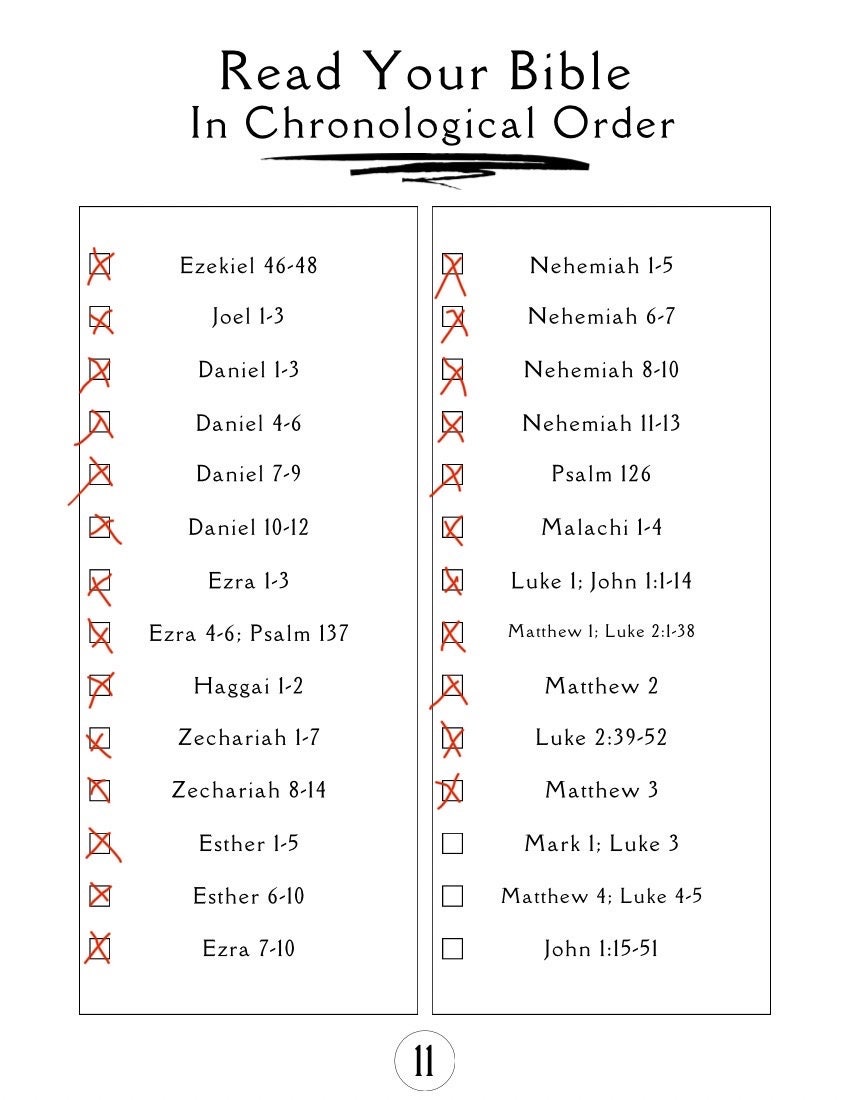
Reading the Bible chronologically, where events are presented in the order they occurred historically rather than by book arrangement, is a popular choice for understanding the grand narrative. This can be complex to achieve with a physical Bible, often requiring extensive cross-referencing. Digital Bible apps, however, leverage sophisticated algorithms to re-order chapters and books seamlessly. They can dynamically present readings that jump from a prophetic book to a historical book, then to a psalm, all based on the estimated time period of their writing or the events they describe. This algorithmic re-ordering provides an immersive historical context that is incredibly difficult to replicate without digital assistance, making it a compelling option for a deeper understanding of biblical history.
Thematic Studies: Curated Content via App Features
For those interested in exploring specific topics or virtues, thematic reading offers a focused path. Digital platforms excel here by curating verses and passages from across the entire Bible based on a user-selected theme—be it “faith,” “love,” “leadership,” or “financial wisdom.” Advanced search functions allow users to find every mention of a specific word or concept, and many apps integrate dedicated thematic study guides that link relevant scriptures, offering a comprehensive look at a topic. This ability to instantly compile and navigate scattered verses into a coherent study plan makes thematic reading profoundly more accessible and impactful than relying solely on concordances or manual searches in a physical book.
Enhancing Your Reading with Digital Study Aids and Community Features
Beyond merely organizing the text, modern tech tools significantly augment the study aspect of Bible reading, turning a solitary activity into a rich, interactive experience.
Integrating Notes, Highlighting, and Cross-References
Digital Bibles offer an infinite canvas for personal study notes, highlights, and annotations. Unlike physical books with limited margins, apps allow users to add extensive notes to any verse, highlight passages in multiple colors, and tag them for easy retrieval. These annotations are often cloud-synced, meaning they are accessible across all devices, ensuring that personal insights are never lost. Moreover, the integrated cross-referencing feature is invaluable: tapping a verse instantly reveals related scriptures, commentaries, dictionary definitions, and even maps or historical contexts. This interconnectedness transforms static text into a dynamic learning environment, making deep dives into scripture more intuitive and efficient.
Guided Studies and Community Forums Within Apps
Many Bible applications extend their utility by integrating guided audio commentaries, video lessons, and podcasts directly alongside reading plans. This multimodal approach caters to different learning styles, providing expert insights and contextual understanding that can significantly enrich the reading experience. Furthermore, digital platforms foster community. Users can often share their insights, join virtual study groups, and participate in moderated forums to discuss readings and interpretations. This social dimension allows for collective learning, shared encouragement, and diverse perspectives, transforming the potentially solitary act of reading into a communal and engaging journey.
Digital Security and Data Privacy in Your Reading Journey
As with any digital tool, utilizing Bible apps and software involves considerations of digital security and data privacy. When choosing a platform to facilitate your reading journey, it’s crucial to be aware of how your personal data—including reading habits, notes, highlights, and any demographic information you provide—is handled. Reputable Bible apps prioritize user privacy, employing robust encryption for data transmission and storage, secure login protocols, and clear, transparent privacy policies. Users should review these policies to understand what data is collected, how it’s used, and whether it’s shared with third parties. Opting for apps that offer options for data portability, allowing you to export your notes and highlights, is also a prudent choice. Protecting your digital spiritual journal is as important as safeguarding any other personal data in our increasingly connected world.

Selecting the Right Tech for Your Bible Reading Goals
Ultimately, “what is the best order to read the Bible” is a profoundly personal question, and the “best tech” is the one that most effectively empowers your chosen order and enhances your individual study. To make an informed decision, evaluate potential apps based on their feature sets, user interface, availability of your preferred Bible translations, cost (many offer free tiers with premium upgrades), and their commitment to data privacy.
The dynamic nature of technology means that new tools and enhancements are constantly emerging, making the digital landscape for Bible reading a vibrant and evolving space. Don’t hesitate to experiment with different applications and reading plans. The perfect order for you might be a blend of chronological understanding facilitated by an algorithm, thematic deep-dives curated by AI, and traditional canonical progression supported by intuitive navigation. By embracing the power of modern technology, you can unlock a richer, more organized, and deeply personalized Bible reading experience tailored precisely to your needs and spiritual aspirations.
aViewFromTheCave is a participant in the Amazon Services LLC Associates Program, an affiliate advertising program designed to provide a means for sites to earn advertising fees by advertising and linking to Amazon.com. Amazon, the Amazon logo, AmazonSupply, and the AmazonSupply logo are trademarks of Amazon.com, Inc. or its affiliates. As an Amazon Associate we earn affiliate commissions from qualifying purchases.