
The Digital Fabric of Communication: Understanding Area Codes
The unassuming three-digit prefix known as an area code forms a fundamental layer within the intricate architecture of telecommunications. More than just a simple identifier, these numerical designations are critical for the efficient routing of telephone calls and for establishing a geographic context for a given phone number. Born from the necessity of organizing and automating the vast and growing telephone network, area codes have evolved from a purely technical function to playing a nuanced role in today’s interconnected digital landscape.
The Fundamental Role of Area Codes
At its core, an area code serves as the primary geographical indicator within the North American Numbering Plan (NANP). When a call is placed, the area code directs the call to the correct general region before local exchanges take over to pinpoint the specific recipient. This system was revolutionary in its time, enabling long-distance calls to be routed without manual operator intervention, significantly streamlining communication across vast distances. For businesses, an area code often signifies local presence, fostering trust and accessibility within a specific community. For individuals, it can be a mark of local identity, connecting them to their hometown or region, even in an increasingly mobile world.

From Manual Switches to Digital Networks
The concept of area codes emerged in the mid-20th century, a direct response to the explosion of telephone usage and the inherent limitations of manual switching systems. Prior to area codes, every long-distance call required an operator to manually connect lines, a labor-intensive and slow process. The introduction of the first area codes in 1947 by AT&T, then managing the Bell System, allowed for the gradual automation of long-distance dialing. As technology advanced from analog to digital networks, the underlying mechanisms for routing calls became infinitely more complex, yet the fundamental role of the area code persisted. Digital switches and internet protocol (IP) networks now handle call routing with unparalleled speed and efficiency, but they still rely on the foundational structure provided by the numbering plan, with area codes serving as the initial address parameter in a complex data packet.
Beyond Geography: The Shifting Paradigm
While traditionally tied to specific geographic areas, the advent of mobile telephony and Voice over Internet Protocol (VoIP) services has somewhat decoupled the phone number from a fixed physical location. A mobile user can retain their 815 number even if they travel across the country, and a business operating entirely online might choose an 815 number to project a local presence in northern Illinois without having a physical office there. This shift presents both opportunities and challenges. On one hand, it offers flexibility and choice; on the other, it can complicate efforts to identify the true origin of a call, an issue frequently exploited by spammers and scammers. Despite this evolution, the area code retains a strong psychological and practical significance, acting as a shorthand for regional identity and a crucial data point in digital security protocols.
Unpacking 815: Geographic Coverage and Key Locations
The 815 area code is a significant identifier for a large swathe of northern Illinois, playing a critical role in the telecommunications infrastructure of this economically diverse region. Understanding its specific geographic boundaries and the communities it serves is key to comprehending its technological and social impact.
Identifying the 815 Territory
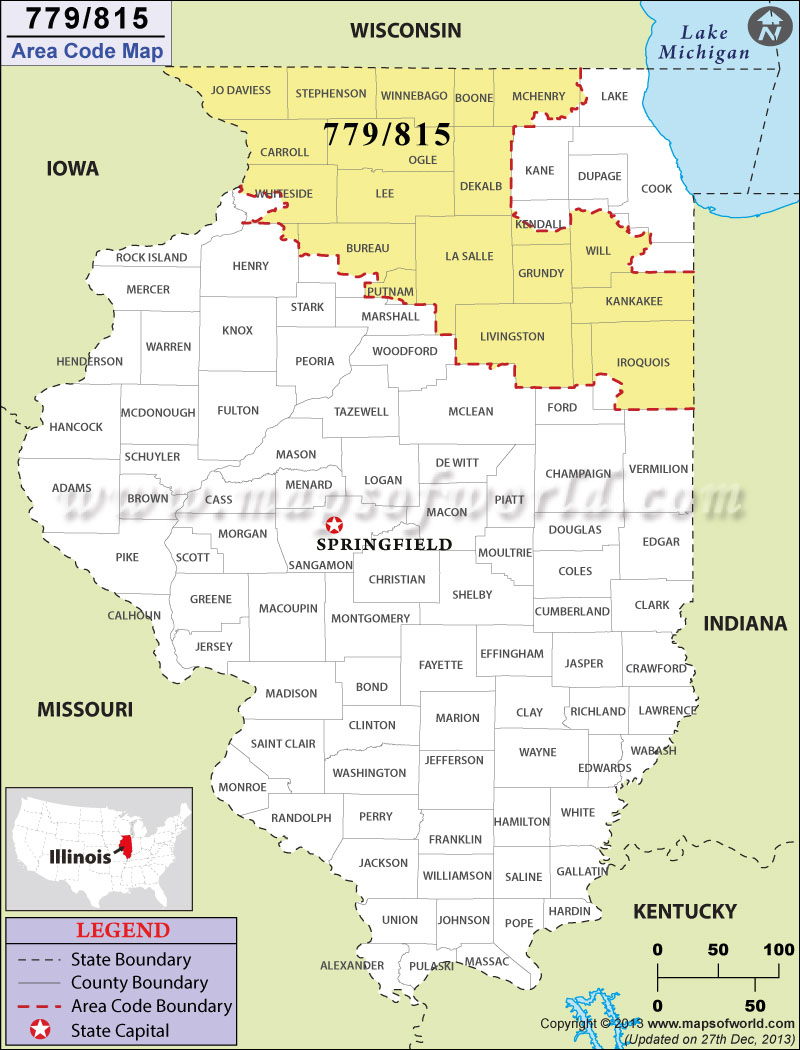
The 815 area code encompasses a broad region of northern Illinois, stretching from the Wisconsin border down through several central counties. Crucially, it excludes the immediate Chicago metropolitan area and its inner ring of suburbs, which are covered by a distinct set of area codes (e.g., 312, 773 for Chicago proper; 847, 224, 630, 331 for surrounding suburbs). Instead, 815 serves the more expansive, often less densely populated, areas surrounding the Chicago mega-region. Its territory includes a blend of industrial centers, agricultural communities, and university towns, creating a rich tapestry of communication needs.
Major Cities and Counties
Within the 815 service area are several prominent cities and numerous counties that contribute significantly to Illinois’ economy and culture. Key cities include:
- Rockford: The largest city in the 815 area, known for its manufacturing history and a hub of commerce in northwestern Illinois.
- Joliet: A major city located southwest of Chicago, serving as a transportation and industrial center, particularly known for its inland port and historical significance.
- DeKalb: Home to Northern Illinois University, making it a vibrant college town with a significant academic and research presence.
- Kankakee: Situated along the Kankakee River, a regional center for manufacturing, healthcare, and agriculture.
- Aurora (Western parts): While much of Aurora is in the 630/331 area code, some western portions and surrounding areas fall under 815.
- Peru and Ottawa: Cities in the Illinois River Valley, known for their natural beauty and historical significance.
- Freeport: A city in Stephenson County, serving as a regional center in northwestern Illinois.
- Belvidere: Home to significant automotive manufacturing facilities.
- Rochelle: A key transportation hub with extensive rail infrastructure.
Counties predominantly served by 815 include Winnebago, Boone, DeKalb, LaSalle, Kendall, Kankakee, Ogle, Lee, Grundy, and parts of Will, McHenry, and Stephenson counties, among others. This extensive coverage highlights the strategic importance of the 815 area code in connecting diverse communities across northern Illinois.
Economic and Technological Hubs
The regions covered by 815 represent a significant economic engine for Illinois, extending beyond the shadow of Chicago. These areas are characterized by a robust mix of industries, including advanced manufacturing (automotive, machinery), logistics and transportation (due to excellent rail and highway networks), agriculture (especially in the central and western parts), and education. Universities like Northern Illinois University in DeKalb contribute to a strong intellectual and technological base, fostering innovation and providing a skilled workforce. The presence of data centers and modern infrastructure in some of these areas also underscores their evolving role as technological contributors, rather than merely relying on legacy industries. The 815 area code therefore facilitates communication for a dynamic and diverse economy, bridging traditional sectors with emerging technological endeavors.
A Historical Look: The Evolution of 815 in Telecommunications
The history of the 815 area code is a micro-narrative within the larger saga of telecommunications expansion and technological adaptation in the United States. Its origins and subsequent modifications reflect the profound changes in population distribution, economic activity, and the sheer demand for telephone numbers over nearly eight decades.
Origins and Initial Assignment
The 815 area code was among the very first set of 86 area codes introduced by AT&T in 1947 as part of the initial implementation of the North American Numbering Plan (NANP). At that time, Illinois was divided into four original area codes: 312 for the bustling city of Chicago, 217 for central Illinois, 618 for southern Illinois, and 815 for the expansive northern region that surrounded Chicago. Specifically, 815 was created by splitting off portions of the larger 312 and 217 territories, acknowledging the growing population and telecommunications needs of northern Illinois outside the immediate Chicago core. This division laid the groundwork for a more organized and efficient long-distance dialing system that would soon become indispensable.
Boundary Adjustments and Splits
Throughout the latter half of the 20th century, as population centers grew and demand for telephone lines surged, existing area codes frequently underwent adjustments. While 815 itself remained geographically stable for many years, the areas surrounding it, particularly the rapidly expanding suburban “collar counties” around Chicago, saw numerous splits and overlays. These adjustments, such as the creation of 847, 630, and 708 from the original 312, indirectly impacted 815 by defining its boundaries more sharply and ensuring that it continued to serve its designated northern Illinois territory without encroaching on or being encroached by the intensely populated metropolitan zones.
The Overlay Strategy: Introduction of 779
The most significant evolution for the 815 area code came with the implementation of an “overlay” area code. By the early 2000s, the burgeoning demand for telephone numbers – driven by population growth, the proliferation of fax machines, pagers, and later, mobile phones – began to exhaust the available numbering combinations within the 815 code. Rather than undergoing another geographic split, which would require many existing customers to change their numbers, regulatory authorities opted for an overlay. In 2007, the 779 area code was introduced and assigned to the exact same geographic region as 815. This meant that new phone numbers in the northern Illinois region could be assigned either an 815 or a 779 prefix. The primary consequence of an overlay is the mandatory adoption of 10-digit dialing for all local calls within the affected area. This measure ensures a continuous supply of phone numbers while preserving the existing numbers for current subscribers. The introduction of 779 marked a significant technological adaptation, transitioning users in northern Illinois to a dialing pattern that has since become commonplace in many densely populated regions across the NANP.
Navigating the Modern Landscape: 815 in the Age of Digital Communication
In an era dominated by smartphones, internet calls, and global connectivity, the role of a traditional area code like 815 might seem less critical than it once was. However, it continues to hold significant relevance, particularly concerning local identity, business operations, and the practicalities of modern communication.
Local Presence in a Globalized World
Despite the ability of mobile phones to transcend geographic limitations, an 815 phone number still acts as a powerful signal of local presence for both individuals and businesses operating in northern Illinois. For businesses, displaying an 815 number on marketing materials or websites immediately communicates a connection to the local community, fostering trust and making it easier for local customers to perceive them as accessible. This local identity is particularly valuable for small businesses, service providers, and brick-and-mortar establishments where community ties are paramount. In the digital age, local SEO (Search Engine Optimization) strategies often prioritize local phone numbers, helping businesses appear in local search results and attract customers within their service area. For individuals, keeping an 815 number, even when moving within the region, reinforces a sense of belonging and familiarity with their local network.
The Impact of VoIP and Number Portability
The rise of Voice over Internet Protocol (VoIP) services has fundamentally altered how phone numbers are acquired and utilized. VoIP providers allow users to choose virtually any available area code, irrespective of their physical location. An individual in California could easily acquire an 815 number, enabling them to establish a virtual presence in northern Illinois without ever setting foot there. This flexibility is a boon for remote workers, virtual businesses, and individuals who wish to maintain connections across different regions. Simultaneously, number portability, a regulatory requirement, ensures that customers can retain their 815 phone number even if they switch telecommunications providers (e.g., from a landline to a mobile carrier, or between different mobile providers) as long as they remain within the geographic boundaries of the 815/779 service area. This technological capability empowers consumers and fosters competition among service providers, but also adds another layer of complexity to accurately identifying a caller’s true physical location based solely on their area code.
10-Digit Dialing and Its Implications
With the overlay of the 779 area code onto the 815 service area in 2007, 10-digit dialing became mandatory for all local calls. This means that even if an 815 user is calling another 815 user within the same town, they must dial the full 10-digit number (area code + 7-digit local number). While initially requiring an adjustment for some, 10-digit dialing is now a standard practice in most areas with overlay codes across the NANP. Its implementation was a necessary step to ensure the continued availability of phone numbers and prevent the need for disruptive geographic splits. For users, it primarily means reprogramming saved contacts and adapting to the longer dialing sequence. For the telecommunications network, it ensures that there are enough unique number combinations to serve current and future demand for decades to come, extending the life and utility of the existing numbering plan.
Digital Security and Practical Tips for 815 Users
In an increasingly connected world, telecommunications users, including those in the 815/779 area, face a growing array of digital security challenges. While area codes are essential for routing, they can also be exploited by malicious actors. Understanding these risks and adopting proactive measures is crucial for protecting personal information and maintaining digital well-being.
Identifying Potential Scams
Area codes are frequently manipulated by scammers using a technique called “spoofing.” This allows them to display a local or familiar area code, like 815, on your caller ID, even if they are calling from anywhere in the world. The goal is to deceive recipients into believing the call is legitimate, increasing the likelihood they will answer. Common scams include impersonating government agencies (IRS, Social Security), tech support (claiming your computer has a virus), banks, or even local businesses. While an 815 number appearing on your caller ID might genuinely be a local call, it’s essential to approach unsolicited calls with caution, especially if they demand personal information, immediate payment, or require you to perform specific actions on your computer.
Leveraging Caller ID and Call Blocking
Modern smartphones and many landline services offer robust features to help manage incoming calls. Users in the 815/779 area should fully utilize their phone’s caller ID to screen calls. If a number is unfamiliar, it’s often safer to let it go to voicemail. Many devices and network carriers also provide built-in call blocking features, allowing you to block specific numbers that are repeatedly calling or are known sources of spam. Additionally, numerous third-party apps (e.g., Nomorobo, Truecaller) are available that leverage community-reported data to identify and block robocalls and known scam numbers, offering an extra layer of protection. Actively managing your call settings and employing these tools can significantly reduce the volume of unwanted and potentially fraudulent calls.
Verifying Unknown Numbers
If you receive a suspicious call from an 815 number and are unsure of its legitimacy, avoid calling back immediately, especially if the call was very short (a single ring) or hung up quickly. This could be a “wangiri” scam, where you are charged exorbitant fees for calling back an international premium rate number disguised as a local one. Instead, if you suspect the call might be legitimate but from an unknown source, try researching the number online. A quick search can often reveal whether the number is associated with a known business, a potential scam, or if others have reported it as spam. If the caller claimed to be from a specific organization, look up the official contact number for that organization independently and call them back directly to verify the request, rather than using a number provided by the suspicious caller.

Staying Informed on Telecommunication Changes
The landscape of telecommunications is constantly evolving, with new technologies, regulations, and scam tactics emerging regularly. Users in the 815/779 service area should remain informed about changes to dialing procedures (like future overlays, though none are currently planned for 815/779), new area codes being introduced in adjacent regions, and, critically, common scam tactics. Resources from the Federal Communications Commission (FCC) and your local service provider often provide valuable updates and tips on how to protect yourself. Awareness is your first line of defense against telecommunication fraud and ensures that you can continue to use your 815 number for secure and effective communication.
aViewFromTheCave is a participant in the Amazon Services LLC Associates Program, an affiliate advertising program designed to provide a means for sites to earn advertising fees by advertising and linking to Amazon.com. Amazon, the Amazon logo, AmazonSupply, and the AmazonSupply logo are trademarks of Amazon.com, Inc. or its affiliates. As an Amazon Associate we earn affiliate commissions from qualifying purchases.