
In the ever-expanding universe of data, the quest to imbue information with true meaning and context has driven significant innovation in database technologies. While traditional relational databases have long served as the bedrock of enterprise applications, their inherent limitations in handling complex, highly interconnected, and rapidly evolving data structures have paved the way for more sophisticated paradigms. Among these, the semantic database stands out as a powerful solution designed not just to store data, but to understand its relationships and context, enabling a more intelligent and intuitive interaction with information.
Beyond Relational Structures: The Core Concept
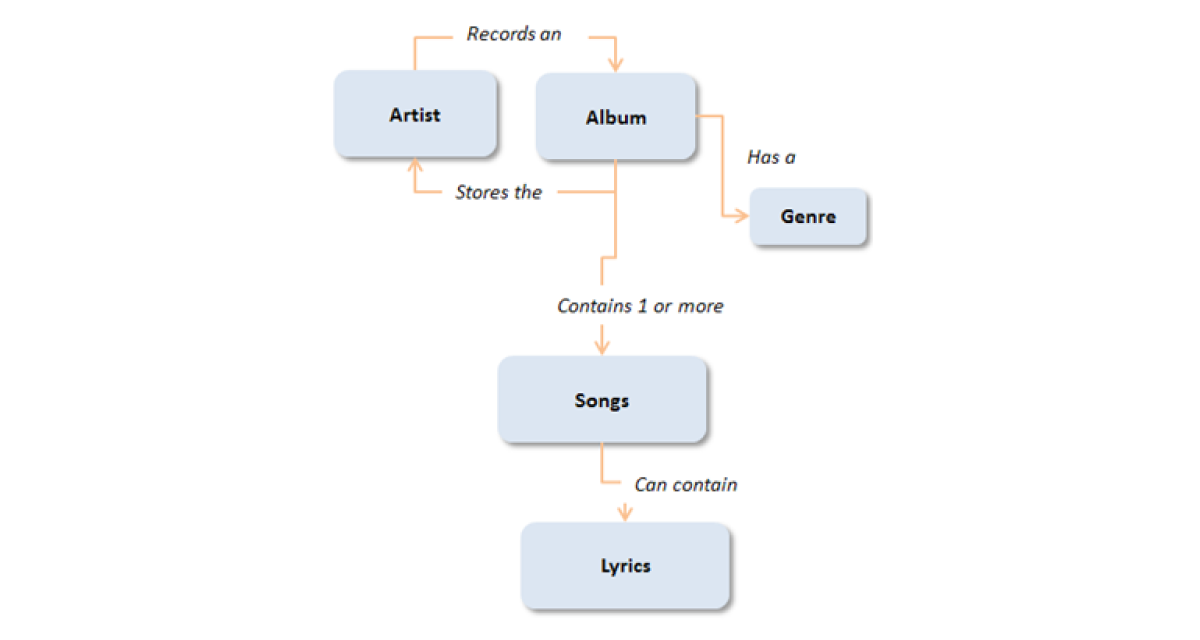
At its heart, a semantic database represents a fundamental shift from schema-on-write, table-centric data organization to a schema-on-read, graph-based approach that emphasizes meaning.
The Limitations of Traditional Databases
Relational databases, built upon the principles of tabular data storage and predefined schemas, excel at managing structured data with clear relationships. They enforce strict data types and relationships through foreign keys, ensuring data integrity and consistency. However, this rigidity becomes a bottleneck when dealing with highly heterogeneous data sources, fuzzy relationships, or rapidly changing business requirements. Integrating data from disparate systems often involves complex ETL (Extract, Transform, Load) processes to force diverse data into a common, predefined schema. Furthermore, querying complex, multi-level relationships across numerous tables can become cumbersome and performance-intensive, making it difficult to uncover deeper insights or infer new knowledge. The “meaning” of data in a relational system is often externalized, residing in application code or human interpretation, rather than being an intrinsic part of the database itself.
Introducing the Semantic Layer
Semantic databases tackle these challenges by directly incorporating meaning and context into the data model. Instead of storing data in rows and columns, they represent information as a network of interconnected entities and relationships, often referred to as a knowledge graph. This approach allows the database to not only store facts but also understand what those facts mean in relation to others. The “semantic layer” refers to this explicit representation of knowledge, enabling machines to process and reason about information in a way that mimics human understanding. It moves beyond merely connecting data points to defining the nature and properties of those connections.
Triples and Graphs
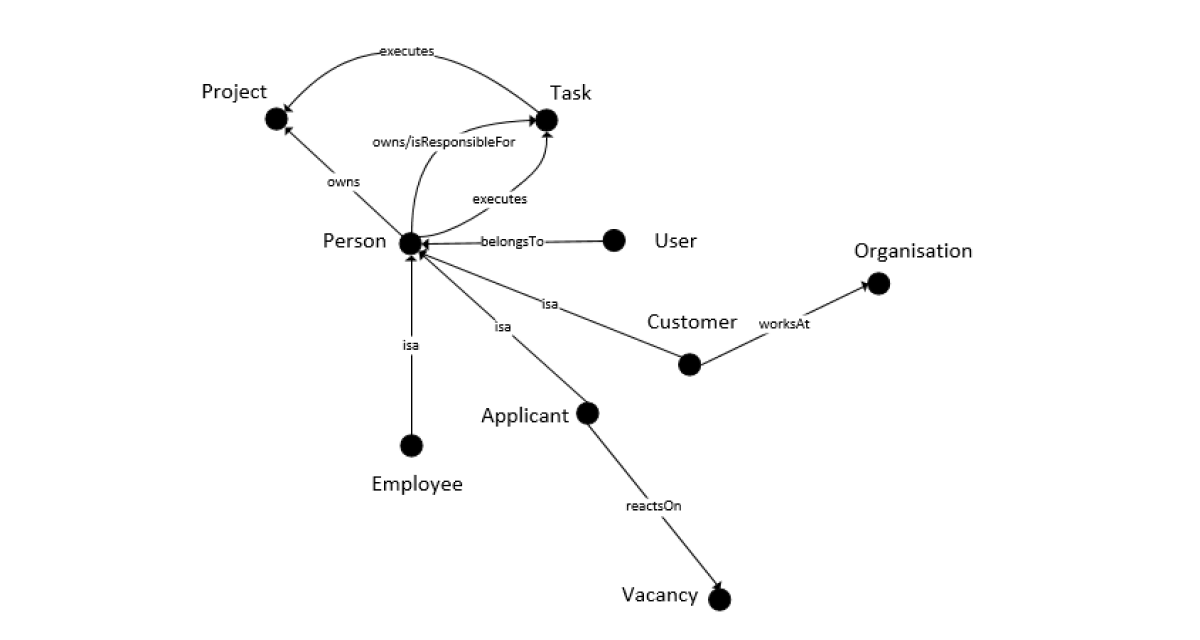
The fundamental building block of most semantic databases is the “triple.” A triple consists of three parts: a subject, a predicate (or property), and an object. For example, “Elon Musk – founderOf – SpaceX” is a triple where “Elon Musk” is the subject, “founderOf” is the predicate, and “SpaceX” is the object. This simple structure allows for infinite flexibility in describing any piece of information and its relationship to other pieces. When numerous triples are interconnected, they form a vast, interconnected network called a knowledge graph. In this graph, subjects and objects become nodes (entities), and predicates become directed edges (relationships) connecting these nodes. This graph-based representation inherently captures the context and meaning of data, making complex relationships easily discoverable and queryable.
Key Characteristics and Technologies
The power of semantic databases is derived from a suite of interconnected technologies and standards designed to represent, store, and query knowledge graphs.
Data Modeling with Ontologies and Schemas
Unlike relational databases that rely on a fixed schema defined at design time, semantic databases leverage ontologies and vocabularies for data modeling. An ontology is a formal, explicit specification of a shared conceptualization. It defines the types of entities that exist in a domain, their properties, and the relationships between them. Technologies like RDF Schema (RDFS) and OWL (Web Ontology Language) provide the necessary constructs to define these ontologies. RDFS allows for the definition of classes, properties, and relationships, while OWL extends this with more expressive power, enabling the definition of complex class hierarchies, property characteristics (e.g., transitive, symmetric), and logical constraints. This “schema-on-read” approach means that the structure of the data can evolve flexibly, and data from different sources can be integrated as long as their underlying concepts can be mapped to a shared ontology.
RDF (Resource Description Framework)
RDF is a W3C standard for describing information in a machine-readable format. It is the foundational model for semantic databases. RDF expresses data as a collection of triples, where each part (subject, predicate, object) is typically identified by a URI (Uniform Resource Identifier), ensuring global uniqueness and unambiguous reference. For instance, http://example.org/person/elonmusk (subject) http://example.org/ontology/founderOf (predicate) http://example.org/company/spacex (object). This standardized way of representing information allows for seamless data exchange and integration across different systems and domains, fostering interoperability that is difficult to achieve with proprietary data formats.
SPARQL (SPARQL Protocol and RDF Query Language)
To query the interconnected data within an RDF graph, SPARQL was developed as the standard query language. Similar in function to SQL for relational databases, SPARQL enables users to traverse the graph, find specific patterns, and extract information based on the relationships between entities. However, SPARQL’s capabilities extend far beyond SQL, allowing for sophisticated graph pattern matching, union operations, optional patterns, and even federated queries across multiple semantic data sources. It can answer questions like “Show me all people who are founders of companies located in California, and what other companies they are associated with.” This capability to perform complex traversals and retrieve related information across diverse links is a key differentiator.
Inference and Reasoning
One of the most powerful features of semantic databases, often powered by OWL ontologies, is their ability to perform inference and reasoning. This means the database can derive new facts or relationships that are not explicitly stored but are logically implied by the existing data and the rules defined in the ontology. For example, if an ontology defines that “a person’s child is also a descendant,” and the database contains the fact “Mary is the child of John,” the semantic database can infer that “Mary is a descendant of John” without explicitly storing that triple. Similarly, if “all employees are persons” is defined, and “Alice is an employee,” the system can infer “Alice is a person.” This capability enriches the knowledge base, allows for more comprehensive queries, and forms the bedrock for advanced AI applications.
Advantages and Transformative Impact
The architectural choices and technological underpinnings of semantic databases confer several significant advantages over traditional database systems, impacting how organizations manage and leverage their data.
Enhanced Data Integration and Interoperability
By focusing on the meaning (semantics) of data rather than just its structure, semantic databases dramatically simplify data integration. Data from disparate sources can be mapped to a shared ontology, allowing the database to understand how different datasets relate to each other, even if their original schemas are vastly different. This eliminates the need for extensive data transformations and reduces the complexity of maintaining data silos, enabling a truly unified view of information across an enterprise or even across the web. This interoperability is crucial for modern applications that need to consume and correlate data from a multitude of external and internal sources.
Flexibility and Schema Evolution
The schema-on-read nature and the use of ontologies provide unparalleled flexibility. Developers can add new types of entities, properties, or relationships to the knowledge graph without requiring disruptive schema changes or migrations of existing data. This agile approach is ideal for environments where data requirements are constantly evolving, and rapid iteration is essential. It supports incremental development and allows organizations to adapt their data models as their understanding of the domain matures, without incurring significant technical debt.
Richer Context and Meaningful Queries
Because relationships and their types are explicit, queries can delve deeper into the context of data. Users and applications can ask more sophisticated questions, leading to richer insights. Instead of merely retrieving data points, queries can explore connections, uncover hidden patterns, and understand the “why” behind relationships. This is particularly valuable for applications that require a nuanced understanding of information, such as natural language processing, complex search engines, and advanced analytics, where the semantic context dramatically improves relevance and accuracy.
Support for AI and Machine Learning
Knowledge graphs, powered by semantic databases, are becoming an increasingly vital component in the architecture of intelligent systems. They provide a structured, contextualized, and machine-readable representation of real-world knowledge that can feed and enhance AI and machine learning models. By offering a rich source of interconnected facts and explicit relationships, knowledge graphs can improve natural language understanding, power recommendation systems, enable explainable AI, and provide the common-sense reasoning layers that sophisticated AI agents require for more human-like decision-making and interaction.
Real-World Applications and Use Cases
Semantic databases are finding traction across a diverse array of industries and applications, demonstrating their versatility and power.
Enterprise Knowledge Graphs
Many large organizations are building enterprise knowledge graphs to create a unified, holistic view of their business operations. This can encompass customer 360 views, product catalogs, employee skills, regulatory requirements, internal documents, and IT infrastructure. By connecting these disparate data points, businesses gain unprecedented insights into their operations, enabling better decision-making, improved operational efficiency, and enhanced customer experiences.
Life Sciences and Healthcare
In pharmaceutical research, semantic databases are used to integrate vast amounts of biomedical data, including scientific literature, clinical trial results, patient records, and genomic information. This helps accelerate drug discovery, identify potential drug interactions, personalize medicine, and better understand disease pathways. Healthcare providers use them to link patient data, medical histories, and treatment protocols for more comprehensive patient care and improved diagnostics.
Financial Services
The financial sector leverages semantic databases for sophisticated fraud detection by identifying complex, non-obvious relationships between transactions, accounts, and entities. They also aid in regulatory compliance by mapping regulations to business processes and data, ensuring auditability and reducing risk. Furthermore, they are used for risk management, customer relationship management, and constructing comprehensive views of financial markets.
E-commerce and Recommendation Engines
Online retailers use semantic databases to build detailed product knowledge graphs, linking products by attributes, brands, categories, and customer reviews. This enhances search capabilities, powers personalized recommendation engines, and improves product discovery, leading to better user experiences and increased sales.
Challenges and Future Outlook
While offering compelling advantages, semantic databases also present certain considerations and are an area of ongoing innovation.
Scalability and Performance
Managing and querying extremely large knowledge graphs, especially those with billions of triples, can present scalability and performance challenges. Optimizing graph storage, indexing, and query execution for massive datasets is an active area of research and development, with leading semantic database vendors continually improving their engines.
Tooling and Ecosystem Maturity
Compared to the mature ecosystem surrounding relational databases (with a vast array of tools, established best practices, and a large developer community), the semantic database ecosystem, though growing rapidly, is still evolving. This includes development tools, integration frameworks, and skilled personnel. However, the adoption of knowledge graphs in AI and enterprise contexts is accelerating this maturity.
Data Governance and Quality
As with any complex data system, ensuring the quality, consistency, and governance of semantic data is paramount. Building effective ontologies, defining clear data stewardship policies, and implementing robust data validation processes are crucial for maintaining the integrity and trustworthiness of the knowledge graph, especially when integrating data from numerous sources.
The Hybrid Future
It’s unlikely that semantic databases will completely replace traditional relational or NoSQL databases. Instead, a hybrid approach is emerging where semantic capabilities complement existing systems. Semantic databases are ideally suited for workloads that require deep contextual understanding, complex relationship analysis, and flexible schema evolution, while traditional databases might continue to handle high-volume transactional processing or simple structured data storage.

Semantic Web’s Evolution
Semantic databases are a cornerstone of Tim Berners-Lee’s original vision for the Semantic Web—a web of data that can be processed directly and indirectly by machines. As the internet of things (IoT) expands and AI becomes more pervasive, the need for machines to understand and reason about information will only grow. Semantic databases are essential enablers of this vision, paving the way for a more intelligent, interconnected, and context-aware digital future. Their continued development and broader adoption promise to unlock unprecedented levels of insight and automation across all sectors.
aViewFromTheCave is a participant in the Amazon Services LLC Associates Program, an affiliate advertising program designed to provide a means for sites to earn advertising fees by advertising and linking to Amazon.com. Amazon, the Amazon logo, AmazonSupply, and the AmazonSupply logo are trademarks of Amazon.com, Inc. or its affiliates. As an Amazon Associate we earn affiliate commissions from qualifying purchases.