
The choice of flooring in a home or commercial property is more than an aesthetic decision; it’s a significant financial investment with long-term implications for maintenance costs, property value, and overall budget management. Luxury Vinyl Plank (LVP) flooring has emerged as a popular option, lauded for its durability and appearance. But to truly understand its financial merit, one must delve into its composition. What LVP is made of directly dictates its upfront cost, lifespan, performance, and ultimately, its return on investment (ROI). Understanding these layers and their material science allows for informed financial planning and asset management.

The Layered Anatomy of LVP and Its Cost Implications
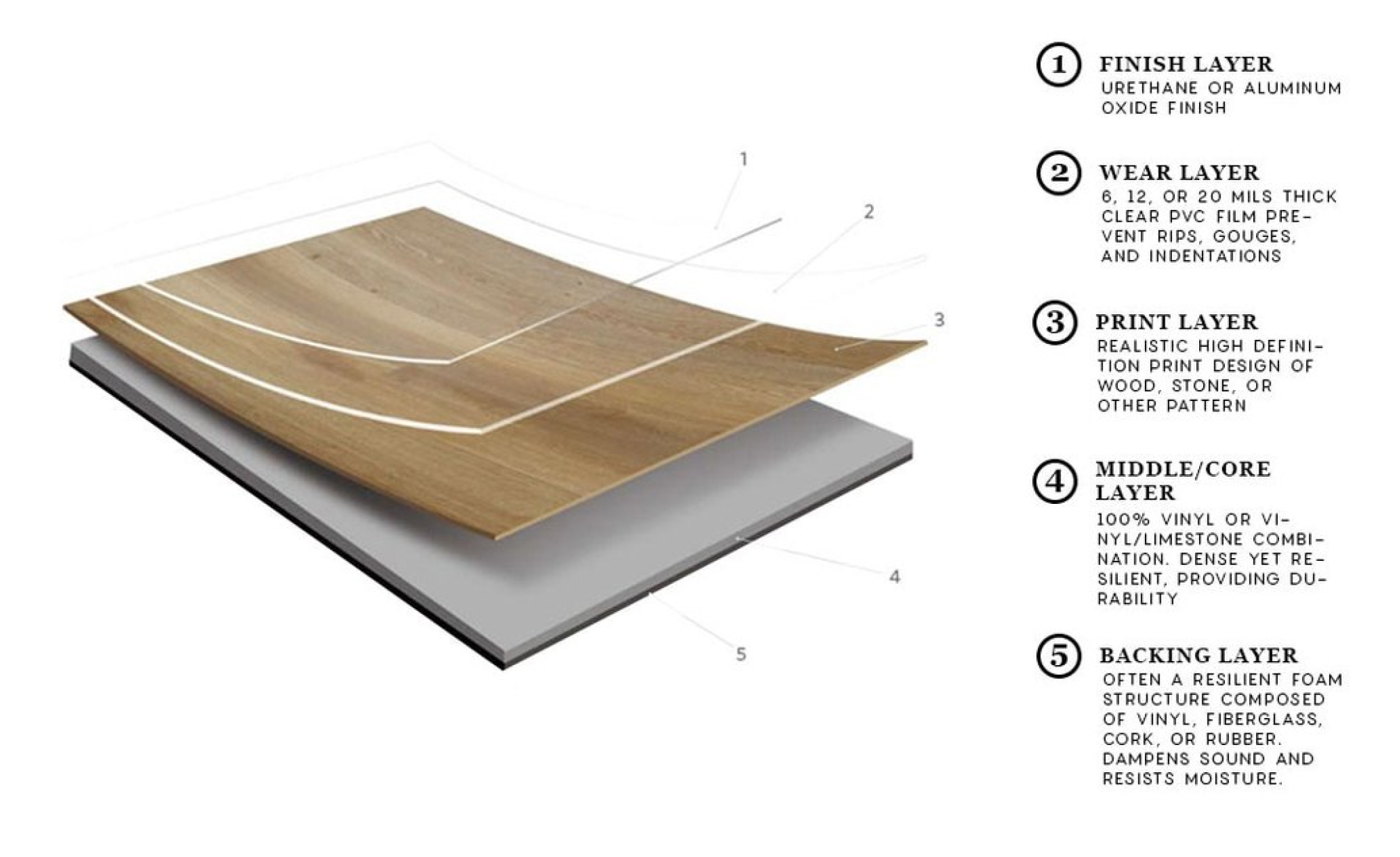
LVP flooring is not a monolithic material but a sophisticated composite, typically constructed in multiple distinct layers. Each layer serves a specific purpose, contributing to the plank’s overall performance characteristics, which in turn influence its price point, durability, and the long-term financial benefits or costs associated with it.
The Core Layer: Stability and Investment Value
At the heart of an LVP plank lies its core layer, the primary determinant of the product’s structural integrity and rigidity. Historically, many vinyl products featured flexible PVC cores, which offered basic water resistance but could be susceptible to indentations and less stable under temperature fluctuations. Modern LVP, however, often incorporates rigid core technologies, significantly enhancing its appeal as a long-term investment.
The composition of this core is critical. A stable, rigid core resists expansion and contraction, preventing issues like gapping, buckling, or warping, which can be costly to repair or replace. This stability translates directly into asset longevity, reducing the risk of premature replacement expenses. For rental properties, commercial spaces, or homes subject to varying conditions, a robust core minimizes operational headaches and capital expenditures over time. Different core materials, such as Stone Plastic Composite (SPC) or Wood Plastic Composite (WPC), carry distinct cost structures and performance profiles, making the core a primary factor in the initial investment and projected financial return.
The Print Layer: Aesthetics, Trends, and Resale Appeal
Above the core, a high-definition photographic print layer is adhered. This layer is responsible for LVP’s remarkable ability to mimic the appearance of natural materials like hardwood, stone, or ceramic tile. The quality and realism of this print layer significantly influence the perceived value and aesthetic appeal of the flooring, which can directly impact a property’s marketability and resale value.
Investing in LVP with a sophisticated print layer, featuring realistic textures and a broad range of colors and patterns, can elevate a property’s interior design without the exorbitant costs associated with genuine hardwoods or natural stone. While the cost difference between basic and premium print layers might seem marginal upfront, the enhanced curb appeal and potential for higher buyer interest can yield a substantial return upon sale. Conversely, opting for outdated or low-quality prints might diminish a property’s perceived value, potentially affecting its selling price or rental income in competitive markets. It’s a strategic investment in visual equity that pays dividends in desirability.
The Wear Layer: Durability, Maintenance, and Long-Term Savings
The wear layer is arguably the most financially impactful component of LVP flooring. This transparent, protective coating sits atop the print layer, acting as a shield against scratches, scuffs, stains, and general wear and tear. Its thickness, typically measured in mils (thousandths of an inch), directly correlates with the flooring’s durability and expected lifespan.
A thicker wear layer, often found in higher-grade LVP products, represents a greater upfront investment. However, this initial outlay is often offset by significant long-term financial benefits. A robust wear layer reduces the need for frequent repairs or premature replacement, minimizing capital expenditures. It also simplifies maintenance, as the surface is less prone to damage from spills and foot traffic, leading to lower cleaning supply costs and less labor-intensive upkeep. For high-traffic areas in commercial settings or busy households, a premium wear layer is an investment in longevity and reduced operational costs. Failing to invest adequately in a thick wear layer can result in accelerated depreciation of the flooring asset, leading to earlier replacement cycles and higher lifetime costs. Therefore, selecting the appropriate wear layer thickness is a critical financial decision impacting the flooring’s true cost of ownership.
Understanding SPC and WPC Variations: Different Price Points, Different Performance
Beyond the general layered structure, LVP flooring has evolved into distinct categories primarily differentiated by their core composition: Stone Plastic Composite (SPC) and Wood Plastic Composite (WPC). Each offers a unique balance of cost, performance, and comfort, dictating their suitability for various budgets and property investment strategies.
Stone Plastic Composite (SPC): Budget-Friendly Durability
SPC flooring is characterized by its ultra-rigid core, typically made from a blend of natural limestone powder, polyvinyl chloride (PVC) resin, and stabilizers. This composition gives SPC planks exceptional density and rigidity. From a financial standpoint, SPC often presents a compelling value proposition. It is generally more affordable than WPC or many traditional hard-surface flooring options, making it an attractive choice for budget-conscious investors or large-scale projects where cost-efficiency is paramount.
The extreme stability of SPC’s core makes it highly resistant to temperature fluctuations and indentations, translating into a durable asset that can withstand heavy commercial traffic or the rigors of an active family. This resilience minimizes maintenance and repair costs over its lifespan, providing long-term savings. Its waterproof nature protects against costly water damage, a significant risk with many other flooring types. While its rigidity can make it feel harder underfoot and offer less sound absorption, its durability and competitive pricing position SPC as a strong candidate for areas where robustness and cost control are key financial drivers, such as rental properties, retail spaces, or basements where moisture is a concern. The low total cost of ownership makes SPC a smart financial choice for investors seeking reliable performance without a premium price tag.
Wood Plastic Composite (WPC): Enhanced Comfort and Higher Cost
WPC flooring, in contrast to SPC, features a core made from wood pulp, plasticizers, and foaming agents, combined with PVC. This composition results in a lighter, softer, and more resilient core compared to SPC. Financially, WPC typically commands a higher price point than SPC, reflecting its enhanced comfort and sound-dampening properties.

The added resilience of WPC makes it more comfortable underfoot, a desirable feature for residential properties or commercial spaces where user experience is prioritized. This comfort can be a selling point, potentially increasing property value or tenant satisfaction. The insulating properties of WPC can also contribute to marginal energy savings, reducing heating and cooling costs over time. Furthermore, its ability to absorb sound can be a valuable asset in multi-story buildings or open-plan offices, reducing noise complaints and improving the overall living or working environment. While the initial capital expenditure for WPC is higher, the investment in comfort, reduced noise pollution, and enhanced aesthetic appeal can translate into higher rental yields or faster property sales, justifying the increased cost for specific target markets. It’s a strategic investment in premium living or working conditions.
Installation Methods: DIY Savings vs. Professional Investment
The method of LVP installation also plays a crucial role in its overall financial impact. Depending on the project scope, desired lifespan, and budget, property owners can choose between empowering DIY solutions or investing in professional installation. Each approach carries its own set of costs, risks, and potential returns.
Click-Lock Systems: Empowering the DIY Investor
Many modern LVP products feature innovative click-lock or floating installation systems. These planks are designed to interlock seamlessly, requiring no adhesives or complex tools, and are laid directly over an existing subfloor. This method significantly reduces labor costs, making it a highly attractive option for the cost-conscious homeowner or property manager looking to maximize immediate savings.
For those with basic DIY skills, the ability to self-install LVP can represent a substantial reduction in the overall project budget. This empowers individuals to undertake renovations without incurring significant professional labor fees, directly impacting their personal finance. However, while seemingly cheaper upfront, improper DIY installation can lead to costly mistakes such as gapping, uneven surfaces, or premature wear, which could necessitate professional intervention or even full replacement later. The financial success of a DIY installation hinges on meticulous planning, adherence to manufacturer guidelines, and a realistic assessment of one’s own capabilities. A well-executed DIY job maximizes savings and builds equity, while a botched job can quickly turn into a financial drain.
Glue-Down Options: Professional Durability for High-Traffic Returns
Traditional LVP often utilizes a glue-down installation method, where planks are permanently adhered to the subfloor with a strong adhesive. This method is typically more labor-intensive and requires specialized tools and expertise, almost invariably necessitating professional installation. Consequently, the upfront labor costs are significantly higher than with click-lock systems.
Despite the increased initial capital expenditure, glue-down installation offers superior stability and durability, making it an excellent long-term investment for high-traffic commercial spaces or areas prone to heavy impacts. The permanent bond minimizes movement, prevents gapping, and enhances the flooring’s resistance to heavy loads and extreme conditions, extending its lifespan and reducing the frequency of future capital outlays for replacement. For businesses, this translates into reduced operational disruptions and consistent aesthetic appeal, safeguarding brand image and customer experience. For residential applications, particularly in multi-generational homes or areas with direct access to the outdoors, the robust nature of glue-down LVP can offer peace of mind and significantly lower long-term maintenance costs, providing a strong ROI in enduring performance.
LVP’s Financial Return: Lifespan, Maintenance, and Property Value
When evaluating LVP flooring, its financial return on investment extends beyond the initial purchase and installation costs. Its inherent characteristics—lifespan, maintenance requirements, and impact on property value—collectively determine its true cost of ownership and its contribution to a property’s overall financial health.
Longevity as an Investment Metric
The lifespan of LVP flooring is a critical financial metric. High-quality LVP, particularly those with robust wear layers and rigid cores (SPC/WPC), can last 15 to 25 years or even longer in residential settings, and 5 to 10 years in heavy commercial applications. This extended durability means fewer cycles of replacement, which directly translates into significant long-term savings on material costs, labor, and disposal fees.
From an investment perspective, a flooring material with a long lifespan ensures that the initial capital expenditure depreciates slowly, providing sustained value over many years. For property investors or landlords, this longevity guarantees consistent asset quality, minimizes vacancies due to renovation, and contributes to predictable operating expenses. Choosing a cheaper, lower-quality alternative with a shorter lifespan might save money upfront but will inevitably lead to higher cumulative costs over the property’s lifecycle due to more frequent replacement cycles. Investing in quality LVP is an investment in durable asset management.
Low Maintenance, High Savings
One of LVP’s most attractive financial benefits is its low maintenance profile. Its waterproof and stain-resistant surface makes cleaning simple, typically requiring just sweeping, vacuuming, and occasional damp mopping. Unlike hardwood, LVP never needs sanding, refinishing, or waxing, eliminating significant periodic expenses associated with traditional flooring types.
These reduced maintenance requirements contribute substantially to long-term financial savings. For homeowners, it frees up budget that would otherwise be allocated to specialized cleaning products or professional upkeep services. For businesses, lower maintenance means reduced labor costs for janitorial staff and fewer disruptions to operations. This combination of durability and ease of care directly impacts the total cost of ownership, making LVP a financially savvy choice for those seeking to minimize ongoing operational expenses and maximize their disposable income or business profits.
Impact on Property Value and Market Appeal
Finally, the impact of LVP flooring on property value and market appeal cannot be overstated. With its realistic aesthetics mirroring expensive natural materials, LVP can significantly enhance the visual appeal of a property. A well-maintained, attractive LVP floor can be a powerful selling point, allowing homeowners to potentially list their property at a higher price or achieve a quicker sale.
For rental properties, updated LVP flooring can justify higher rental rates, attract more desirable tenants, and reduce vacancy periods, directly boosting rental income. It presents a clean, modern, and durable surface that appeals to a broad demographic, showcasing a property that is both stylish and easy to live in. This increase in marketability and perceived value provides a tangible financial return on the initial flooring investment, positioning LVP not just as a floor covering, but as a strategic asset that contributes positively to the overall financial health and equity of a property.
aViewFromTheCave is a participant in the Amazon Services LLC Associates Program, an affiliate advertising program designed to provide a means for sites to earn advertising fees by advertising and linking to Amazon.com. Amazon, the Amazon logo, AmazonSupply, and the AmazonSupply logo are trademarks of Amazon.com, Inc. or its affiliates. As an Amazon Associate we earn affiliate commissions from qualifying purchases.