
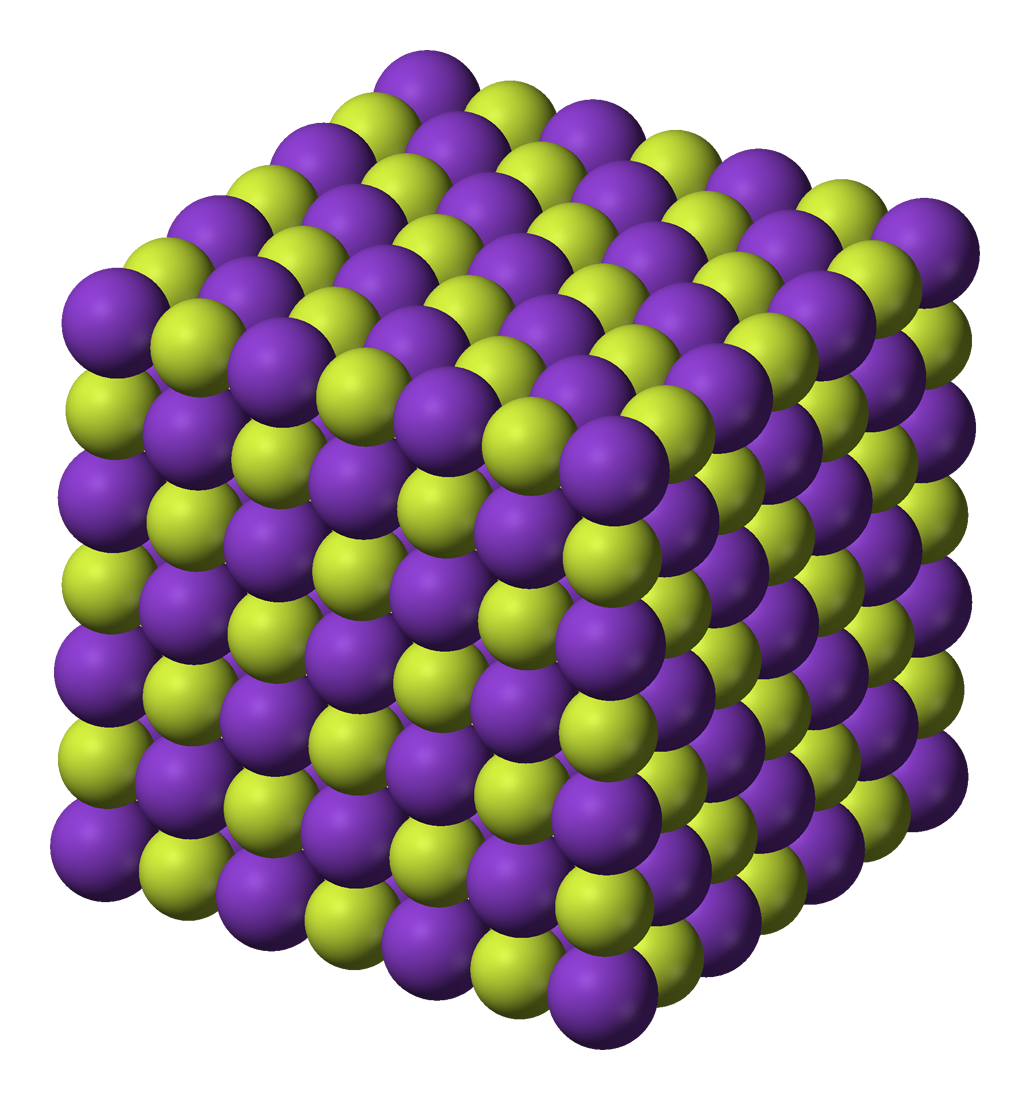
KF Chemistry, more widely known as Karl Fischer (KF) titration, represents a cornerstone analytical technique in industries worldwide, driven by sophisticated technological advancements. At its core, KF chemistry is a highly precise method for determining the water content in a vast array of samples, from pharmaceuticals and petroleum products to food and cosmetics. While the underlying chemical principles date back to the 1930s, the modern practice of KF analysis is inextricably linked with cutting-edge instrumentation, software, and automation, making it a critical component of technological quality control and assurance in the 21st century. Understanding “what is KF chemistry” today means appreciating the symbiotic relationship between a fundamental chemical reaction and the advanced technology that makes it indispensable.
The Technological Foundation of Karl Fischer Titration
The evolution of Karl Fischer titration from a manual, labor-intensive process to a fully automated, high-precision analytical technique is a testament to continuous technological innovation. Modern KF titrators are far removed from their early predecessors, incorporating advanced electronics, precise fluidics, and intelligent control systems that redefine accuracy, speed, and ease of use.
Evolution from Manual to Automated Systems
Early Karl Fischer titrations were performed manually, requiring skilled chemists to carefully monitor color changes and manipulate reagents. This process was prone to human error, time-consuming, and offered limited precision, especially at very low water concentrations. The advent of electrochemical detection, utilizing platinum electrodes to sense the endpoint of the titration, was the first major technological leap, introducing a quantitative and objective means of endpoint determination.
However, the true revolution came with automation. Microprocessor-controlled titrators emerged, automating the addition of reagents, data logging, and calculation of results. This shift dramatically improved repeatability and reproducibility, reducing analyst variability and increasing throughput. Today’s automated KF titrators are highly integrated systems capable of performing multiple analyses sequentially, often with minimal operator intervention. They feature automated solvent handling, waste management, and even integrated sample changers, allowing for unattended operation and freeing up laboratory personnel for more complex tasks. This level of automation is crucial for industries where high sample volumes and stringent quality standards are paramount.
Key Components of a Modern Titrator
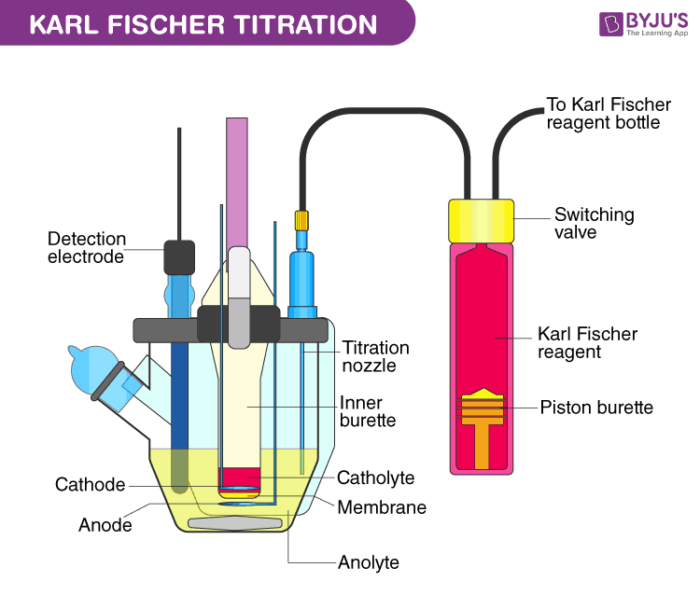
A contemporary KF titrator is a marvel of integrated engineering, comprising several critical technological components that work in concert:
- Titration Cell: The heart of the system, often made of glass with specialized ports for electrodes, reagent inlets, and sample introduction. Advanced cells minimize atmospheric moisture ingress, a critical factor for accurate water determination.
- Dosing Unit: A high-precision burette, typically motor-driven, capable of accurately dispensing microliter volumes of KF reagent. Modern dosing units often incorporate sophisticated stepper motors and precise piston movements to ensure reproducible additions.
- Electrode System: Consists of a generator electrode (for coulometric KF) or an indicator electrode (for volumetric KF). These electrodes employ potentiometric or amperometric principles to detect the electrochemical changes indicating the end of the titration reaction. Digital electrodes with built-in temperature compensation and intelligent diagnostics represent the cutting edge in this area.
- Control Unit: A powerful microprocessor-based system that manages all aspects of the titration process, from reagent addition and stirring to data acquisition and calculation. It integrates the input from the electrode, controls the dosing unit, and executes complex algorithms for endpoint detection and result computation.
- Display and User Interface: Often a color touchscreen that provides real-time titration curves, method parameters, and results. Intuitive graphical interfaces enhance user experience and simplify method setup and calibration.
These components are engineered for robustness, precision, and longevity, reflecting the demanding environments in which KF titrators operate.
Software and Data Management in KF Analysis
Beyond the hardware, the software that drives modern KF titrators is equally vital, transforming raw electrochemical signals into actionable data. This software not only controls the instrument but also provides comprehensive tools for method development, data interpretation, and seamless integration into laboratory information management systems (LIMS).
Precision Control and Method Development
Sophisticated software platforms embedded within KF titrators allow users to define and store a multitude of titration methods tailored to specific sample types and regulatory requirements. These methods precisely control parameters such as stirring speed, titration rate, wait times, and blank values. Advanced algorithms within the software are crucial for accurate endpoint detection, especially for complex samples that may exhibit slow reactions or drift.
The software often includes features for automatic drift compensation, a critical aspect of KF titration where residual moisture in the system can affect results. It can also perform complex calculations, statistically analyze multiple runs, and generate detailed reports. This level of software control ensures that each titration is performed under optimal, reproducible conditions, leading to highly reliable and legally defensible data. Furthermore, modern software often includes self-diagnostic functions, guiding users through troubleshooting and maintenance, thereby maximizing instrument uptime.
Digital Integration and LIMS Connectivity
In contemporary laboratories, standalone instruments are increasingly a thing of the past. The ability of KF titrators to digitally integrate with broader laboratory ecosystems is a key technological advantage. Most advanced titrators come equipped with Ethernet ports, USB connections, and sometimes Wi-Fi capabilities, allowing for direct data transfer to PCs, network drives, or cloud-based platforms.
The most significant integration is often with Laboratory Information Management Systems (LIMS). LIMS connectivity allows for automated transfer of titration results, sample IDs, and method parameters, eliminating manual data entry and drastically reducing transcription errors. This digital workflow streamlines data management, improves data integrity, and facilitates compliance with regulatory standards such as FDA 21 CFR Part 11, which mandates electronic record-keeping and audit trails. The software records every action, every calibration, and every result, creating an unalterable audit trail essential for quality assurance and regulatory scrutiny in tech-driven industries.
KF Chemistry in Advanced Manufacturing and Quality Control
The application of KF chemistry extends across nearly every sector of advanced manufacturing and technological development, underpinning critical quality control processes that ensure product safety, efficacy, and performance. Its ubiquity highlights its unparalleled importance in assessing water content, a parameter that profoundly impacts material properties and product stability.
Ensuring Product Integrity in High-Tech Industries
In the pharmaceutical industry, precise water content determination using KF chemistry is vital for drug stability, shelf-life, and dissolution rates. Too much moisture can degrade active pharmaceutical ingredients (APIs), while too little might affect solubility. KF titrators, therefore, are standard equipment in R&D and QC labs, ensuring every batch meets stringent specifications.
Similarly, in the electronics sector, even trace amounts of water in components like integrated circuits or capacitors can lead to corrosion, short circuits, or performance degradation. KF analysis helps manufacturers ensure the dryness of encapsulants, sealants, and raw materials, safeguarding the reliability of electronic devices. The petroleum industry relies on KF to assess water in crude oil, fuels, and lubricants, as water can cause corrosion, reduce efficiency, and impact engine performance. Beyond these, industries like plastics, chemicals, and even specialized food production (e.g., dehydrated goods, chocolate) depend on KF technology to monitor moisture and prevent spoilage or maintain specific material properties.
Regulatory Compliance and Digital Traceability
For many industries, water content is a critical quality attribute regulated by national and international standards (e.g., pharmacopeias, ASTM, ISO). Modern KF titrators, with their advanced software and digital connectivity, play a crucial role in achieving and demonstrating regulatory compliance. The ability to generate comprehensive, tamper-proof reports, complete with method details, calibration data, and audit trails, is indispensable for audits and regulatory submissions. Digital traceability, from sample registration in a LIMS to the final reported result, is now an expectation, and KF technology provides the tools to achieve this with high integrity.
Future Trends: AI, IoT, and Miniaturization
The field of KF chemistry is not static; it continues to evolve with broader technological trends, promising even more intelligent, connected, and accessible analytical solutions.
Predictive Maintenance and Remote Monitoring
The integration of Artificial Intelligence (AI) and the Internet of Things (IoT) is beginning to transform KF analysis. IoT-enabled titrators can continuously monitor their own performance, tracking reagent levels, electrode health, and calibration status. This data can be fed into AI algorithms that predict when maintenance is needed or when a reagent will run out, enabling predictive maintenance rather than reactive repairs. This significantly reduces downtime and optimizes laboratory operations. Remote monitoring capabilities allow supervisors to oversee multiple instruments from a central location, improving efficiency and resource allocation across distributed laboratory networks.
Portable and In-line KF Solutions
The trend towards miniaturization and on-site analysis is also impacting KF technology. While traditional benchtop titrators remain essential for lab-based precision, there’s a growing demand for portable and in-line KF solutions. Portable titrators offer the flexibility to perform analyses directly at the point of need—on the factory floor, in the field, or in remote locations—providing immediate results and enabling rapid decision-making.
In-line KF systems represent an even more advanced application, continuously monitoring water content within a process stream. These systems integrate directly into manufacturing lines, providing real-time data that allows for dynamic process control and immediate adjustments, preventing costly deviations. Such integration exemplifies the full technological potential of KF chemistry, moving it from a post-process quality check to an integral, real-time component of automated manufacturing and quality assurance systems. As industries push for greater efficiency, automation, and data-driven decision-making, the technological frontier of KF chemistry continues to expand, solidifying its role as an indispensable tool in the modern technological landscape.
aViewFromTheCave is a participant in the Amazon Services LLC Associates Program, an affiliate advertising program designed to provide a means for sites to earn advertising fees by advertising and linking to Amazon.com. Amazon, the Amazon logo, AmazonSupply, and the AmazonSupply logo are trademarks of Amazon.com, Inc. or its affiliates. As an Amazon Associate we earn affiliate commissions from qualifying purchases.