
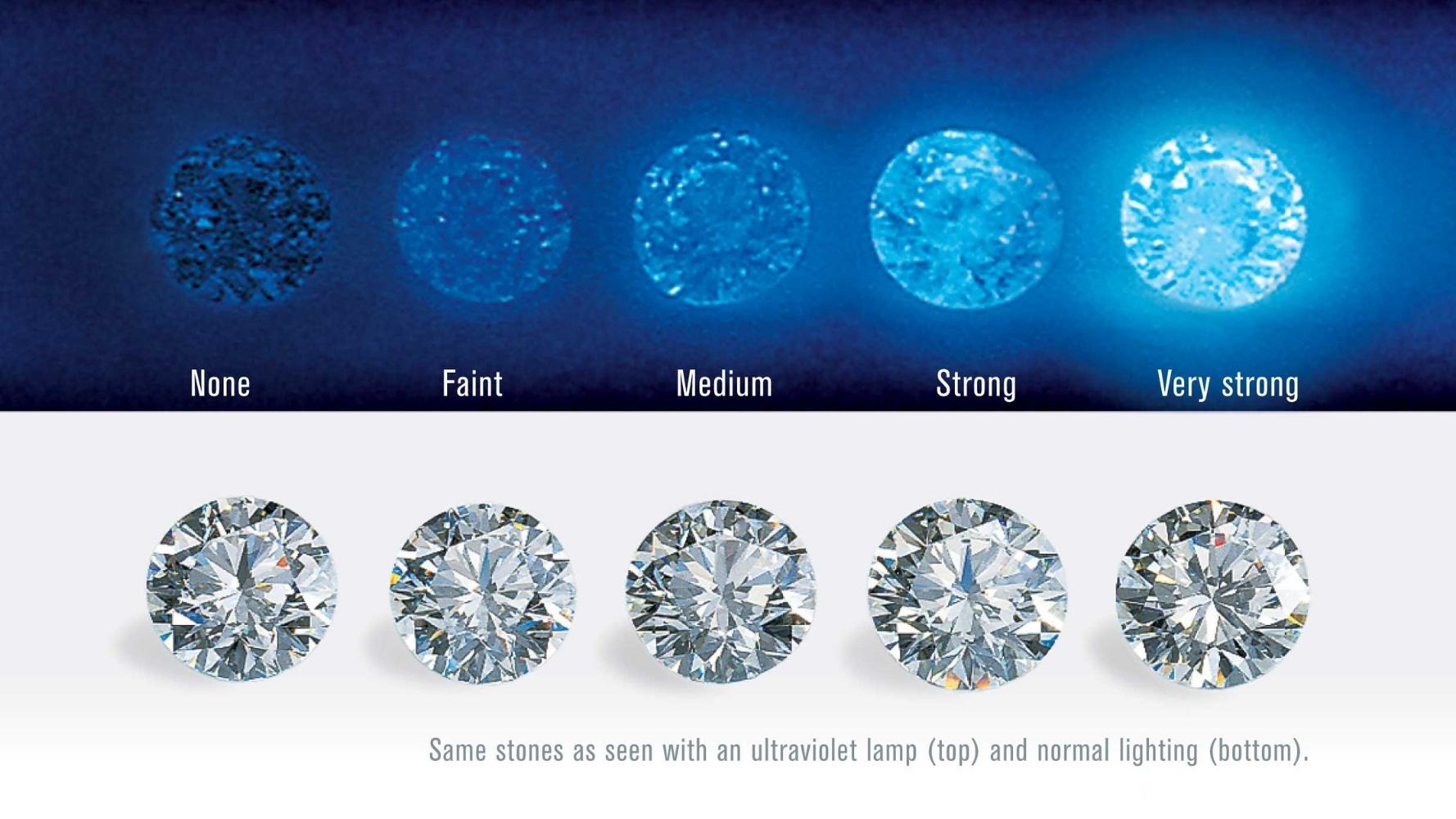
Fluorescence in a diamond is a captivating optical phenomenon where a diamond emits visible light when exposed to ultraviolet (UV) radiation. Far from being a flaw, it is a natural characteristic present in a significant percentage of diamonds, acting as a unique optical signature. Understanding diamond fluorescence requires delving into its underlying physics and the advanced technological methods employed for its detection, analysis, and integration into modern gemological standards. This property, once a subject of widespread misunderstanding, is now comprehensively studied and categorized using sophisticated instruments, contributing to diamond authentication and comprehensive grading.
The Core Physics: Illuminating Diamond Fluorescence
The essence of diamond fluorescence lies in the atomic structure of the diamond itself and its interaction with specific wavelengths of light. It’s a prime example of how minute variations at the atomic level can manifest in observable optical properties, detectible through specialized technology.
Atomic Structure and Light Interaction
Diamonds are primarily composed of carbon atoms arranged in a crystal lattice. However, during their natural formation deep within the Earth, trace elements can become incorporated into this structure. The most common impurity responsible for fluorescence is nitrogen. When a diamond containing these nitrogen atoms (or other trace elements like boron) is exposed to UV light, the energy from the UV photons is absorbed by electrons associated with these impurity atoms. This absorption excites the electrons, causing them to jump to a higher energy level. This elevated state is unstable, and the electrons quickly return to their lower, more stable energy state, releasing the absorbed energy in the form of photons. Because some energy is lost during this process (e.g., as heat), the emitted photons have less energy than the absorbed UV photons, resulting in visible light. This is why a diamond glows blue (most common), yellow, green, or orange when exposed to a UV light source.
The Role of Nitrogen Impurities
The specific color and intensity of fluorescence are directly linked to the type, concentration, and aggregation state of the impurity atoms. Nitrogen is particularly effective because it often forms clusters or substitutes for carbon atoms in ways that create specific “color centers” within the diamond’s lattice structure. For instance, isolated single nitrogen atoms and specific nitrogen-vacancy pairs are largely responsible for the most common blue fluorescence. The conditions under which a diamond forms, including temperature, pressure, and the availability of nitrogen, dictate how these impurities are incorporated and thus influence its fluorescent properties. Advanced spectroscopic techniques allow gemologists to “fingerprint” these specific impurity structures, providing insights into the diamond’s origin and growth history.
Spectrum of Emission
While blue is overwhelmingly the most common fluorescent color observed in diamonds (accounting for approximately 95% of all fluorescent diamonds), other colors like yellow, green, orange, and even white are possible. These rarer colors arise from different combinations of impurity atoms or structural defects within the diamond. For example, specific combinations of nitrogen and boron might result in green or yellow fluorescence. High-resolution spectrometers are crucial “gadgets” in the laboratory for accurately measuring the precise wavelengths of light emitted, allowing for a detailed spectral analysis that goes beyond simple visual observation. This technological capability enables experts to differentiate between various fluorescence types and often provides clues about potential treatments or the diamond’s geological formation.
Technological Detection and Grading Methodologies
The systematic evaluation of diamond fluorescence relies heavily on established technological protocols and sophisticated instrumentation, moving far beyond mere subjective observation to provide standardized, verifiable data.
Standard UV Illumination Systems
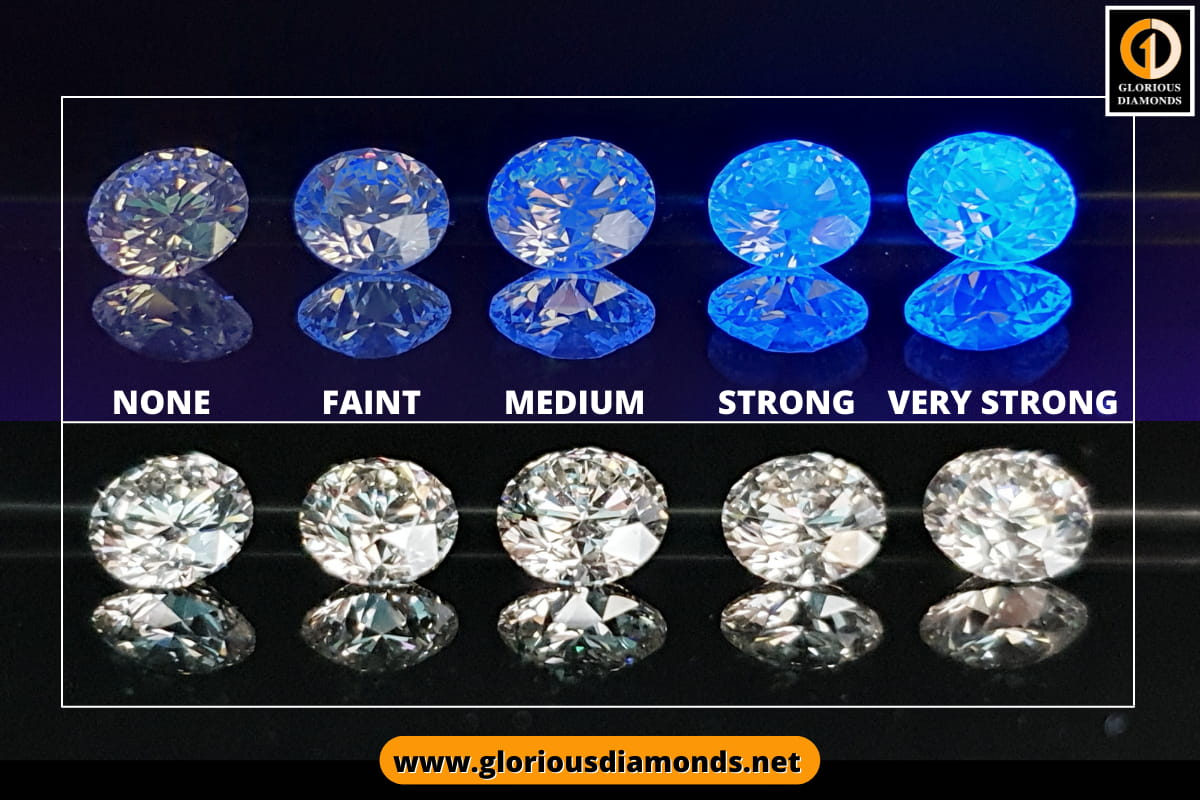
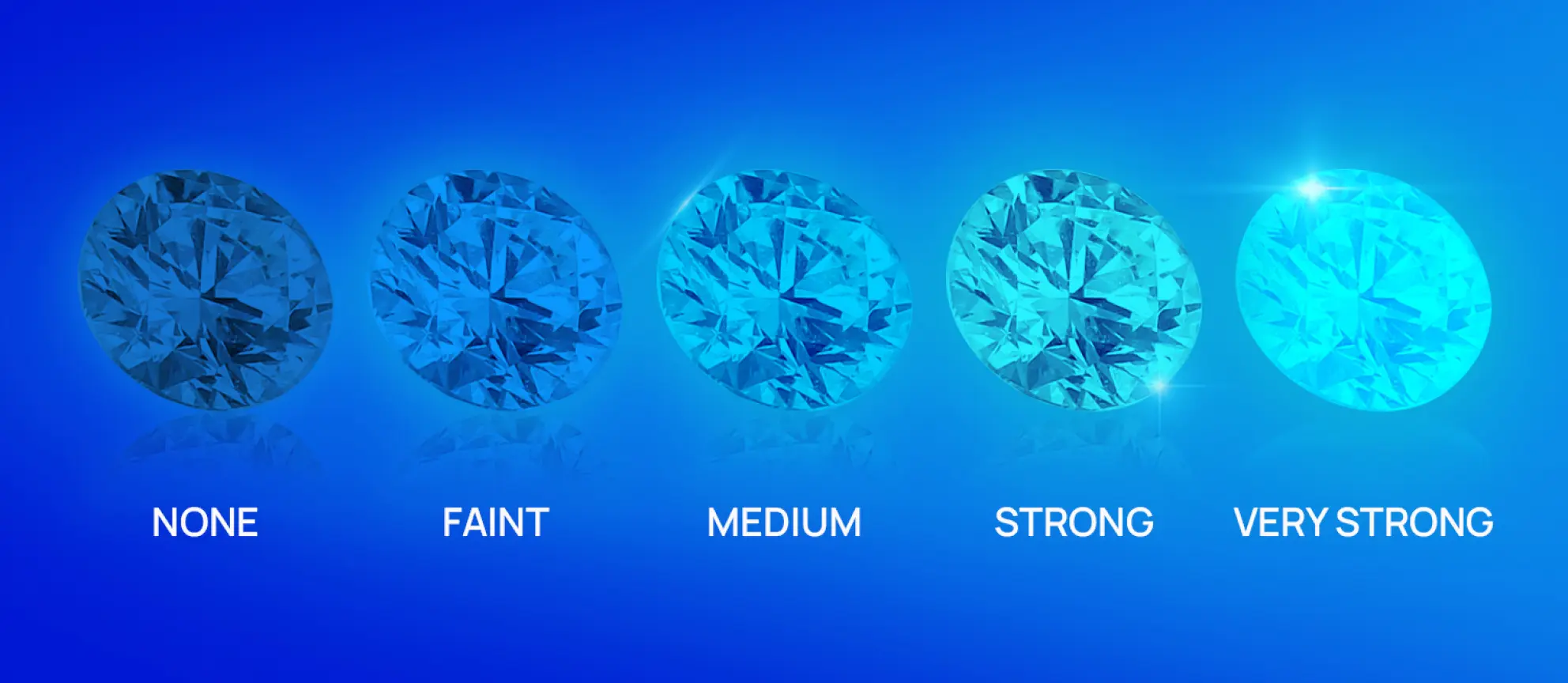
The initial detection of diamond fluorescence in gemological laboratories primarily involves specialized UV illumination systems. These systems typically employ long-wave ultraviolet (LWUV) lamps, which emit UV light at approximately 365 nanometers. Some labs may also utilize short-wave ultraviolet (SWUV) lamps (around 254 nanometers) for specific tests, although LWUV is the standard for fluorescence assessment in grading. These lamps are carefully calibrated “gadgets” that ensure consistent UV exposure conditions, allowing gemologists to visually assess the presence and intensity of fluorescence. The assessment scales, such as those used by the Gemological Institute of America (GIA), range from “None” to “Very Strong,” providing a standardized descriptor for this characteristic.
Advanced Spectroscopic Analysis
Beyond basic visual assessment, cutting-edge gemological laboratories employ advanced spectroscopic analysis for a deeper understanding of fluorescence. UV-Vis-NIR (Ultraviolet-Visible-Near Infrared) spectrometers are powerful tools that can precisely measure the wavelengths and intensities of light emitted by a diamond across the electromagnetic spectrum. This technology provides a detailed “fluorescence spectrum” or “fingerprint” which reveals the specific impurity centers responsible for the fluorescence. Such detailed quantitative data allows gemologists to differentiate between various types of nitrogen aggregates, identify other trace elements, and even detect specific features indicative of certain treatments or synthetic origins. This level of analysis transcends visual grading, providing objective, data-driven insights.
Automated Grading Systems and AI Integration
The future of diamond grading, including fluorescence assessment, is increasingly moving towards automation and the integration of artificial intelligence (AI). Automated systems equipped with high-resolution cameras and precisely controlled UV light sources can capture digital images and spectral data of fluorescence under standardized conditions. AI algorithms, particularly those leveraging machine learning, are being developed and implemented to analyze this vast amount of data. These algorithms can identify subtle patterns in fluorescence intensity and color that might be missed by the human eye, ensuring greater consistency and objectivity in grading. AI’s capacity for rapid, unbiased analysis of complex spectral data promises to revolutionize the efficiency and accuracy of large-scale diamond evaluation, reducing human subjectivity and standardizing output across the industry.
Digital Documentation and Reporting
Modern gemological laboratories rely on robust digital documentation and reporting systems to ensure transparency and accessibility of diamond characteristics. Once assessed, fluorescence information—including its intensity and color—is meticulously recorded in digital databases. High-resolution digital imaging allows for visual documentation of the fluorescence, which can accompany the grading report. This digital infrastructure ensures that detailed, accurate, and verifiable data on a diamond’s fluorescence is readily available to industry professionals and consumers alike. The integration of QR codes and online verification platforms further enhances the integrity and trustworthiness of these digital reports, connecting the physical diamond to its comprehensive technological assessment.
Fluorescence in Diamond Identification and Authentication Technologies
Fluorescence, when analyzed with advanced technology, serves as a crucial characteristic for identifying and authenticating diamonds, playing a vital role in differentiating natural stones from synthetics and detecting various treatments.
Distinguishing Natural from Synthetic Diamonds
The patterns and spectral characteristics of fluorescence can be invaluable in distinguishing natural diamonds from lab-grown (synthetic) diamonds. High-Pressure/High-Temperature (HPHT) and Chemical Vapor Deposition (CVD) methods often result in distinct fluorescence behaviors compared to natural diamonds. For instance, some HPHT synthetic diamonds may exhibit strong, unusual fluorescence patterns, such as cross-shaped or sectorial zoning under UV light, due to how impurities are incorporated during rapid growth. CVD synthetics, on the other hand, can sometimes show weak or no fluorescence, or even phosphorescence (glowing after the UV light is removed) with specific spectral signatures. Sophisticated analytical techniques, including advanced spectroscopy and fluorescence microscopy, are deployed to capture these subtle differences, providing robust evidence for authentication and ensuring market integrity. These technologies are crucial for guarding against misrepresentation in the diamond supply chain.
Identifying Treatments and Enhancements
Various treatments applied to diamonds to improve their color or clarity can also impact their fluorescence characteristics. For example, certain types of HPHT treatment performed on natural diamonds to enhance their color might alter existing fluorescence or induce new fluorescence patterns. Irradiation treatments, another method for color alteration, can also produce specific fluorescence responses. Gemological technologies, including advanced UV-Vis-NIR spectroscopy and photoluminescence spectroscopy, are specifically designed to detect these subtle changes. By analyzing the complete fluorescence spectrum, experts can identify tell-tale signs of treatments that might not be apparent under standard visual examination. This technological capability is vital for maintaining transparency and informing buyers about a diamond’s full history.
Trace Element Analysis through Fluorescence
Beyond simple identification, detailed fluorescence analysis provides a window into the geological conditions under which a diamond formed. The specific types and concentrations of impurity centers responsible for fluorescence can be linked to the diamond’s growth environment and even its potential geographic origin. Combining advanced fluorescence spectroscopy with other analytical techniques like cathodoluminescence (CL) imaging allows scientists to map the distribution of impurities within a diamond’s crystal structure, revealing growth zones and reconstruct its formation history. This deep technological analysis helps in building a comprehensive understanding of diamond geology, improving source verification, and enhancing the overall integrity of the diamond industry.
Dispelling Misconceptions Through Scientific Data and Tech Validation
Historically, fluorescence has been a misunderstood characteristic, often associated with negative perceptions. However, scientific data and technological advancements have largely dispelled these myths, providing a clearer, evidence-based understanding.
The “Oily” or “Cloudy” Appearance Myth
One of the most persistent misconceptions is that fluorescence makes a diamond appear “oily,” “milky,” or “hazy.” Extensive research, particularly by organizations like the GIA, utilizing advanced imaging and spectrophotometric technologies, has definitively shown that this visible effect is extremely rare. Out of the millions of diamonds graded, only a small percentage (less than 0.2%) with “Very Strong” blue fluorescence might exhibit a visible hazy appearance, and even then, often only under specific UV-rich lighting conditions, such as direct sunlight. For the vast majority of fluorescent diamonds, the effect is entirely invisible to the naked eye under normal viewing conditions. High-resolution digital microscopy and controlled environment studies have provided the empirical data necessary to quantify this phenomenon, proving that the myth is largely unfounded for typical diamonds.
Fluorescence and Diamond Durability/Quality
Another common misconception is that fluorescence negatively impacts a diamond’s inherent quality, durability, or structural integrity. Scientifically, fluorescence is an optical phenomenon—a light emission process—and has absolutely no bearing on a diamond’s physical strength, hardness, or chemical stability. The presence of trace nitrogen, which causes the fluorescence, does not weaken the carbon lattice. Advanced material science and extensive testing confirm that fluorescent diamonds are just as durable and long-lasting as non-fluorescent diamonds. This characteristic is purely aesthetic and relates to how the diamond interacts with UV light, not its fundamental composition or structural integrity. Tech-driven analytics ensure that grading protocols focus on objective quality metrics, separating optical characteristics from structural attributes.
Leveraging Digital Tools for Informed Decisions
In the contemporary diamond market, digital tools and resources play a crucial role in providing transparent, scientifically accurate information about fluorescence. Consumers and trade professionals are encouraged to leverage online access to detailed grading reports from reputable laboratories. These digital reports, often featuring interactive components and high-resolution images captured by advanced equipment, clearly state a diamond’s fluorescence characteristics, including intensity and color. Educational content, backed by scientific research and accessible online, helps demystify fluorescence, allowing individuals to make informed purchasing decisions based on verified data rather than outdated folklore. This digital literacy and access to tech-validated information empower stakeholders to understand that fluorescence is a natural, often benign, and sometimes even desirable characteristic of a diamond, rather than a defect.
aViewFromTheCave is a participant in the Amazon Services LLC Associates Program, an affiliate advertising program designed to provide a means for sites to earn advertising fees by advertising and linking to Amazon.com. Amazon, the Amazon logo, AmazonSupply, and the AmazonSupply logo are trademarks of Amazon.com, Inc. or its affiliates. As an Amazon Associate we earn affiliate commissions from qualifying purchases.