
In the intricate world of business finance, acronyms often serve as shorthand for vital concepts that underpin operational health and strategic planning. Among these, “FF&E” stands out as a critical category of assets that every business, regardless of size or industry, must understand and manage effectively. FF&E, an abbreviation for Furniture, Fixtures, and Equipment, represents the tangible, non-real estate physical assets a company owns and uses to conduct its operations. These assets are distinct from inventory, which is held for sale, and real estate itself, which represents the land and buildings. Understanding FF&E is not merely an accounting exercise; it’s fundamental to budgeting, capital allocation, asset management, and ultimately, a company’s financial valuation and operational efficiency.

Defining FF&E: The Tangible Assets of Your Enterprise
To truly grasp the implications of FF&E, it’s essential to break down each component and understand what specific items fall under each umbrella. These categories are defined by their nature, their permanence to a property, and their role in business operations.
Furniture: More Than Just Seating
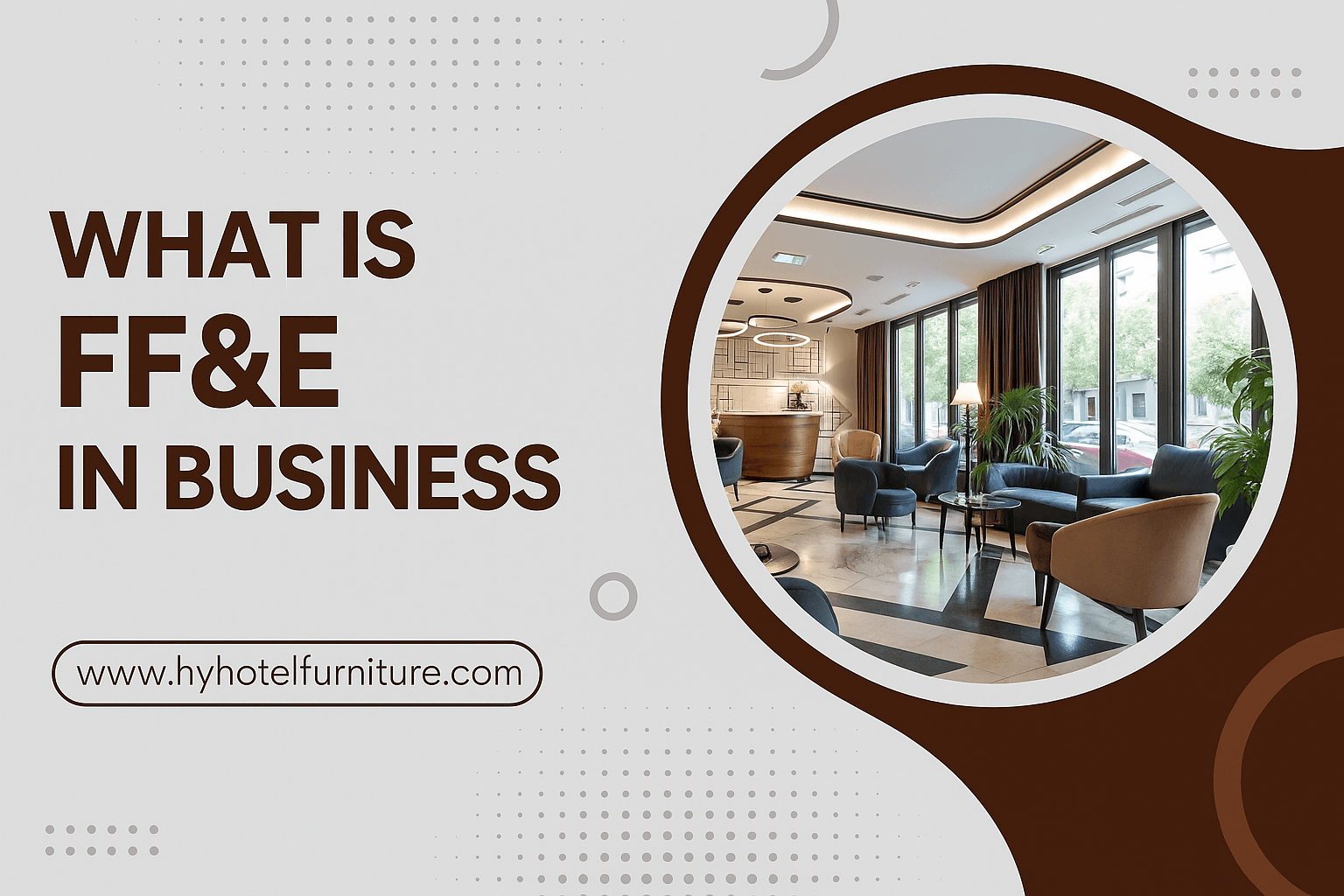
Furniture encompasses all movable items that outfit a business space, serving functional, aesthetic, or ergonomic purposes. This includes a vast array of items critical to daily operations and employee comfort. For an office environment, furniture would include desks, chairs, filing cabinets, conference tables, and reception area seating. In a retail setting, it extends to display cases, shelving units, and dressing room furniture. Hospitality businesses, such as hotels, rely heavily on furniture like beds, dressers, dining tables, and lounge chairs to create specific guest experiences. While often seen as less “critical” than specialized equipment, well-chosen and maintained furniture contributes significantly to employee productivity, client perception, and overall brand identity, all of which have financial implications. The initial capital outlay for furniture can be substantial, and its depreciation must be accounted for over its useful life.
Fixtures: Enhancing the Property
Fixtures are items that are permanently or semi-permanently attached to a building or property and, while distinct from the building structure itself, are considered part of the real estate once installed. Their removal would typically cause damage to the property or render the fixture unusable for its original purpose. Examples include built-in cabinetry, lighting systems, plumbing fixtures (sinks, toilets), HVAC systems, installed carpeting, security systems, and wall-mounted whiteboards or projectors. From a financial perspective, fixtures are often depreciated over a longer period than furniture or certain types of equipment due to their inherent attachment and longer lifespan. Their cost is often factored into tenant improvement allowances in leased properties or capitalized as part of a property development project. Strategic investment in fixtures can significantly enhance a property’s functionality, efficiency, and market value.
Equipment: The Tools of Productivity
Equipment refers to the machinery, tools, and other apparatuses necessary for a business to perform its core functions. This is arguably the most diverse category within FF&E, varying dramatically by industry. For a manufacturing company, equipment includes assembly lines, CNC machines, forklifts, and specialized tools. A restaurant’s equipment roster would feature ovens, refrigerators, dishwashers, coffee machines, and point-of-sale (POS) systems. In a tech company, servers, networking hardware, and specialized testing apparatuses fall under this category. Office-based businesses rely on computers, printers, copiers, and projectors. The financial implications of equipment are often the most significant part of FF&E. Equipment can represent a substantial capital expenditure, often requiring specialized financing. Its useful life can vary widely, necessitating careful depreciation schedules and maintenance budgets to ensure operational continuity and maximize return on investment.
The Financial Significance of FF&E
Understanding FF&E is not just about cataloging assets; it’s about appreciating their profound impact on a company’s financial statements, capital structure, and overall fiscal health. Effective management of FF&E directly influences profitability, cash flow, and valuation.
Capital Expenditure (CapEx) vs. Operating Expenses (OpEx)
A fundamental financial distinction for FF&E is whether an item is classified as a capital expenditure (CapEx) or an operating expense (OpEx). FF&E items are typically considered CapEx, meaning they are significant purchases that will be used for more than one accounting period and are recorded as assets on the balance sheet. Instead of being expensed immediately, their cost is spread out over their useful life through depreciation. In contrast, OpEx includes day-to-day costs like rent, utilities, salaries, and routine maintenance that are expensed in the period they are incurred. The decision to classify an expense as CapEx or OpEx has significant implications for a company’s financial statements, affecting profitability metrics, tax liabilities, and cash flow reporting. Misclassifying an FF&E purchase can distort financial performance and lead to incorrect strategic decisions.
Depreciation and Amortization
Since FF&E assets have a finite useful life, their value diminishes over time due to wear and tear, obsolescence, or usage. This reduction in value is accounted for through depreciation (for tangible assets like FF&E) or amortization (for intangible assets). Depreciation is a non-cash expense that systematically allocates the cost of an asset over its useful life. This process impacts a company’s net income and asset value on the balance sheet. For instance, a $50,000 piece of equipment with a 5-year useful life might be depreciated by $10,000 each year. This depreciation expense reduces taxable income, providing a tax shield for the business. Proper depreciation methods are crucial for accurate financial reporting, tax compliance, and realistic asset valuation.
Impact on Balance Sheets and Valuation
FF&E assets are recorded on a company’s balance sheet under “Property, Plant, and Equipment” (PP&E) or a similar category. The net book value of FF&E (original cost less accumulated depreciation) contributes significantly to a company’s total asset base. This directly impacts key financial ratios, such as return on assets (ROA), and influences the company’s borrowing capacity, as these assets can often serve as collateral for loans. For investors and potential buyers, the quality, age, and value of a company’s FF&E provide insights into its operational capacity, technological relevance, and future capital expenditure needs. Businesses with well-maintained, modern FF&E are often perceived as more efficient and valuable, while those with aging or insufficient FF&E might face higher future CapEx requirements or operational limitations, impacting their long-term valuation.
Strategic Management of FF&E for Business Growth
Effective FF&E management goes beyond mere accounting; it’s a strategic imperative that supports business growth, optimizes operational efficiency, and maximizes shareholder value. Businesses must adopt a proactive approach to acquiring, maintaining, and eventually disposing of these vital assets.
Budgeting and Procurement Strategies
Strategic FF&E management begins with robust budgeting and procurement. Businesses need to meticulously plan for both initial CapEx and ongoing maintenance costs. This involves forecasting equipment needs based on growth projections, technological advancements, and replacement cycles. Procurement strategies should focus not only on cost but also on quality, durability, energy efficiency, and total cost of ownership (TCO), which includes purchase price, operating costs, and end-of-life expenses. Negotiating favorable terms with suppliers, exploring bulk purchasing discounts, and considering leasing options are all part of a savvy procurement strategy that can significantly impact a company’s cash flow and financial performance.
Lifecycle Management: Acquisition to Disposal
Managing FF&E assets effectively requires a lifecycle approach. This encompasses every stage:
- Acquisition: Careful planning, budgeting, vendor selection, and negotiation.
- Deployment: Installation, integration into existing operations, and employee training.
- Maintenance & Operations: Regular servicing, preventative maintenance, and ensuring optimal utilization to extend useful life and minimize downtime. This often involves tracking asset performance and repair histories.
- Renewal & Replacement: Determining when an asset has reached the end of its economic life, considering factors like declining efficiency, increased maintenance costs, or technological obsolescence.
- Disposal: Strategically selling, trading in, or sustainably disposing of old assets to recover residual value or minimize environmental impact. Proper disposal can free up capital, reduce storage costs, and sometimes generate additional revenue.
A holistic lifecycle management strategy ensures that FF&E assets consistently support business objectives without becoming a drain on resources due to inefficiency or unexpected failures.
Financing FF&E: Loans, Leases, and Equity
Acquiring FF&E often requires significant capital, leading businesses to explore various financing options.
- Debt Financing (Loans): Businesses can take out traditional bank loans or equipment-specific loans, using the FF&E itself as collateral. This typically results in ownership of the asset but carries interest payments.
- Leasing: Operating leases allow businesses to use an asset for a set period without owning it, often resulting in lower upfront costs and easier upgrades. Capital leases, while legally structured as leases, are often treated as asset purchases for accounting purposes, with the asset appearing on the balance sheet. Leasing can be attractive for rapidly evolving technology, as it avoids obsolescence risks and allows for predictable monthly payments.
- Equity Financing: Larger FF&E investments might be funded through equity, either from retained earnings, new shareholder investments, or venture capital. This avoids debt obligations but dilutes ownership or reduces cash reserves.
The choice of financing method heavily impacts a company’s cash flow, debt-to-equity ratio, and tax situation, requiring careful financial analysis to align with overall business strategy and risk tolerance.
Industry-Specific Considerations and Trends
The importance and nature of FF&E vary significantly across different industries, driven by operational requirements, customer expectations, and technological advancements.
Hospitality and Retail: Customer Experience Drives FF&E
In the hospitality (hotels, restaurants) and retail sectors, FF&E plays a dual role: it supports operations and is a direct component of the customer experience. For hotels, high-quality furniture, modern fixtures, and reliable equipment (e.g., kitchen appliances, laundry machines) are critical for guest satisfaction and brand reputation. Regular refurbishment cycles are common to keep the property fresh and competitive. In retail, FF&E like display cases, shelving, lighting, and POS systems are designed to enhance product presentation, optimize store layout, and streamline transactions, directly influencing sales and customer engagement. Investment in FF&E in these sectors is often driven by marketing and branding strategies as much as by operational necessity.
Manufacturing and Technology: Specialized Equipment Needs
For manufacturing and technology companies, equipment is the heartbeat of their operations. Specialized machinery, automated systems, precision tools, and high-performance computing infrastructure are direct revenue generators. Investment in cutting-edge equipment can lead to increased production capacity, improved product quality, reduced waste, and a competitive advantage. The focus here is on efficiency, reliability, and staying abreast of technological advancements. The lifecycle of equipment in these sectors can be shorter due to rapid innovation, necessitating robust capital expenditure planning for upgrades and replacements to maintain market relevance and operational edge.
Sustainability and Circular Economy in FF&E
A growing trend across all industries is the integration of sustainability principles into FF&E management. This involves selecting energy-efficient equipment, sourcing furniture and fixtures made from recycled or sustainable materials, and adopting practices that support a circular economy. The circular economy model aims to keep resources in use for as long as possible, extracting the maximum value from them whilst in use, then recovering and regenerating products and materials at the end of each service life. This includes responsible disposal, recycling, or even “upcycling” of FF&E components. Beyond environmental benefits, sustainable FF&E practices can lead to cost savings (e.g., lower energy bills), enhance brand reputation, and attract environmentally conscious customers and investors.
Common Pitfalls and Best Practices
Despite its critical importance, FF&E management can be complex, and businesses often encounter common pitfalls that can lead to financial strain or operational inefficiencies. Adopting best practices can mitigate these risks.
Avoiding Underestimation of Costs
One common mistake is underestimating the total cost of FF&E. Businesses often focus solely on the purchase price, neglecting associated expenses such as shipping, installation, insurance, maintenance contracts, staff training, and eventual disposal costs. A comprehensive total cost of ownership (TCO) analysis is crucial to prevent budget overruns and ensure an accurate financial picture. Failing to budget adequately for maintenance can lead to premature equipment failure, costly emergency repairs, and operational downtime.
Regular Inventory and Maintenance
Many businesses lack a robust system for tracking their FF&E assets. This can lead to lost or misplaced items, inaccurate depreciation schedules, and an inability to plan for replacements effectively. Implementing an asset management system, whether a simple spreadsheet for small businesses or sophisticated enterprise resource planning (ERP) software for larger entities, is a best practice. Regular inventory audits and a proactive maintenance schedule are essential to extend asset life, ensure operational reliability, and maximize return on investment. Preventative maintenance, though an upfront cost, invariably saves money and prevents costly disruptions in the long run.
Leveraging Technology for Asset Tracking
Modern technology offers powerful tools for FF&E management. Cloud-based asset tracking software, often integrated with QR codes or RFID tags, can provide real-time data on asset location, condition, maintenance history, and depreciation status. This level of insight allows for better utilization, more accurate financial reporting, optimized maintenance schedules, and improved capital expenditure planning. For businesses with extensive FF&E portfolios, technology transforms asset management from a reactive, cumbersome task into a strategic, data-driven advantage.
In conclusion, Furniture, Fixtures, and Equipment are far more than just items in a business space; they are strategic financial assets that directly influence a company’s operational capacity, financial health, and long-term viability. Effective FF&E management, encompassing rigorous financial planning, lifecycle oversight, and strategic procurement, is indispensable for any business aiming for sustained growth and profitability in a competitive market.
aViewFromTheCave is a participant in the Amazon Services LLC Associates Program, an affiliate advertising program designed to provide a means for sites to earn advertising fees by advertising and linking to Amazon.com. Amazon, the Amazon logo, AmazonSupply, and the AmazonSupply logo are trademarks of Amazon.com, Inc. or its affiliates. As an Amazon Associate we earn affiliate commissions from qualifying purchases.