
Computer Aided Instruction (CAI) represents a foundational pillar in the evolution of digital learning, leveraging computational power to facilitate, enhance, and personalize the educational experience. At its core, CAI encompasses a broad range of technological applications designed to deliver instructional content, assess learner understanding, and provide immediate feedback, all mediated by computer systems. From interactive tutorials and drills to sophisticated simulations and adaptive learning platforms, CAI fundamentally transforms traditional pedagogical approaches by introducing dynamic, self-paced, and often individualized learning pathways. This technology-driven methodology empowers learners to engage with educational material on their own terms, at their own pace, and often outside the confines of a traditional classroom, marking a significant shift in how knowledge is acquired and skills are developed in the digital age.

The Evolution and Core Principles of CAI
The concept of using machines to aid instruction has roots tracing back to the mid-20th century, long before the ubiquity of personal computers. The progression of CAI is intricately linked with advancements in computing power, software development, and a deeper understanding of cognitive science and learning theories.
Early Beginnings and Conceptual Foundations
The origins of CAI can be attributed to early experimental systems developed in the 1950s and 60s, such as B.F. Skinner’s teaching machines, which explored programmed instruction using mechanical devices. However, the true dawn of computer-aided instruction began with the advent of mainframe computers. Projects like PLATO (Programmed Logic for Automated Teaching Operations) at the University of Illinois in the 1960s were pioneers, demonstrating the potential of networked computer systems to deliver educational content, provide interactive exercises, and even support early forms of online communities. These early systems, though rudimentary by today’s standards, established the core principle: using computational logic to guide and respond to a learner’s progress, offering a structured, interactive alternative to static textbooks and lectures. The initial focus was often on drill-and-practice routines, tutorial programs, and problem-solving simulations, laying the groundwork for more complex applications.
Key Characteristics of Modern CAI
Modern CAI systems are characterized by several defining features that differentiate them from mere digital content delivery. They are fundamentally interactive, demanding user input and responding dynamically. This interactivity extends beyond simple button clicks to complex simulations where learner decisions influence outcomes. Personalization is another hallmark, with advanced CAI systems capable of adapting content, pace, and difficulty based on individual learner performance and preferences. This adaptive quality often relies on sophisticated algorithms that analyze user data in real-time. Furthermore, modern CAI platforms excel at providing immediate and detailed feedback, a critical component for effective learning. This feedback can range from simple correctness indicators to elaborate explanations, hints, and references to relevant learning materials. The integration of multimedia elements—graphics, audio, video, and animation—is also crucial, making complex topics more accessible and engaging. Finally, the ability to track and report on learner progress provides valuable data for both the learner and the instructor, enabling targeted intervention and assessment.
How CAI Works: Components and Modalities
The operational mechanics of CAI involve a synergy of hardware, software, and instructional design principles to create effective digital learning environments. Understanding these components illuminates the “aided by computer” aspect of the instruction.
Software and Hardware Ecosystems
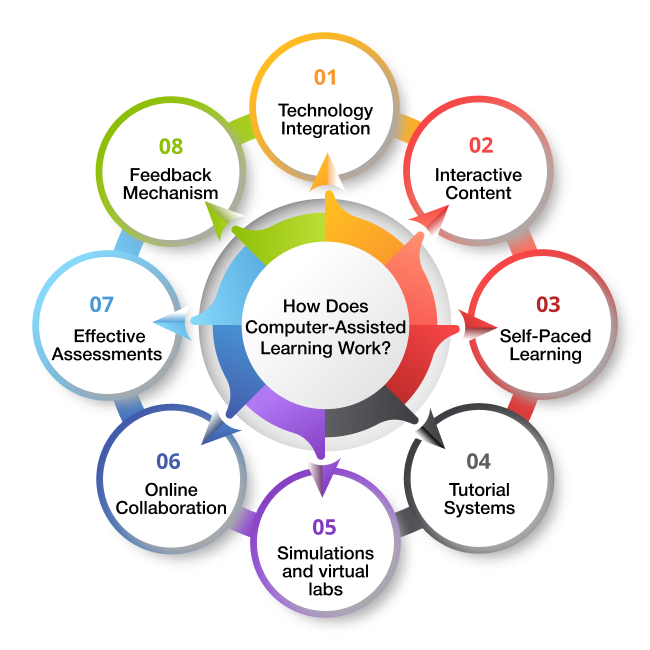
At the heart of any CAI system is its software. This can range from standalone applications downloaded to a local device to sophisticated web-based platforms delivered via cloud infrastructure. Key software components include:
- Content Delivery Modules: Responsible for presenting text, images, videos, and interactive elements.
- Assessment Engines: Algorithms and databases designed to create, deliver, and grade quizzes, tests, and exercises.
- Feedback Mechanisms: Logic gates and programming that generate context-sensitive responses to learner input, offering explanations, hints, or redirection.
- Learning Management System (LMS) Integration: Often, CAI modules are integrated into larger LMS platforms (e.g., Moodle, Canvas, Blackboard) which handle user authentication, course management, gradebooks, and communication tools.
- Adaptive Learning Algorithms: Increasingly, AI and machine learning are employed to dynamically adjust the learning path, content difficulty, and instructional strategies based on a learner’s real-time performance, learning style, and prior knowledge. This predictive analysis allows for a truly personalized experience.
The hardware ecosystem supporting CAI has also evolved from dedicated terminals to a diverse array of devices, including desktop computers, laptops, tablets, and smartphones. Cloud computing plays a critical role, enabling widespread access to CAI applications without requiring powerful local hardware or complex installations, facilitating global reach and scalability. Network infrastructure, both wired and wireless, is essential for delivering rich multimedia content and ensuring seamless interaction.
Interactive Learning Environments
CAI creates highly interactive learning environments that transcend passive consumption of information. This is achieved through various modalities:
- Simulations: Replicating real-world scenarios where learners can practice skills, make decisions, and observe consequences in a safe, controlled digital space. This is particularly valuable in fields like medicine, engineering, and aviation.
- Tutorials: Guided step-by-step instruction, often incorporating explanations, examples, and practice problems with immediate feedback.
- Drill and Practice: Repetitive exercises designed to reinforce knowledge and develop fluency in specific skills, ideal for subjects requiring memorization or procedural mastery.
- Educational Games: Gamification principles are applied to learning, making the process more engaging through challenges, rewards, and competitive elements.
- Virtual Labs and Augmented Reality (AR) Experiences: Offering immersive environments where users can manipulate virtual objects, conduct experiments, or explore concepts in 3D, often transcending the limitations of physical labs.
Data Collection and Adaptive Pathways
A fundamental technological advantage of CAI is its ability to meticulously collect data on learner interactions. Every click, answer, time spent on a task, and error made can be recorded and analyzed. This data forms the backbone of adaptive learning. Sophisticated algorithms use this information to:
- Diagnose Learning Gaps: Identify areas where a learner struggles.
- Recommend Resources: Suggest supplementary materials or different approaches to a concept.
- Adjust Difficulty: Increase or decrease the complexity of tasks based on performance.
- Personalize Pacing: Allow learners to progress at their own speed, rather than a fixed class pace.
- Provide Targeted Feedback: Deliver specific, constructive feedback tailored to the learner’s exact mistake or misunderstanding.
This data-driven approach allows CAI systems to create highly individualized “adaptive pathways,” ensuring that each learner receives instruction that is optimally challenging and supportive.

Benefits and Advantages in Learning Environments
The implementation of CAI brings a host of significant benefits, transforming both the learner’s journey and the educator’s toolkit through technological leverage.
Personalized Learning at Scale
One of the most compelling advantages of CAI is its capacity to deliver personalized instruction to a large number of learners simultaneously. Traditional classrooms often struggle to cater to diverse learning styles and paces. CAI platforms, powered by adaptive algorithms, can individualize the learning experience for each student, presenting content in varied formats, adjusting difficulty levels, and offering tailored remediation. This scalability means that many individuals can receive an education that feels custom-made, irrespective of their starting point or previous knowledge, a feat nearly impossible without significant technological intervention. This personalization leads to more effective learning outcomes as students are neither bored by overly simple material nor overwhelmed by content beyond their current grasp.
Enhanced Engagement and Retention
CAI leverages multimedia, interactivity, and often gamification to make learning more engaging than traditional methods. The dynamic nature of simulations, the instant gratification of correct answers, and the challenge of interactive problem-solving can significantly increase learner motivation and focus. Active participation, rather than passive reception, is a hallmark of CAI. Studies show that when learners are actively involved and can manipulate variables or make choices within a digital environment, their comprehension and retention of information improve dramatically. The ability to revisit complex topics multiple times, practice skills in a risk-free environment, and receive immediate corrective feedback solidifies understanding and memory.
Accessibility and Flexibility
Technology democratizes access to education. CAI, particularly through web-based platforms, allows learners to access high-quality instructional content anytime, anywhere, provided they have an internet connection and a compatible device. This flexibility is invaluable for adult learners juggling work and family commitments, students in remote areas with limited access to traditional institutions, or individuals with specific learning needs that require a non-traditional setting. It breaks down geographical and temporal barriers, making education more inclusive and adaptable to diverse lifestyles. Moreover, CAI can incorporate features that enhance accessibility for learners with disabilities, such as screen readers, adjustable font sizes, and alternative input methods, ensuring broader participation.
Efficient Resource Utilization
From an institutional perspective, CAI can lead to more efficient utilization of resources. While initial development costs can be significant, once a robust CAI module or platform is built, it can serve countless learners with relatively low marginal costs. It reduces the need for constant, direct instructor supervision for basic drill-and-practice or introductory material, freeing up educators to focus on higher-order thinking, complex problem-solving, and individualized mentorship. Automated grading and progress tracking also save instructors valuable time, allowing them to concentrate on pedagogical strategy rather than administrative tasks. For learners, CAI can offer a cost-effective alternative to traditional education, potentially reducing expenses related to textbooks, travel, and on-campus facilities.
Challenges and Future Directions
While CAI has revolutionized education, its path forward involves addressing existing challenges and embracing emerging technological paradigms to unlock its full potential.
Bridging the Digital Divide
Despite its promise of accessibility, CAI faces the significant hurdle of the digital divide. Unequal access to reliable internet, suitable hardware (computers, tablets), and digital literacy skills among various socioeconomic groups can exacerbate existing educational inequalities. For CAI to truly fulfill its potential as an equalizer, efforts must be made to ensure equitable access to technology and connectivity. This involves public policy initiatives, community programs, and innovative solutions to provide affordable devices and internet services, along with training in digital competencies. Without addressing this fundamental infrastructure gap, the benefits of advanced CAI risk remaining concentrated among already privileged populations.
Integration with Emerging Technologies (AI, VR/AR)
The future of CAI is deeply intertwined with advancements in artificial intelligence (AI), virtual reality (VR), and augmented reality (AR). AI, beyond current adaptive algorithms, promises even more sophisticated personalization, capable of understanding nuanced learner emotions, predicting cognitive states, and generating dynamic content on the fly. AI-powered intelligent tutoring systems are moving towards replicating the effectiveness of human tutors, offering highly individualized and context-aware guidance. VR and AR hold the potential to create unprecedented immersive learning experiences, transforming abstract concepts into tangible, interactive realities. Imagine studying anatomy in a virtual operating room, exploring historical sites as if present, or designing complex machinery in a simulated workshop. These technologies can make learning experiential, highly engaging, and memorable, moving beyond screen-based interactions to truly embodied learning.
Instructor Role Reimagination
The proliferation of CAI necessitates a re-evaluation and reimagination of the instructor’s role. Rather than merely delivering content, educators can evolve into facilitators, mentors, and instructional designers. With CAI handling routine instruction and assessment, instructors can focus on higher-level activities: guiding discussions, fostering critical thinking, facilitating collaborative projects, providing emotional support, and addressing complex individual learning challenges that automated systems cannot yet manage. They become curators of digital learning pathways, leveraging data from CAI systems to provide targeted interventions and enrich the overall learning experience. This shift requires ongoing professional development for educators, equipping them with the skills to effectively integrate and leverage technology in their teaching practices.
aViewFromTheCave is a participant in the Amazon Services LLC Associates Program, an affiliate advertising program designed to provide a means for sites to earn advertising fees by advertising and linking to Amazon.com. Amazon, the Amazon logo, AmazonSupply, and the AmazonSupply logo are trademarks of Amazon.com, Inc. or its affiliates. As an Amazon Associate we earn affiliate commissions from qualifying purchases.