
The question “what is COD rated” is multifaceted, typically referring to two primary aspects: the age classification assigned by regulatory bodies and the critical reception or user ratings for the Call of Duty (COD) franchise. As a cornerstone of the modern gaming industry, Call of Duty has consistently been at the forefront of discussions surrounding mature content, technological advancement, and the impact of annual release cycles. Understanding its ratings involves delving into the mechanisms of game classification and the dynamic landscape of game criticism.
Decoding Age Ratings: The Industry’s Gatekeepers
Age ratings are crucial for informing consumers, particularly parents, about the suitability of game content for different age groups. These ratings are not merely suggestions but are often legally binding in various regions, dictating where and to whom games can be sold. For Call of Duty, given its mature themes, understanding these systems is paramount.

ESRB: The North American Standard
In North America, the Entertainment Software Rating Board (ESRB) is the primary body responsible for assigning age and content ratings. The ESRB system employs a letter-based rating scale, from “EC” (Early Childhood) to “AO” (Adults Only). For the Call of Duty series, nearly every main installment has received an “M for Mature” rating.
An “M” rating signifies content that may be suitable for persons ages 17 and older. This rating is typically applied due to intense violence, blood and gore, sexual themes, strong language, and/or use of drugs and alcohol. For Call of Duty, the consistent “M” rating stems primarily from its realistic, intense, and often graphic depiction of combat, warfare, and its consequences. Content descriptors accompanying the “M” rating for COD titles frequently include “Blood and Gore,” “Intense Violence,” “Strong Language,” and sometimes “Drug Reference” or “Suggestive Themes,” depending on the specific game’s narrative elements. These descriptors provide an additional layer of detail, explaining why a particular rating was assigned, beyond just the age recommendation.
PEGI: Europe’s Classification System
Across Europe, the Pan European Game Information (PEGI) system serves a similar purpose to the ESRB. PEGI uses a numerical age rating (3, 7, 12, 16, 18) combined with content descriptors. For the Call of Duty franchise, the vast majority of titles have consistently received a “PEGI 18” rating.
A “PEGI 18” rating indicates that the game is only suitable for adults and is considered the equivalent of the ESRB’s “M” rating. This classification is typically assigned to games featuring graphic violence, explicit sexual content, discriminatory depictions, or the promotion of illegal drug use. Call of Duty games are classified as PEGI 18 primarily due to “Violence” and “Bad Language” descriptors, often accompanied by “Drugs” or “In-Game Purchases” where applicable. The explicit nature of the combat scenarios, the often-gritty narratives, and the use of strong language within character dialogues all contribute to this adult classification.
Other Global Rating Bodies
While ESRB and PEGI are the most widely recognized, other significant rating bodies exist globally. For instance, Japan utilizes the Computer Entertainment Rating Organization (CERO), Australia has the Australian Classification Board (ACB), and Germany employs the Unterhaltungssoftware Selbstkontrolle (USK). Each system has its unique scale and criteria, but the overarching principle remains consistent: to provide consumers with clear information about game content. Call of Duty titles generally receive the highest or second-highest adult rating across all these systems, underscoring the universal recognition of its mature themes. For example, in Australia, most COD titles are rated “R18+”, reflecting content deemed suitable only for individuals 18 years and over.
Why Ratings Matter
Beyond consumer information, age ratings have significant implications for game development, marketing, and distribution. Developers must consider rating guidelines during production, as an unexpected “Adults Only” (AO) rating from the ESRB, for instance, could severely restrict a game’s retail availability. Retailers often have strict policies against selling M/18+ rated games to minors, with legal repercussions for non-compliance. Furthermore, marketing campaigns for mature-rated games are often tailored to adult audiences, avoiding channels primarily aimed at children. This regulatory framework shapes not just what content is created, but also how it reaches its intended audience.
Call of Duty’s Consistent Mature Content
The enduring popularity of Call of Duty is inextricably linked to its signature gameplay loop and realistic portrayal of combat, which inherently places it within the mature content category. This consistency in its rating reflects the series’ commitment to delivering a specific type of experience.
Common Content Triggers
Several recurring elements within Call of Duty titles consistently trigger M/18+ ratings:
- Intense and Realistic Violence: The core gameplay revolves around engaging in armed combat. This often includes realistic depictions of bullet impacts, blood effects, dismemberment (in some titles or modes), and the overall visceral nature of warfare. The strategic and tactical depth is often intertwined with the graphic consequences of conflict.
- Strong Language: Dialogue from characters, particularly soldiers under duress or in combat situations, frequently includes profanity. This is often integrated to enhance realism and character authenticity within military contexts.
- Drug Reference/Use: While not always a primary focus, some narratives or environments might include references to or depictions of drugs, particularly in modern warfare settings exploring themes like organized crime or post-conflict trauma.
- Thematic Elements: Beyond explicit content, the overarching themes of war, terrorism, political intrigue, and the moral ambiguities of conflict are inherently mature. These narratives often explore complex ethical dilemmas and portray intense psychological stress.
Evolution of Mature Content in Gaming
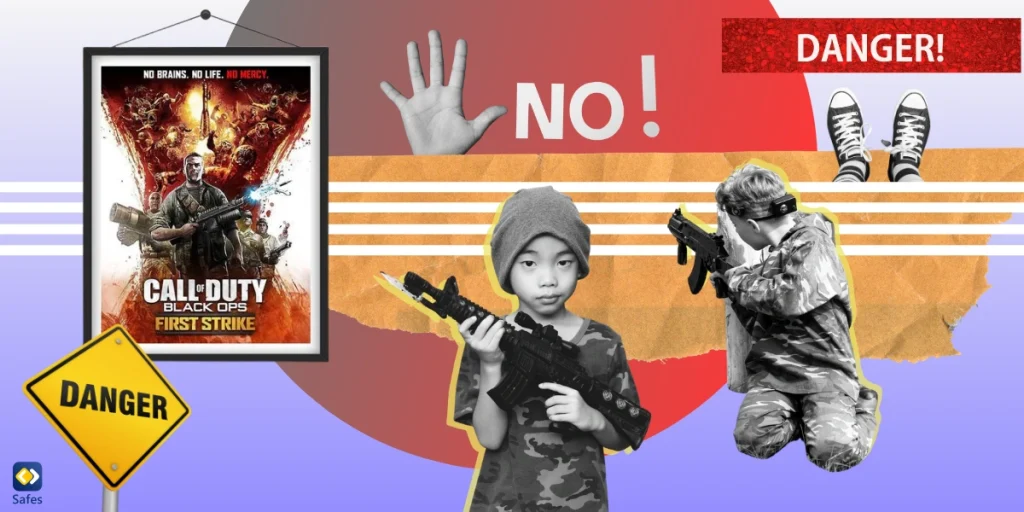
The gaming industry, including Call of Duty, has seen an evolution in how mature content is presented and perceived. Early games with violent themes often faced intense scrutiny, leading to the establishment of rating boards. Over time, as gaming technology advanced, the fidelity of graphics and audio allowed for more realistic and immersive depictions of violence. Call of Duty has pushed these boundaries, often praised for its cinematic quality and realistic sound design, which naturally amplifies the impact of its mature content. The series has also experimented with increasingly darker and more morally ambiguous storylines, particularly in titles like Modern Warfare (2019) and Black Ops Cold War, further cementing its position as a mature-rated franchise.
The Impact on Audience and Marketing
The consistent mature rating has solidified Call of Duty‘s position as a game primarily for adult and young adult audiences. This allows developers greater creative freedom to explore complex themes without needing to censor content for younger players. Marketing efforts are strategically aimed at these demographic groups, utilizing channels and messaging that resonate with a mature audience interested in action, competitive play, and immersive narratives. This clear segmentation helps manage expectations and ensures the game reaches players who are legally and psychologically prepared for its content.
Critical Acclaim and Player Reception
Beyond official age ratings, “what is COD rated” also frequently refers to how the games are reviewed and perceived by critics and the player base. This encompasses scores from professional game reviewers and aggregate platforms, as well as the ongoing dialogue within the gaming community.
Metacritic and Review Aggregators
Metacritic, OpenCritic, and other review aggregators compile scores from numerous gaming publications to provide an average critical rating. Call of Duty titles consistently receive generally favorable to strong reviews, typically scoring in the 70s and 80s out of 100. Games like Call of Duty 4: Modern Warfare, Modern Warfare 2 (2009), and Black Ops are often cited as critical darlings, frequently landing in the high 90s on Metacritic, signifying universal acclaim.
These scores reflect a consensus on various technical and artistic merits:
- Gameplay Mechanics: Reviewers often praise the tight controls, satisfying gunplay, and responsive movement that are hallmarks of the series.
- Campaign Narratives: While varying in quality from year to year, some campaigns are lauded for their cinematic presentation, compelling characters, and engaging storylines.
- Multiplayer Innovation: The competitive multiplayer modes are a consistent draw, with each installment introducing new maps, weapons, modes, and progression systems that are critically assessed for their balance and longevity.
- Technical Performance: Frame rate stability, graphical fidelity, and sound design are crucial components of the Call of Duty experience and are always under scrutiny.
The Double-Edged Sword of Annual Releases
One of the most significant factors influencing critical and player reception for Call of Duty is its annual release schedule. While this ensures a constant stream of new content, it also presents challenges:
- Innovation Fatigue: Critics sometimes express “franchise fatigue,” noting that annual iterations can struggle to introduce truly groundbreaking innovations, leading to a sense of repetition.
- Development Cycles: The rapid development cycle can sometimes lead to technical issues at launch or a perceived lack of polish compared to games with longer development periods.
- Player Expectations: The sheer size and loyalty of the Call of Duty player base mean expectations are incredibly high, and any perceived misstep can lead to significant backlash.
Despite these challenges, the franchise consistently sells millions of copies, demonstrating its enduring appeal and ability to adapt to changing player preferences, even if critical scores fluctuate between titles.
Player Engagement and Esports
Player reception, distinct from professional critic scores, is often gauged through active player counts, sales figures, and community sentiment on platforms like Reddit, Twitter, and Twitch. Call of Duty maintains an incredibly active player base, driven by its competitive multiplayer and popular battle royale mode, Warzone. The game’s strong presence in esports further highlights its technical depth and competitive balance, with millions tuning in to watch professional tournaments. Positive player reception is often tied to the perceived fairness of matchmaking, the quality of new seasonal content, and the responsiveness of developers to community feedback regarding bugs and balance issues.
The Broader Implications of Mature Games
The consistent mature rating and widespread discussion surrounding Call of Duty highlight broader issues within the gaming ecosystem, touching on parental guidance, digital literacy, and industry responsibility.
Parental Guidance and Digital Literacy
For parents, understanding game ratings and descriptors is a vital component of digital literacy. It’s not just about restricting access but about fostering an informed approach to media consumption. Websites like the ESRB and PEGI offer detailed guides and search functions to help parents make informed decisions tailored to their children’s maturity levels, not just their chronological age. Discussions around Call of Duty‘s rating often underscore the need for ongoing conversations between parents and children about appropriate content and responsible gaming habits.
Regulatory Scrutiny and Industry Self-Regulation
The existence and effectiveness of game rating systems like those that classify Call of Duty are a testament to the industry’s self-regulatory efforts aimed at preempting government intervention. By proactively providing clear, consistent information about game content, the industry seeks to demonstrate its commitment to consumer welfare. However, debates about the impact of violent video games on behavior occasionally resurface, leading to renewed scrutiny of these rating systems and their implementation.

The Future of Gaming Content and Ratings
As gaming technology continues to advance, incorporating elements like virtual reality (VR) and augmented reality (AR), the nuances of content rating will likely evolve. The immersive nature of these technologies could introduce new considerations for how violence, language, and other mature themes are perceived and experienced. Call of Duty‘s ongoing evolution will undoubtedly continue to be a benchmark for how interactive entertainment navigates these challenges, ensuring that its intense and impactful experiences are delivered responsibly to its intended mature audience.
aViewFromTheCave is a participant in the Amazon Services LLC Associates Program, an affiliate advertising program designed to provide a means for sites to earn advertising fees by advertising and linking to Amazon.com. Amazon, the Amazon logo, AmazonSupply, and the AmazonSupply logo are trademarks of Amazon.com, Inc. or its affiliates. As an Amazon Associate we earn affiliate commissions from qualifying purchases.