
In the realm of technology, “abstract” is far more than a conceptual adjective; it defines a fundamental principle that underpins nearly every complex system, from the smallest software components to vast distributed networks and sophisticated AI models. At its core, abstraction is the process of simplifying a complex reality by removing or hiding unnecessary details, leaving only the essential and relevant information. It allows developers, engineers, and users to interact with systems at a higher, more manageable level without needing to comprehend the intricate inner workings beneath. This concept is crucial for managing complexity, fostering reusability, and enabling scalability in the ever-evolving digital landscape.
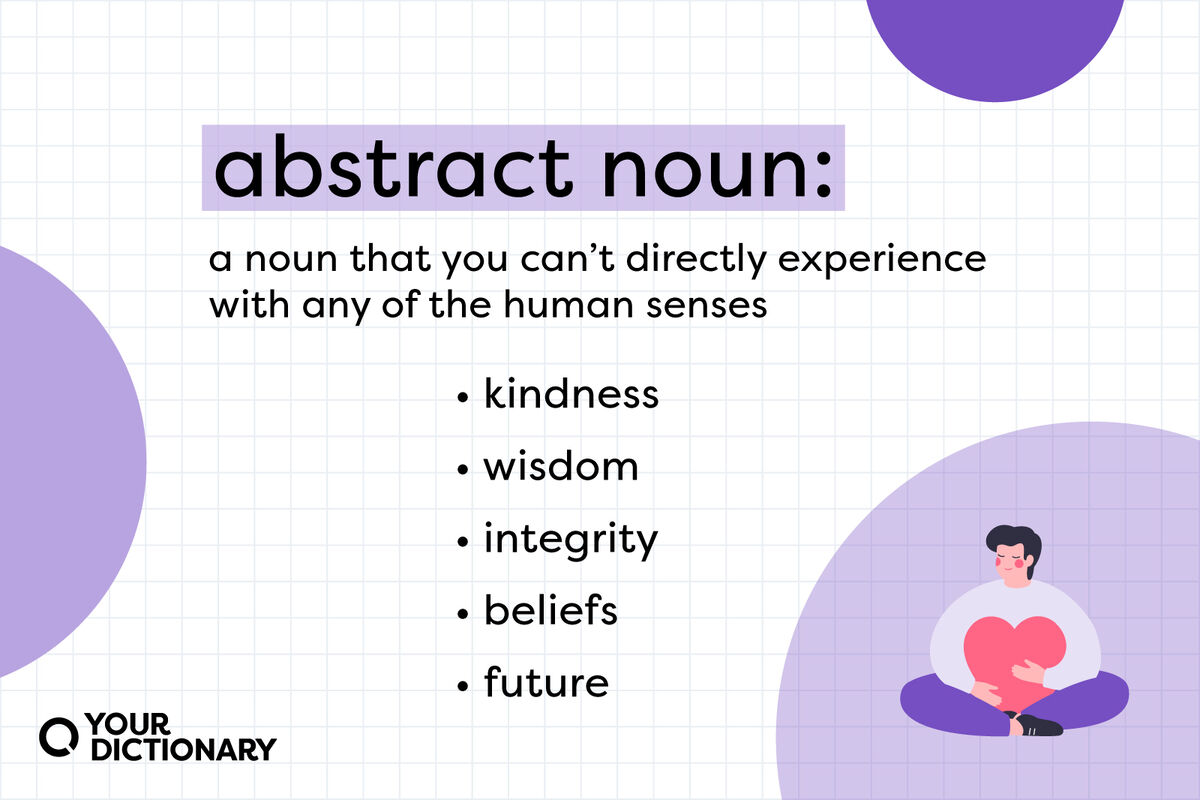
The Foundational Concept of Abstraction in Technology
Abstraction in technology isn’t merely an idea; it’s a practical methodology to make the development, maintenance, and use of systems feasible. Without it, even a simple smartphone application would require an understanding of transistor physics, memory management at the hardware level, and raw binary instructions – tasks that would render modern computing impossible for all but a select few specialists.
Simplifying Complexity
The primary objective of abstraction is to reduce cognitive load. By presenting a simplified view of a system, developers can focus on a particular problem domain without being overwhelmed by the details of how underlying components function. Consider an API (Application Programming Interface): it abstracts away the complex logic of how a service processes a request, providing a clean, standardized interface for other applications to interact with it. A developer using a mapping API doesn’t need to know the algorithms for pathfinding or the specifics of satellite image processing; they simply call a function to get directions between two points. This simplification allows for modular development, where teams can work on different parts of a system independently, knowing that the interfaces between their modules will remain consistent.
Hiding Implementation Details
A critical aspect of abstraction is information hiding. This means that the internal structure, data representation, and algorithms of a component are kept private. Users or other components interacting with it only see its public interface, which specifies what it does, not how it does it. For example, when you use a database, you interact with it through SQL queries or ORM (Object-Relational Mapping) tools. You don’t need to know if it’s using a B-tree or a hash table for indexing, how it manages disk I/O, or the specifics of its transaction logging. These implementation details are abstracted away, allowing the database administrator or application developer to focus on data storage and retrieval logic rather than low-level system mechanics. This separation of concerns ensures that changes to the internal implementation of a component do not necessitate changes to the components that use it, as long as its public interface remains stable.
Abstraction in Software Development and Programming
The principles of abstraction are deeply embedded in software engineering practices and programming language design, acting as the bedrock for building robust, maintainable, and scalable applications.
Abstract Data Types and Classes
In object-oriented programming (OOP), abstraction is prominently manifested through abstract data types (ADTs) and abstract classes. An ADT defines a set of operations without specifying their implementation details. For instance, a “List” ADT defines operations like add, remove, get_element_at_index, but doesn’t dictate whether it’s implemented as an array, a linked list, or some other data structure. Abstract classes take this a step further, providing a blueprint for concrete classes. They can define common behaviors and properties but leave certain methods abstract (without implementation), forcing subclasses to provide their own specific implementations. This ensures that all derived classes adhere to a certain contract, promoting polymorphism and consistent behavior across related objects.
Interfaces and APIs
Interfaces (in languages like Java or C#) and Application Programming Interfaces (APIs) are perhaps the most ubiquitous forms of abstraction in modern software. An interface defines a contract: a set of method signatures that a class must implement. It specifies what a class can do, without revealing how. This allows for loose coupling between components; a client can interact with any object that implements a particular interface, without needing to know its concrete type. Similarly, APIs provide a clean, documented layer for inter-application communication. Whether it’s a RESTful API for web services, a library API for specific functionalities, or operating system APIs, they present a simplified facade to complex underlying systems, enabling disparate software components to collaborate seamlessly. This is crucial for microservices architectures, where services communicate via well-defined APIs, each handling its own domain logic independently.
Layered Architectures
Software systems are often organized into layers, each layer abstracting the complexities of the layers beneath it. The classic three-tier architecture (presentation, business logic, data access) is a prime example. The presentation layer (e.g., a web UI) interacts only with the business logic layer, which in turn interacts with the data access layer. The presentation layer doesn’t need to know how data is stored or retrieved; it simply requests data from the business logic. This separation allows developers to work on specific layers without needing to understand the full complexity of the entire system. Changes in the database schema, for instance, might only affect the data access layer, leaving the business logic and presentation layers untouched.

Abstraction’s Role in Modern Tech Stacks
Abstraction isn’t confined to programming language constructs; it pervades infrastructure, platforms, and even advanced applications like AI. It is the invisible scaffolding that allows today’s complex technological ecosystem to function.
Cloud Computing and Virtualization
Cloud computing is a grand exercise in abstraction. When you provision a virtual machine (VM) or a serverless function on a cloud platform, you are interacting with highly abstracted resources. You don’t manage the physical hardware, networking cables, power supply, or cooling systems. These are all abstracted away by the cloud provider, offering you a virtualized instance that you can configure and use as if it were your own dedicated machine. Virtualization technologies (like hypervisors) abstract the underlying physical hardware, presenting guest operating systems with a consistent virtual hardware interface, regardless of the actual physical components. This enables efficient resource utilization, scalability, and simplified deployment.
AI and Machine Learning Frameworks
The rapid advancement and democratization of Artificial Intelligence and Machine Learning are largely due to effective abstraction layers. Frameworks like TensorFlow, PyTorch, and scikit-learn abstract away the intricate mathematical operations, GPU programming, and low-level memory management required for building and training neural networks. Data scientists and developers can work at a higher level, defining model architectures, feeding data, and analyzing results without needing to write complex CUDA kernels or optimize matrix multiplications from scratch. These frameworks provide high-level APIs that encapsulate complex algorithms and computational graphs, making AI development accessible to a wider audience and accelerating innovation.
User Interfaces and Experience
From a user’s perspective, abstraction is paramount to a positive user experience. A graphical user interface (GUI) abstracts away the command-line interfaces and underlying operating system calls. When a user clicks an icon, they don’t think about the system call that launches the application; they simply interact with the visual representation. Even within an application, features are often presented through intuitive controls that hide complex logic. For example, a “share” button in a photo app abstracts the entire process of formatting the image, connecting to social media APIs, and uploading the content. This simplifies interaction, making technology intuitive and accessible for billions.
The Benefits and Challenges of Effective Abstraction
While abstraction is a powerful tool, its effective application requires careful design and consideration. Its benefits are profound, but there are also potential pitfalls if not managed correctly.
Enhanced Modularity and Reusability
By encapsulating functionality behind well-defined interfaces, abstraction promotes modular design. Each module can be developed, tested, and maintained independently. This modularity naturally leads to higher reusability. A well-abstracted component, like a logging utility or a payment gateway integration, can be dropped into multiple projects or reused across different parts of the same application without modification. This saves development time, reduces potential for errors, and enforces consistency. Developers can build upon existing, robust components rather than reinventing the wheel for every new feature.
Improved Maintainability and Scalability
The separation of concerns enabled by abstraction greatly enhances system maintainability. When an internal implementation needs to change (e.g., upgrading a database, optimizing an algorithm), these changes can often be made within a single abstracted component without affecting the rest of the system, provided its external interface remains unchanged. This reduces the risk of introducing bugs and simplifies the update process. Moreover, abstraction facilitates scalability. By abstracting computational resources (as in cloud computing) or data storage, systems can scale horizontally or vertically by simply adding more abstracted units, rather than redesigning fundamental components.

Potential for “Leaky” Abstractions
Despite its benefits, abstraction is not without its challenges. The most common pitfall is the “leaky abstraction.” This occurs when an abstraction fails to completely hide the underlying details, forcing the user of the abstraction to understand the implementation below. For instance, a network file system might abstract away local vs. remote storage, but if network latency issues frequently cause timeouts or errors, the abstraction has “leaked” the underlying network details. When abstractions leak, they undermine their very purpose, increasing complexity and making the system harder to use and reason about. Designing truly robust and leak-proof abstractions is one of the most significant challenges in software engineering, requiring deep understanding of the problem domain and careful foresight.
aViewFromTheCave is a participant in the Amazon Services LLC Associates Program, an affiliate advertising program designed to provide a means for sites to earn advertising fees by advertising and linking to Amazon.com. Amazon, the Amazon logo, AmazonSupply, and the AmazonSupply logo are trademarks of Amazon.com, Inc. or its affiliates. As an Amazon Associate we earn affiliate commissions from qualifying purchases.