
The Apostle’s Creed, a statement of Christian belief that has endured for nearly two millennia, can be insightfully analyzed through the lens of brand strategy. Far from a mere theological declaration, it functioned as a sophisticated early example of establishing corporate identity, consolidating core messaging, and creating a memorable brand narrative for an emerging global organization. Understanding the Creed in this context reveals its strategic brilliance as a foundational document for a movement seeking both internal cohesion and external recognition.
The Creed as a Foundational Brand Statement
At its core, the Apostle’s Creed served as an extraordinarily effective foundational brand statement for early Christianity. In an era marked by diverse interpretations and competing philosophies, this succinct articulation provided a clear, consistent set of core beliefs, essential for establishing a unified corporate identity.

Defining Core Beliefs for Identity
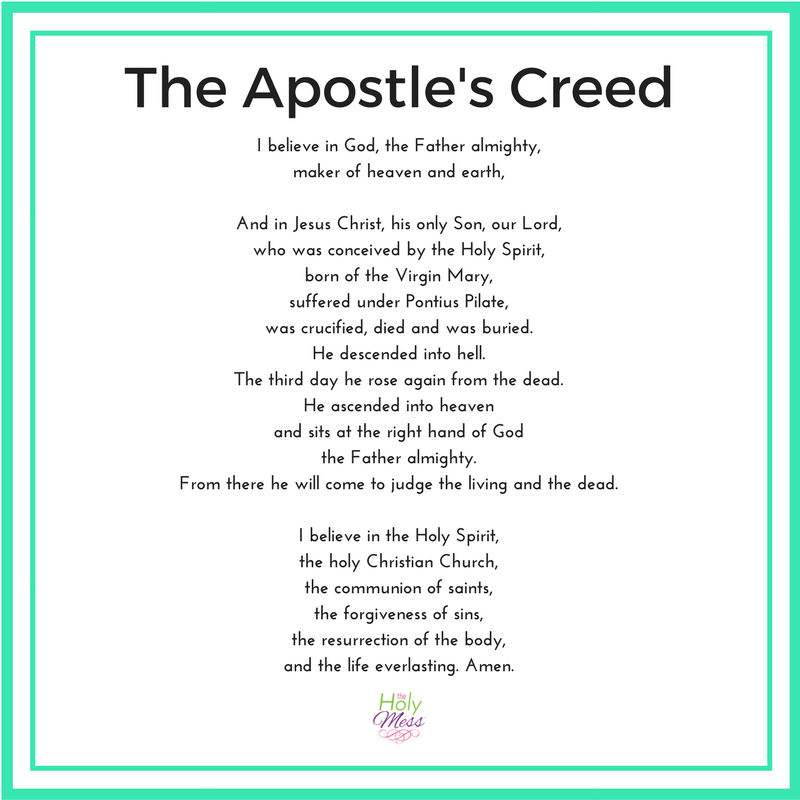
Just as a modern corporation articulates its mission statement and values to define its purpose and ethos, the Apostle’s Creed meticulously outlined the fundamental tenets that distinguished the Christian “brand.” It provided a non-negotiable set of beliefs, acting as the ultimate brand guidelines. Every statement – “I believe in God, the Father almighty, creator of heaven and earth,” to “the resurrection of the body, and the life everlasting” – was a pillar upon which the entire organizational identity rested. This clarity was paramount in defining who the group was, what it stood for, and what its members collectively believed. Without such a concise declaration, the brand risks dilution, internal dissent, and a fractured identity, much like a company without a clear vision statement. The Creed ensured that, regardless of geographic location or cultural context, the fundamental components of the Christian identity remained consistent, providing a sturdy framework for brand recognition and loyalty. It was a commitment statement, a pledge of allegiance to a particular set of values and an overarching narrative, crucial for fostering a sense of belonging and collective purpose among adherents.
Historical Context of Brand Formation
The historical environment in which the Apostle’s Creed emerged was one of significant brand competition. Early Christianity was not the sole purveyor of spiritual or philosophical guidance; it was one among many emergent groups vying for adherents and influence. In this saturated “marketplace” of ideas, a powerful and easily communicable brand identity was a strategic necessity. The Creed offered a streamlined narrative that differentiated early Christianity from various Gnostic sects, pagan cults, and philosophical schools. Its existence helped to delineate the boundaries of the “Christian brand,” ensuring that internal stakeholders (believers) understood their unique value proposition, and external audiences (potential converts or even adversaries) could clearly identify what the Christian movement represented. This was not merely about belief; it was about positioning within a complex social and religious landscape, a masterful stroke of early brand architecture designed to solidify and project a distinct identity in a crowded field. The concise nature of the Creed also made it highly portable and translatable, facilitating the spread of the brand across diverse linguistic and cultural boundaries, much like a well-designed corporate logo or slogan.
Crafting a Unified Corporate Identity
Beyond merely defining beliefs, the Apostle’s Creed was instrumental in crafting a unified corporate identity for the nascent Christian movement. It acted as a powerful tool for internal cohesion and external differentiation, streamlining a complex belief system into an accessible and consistent message.
Simplifying Complex Ideas for Broad Appeal
One of the most remarkable strategic achievements of the Apostle’s Creed lies in its ability to simplify profound theological concepts into a concise, memorable, and repeatable format. For any organization aiming for broad appeal and rapid adoption, the simplification of complex ideas into easily digestible soundbites is critical. The Creed distilled centuries of theological discourse and narrative into twelve succinct articles, each profound yet simple enough to be understood and recited by individuals from diverse educational backgrounds. This simplification was not a dilution of meaning but a strategic refinement, making the core tenets of the Christian brand accessible to a mass audience. It functioned much like a modern marketing slogan or a company’s elevator pitch, enabling adherents to grasp the essence of the brand quickly and confidently. This accessibility was crucial for fostering widespread adoption and ensuring that the fundamental components of the corporate identity were universally understood and embraced, thereby strengthening the collective brand equity.
Internal Cohesion and External Recognition
The consistent recitation and affirmation of the Apostle’s Creed played a pivotal role in fostering internal cohesion within the early Christian community. For a geographically dispersed and culturally diverse organization, a shared corporate identity statement is vital for maintaining unity and a sense of shared purpose. The Creed served as a common language, a communal pledge that transcended local variations in practice or interpretation, solidifying a collective consciousness. This internal alignment then projected outward, enabling clearer external recognition. When interacting with non-believers or other religious groups, the Creed provided a definitive and consistent answer to the question, “What do Christians believe?” This predictable messaging was crucial for building trust, establishing credibility, and allowing the Christian brand to be accurately perceived in the marketplace of ideas. It mitigated confusion and presented a united front, thereby enhancing the brand’s reputation and distinctiveness in an often-skeptical external environment. The Creed thus acted as both an internal compass and an external beacon, guiding members and signaling identity to the world.

The Creed’s Role in “Marketing” Early Christianity
To view the Apostle’s Creed purely as an internal document would be to miss a significant aspect of its strategic function: its role as a powerful “marketing” tool for early Christianity. It was a potent instrument for communicating the brand’s value proposition to potential converts and differentiating it from competitors.
A Memorable “Tagline” for Converts
In an age before mass media, word-of-mouth and personal testimony were the primary channels for disseminating information. The Apostle’s Creed, with its rhythmic structure and memorable phrasing, served as an ideal “tagline” or core message for early Christian evangelists. It provided a concise, portable summary of what it meant to “buy into” the Christian brand. Potential converts could easily learn, understand, and repeat this foundational statement, thereby internalizing the brand’s core offering. This oral tradition made the Creed highly effective as a promotional tool, enabling it to spread rapidly across diverse communities. It was more than just a list of beliefs; it was an invitation, a clear statement of benefits and identity that resonated with individuals seeking spiritual meaning and community. The ease of recall and repetition meant that the Christian message could be communicated efficiently and consistently, a hallmark of effective marketing strategy designed for virality and broad reach.
Distinguishing the Brand from Competitors
A critical aspect of any successful marketing strategy is brand differentiation. In the competitive spiritual landscape of the Roman Empire, the Apostle’s Creed provided clear points of distinction for the Christian brand. By explicitly stating belief in a single, triune God, the resurrection of the body, and forgiveness of sins, it sharply contrasted with polytheistic pagan religions, philosophical schools that denied bodily resurrection, and various other groups that lacked a unified theological framework. The Creed highlighted the unique value proposition of Christianity, articulating beliefs that set it apart from its “competitors.” It was a declaration of unique selling points, succinctly packaged for maximum impact. This strategic differentiation allowed early Christians to present a compelling and distinct alternative, drawing in those who were not satisfied with existing spiritual options. By clearly articulating what made the Christian brand unique, the Creed acted as a powerful differentiator in the spiritual marketplace, a crucial element for market penetration and sustained growth.
Enduring Brand Legacy and Adaptability
The sustained relevance of the Apostle’s Creed for nearly two millennia underscores its remarkable enduring brand legacy. Its inherent adaptability and timeless articulation of core values have allowed it to persist as a cornerstone of Christian identity through countless societal shifts, demonstrating powerful brand resilience.
Preservation of Core Values Across Generations
One of the ultimate tests of a strong brand strategy is its ability to preserve core values and identity across generations, adapting to changing external environments without losing its essence. The Apostle’s Creed has achieved this with unparalleled success. It has functioned as a constant touchstone, anchoring the Christian brand to its foundational principles even as its global footprint expanded and evolved. Each generation, through its recitation, reaffirms the original brand promise and its core tenets, ensuring continuity and preventing significant drift from the original corporate identity. This consistent reiteration of core values is vital for long-term brand equity, fostering a sense of historical depth and stability that resonates with adherents. It serves as a reminder of the brand’s origins and its unchanging purpose, instilling confidence and loyalty among its vast, multi-generational “customer base.” This preservation mechanism is a testament to the Creed’s strategic design as a robust framework for enduring identity.
Modern Implications for Brand Strategy
Analyzing the Apostle’s Creed through a branding lens offers profound modern implications for brand strategy. It demonstrates the power of simplicity, consistency, and a clear articulation of core values in building an enduring organization. Contemporary businesses and movements can learn from its ability to:
- Distill Complexities: Reduce intricate ideas into memorable, accessible messages.
- Foster Internal Alignment: Create a shared identity that unites diverse stakeholders.
- Differentiate Effectively: Clearly articulate unique value propositions in a crowded market.
- Build Lasting Loyalty: Cultivate a deep sense of belonging and commitment through consistent messaging.
- Ensure Adaptability: Provide a core framework that remains relevant even as external contexts change.
The Creed exemplifies that a well-crafted foundational statement is more than just words; it is the strategic blueprint for building an influential and resilient brand, capable of transcending time and cultural boundaries to maintain its relevance and impact. Its longevity is a masterclass in establishing and sustaining a global corporate identity.
aViewFromTheCave is a participant in the Amazon Services LLC Associates Program, an affiliate advertising program designed to provide a means for sites to earn advertising fees by advertising and linking to Amazon.com. Amazon, the Amazon logo, AmazonSupply, and the AmazonSupply logo are trademarks of Amazon.com, Inc. or its affiliates. As an Amazon Associate we earn affiliate commissions from qualifying purchases.