
A tape rule, often interchangeably called a tape measure, is an indispensable tool designed for measuring distances. Far from a mere strip of marked material, it represents a marvel of practical engineering that has underpinned countless advancements in construction, manufacturing, and design for centuries. In essence, it is a flexible ruler, typically made of metal or fiberglass, housed in a compact case and capable of extending to measure lengths from a few inches to many feet or meters. Its utility stems from its portability, accuracy, and the ability to measure both straight lines and curves, making it a ubiquitous item in virtually every toolkit worldwide.

The Foundational Tool for Precision and Construction
At its core, a tape rule is about achieving accuracy in dimension. Its design prioritizes ease of use while maintaining the critical precision required for tasks ranging from hanging a picture to laying out the foundations of a skyscraper. Understanding its components and the materials used in its construction reveals why this simple device remains so vital.
Anatomy of a Modern Tape Rule
The standard retractable tape rule, the most common type, comprises several key components that work in concert:
- Blade: This is the actual measuring strip, marked with increments (typically in both imperial and metric units). Blades are usually concave, which gives them rigidity when extended, allowing them to “stand out” without collapsing.
- Hook/End Hook: Affixed to the end of the blade, this small metal piece is crucial for accurate measurement. It is designed to slide slightly to compensate for its own thickness, ensuring precise internal and external measurements. When hooked onto an edge, it pulls out to the exact start point; when pushed against a surface for an inside measurement, it compresses to account for its own width.
- Case: The durable outer shell, usually made of plastic or metal, protects the blade and houses the internal spring mechanism. It’s designed to be ergonomic and withstand the rigors of various work environments.
- Spring Mechanism: Housed within the case, this coiled spring allows the blade to retract smoothly and automatically, making storage quick and convenient.
- Lock Button: A crucial feature, the lock button engages a mechanism that holds the blade firmly at a desired length, freeing the user’s hands for marking or securing.
- Belt Clip: Many tape rules include a metal clip on the back of the case, allowing users to conveniently attach it to a belt or pocket for easy access.
Materials and Durability
The choice of materials significantly impacts a tape rule’s durability, accuracy, and suitability for different tasks.
- Steel Blades: Most common for general-purpose tape rules, steel blades are durable and resistant to kinking. They are often coated with nylon or polyester to protect the markings from wear and corrosion, extending the tool’s lifespan. High-carbon steel provides excellent rigidity and wear resistance.
- Fiberglass Blades: For longer measuring tapes (typically 50 feet/15 meters or more), fiberglass is preferred. These blades are flexible, non-conductive (making them safer around electrical work), and resistant to moisture and stretching, though they may not offer the same rigidity or ultimate durability against sharp edges as steel.
- Case Materials: Cases are typically molded from impact-resistant ABS plastic, often overmolded with rubber for improved grip and shock absorption. More heavy-duty models might feature metal cases for enhanced robustness.
Mastering Accurate Measurement: Techniques and Best Practices
While seemingly straightforward, mastering the use of a tape rule involves specific techniques to ensure consistent accuracy, especially critical in fields like carpentry, engineering, and construction.
Reading Imperial and Metric Scales
Most modern tape rules feature both imperial (feet, inches, fractions of an inch) and metric (meters, centimeters, millimeters) scales.
- Imperial: Measurements are typically marked with large numbers for feet, then smaller numbers for inches, and often finer lines for 1/2, 1/4, 1/8, and 1/16 of an inch. Understanding these fractions is paramount for precision.
- Metric: This system is often simpler, with major markings for meters, followed by decimeters (sometimes implicit), centimeters, and millimeters. Millimeters are the smallest common unit, providing very fine precision.
Hooking, Butt-Measuring, and Inside Measurements
Proper technique is key to avoiding cumulative errors:
- Hooking: For external measurements, the end hook is crucial. Hook it securely over the edge of the material and pull the tape taut. The hook’s slight play compensates for its own thickness.
- Butt-Measuring: When measuring from an internal corner or a surface where the hook cannot be used, push the end of the blade directly against the surface. The end hook will compress, again compensating for its thickness to provide an accurate reading.
- Inside Measurements: For measuring the distance between two internal surfaces (like the inside of a window frame), you can either bend the tape into the corner and read the measurement directly, or, more accurately, measure to one inside edge, then add the length of the tape rule’s case (which is often printed on the side of the case itself) to the displayed measurement. This leverages the sliding hook’s compensation.
Common Pitfalls and How to Avoid Them
Errors, even minor ones, can be costly in projects.
- Blade Sag: When extending the tape rule over a long distance without support, the blade can sag, leading to an inaccurate, shorter reading. Always support the tape, or ensure it’s taut if unsupported.
- Parallax Error: Reading the measurement from an angle instead of directly above the mark can lead to slight discrepancies. Always position your eye directly above the marking for a true reading.
- Bent Hook: A bent or damaged end hook will cause consistent errors. Periodically check the hook for straightness and ensure its free play is correct.
- “Burning an Inch”: For extreme accuracy, some professionals “burn an inch” by starting their measurement at the 1-inch mark instead of the end hook, then subtracting 1 inch from the final reading. This mitigates potential errors from a worn or damaged end hook.
Diverse Applications Across Industries
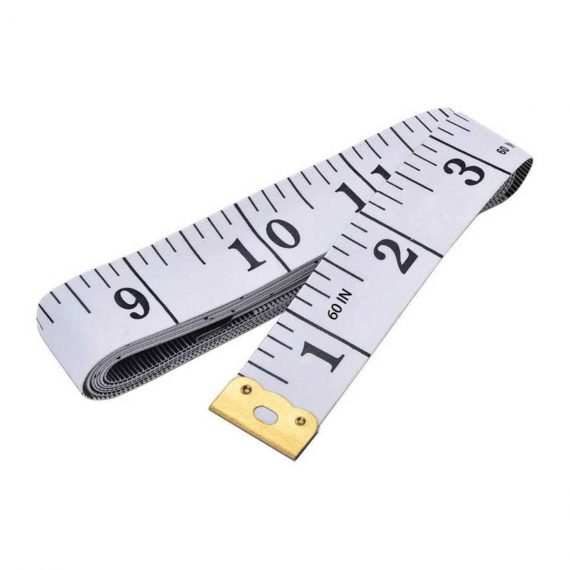
The tape rule’s simplicity belies its profound impact across a multitude of sectors, extending far beyond the typical construction site.
From Carpentry to Interior Design
In carpentry and woodworking, precision measurement dictates the fit and finish of every joint and component. A tape rule is used for everything from marking cuts to laying out complex designs. For interior designers, it’s essential for space planning, furniture placement, curtain fitting, and ensuring that custom elements like cabinets or shelving will fit perfectly within a room’s dimensions. Precise measurements prevent costly errors and ensure aesthetic harmony.
Engineering and Manufacturing Precision
While high-tech digital calipers and coordinate measuring machines handle ultra-fine tolerances, tape rules still play a crucial role in the initial layout, rough measurements, and quality checks in engineering and manufacturing. They are used to verify lengths of raw materials, position components, and check overall dimensions of large assemblies. Their portability makes them ideal for on-site verification or in large workshop environments where fixed measuring devices are impractical.
Everyday DIY and Home Improvement
For the average homeowner or DIY enthusiast, the tape rule is often the first tool reached for. From hanging shelves and picture frames to assembling furniture, measuring for new appliances, or planning a garden layout, its versatility is unmatched. It empowers individuals to undertake projects with confidence, ensuring everything fits as intended and materials are purchased accurately, minimizing waste and additional costs.
The Evolution of Measurement Technology
While the basic concept of a flexible ruler has existed for millennia, the tape rule has continually evolved, incorporating new materials and, more recently, digital advancements that push the boundaries of precision and convenience.
Manual to Digital: Laser Distance Measures
The most significant technological leap in measurement has been the advent of laser distance measures (LDMs). These devices use a laser beam to calculate distances by measuring the time it takes for the light to reflect off a target and return to the sensor.
- Advantages: LDMs offer incredible speed, accuracy over long distances, and the ability to measure inaccessible points (e.g., ceilings without a ladder). They can often perform area and volume calculations, and some even have inclination sensors.
- Integration: While not replacing traditional tape rules entirely, LDMs complement them, particularly for large-scale projects or situations requiring quick, one-person measurements. Many professionals carry both a traditional tape rule and an LDM.
Smart Features and Connectivity
Beyond basic laser measurement, “smart” tape rules and LDMs are emerging, integrating further technological capabilities:
- Bluetooth Connectivity: Many digital measuring tools can now connect wirelessly to smartphones or tablets. This allows measurements to be instantly transferred to apps for project planning, creating floor plans, or adding dimensions to photos.
- Memory Functions: Digital tools often store multiple measurements, allowing users to recall previous data without needing to write it down manually.
- Advanced Calculations: Some devices offer advanced features like Pythagorean calculations (to measure indirect distances), stake-out functions, and even CAD integration for complex projects.
- Digital Displays: Even traditional-looking tape measures can now feature small digital displays on the case, providing a clear, precise reading of the blade extension.
Choosing the Right Tape Rule for Your Needs
Selecting the appropriate tape rule depends heavily on the intended use, frequency, and specific requirements of the tasks at hand.
Length, Blade Width, and Standout
- Length: Common lengths range from 10 feet (3 meters) for small household tasks to 30 feet (9 meters) for general construction, and up to 100 feet (30 meters) or more for surveying and landscaping with fiberglass tapes. Choose a length slightly longer than your typical maximum measurement.
- Blade Width: Wider blades (typically 1 inch or 1.25 inches) offer better “standout”—the distance the blade can extend horizontally without kinking. This is crucial for one-person measurements over longer distances. Narrower blades (e.g., 1/2 inch) are more compact and lighter for portability.
- Standout: A good standout measurement indicates a stiffer, more robust blade, reducing frustration when measuring alone.

Special Features: Magnetic Tips, Double-Sided Blades, Auto-Lock
- Magnetic Tips: An end hook with a strong magnet is invaluable for working with metal surfaces, allowing the tape to securely attach without needing a second hand.
- Double-Sided Blades: Some tape rules feature markings on both sides of the blade, which is convenient for overhead measurements or when reading from an awkward angle.
- Auto-Lock Mechanism: An auto-lock tape rule automatically locks the blade in place as it’s extended, requiring a button press to retract. This offers convenience and prevents accidental retraction during critical measurements.
- Rubberized Grip: For comfort and durability, especially in demanding environments, a rubberized or overmolded case provides better grip and impact resistance.
- Fractional Readout: Some tape rules designed for North American users feature markings that explicitly show common fractions (e.g., 1/2″, 3/4″) rather than just lines, simplifying reading.
The tape rule, in its various forms, remains an essential technological tool. From its fundamental mechanical design to its contemporary digital iterations, it continues to enable precision, efficiency, and progress across countless fields, embodying a perfect blend of simplicity and ingenuity.
aViewFromTheCave is a participant in the Amazon Services LLC Associates Program, an affiliate advertising program designed to provide a means for sites to earn advertising fees by advertising and linking to Amazon.com. Amazon, the Amazon logo, AmazonSupply, and the AmazonSupply logo are trademarks of Amazon.com, Inc. or its affiliates. As an Amazon Associate we earn affiliate commissions from qualifying purchases.