
The concept of a “poverty wage” in the United States is more complex than simply earning below a certain threshold. It represents a wage level that, despite an individual or household working full-time, fails to provide a basic standard of living, trapping them in a cycle of financial precariousness. Understanding this benchmark is crucial for grasping the economic realities faced by millions of Americans and for informing personal financial planning, public policy, and business practices.
Defining the Federal Poverty Level (FPL) and its Discrepancies
At the heart of the “poverty wage” discussion is the official Federal Poverty Level (FPL). Established by the U.S. government, the FPL serves as a key statistical measure to determine eligibility for various federal programs and benefits. It is calculated annually by the Department of Health and Human Services and varies based on family size and age composition.
How the FPL is Calculated and Its Origins
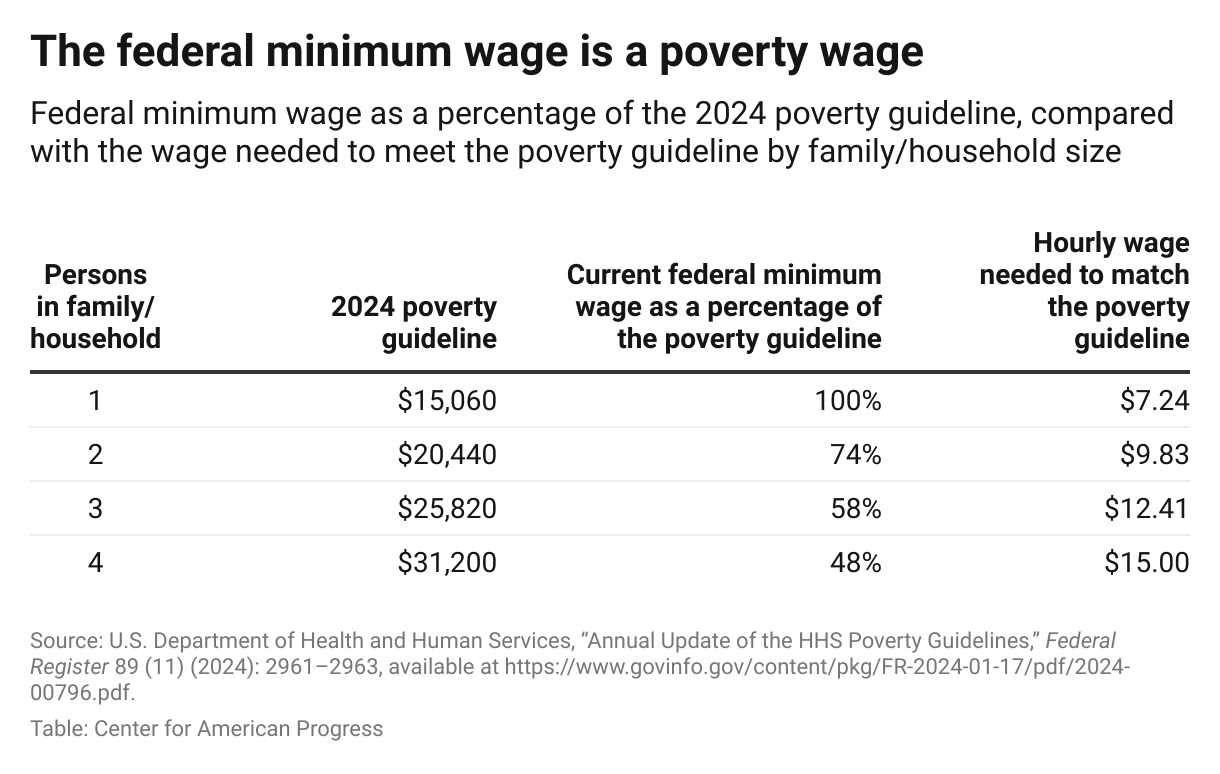
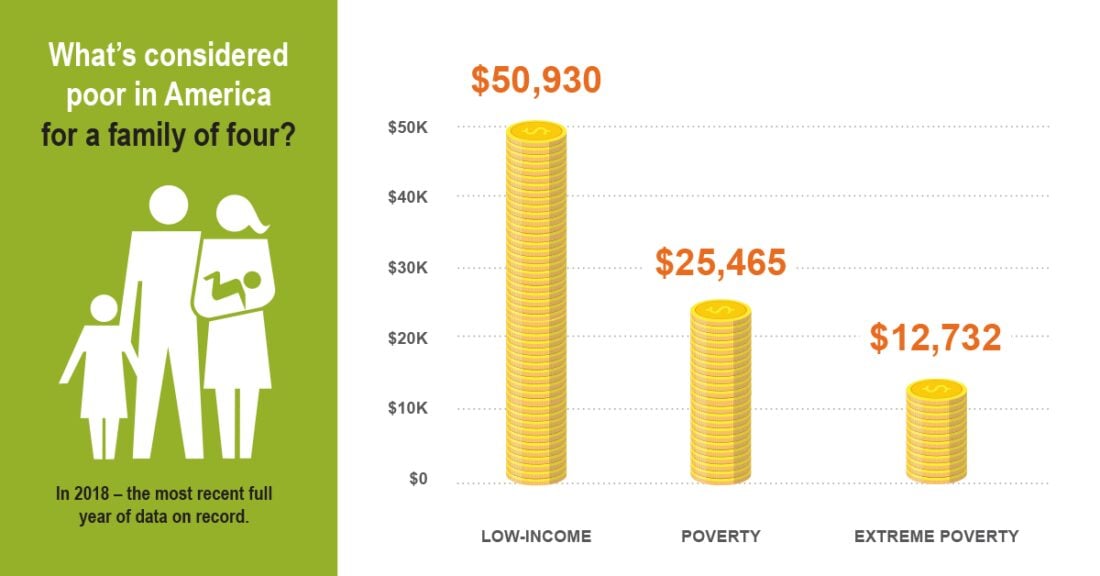
The FPL was first developed in the 1960s based on an economy food plan designed for emergency or temporary use. The original methodology assumed that a family spent approximately one-third of its income on food. Therefore, the poverty line was set at three times the cost of that economy food plan. While the food plan itself has evolved, the core methodology—multiplying a minimal food budget by three—largely persists, adjusted for inflation. For instance, in 2024, the FPL for a single individual is $15,060 annually, and for a family of four, it stands at $31,200.
The Stark Reality: FPL vs. Actual Cost of Living
One of the most significant criticisms of the FPL is its failure to account for the actual cost of living in contemporary America. The FPL is a national standard, which means it does not differentiate between the vastly different costs of housing, transportation, healthcare, and childcare across various states and metropolitan areas. Earning the FPL in a low-cost rural area might offer a semblance of survival, but in high-cost urban centers like New York City, San Francisco, or Washington D.C., an income at or even significantly above the FPL can still mean severe financial hardship.
This discrepancy means that millions of individuals and families who earn above the official poverty line are still unable to meet their basic needs without significant struggle or external assistance. They are often referred to as “the working poor”—people who are employed, sometimes in multiple jobs, yet remain financially vulnerable.
Understanding the Living Wage Versus a Poverty Wage
To address the limitations of the FPL, economists and advocacy groups often refer to the concept of a “living wage.” Unlike the FPL, a living wage is designed to be location-specific and takes into account the actual expenses necessary to maintain a minimum standard of living.
What Constitutes a Living Wage?
A living wage is generally defined as the minimum income necessary for an individual or family to afford basic necessities without relying on public assistance or facing severe financial stress. These necessities typically include housing (rent and utilities), food, transportation, healthcare, childcare, clothing, and a modest allowance for miscellaneous expenses and savings. Organizations like MIT’s Living Wage Calculator provide detailed, localized data, showing that a living wage can be significantly higher than the federal minimum wage or even the FPL in many parts of the country. For a single adult, a living wage might range from $18 to over $30 per hour, depending on the region, far exceeding the federal minimum wage of $7.25 per hour.
Minimum Wage: A Bridge or a Barrier?
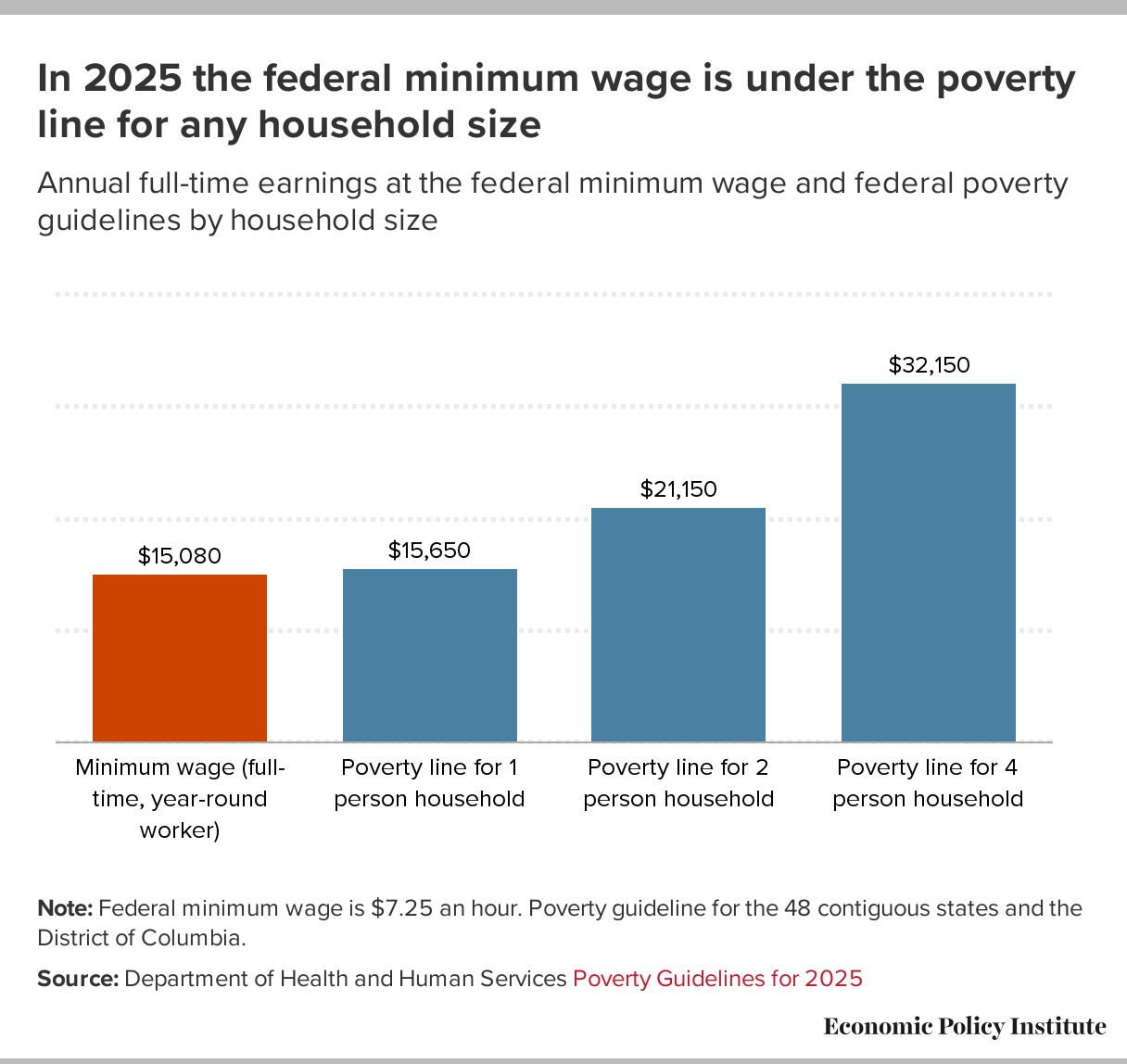
The federal minimum wage, currently $7.25 per hour, has remained unchanged since 2009. While many states and cities have enacted their own higher minimum wages, the federal standard often falls far short of a living wage. An individual working full-time (40 hours per week) at the federal minimum wage earns approximately $15,080 annually, which is just above the FPL for a single person but significantly below for a family. For families, this wage level unequivocally constitutes a poverty wage, necessitating reliance on food banks, Medicaid, and other safety net programs to make ends meet. The debate around raising the minimum wage often centers on whether it should serve as a poverty prevention tool or simply a baseline, with proponents arguing that a higher minimum wage would reduce reliance on public assistance and boost local economies.
Consequences of Earning a Poverty Wage
Earning a poverty wage creates a ripple effect of adverse consequences that impact not only individuals and families but also the broader economy and society. The constant struggle for financial survival can lead to chronic stress, limited opportunities, and long-term economic stagnation.
Financial Instability and Entrenched Debt
The most immediate consequence of a poverty wage is perpetual financial instability. Individuals and families find it nearly impossible to save for emergencies, retirement, or major life events. They often live paycheck to paycheck, one unexpected expense away from a crisis. This precariousness frequently leads to reliance on high-interest loans (e.g., payday loans, title loans) to cover gaps, trapping them in cycles of debt that are incredibly difficult to escape. Housing insecurity, utility shut-offs, and food insecurity become routine concerns, forcing difficult choices between essential needs.
Impact on Health and Well-being
The stress of poverty wages takes a heavy toll on physical and mental health. Chronic financial strain is linked to higher rates of depression, anxiety, and other mental health issues. Limited access to healthy food options due to cost and availability can contribute to diet-related illnesses, while inadequate health insurance or an inability to afford co-pays and prescriptions often means delaying or foregoing necessary medical care. Children growing up in poverty wage households are particularly vulnerable, experiencing higher rates of health problems, academic struggles, and reduced opportunities for future success.
Barriers to Economic Mobility
A poverty wage creates significant barriers to economic mobility. Without disposable income, investing in education, skill development, or career advancement becomes nearly impossible. Transportation costs, childcare expenses, and the inability to take time off work for training or interviews further hinder upward movement. This creates a self-reinforcing cycle where individuals are stuck in low-wage jobs, unable to acquire the resources or skills needed to escape poverty, perpetuating intergenerational poverty.
Strategies for Navigating and Escaping Low-Income Environments
For those earning a poverty wage, strategic financial planning, leveraging available resources, and focusing on long-term skill development are critical steps toward greater financial stability. While systemic changes are needed, individual actions can provide a buffer and a path forward.
Meticulous Budgeting and Financial Planning
Creating and strictly adhering to a budget is paramount. This involves tracking every dollar earned and spent, prioritizing essential needs, and identifying areas for reduction. Even small savings can accumulate over time. Tools like budgeting apps, spreadsheets, or simply a notebook can help visualize spending patterns. Seeking free financial counseling services offered by non-profits or community organizations can provide personalized guidance on debt management and saving strategies.
Accessing Public Assistance Programs and Community Resources
Many individuals earning poverty wages are eligible for various public assistance programs. These can include SNAP (food stamps), Medicaid, housing assistance (e.g., Section 8), LIHEAP (energy assistance), and the Earned Income Tax Credit (EITC). Understanding eligibility criteria and applying for these benefits can significantly alleviate financial pressure. Local food banks, community centers, and non-profits also offer vital resources, from free meals and clothing to job training and legal aid.
Skill Development and Career Advancement
Investing in oneself through education and skill acquisition is a long-term strategy for increasing earning potential. This doesn’t always mean a four-year degree; vocational training, certifications in high-demand fields (e.g., healthcare support, skilled trades, IT), and online courses can quickly lead to higher-paying jobs. Many community colleges offer affordable programs, and some organizations provide grants or scholarships specifically for low-income individuals seeking to upskill.
Exploring Supplemental Income and Side Hustles
To bridge income gaps, many individuals earning poverty wages explore side hustles or gig economy opportunities. This could involve anything from ridesharing, food delivery, or freelancing online to selling handmade goods or offering local services. While often requiring additional time and effort, supplemental income can provide crucial funds for emergencies, debt repayment, or saving for future investments.
The Broader Economic Implications and Policy Debates
The existence of a widespread poverty wage has significant implications for the U.S. economy and sparks ongoing policy debates. It reflects systemic issues that require comprehensive solutions beyond individual efforts.
The Role of Government Policy
Government policies play a pivotal role in shaping wage environments. Debates surrounding the federal minimum wage, welfare reform, tax credits like the EITC and Child Tax Credit, and affordable housing initiatives are all directly related to addressing poverty wages. Progressive policies often advocate for higher minimum wages, universal basic income (UBI) experiments, expanded access to affordable healthcare and childcare, and stronger worker protections to ensure that full-time employment translates into a dignified life.
Employer Responsibilities and Corporate Social Responsibility
Businesses also bear responsibility in the discussion of poverty wages. While employers operate within market realities, a growing movement emphasizes corporate social responsibility and fair wages. Companies that pay a living wage often experience benefits such as reduced employee turnover, higher productivity, improved morale, and enhanced brand reputation. Some businesses adopt “responsible employer” models, offering not just better wages but also benefits, training, and opportunities for advancement, recognizing that their employees’ well-being contributes to the company’s long-term success.
Advocating for Change
Ultimately, addressing poverty wages requires a multi-faceted approach involving individual financial empowerment, robust social safety nets, and systemic policy reforms. Advocacy groups, labor unions, and community organizers play a crucial role in raising awareness, pushing for legislative changes, and ensuring that the voices of those impacted by poverty wages are heard in the national economic discourse. The collective effort to ensure that work pays enough to live with dignity is an ongoing challenge but one vital for economic justice and a thriving society.
aViewFromTheCave is a participant in the Amazon Services LLC Associates Program, an affiliate advertising program designed to provide a means for sites to earn advertising fees by advertising and linking to Amazon.com. Amazon, the Amazon logo, AmazonSupply, and the AmazonSupply logo are trademarks of Amazon.com, Inc. or its affiliates. As an Amazon Associate we earn affiliate commissions from qualifying purchases.