
The allure of the Titanic is undeniable, even a century after its tragic maiden voyage. While the sinking itself is etched in history, the opulent interiors that defined its “unsinkable” reputation continue to captivate our imaginations. Beyond the dramatic surface, what truly lay within the majestic vessel? This exploration delves into the Titanic’s lavish interiors, examining how they reflected the technological prowess of the era, the branding that positioned it as the pinnacle of luxury, and the financial investment that underscored its ambition.
The Titanic was more than just a ship; it was a floating palace, a testament to human ingenuity and aspiration. Its construction was a colossal undertaking, representing a significant financial and technological leap for the White Star Line. The design prioritized not just speed and safety, but an unparalleled level of comfort and grandeur for its diverse passenger classes. From the gilded salons of the first-class suites to the more utilitarian, yet still respectable, quarters of the third class, every detail was meticulously considered.

The Engineering Marvel: Technology and Innovation Aboard the Titanic
The Titanic was a marvel of Edwardian engineering, embodying the technological advancements of its time. Its sheer size was unprecedented, requiring innovative construction techniques. The hull, a double-bottomed structure, was a significant safety feature, though ultimately insufficient against the catastrophic impact with the iceberg.
Propulsion and Power: The Heartbeat of the Leviathan
At the core of the Titanic’s technological prowess lay its groundbreaking propulsion system. The ship boasted three main engines: two four-cylinder reciprocating steam engines and a central low-pressure turbine. This innovative combination allowed for exceptional speed and efficiency, crucial for its transatlantic route. The reciprocating engines, a proven technology, provided the bulk of the power, while the turbine offered a significant boost, contributing to the ship’s speed of around 23 knots.
The sheer scale of these engines was astounding. The reciprocating engines stood several stories high, requiring a dedicated engine room that was a testament to the industrial might of the era. The machinery was a symphony of polished brass, gleaming steel, and the rhythmic thrum of steam. This complex network of pipes, valves, and pistons was managed by a dedicated team of engineers working tirelessly in the heat and noise, a vital, albeit unseen, element of the ship’s functioning.
Furthermore, the Titanic’s electrical system was a significant undertaking. It generated its own power through a series of dynamos, providing electricity for lighting throughout the ship. This was a luxury not commonly found on many vessels of the time, and it contributed to the overall sense of modernity and comfort, particularly in the first-class areas where elaborate chandeliers and individual reading lights were commonplace. The ship also featured an advanced wireless telegraph system, allowing for communication with shore stations and other vessels, a crucial element for passenger connectivity and operational management.
Safety Features: An Ambition Undermined
While the Titanic was promoted as unsinkable, its safety features, though advanced for the period, ultimately proved inadequate. The hull was divided into 16 watertight compartments, with the intention that even if up to four of these compartments were breached, the ship would remain afloat. This was a significant design innovation, and the Titanic was widely considered to be at the cutting edge of maritime safety.
However, the iceberg breached not four, but six of these compartments, exceeding the ship’s designed limit. The watertight doors, designed to seal off these compartments, were also a subject of much discussion. While they could be closed manually or automatically via levers, the extent to which they were fully sealed in the critical moments remains a point of historical debate. The lack of sufficient lifeboats, a decision driven by aesthetic considerations and outdated regulations, proved to be the most tragic failing, a stark reminder that technological ambition must be tempered with practical foresight.
The Epitome of Luxury: Branding the Titanic as a Floating Palace
The White Star Line meticulously crafted the Titanic’s brand as the ultimate symbol of luxury and status. Every aspect of the ship’s interior design was geared towards projecting an image of unparalleled opulence, catering to the wealthy elite who could afford passage in the higher classes.
First-Class Splendor: A Realm of Unrivaled Elegance
The first-class accommodations were where the Titanic truly lived up to its reputation as a floating palace. The Grand Staircase, a magnificent structure of carved oak and ornate ironwork, crowned by a glass dome, was the undisputed centerpiece. Adorned with cherub sculptures and featuring a large wrought-iron clock, it was a breathtaking introduction to the ship’s interior grandeur.
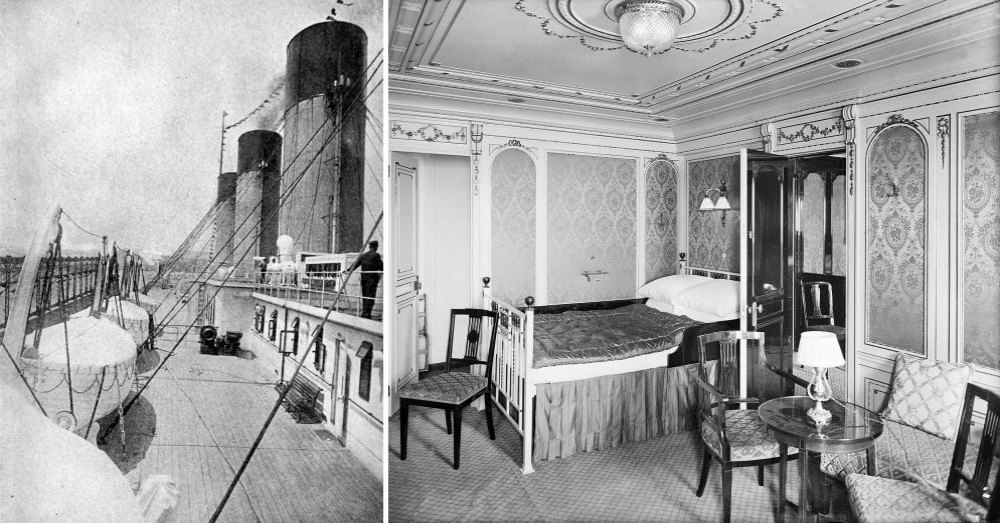
Passengers in first class experienced a level of comfort and sophistication rarely seen at sea. Their staterooms were akin to luxurious hotel suites, often featuring private promenades, sitting rooms, and en-suite bathrooms. The décor was a lavish blend of Edwardian styles, with intricate woodwork, rich fabrics, and fine furnishings. The Dining Saloon, a vast space capable of seating over 500 guests, was adorned with elaborate paneling and ornate lighting, offering a fine dining experience akin to the most exclusive restaurants on land.
Beyond the dining and sleeping quarters, first class offered a plethora of amenities designed for leisure and recreation. The Smoking Room, a masculine sanctuary paneled in rich mahogany and featuring a large fireplace, provided a space for gentlemen to relax and socialize. The Ladies’ Drawing Room, a lighter and more airy space, offered a comfortable setting for conversation and light refreshments. The Verandah Café and Palm Court provided elegant spaces to enjoy the sea air without leaving the ship’s interior. Even the gymnasium, equipped with the latest exercise machines, offered a touch of modern luxury.
Second and Third Class: Comfort and Dignity for All
While the focus often falls on the lavishness of first class, the White Star Line also invested significantly in making the accommodations for second and third-class passengers comfortable and respectable. This was a key part of their brand promise: to offer a superior experience across the board.
Second-Class passengers enjoyed accommodations that rivaled the best in first class on many other ships. Their cabins were well-appointed, and they had access to their own dining saloon, library, and smoking room. The design, while not as extravagant as first class, still exuded a sense of quality and comfort, with polished wood and comfortable furnishings.
Third-Class (or steerage) accommodations, often perceived as basic, were actually a significant improvement over many contemporary vessels. While cabins were smaller and shared, they were clean, well-ventilated, and offered a degree of privacy. Third-class passengers also had access to their own dining areas and communal spaces, which were designed to be functional and hygienic. The White Star Line aimed to attract immigrants seeking a better life in America, and their branding emphasized offering them a safe, comfortable, and dignified journey. The interiors reflected this: practical, well-lit, and a far cry from the cramped and unsanitary conditions often associated with steerage passage.
The Financial Blueprint: Investing in Ambition and Prestige
The construction and outfitting of the Titanic represented a monumental financial undertaking, reflecting the White Star Line’s ambitious vision and its commitment to establishing a dominant presence in the transatlantic travel market. The investment was not just in steel and rivets, but in creating an experience that would command premium prices and solidify their brand as the purveyor of the finest ocean voyages.
The Cost of Grandeur: A Monumental Investment
The estimated cost of building the Titanic was around $7.5 million in 1912, which translates to hundreds of millions of dollars in today’s currency. This figure encompassed the vast expenses of labor, materials, and the intricate interior design and furnishings. The sheer scale of the ship meant that the workforce involved was enormous, and the procurement of materials, from high-quality timber and fine fabrics to custom-made furniture and elaborate fixtures, was a complex logistical and financial challenge.
The investment was a strategic gamble by the White Star Line, aiming to outdo its main competitor, Cunard Line, which had already launched its own impressive vessels, the Lusitania and the Mauretania. The Titanic was conceived as part of a trio of Olympic-class liners, designed to offer a luxurious and fast service, commanding higher fares and attracting the most discerning travelers. The intention was that the prestige and desirability of the Titanic would translate directly into profitability, not just through passenger fares but also through its potent marketing and branding impact.
The Economic Implications of Luxury
The opulent interiors were not merely for show; they were a direct driver of the ship’s economic model. The higher ticket prices for first-class accommodation, justified by the unparalleled luxury, were a significant revenue stream. The ability to cater to the wealthiest individuals in society meant the White Star Line could charge a premium, solidifying their position in the premium travel market.
The investment in lavish amenities also served a crucial marketing purpose. Word-of-mouth, newspaper reports, and early forms of advertising would highlight the grandeur of the Titanic, creating a sense of exclusivity and desire. This effectively positioned the ship as an aspirational destination in itself, a symbol of success and a testament to the wealth of the Edwardian era. The financial investment was thus intrinsically linked to the brand’s ability to attract and retain a high-paying clientele, making the luxury a calculated and profitable business decision.

The Unforeseen Costs of Tragedy
The tragic sinking of the Titanic, while not a direct cost of its interior design, had profound financial implications. The loss of the ship was a devastating blow to the White Star Line, not only in terms of the physical asset but also the immense insurance payouts and the damage to their reputation. The cost of lifeboats, often cited as a point of contention, might have seemed a minor expense in the grand scheme of the ship’s construction budget, but their absence proved to be the most costly oversight of all, a grim reminder that financial prudence must always prioritize human safety above all else.
In conclusion, the Titanic’s interiors were a complex interplay of technological ambition, meticulous branding, and significant financial investment. The ship’s design reflected the era’s confidence in progress and its fascination with luxury. While the tragedy overshadows its story, understanding what the Titanic looked like inside offers a fascinating glimpse into the aspirations, innovations, and societal values of the early 20th century. It serves as a powerful testament to human ingenuity, the allure of luxury, and the enduring impact of design on both perception and reality.
aViewFromTheCave is a participant in the Amazon Services LLC Associates Program, an affiliate advertising program designed to provide a means for sites to earn advertising fees by advertising and linking to Amazon.com. Amazon, the Amazon logo, AmazonSupply, and the AmazonSupply logo are trademarks of Amazon.com, Inc. or its affiliates. As an Amazon Associate we earn affiliate commissions from qualifying purchases.