
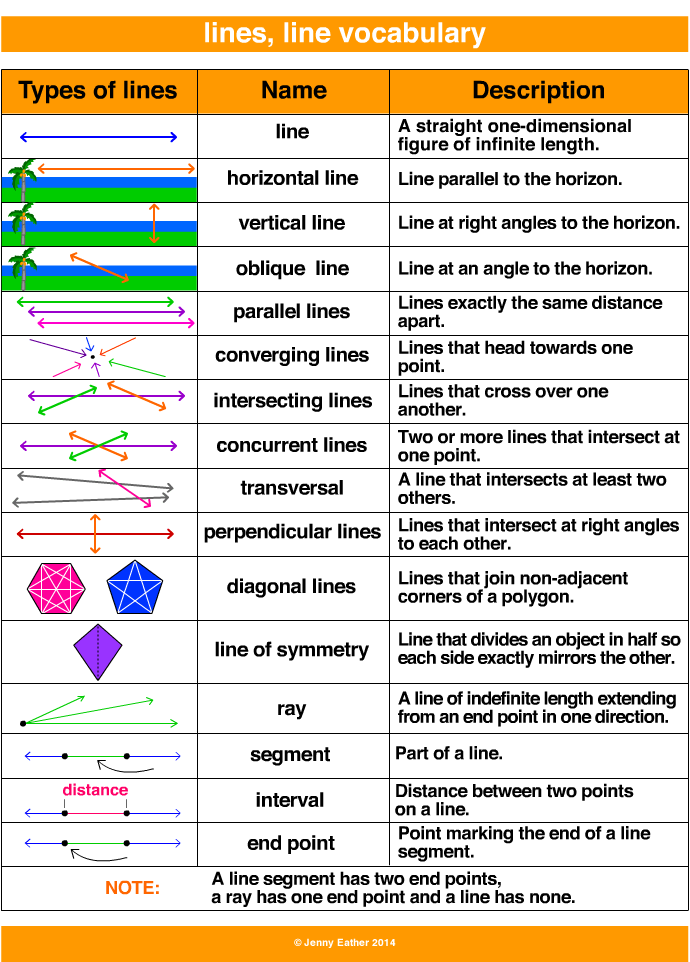
At its core, a line in mathematics is a fundamental concept that transcends simple geometry, forming the bedrock upon which much of modern technology is built. Far from being a mere drawing on a page, the mathematical line represents an infinite, one-dimensional object with no thickness or width, extending endlessly in two opposing directions. Its elegance lies in its simplicity and its profound utility in describing relationships, movements, and structures across countless technological domains. Understanding the “line” is not just an academic exercise; it’s a prerequisite for comprehending the mechanisms behind everything from computer graphics and artificial intelligence to network infrastructure and engineering design.
The Fundamental Definition of a Line and Its Digital Representation
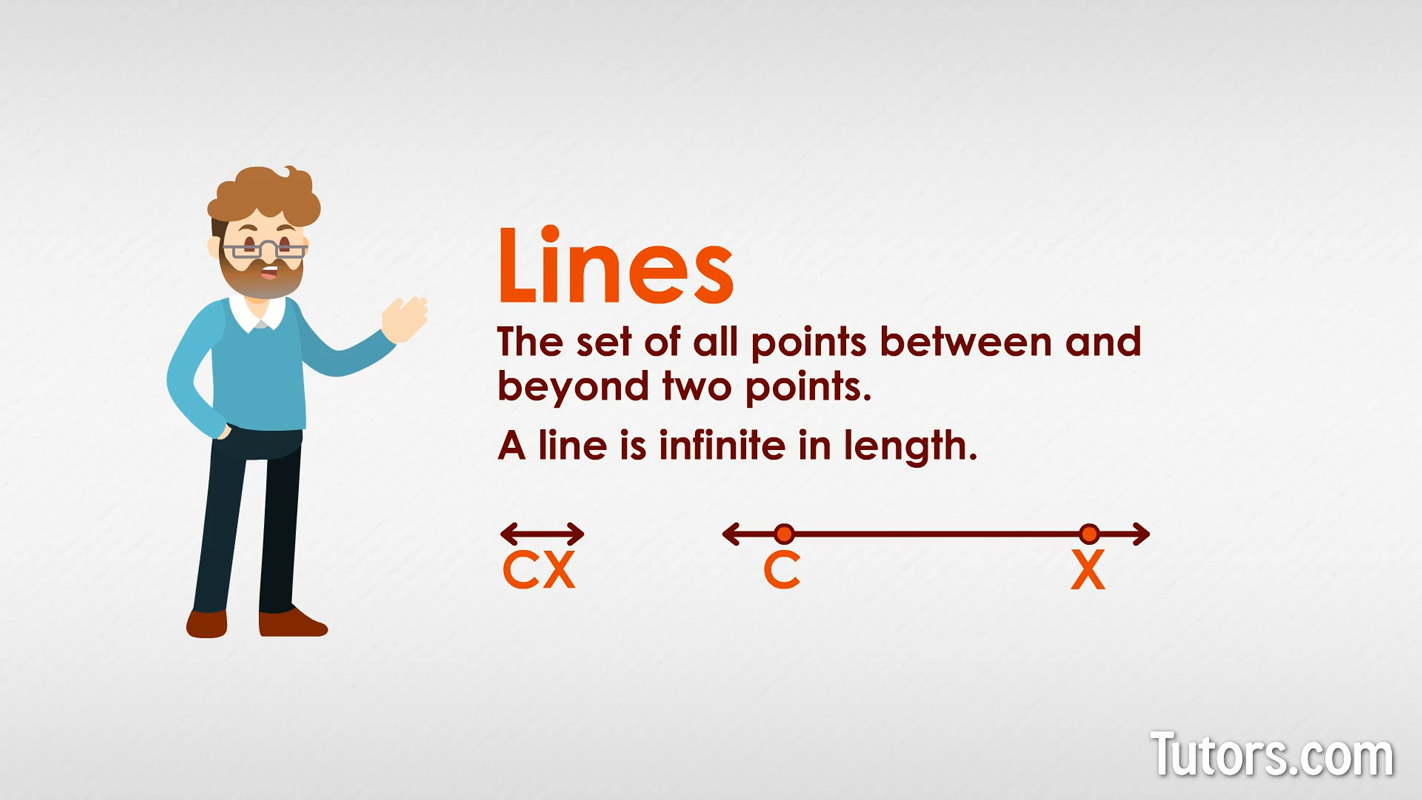
To appreciate the line’s technological significance, we must first firmly grasp its mathematical definition. Geometrically, a line is defined by two distinct points, or by a point and a direction. This seemingly simple construct becomes remarkably powerful when translated into the digital realm.
Geometric Interpretation
In Euclidean geometry, a line is the shortest distance between two points. It is a straight path that has no curvature. This intuitive understanding is critical for algorithms that calculate distances, define boundaries, or trace trajectories. In computational geometry, lines are often represented by their endpoints’ coordinates, allowing computers to manipulate, draw, and analyze them. Imagine a game engine calculating the trajectory of a projectile or a navigation system plotting a route; both rely on this fundamental geometric understanding of a line.
Algebraic Representation (Linear Equations)
Algebra provides a powerful way to represent lines, particularly useful in programming and data analysis. The most common form is the linear equation: $y = mx + b$. Here, $m$ represents the slope (the rate of change of y with respect to x), and $b$ is the y-intercept (the point where the line crosses the y-axis). This algebraic representation allows for precise calculation and prediction. For instance, in sensor data processing, a series of readings might be modeled by a linear equation to predict future states or detect anomalies. In control systems, linear equations describe the desired behavior of a mechanism, enabling automated adjustments.
Vector Representation
For applications in 3D graphics, robotics, and physics simulations, lines are often represented using vectors. A line can be described by a point on the line ($P0$) and a direction vector ($vec{v}$). Any point ($P$) on the line can then be expressed as $P = P0 + tvec{v}$, where $t$ is a scalar parameter. This parametric form is incredibly versatile, allowing developers to easily calculate points along a line, determine intersections with other geometric objects (planes, spheres), and simulate movement. For example, ray tracing algorithms, crucial for realistic rendering in video games and architectural visualizations, fire “rays” (lines) from a virtual camera into a scene, using vector math to determine what objects they intersect and how light interacts with them.
Lines as the Backbone of Computer Graphics and Visualization
The visual world we experience through screens, from intricate user interfaces to photorealistic virtual environments, is fundamentally built upon lines.
Rendering and 2D/3D Design
In computer graphics, lines are the foundational primitives for drawing shapes, objects, and scenes. In 2D graphics, vector-based software (like CAD programs or illustration tools) uses mathematical lines to define curves, polygons, and text, ensuring scalability and precision regardless of zoom level. In 3D graphics, mesh models, which form the basis of virtually all 3D objects, are constructed from vertices connected by edges—which are, in essence, lines. These lines define the wireframe of an object, which is then rendered with textures and lighting. Without a precise mathematical understanding of lines and their transformations (rotation, scaling, translation), the intricate 3D worlds of gaming, animation, and virtual reality would be impossible to create and manipulate.
Data Visualization and Trend Analysis
The power of data visualization lies in its ability to translate complex datasets into easily understandable visual patterns. Line graphs are ubiquitous in technology dashboards, financial charting tools, and scientific simulations to depict trends, comparisons, and relationships over time or across different variables. A line connecting data points immediately conveys progression, growth, decline, or stability. Furthermore, trend lines—mathematically derived lines of best fit (often using linear regression)—are overlaid on scatter plots to predict future values or identify underlying patterns in noisy data, a critical tool in business intelligence and predictive analytics.

Lines in Algorithms and Artificial Intelligence
Beyond visual representation, lines play a crucial, often invisible, role within the algorithms that power modern software and artificial intelligence.
Pathfinding and Navigation
Algorithms for pathfinding, essential in robotics, video games, and GPS navigation systems, heavily rely on line segments. Whether it’s Dijkstra’s algorithm finding the shortest path between two nodes in a graph (where connections are represented as lines), or A* search guiding a robot through a complex environment, the core calculation involves evaluating straight lines (or segments that approximate them) between points. Collision detection in simulations also frequently simplifies complex object shapes into collections of lines or polygons, making intersection tests more computationally efficient.
Machine Learning: Decision Boundaries and Regression
In machine learning, lines are incredibly significant, especially in supervised learning tasks. Linear regression, one of the simplest yet most powerful algorithms, fits a straight line (or a hyperplane in higher dimensions) to a set of data points to model the relationship between variables and make predictions. This “line of best fit” allows systems to forecast stock prices, estimate housing values, or predict user behavior.
Furthermore, in classification tasks, a “decision boundary” is often a line (or hyperplane) that separates different classes of data points. For instance, a Support Vector Machine (SVM) algorithm aims to find the optimal hyperplane that maximizes the margin between different categories of data, effectively drawing a “line” to classify new inputs. Understanding these linear separators is fundamental to comprehending how many AI models make their classifications and predictions.
Lines in Software Development and Engineering
The abstract concept of a line finds concrete application in various engineering disciplines and software development paradigms.
CAD and Engineering Design
Computer-Aided Design (CAD) software, a cornerstone of modern engineering, relies entirely on precise mathematical definitions of lines, curves, and surfaces. Engineers use CAD to design everything from microchips to skyscrapers. Lines define the edges of components, the paths for machining, and the structural elements of complex assemblies. The integrity and functionality of these designs are directly dependent on the accuracy with which these mathematical lines are implemented and manipulated within the software environment.
Network Topologies and Connections
In computer networking, the concept of a “line” can be extended metaphorically and literally. Network diagrams use lines to represent connections between devices, illustrating data paths and network topology. While physical connections might be cables (which are physical lines), the logical model often simplifies to a graph where nodes (devices) are connected by edges (communication lines). Understanding these connections, their bandwidth, latency, and reliability, is crucial for designing robust and efficient communication systems. Even abstract representations of data flow or API dependencies often use lines to denote relationships and information transfer.
The Abstract Power of Lines in Digital Innovation
The journey from a simple geometric notion to a ubiquitous tool in technology highlights the profound impact of foundational mathematical concepts. The line, with its unambiguous definition and diverse representations, provides a universal language for describing structure, movement, and relationships within the digital world.
From Theory to Application
From calculating the rendering of a pixel to defining the decision-making logic of an AI, the line is an indispensable building block. Its versatility allows developers and engineers to model real-world phenomena, design complex systems, and develop intelligent algorithms. The continuous innovation in fields like virtual reality, autonomous systems, and advanced analytics is a testament to the enduring power and adaptability of these fundamental mathematical principles. Mastering the concept of a line in math is, therefore, not just about understanding geometry; it’s about unlocking the potential to create and innovate within the ever-expanding landscape of technology.
aViewFromTheCave is a participant in the Amazon Services LLC Associates Program, an affiliate advertising program designed to provide a means for sites to earn advertising fees by advertising and linking to Amazon.com. Amazon, the Amazon logo, AmazonSupply, and the AmazonSupply logo are trademarks of Amazon.com, Inc. or its affiliates. As an Amazon Associate we earn affiliate commissions from qualifying purchases.