
The invisible forces that bind atoms together into molecules and compounds are fundamental to every aspect of the physical world, including the complex technologies that define our modern era. Understanding the nature of these atomic bonds—primarily ionic and covalent—is not merely an academic exercise in chemistry; it is the bedrock upon which material science and, consequently, almost all technological innovation stands. From the silicon chips powering our AI algorithms to the battery electrolytes in our electric vehicles, the properties imparted by these bonds dictate performance, reliability, and the very possibility of future advancements. While the title might suggest a singular “ionic covalent bond,” it more accurately prompts an exploration of two distinct yet occasionally overlapping mechanisms that govern how atoms interact, shaping the materials engineers leverage to build the digital and physical future.

The Atomic Glue: Foundation of Technological Materials
At the heart of every technological marvel, from the supercomputer to the smartphone, lies a carefully engineered material. The specific properties of these materials—their electrical conductivity, thermal stability, flexibility, strength, and optical characteristics—are directly attributable to the types of chemical bonds holding their constituent atoms together. Without a profound understanding of how electrons are shared or transferred between atoms, the development of semiconductors, advanced composites, robust sensors, or efficient energy storage solutions would be impossible. These fundamental bonding principles allow scientists and engineers to predict material behavior and design novel substances with tailored functionalities essential for pushing the boundaries of technology.
Unpacking Ionic Bonds: Powering Our Digital Lives
Ionic bonds are formed when one atom essentially transfers one or more electrons to another atom. This typically occurs between a metal and a non-metal, where the metal has a tendency to lose electrons (forming a positively charged cation) and the non-metal has a strong tendency to gain electrons (forming a negatively charged anion). The resulting oppositely charged ions are then held together by strong electrostatic forces, forming a crystal lattice.
Electrostatic Attraction in Action: Tech Applications
The characteristics of ionic compounds make them indispensable in several technological domains:
- Energy Storage (Batteries): The most prominent application is in batteries. The electrolytes in lithium-ion batteries, for instance, often contain ionic compounds (like lithium salts) that dissociate into ions, allowing for the movement of charge between the anode and cathode. The efficiency and safety of these energy storage devices critically depend on the stability and ion conductivity of these ionic electrolytes. Solid-state batteries, a cutting-edge area of research, rely on solid ionic conductors to replace liquid electrolytes, promising greater safety and energy density.
- Sensors and Actuators: Many gas sensors, humidity sensors, and even some specialized medical sensors utilize ionic compounds. Their ability to conduct ions under specific conditions or react predictably with certain gases makes them ideal transducers, converting chemical signals into electrical ones.
- High-Temperature Materials: The strong electrostatic forces in ionic bonds give ionic compounds high melting and boiling points. This property is crucial for components that operate under extreme thermal conditions, such as certain ceramic insulators in industrial furnaces or specialized coatings in aerospace applications where thermal stability is paramount.
- Dielectric Materials: In electronics, ionic compounds can function as excellent insulators or dielectric materials, storing electrical energy in their electric fields. This property is vital for capacitors, which are ubiquitous components in virtually all electronic circuits, filtering power and timing signals.
The rigidity and often brittle nature of many ionic compounds, a direct consequence of their strong, non-directional bonds, also guide their application, favoring roles where structural integrity under specific conditions is more important than flexibility.
Delving into Covalent Bonds: The Backbone of Modern Electronics
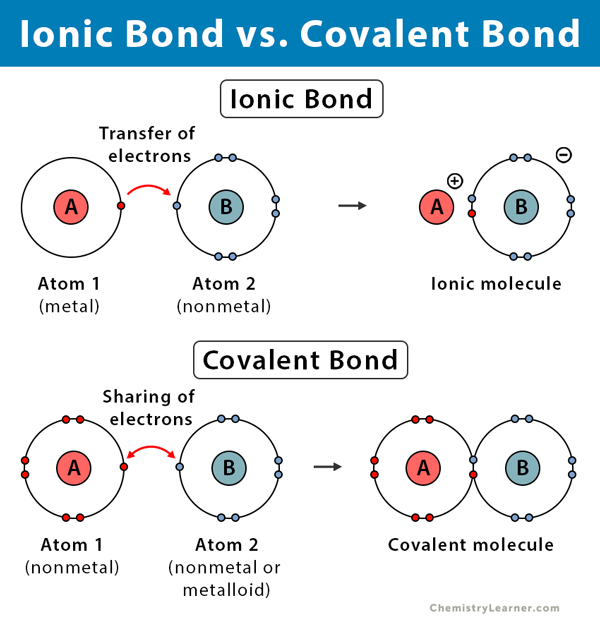
Covalent bonds form when atoms share electrons. This sharing typically occurs between two non-metal atoms, allowing each atom to achieve a stable electron configuration. Unlike the uniform attraction in ionic bonds, covalent bonds are directional, leading to specific molecular geometries that profoundly influence material properties.
Electron Sharing and Molecular Architecture: Key to Tech Innovation
The diverse nature and precise control offered by covalent bonding are central to advanced technology:
- Semiconductors (The Digital Brain): The entire foundation of modern computing rests on semiconductors, primarily silicon. Silicon atoms form a diamond-like lattice through strong covalent bonds. The precise arrangement of these bonds allows for the introduction of impurities (doping) to create p-n junctions, which are the building blocks of transistors, microprocessors, and memory chips. The ability to control electron flow in these covalently bonded networks is what makes computation possible.
- Polymers and Plastics (Flexible Devices & Components): The vast array of plastics, rubbers, and fibers used in tech gadgets—from phone casings to flexible displays, wiring insulation, and internal structural components—are all built from long chains of covalently bonded organic molecules (polymers). The strength, flexibility, and insulation properties can be finely tuned by altering the covalent bond structures, allowing for lightweight, durable, and adaptable materials.
- Advanced Carbon Materials (Next-Gen Electronics): Graphene, carbon nanotubes, and fullerenes, all comprised of covalently bonded carbon atoms in unique arrangements, exhibit extraordinary electrical, thermal, and mechanical properties. These materials are at the forefront of research for next-generation electronics, high-efficiency solar cells, advanced sensors, and ultra-strong composites, promising revolutionary breakthroughs in computing speed, energy efficiency, and material strength.
- Organic Light-Emitting Diodes (OLEDs): The vibrant, energy-efficient displays in modern smartphones and televisions rely on organic molecules that emit light when an electric current passes through them. These complex organic molecules are held together by covalent bonds, and their precise molecular structure dictates their color, efficiency, and lifetime, directly impacting the quality and longevity of our digital displays.
The ability to create highly specific, stable molecular structures through covalent bonding offers an unparalleled degree of control over material properties, making it indispensable for engineering sophisticated technological components.
The Hybrid Realm: Where Ionic and Covalent Properties Converge in Tech
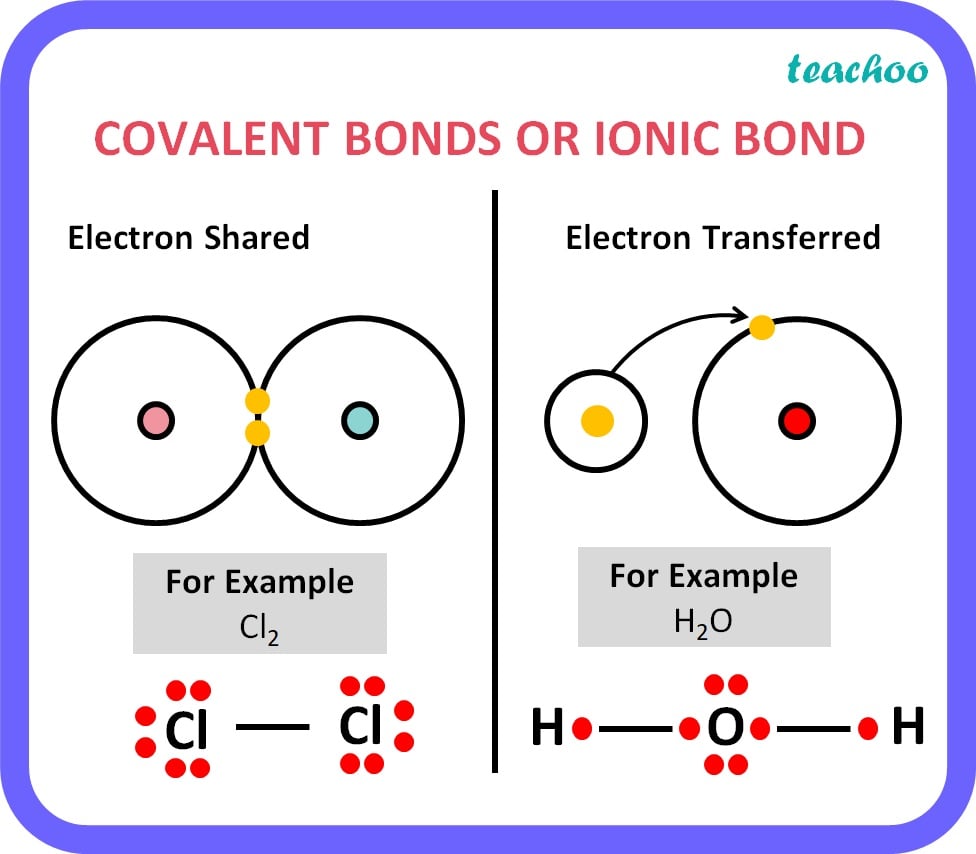
It’s important to recognize that chemical bonding often exists on a spectrum, rather than being purely ionic or purely covalent. Many compounds exhibit characteristics of both, leading to what is known as polar covalent bonding, where electrons are shared unequally between atoms, creating partial positive and negative charges within the molecule. This continuum is particularly relevant in advanced material science, allowing for exquisite control over properties.
The Spectrum of Bonding and Advanced Materials
- Ceramics and Metal Oxides: Many advanced ceramics (e.g., aluminum oxide, zirconium dioxide) used in high-performance electronics, engine components, and protective coatings exhibit a significant degree of both ionic and covalent character. Their strong bonds contribute to exceptional hardness, high melting points, and chemical inertness, making them ideal for durable, high-stress applications where traditional metals or plastics fail.
- Perovskites for Solar Cells: Perovskite materials, often metal-halide compounds, have become a sensation in solar energy research. Their crystal structure and unique blend of ionic and covalent bonding contribute to their remarkable efficiency in converting sunlight into electricity, rivaling silicon in some aspects. Understanding the nuances of their bonding allows researchers to tune their electronic properties for even greater performance.
- Bio-integrated Technologies: In the emerging field of bioelectronics and medical devices, materials often need to interact safely and effectively with biological systems. Many biomolecules themselves exhibit complex mixtures of covalent and ionic interactions. Designing biocompatible sensors, drug delivery systems, or prosthetic interfaces requires materials with specific surface chemistries, often achieved by controlling the polar covalent character and localized charge distribution to facilitate seamless integration.
- Catalysts: Many catalysts used in industrial processes (from chemical manufacturing to fuel cells) are complex compounds with mixed bonding characteristics. The specific bond types and their localized electronic environments are critical for facilitating chemical reactions efficiently, driving innovation in sustainable manufacturing and energy conversion technologies.
This blended nature of bonding allows material scientists to fine-tune properties with incredible precision, opening doors to materials with unprecedented combinations of strength, conductivity, transparency, and reactivity.
Engineering the Future: Designing Materials Atom by Atom
The fundamental understanding of ionic and covalent bonds is not merely foundational; it is an active frontier of research and development in technology. Material scientists and engineers continuously leverage these principles to design and synthesize new compounds with bespoke properties. This ranges from developing more efficient semiconductors for faster processors, to creating supercapacitors with higher energy density, to engineering flexible electronics that can be integrated into wearable devices or smart textiles. Every iteration of technology, from the next generation of AI hardware to advanced sensor networks for smart cities, relies on the continuous innovation in materials science, driven by a deep mastery of how atoms bond together to form the building blocks of our technological world. The quest for faster, smaller, more powerful, and more sustainable technology is, at its core, a quest to better understand and manipulate the atomic glue that holds everything together.
aViewFromTheCave is a participant in the Amazon Services LLC Associates Program, an affiliate advertising program designed to provide a means for sites to earn advertising fees by advertising and linking to Amazon.com. Amazon, the Amazon logo, AmazonSupply, and the AmazonSupply logo are trademarks of Amazon.com, Inc. or its affiliates. As an Amazon Associate we earn affiliate commissions from qualifying purchases.