
The concept of a highway use tax, specifically the Heavy Vehicle Use Tax (HVUT), is a critical component of the American financial ecosystem, directly impacting businesses and individuals operating heavy vehicles. It stands as a prime example of how specific taxes fund essential public infrastructure, making it a pivotal subject within the realm of business finance and financial compliance. For owners and operators of large trucks, buses, and other heavy vehicles, understanding the HVUT is not just about adhering to regulations; it’s about strategic financial planning and ensuring operational continuity.
Understanding the Federal Excise Tax on Heavy Vehicles
At its core, the Highway Use Tax refers to the federal excise tax levied on heavy highway vehicles operating on public roadways in the United States. This tax, often known by its IRS designation, the Heavy Vehicle Use Tax (HVUT), is an annual assessment designed to ensure that those who benefit most from the nation’s road infrastructure contribute proportionally to its upkeep and development.

Purpose and Origins
The primary purpose of the HVUT is to generate revenue for the Highway Trust Fund. This fund is the lifeblood of America’s transportation infrastructure, financing the construction, maintenance, and repair of federal highways, bridges, and mass transit systems. The rationale is simple: heavier vehicles inflict more wear and tear on roads than lighter ones. Therefore, a tax based on vehicle weight ensures a fairer distribution of costs associated with road preservation.
The origins of such taxes can be traced back to federal efforts to establish a self-sustaining mechanism for funding national highway projects. The system helps create a direct link between vehicle usage and infrastructure investment, supporting the vast network that facilitates commerce, travel, and economic growth across the country. Without such dedicated funding, the quality and safety of America’s roads would significantly deteriorate, leading to increased operational costs for businesses and reduced efficiency in supply chains.
Who is Subject to HVUT?
The HVUT applies to a broad range of vehicles, but with specific criteria. Generally, any highway motor vehicle with a gross taxable weight of 55,000 pounds or more, used on public highways during the tax period, is subject to the tax. This primarily includes:
- Trucks and Truck Tractors: Both solo trucks and those used in combination with trailers.
- Buses: Public and private buses.
It’s crucial to understand that “gross taxable weight” isn’t merely the vehicle’s empty weight. It’s a combination of the actual unloaded weight of the vehicle, the weight of any trailers customarily used in combination with the vehicle, and the maximum load customarily carried on the vehicle. This comprehensive definition ensures that the tax accurately reflects the vehicle’s potential impact on the road.
While the scope is broad, certain exemptions exist. These typically include:
- Vehicles used by the federal government, state, or local governments.
- Qualified transit buses providing mass transportation services.
- Vehicles used primarily for non-transportation functions, such as mobile machinery.
- Certain agricultural vehicles used less than 7,500 miles on public highways during the tax period.
- Vehicles that travel less than 5,000 miles on public highways during the tax period (these are considered “suspended” from tax, but still require filing).
Understanding these parameters is essential for financial planning, as miscategorization can lead to penalties or missed opportunities for legitimate exemptions.
Calculating and Filing the HVUT (Form 2290)
Compliance with HVUT regulations revolves around accurate calculation and timely filing of IRS Form 2290. This process requires meticulous attention to detail to avoid financial penalties and ensure uninterrupted business operations.
Determining Gross Taxable Weight
The cornerstone of HVUT calculation is correctly determining the gross taxable weight. This isn’t always straightforward, as it’s not the vehicle’s maximum legal weight but rather its customary maximum operating weight. For a truck tractor, this includes the weight of the heaviest trailer and its load that it’s customarily used with. For other trucks, it’s the actual unloaded weight plus the maximum load it customarily carries. The IRS provides specific weight categories and tax rates based on these ranges. A minor miscalculation can lead to underpayment penalties or overpayment, impacting a business’s cash flow. Therefore, maintaining precise records of vehicle specifications and typical loads is paramount.
Taxable Period and Payment Due Dates
The HVUT tax year runs from July 1st to June 30th of the following year. For vehicles used on public highways during July, the tax return (Form 2290) and full payment are typically due by August 31st of the same year. However, if a vehicle is first used on a public highway after July, the tax is prorated, and the due date is the last day of the month following the month of first use. For instance, a vehicle first used in October would have a filing and payment deadline of November 30th. Understanding these staggered deadlines is crucial for fleet managers and accounting departments to avoid late payment penalties and ensure continuous compliance.
The Role of IRS Form 2290
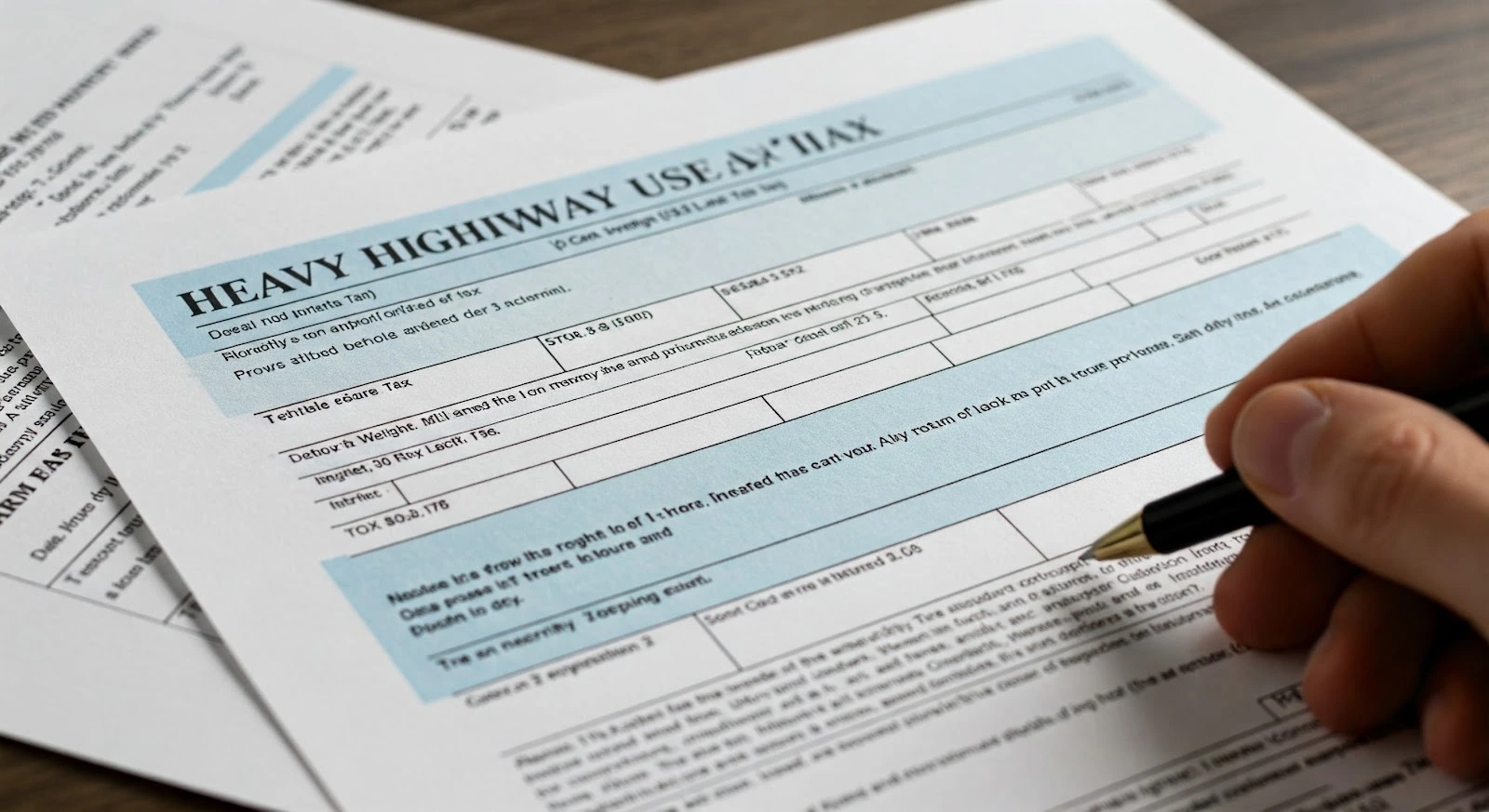
IRS Form 2290, “Heavy Highway Vehicle Use Tax Return,” is the official document for reporting and paying HVUT. While paper filing is an option for some, the IRS mandates e-filing for anyone reporting 25 or more taxable vehicles. However, e-filing is highly recommended for all filers due to its speed, accuracy, and efficiency.
Payment options for the HVUT include:
- Electronic Funds Withdrawal (EFW): Authorizing the IRS to debit your bank account.
- Electronic Federal Tax Payment System (EFTPS): A free online service for paying federal taxes.
- Credit or Debit Card: Through approved third-party processors (fees may apply).
- Check or Money Order: Mailed with a payment voucher (Form 2290-V).
Choosing the appropriate payment method depends on a business’s financial infrastructure and preferences, but electronic options generally offer faster processing and better record-keeping.
Proof of Payment (Stamped Schedule 1)
Upon successful filing of Form 2290 and payment of the tax, the IRS issues a “Stamped Schedule 1.” This document serves as undeniable proof that the HVUT has been paid for a specific vehicle. The Stamped Schedule 1 is critically important for several reasons:
- Vehicle Registration: Most states require proof of HVUT payment to register or renew the registration of heavy vehicles. Without it, a vehicle cannot legally operate.
- IFTA Fuel Tax Credentials: Carriers often need it to obtain or renew International Fuel Tax Agreement (IFTA) decals.
- Operating Authority: Regulatory bodies may request it as part of a carrier’s operating authority compliance.

For e-filers, a digital stamped Schedule 1 is usually available within minutes after acceptance, significantly streamlining the compliance process. This instant proof is a major advantage for businesses needing quick turnaround for vehicle registrations.
Financial Implications and Compliance Risks
The HVUT is more than just another tax; it represents a significant financial consideration for businesses in the transportation sector. Mismanagement of HVUT compliance can lead to substantial financial penalties and operational disruptions.
Penalties for Non-Compliance
The IRS takes HVUT compliance seriously, and the penalties for failure to adhere to regulations can be costly:
- Failure to File: Penalties can reach 4.5% of the total tax due, assessed monthly, up to a maximum of 22.5%.
- Failure to Pay: An additional penalty of 0.5% of the unpaid tax for each month or part of a month the tax remains unpaid, up to 25% of the unpaid amount.
- Interest Charges: Interest is charged on underpayments and unpaid taxes, compounding daily from the due date until the tax is paid in full.
- Fraudulent Returns: In cases of intentional evasion or fraudulent filing, severe penalties, including criminal prosecution, can apply.
Beyond direct financial penalties, non-compliance can lead to the inability to register vehicles, resulting in downtime, lost revenue, and damage to a business’s reputation.
Audits and Record Keeping
To mitigate compliance risks, businesses must prioritize meticulous record keeping. The IRS advises retaining HVUT records for at least three years after the tax is due or paid, whichever is later. These records should include:
- Copies of all Form 2290s filed and their corresponding Stamped Schedule 1s.
- Documentation of vehicle purchases, sales, or disposals.
- Mileage records for vehicles claiming the 5,000-mile (or 7,500 for agricultural) exemption.
- Weight certificates or documentation for gross taxable weight calculations.
In the event of an HVUT audit, accurate and comprehensive records are invaluable for demonstrating compliance and avoiding adverse findings. Audits can involve reviewing mileage logs, vehicle titles, purchase records, and maintenance logs to verify reported vehicle usage and weight.
Impact on Business Finance and Budgeting
For trucking companies, logistics firms, and other heavy vehicle operators, the HVUT is a recurring operational expense that must be factored into financial planning. Budgeting for this annual tax requires foresight, especially for large fleets. Neglecting to account for HVUT can strain cash flow, particularly for smaller businesses.
Strategic financial management might involve:
- Annual Budget Allocation: Setting aside funds specifically for HVUT payments.
- Cash Flow Projections: Incorporating HVUT due dates into cash flow forecasts to ensure liquidity.
- Fleet Management Decisions: Considering HVUT implications when purchasing new vehicles or retiring old ones. For instance, optimizing vehicle weight classes can sometimes lead to reduced HVUT liabilities.
By integrating HVUT into the broader financial strategy, businesses can avoid surprises, maintain compliance, and ensure stable operations.
Specific Scenarios and Exemptions
While the general rules for HVUT apply broadly, several specific scenarios and exemptions require particular attention for accurate financial management.
Vehicles Used for 5,000 Miles or Less (7,500 for Agricultural)
Vehicles that are expected to be used 5,000 miles or less (or 7,500 miles or less for agricultural vehicles) on public highways during the tax period are considered “tax-suspended.” This means no tax is due at the time of filing, but the owner is still required to file Form 2290 to report these vehicles. If a tax-suspended vehicle subsequently exceeds the mileage threshold at any point during the tax year, the tax becomes due, prorated for the remainder of the tax period, and a new Form 2290 must be filed by the last day of the month following the month in which the mileage was exceeded. This nuanced rule is crucial for businesses with fluctuating vehicle usage.
Sold, Destroyed, or Stolen Vehicles
If a taxable vehicle is sold, destroyed, or stolen before the end of the tax period, the taxpayer may be eligible for a credit or refund for the unused portion of the tax paid. To claim this, the taxpayer must file Form 8849, “Claim for Refund of Excise Taxes,” with Schedule 6 (Form 8849), “Other Claims.” Accurate documentation, such as a bill of sale, insurance claim, or police report, is essential for substantiating such claims. This provision helps businesses recover funds for vehicles no longer in service, preventing overpayment of taxes.
Leased Vehicles
For leased heavy vehicles, determining who is responsible for filing and paying the HVUT can be complex. Generally, the person in whose name the vehicle is registered is responsible. This often means the lessor (the owner of the vehicle) files and pays the tax. However, lease agreements can sometimes specify that the lessee (the operator of the vehicle) is responsible. It is imperative for both lessors and lessees to clearly define HVUT responsibilities in their contracts to avoid disputes and ensure proper compliance. Clarifying this financial obligation upfront prevents confusion and potential penalties.
Importance of HVUT for the Economy and Infrastructure
Beyond the immediate financial implications for businesses, the HVUT plays a vital role in the broader economy and the sustainability of national infrastructure. The revenue generated by this tax directly feeds into the Highway Trust Fund, which is indispensable for maintaining and improving the physical backbone of the American economy.
A robust and well-maintained highway system facilitates efficient movement of goods and services, reducing transportation costs, shortening delivery times, and enhancing overall supply chain reliability. This directly translates to lower prices for consumers, increased competitiveness for businesses, and greater economic productivity. Conversely, neglected infrastructure leads to increased wear and tear on vehicles, higher fuel consumption due to congestion, and more frequent accidents, all of which impose significant economic costs.
The HVUT ensures that the primary users of the heavy vehicle infrastructure contribute proportionally to its upkeep, thereby creating a sustainable funding model. This cyclical relationship—heavy vehicle use generating tax revenue that funds infrastructure improvements, which in turn supports more efficient heavy vehicle use—underscores the tax’s importance as a financial mechanism that underpins a critical sector of the economy. For individuals and businesses alike, a functioning transportation network supported by taxes like the HVUT is fundamental to economic vitality and national prosperity.
aViewFromTheCave is a participant in the Amazon Services LLC Associates Program, an affiliate advertising program designed to provide a means for sites to earn advertising fees by advertising and linking to Amazon.com. Amazon, the Amazon logo, AmazonSupply, and the AmazonSupply logo are trademarks of Amazon.com, Inc. or its affiliates. As an Amazon Associate we earn affiliate commissions from qualifying purchases.