
Understanding the Gross Domestic Product (GDP) of any nation, including Pakistan, is fundamental to grasping its economic health, trajectory, and potential. For individuals, businesses, and investors, GDP serves as a crucial metric, influencing everything from job prospects and investment strategies to the cost of living and national policy decisions. In the context of the “Money” category, delving into Pakistan’s GDP provides essential insights into its financial landscape, the opportunities it presents, and the challenges it faces.
Understanding Gross Domestic Product (GDP): A Core Economic Indicator
GDP is the most widely recognized measure of a country’s economic output. It quantifies the total monetary value of all finished goods and services produced within a country’s borders in a specific time period, usually a year or a quarter. It provides a snapshot of the economy’s size and growth rate, acting as a barometer for national prosperity and economic activity.
Defining GDP: What It Measures
At its core, GDP measures productivity and economic activity. When GDP grows, it generally signals a healthy economy, indicating increased production, more jobs, and higher incomes. Conversely, a shrinking GDP points to economic contraction, often accompanied by job losses and reduced spending. It’s important to note that while GDP is a powerful indicator, it doesn’t capture all aspects of welfare, such as income inequality, environmental quality, or the value of unpaid work.
Components of GDP: The Expenditure Approach
To calculate GDP, economists often use the expenditure approach, which sums up all spending in an economy. This approach breaks GDP into four main components:
- Consumption (C): This is the largest component, representing household spending on goods (durable and non-durable) and services. From daily groceries to healthcare and education, consumer spending drives a significant portion of economic activity.
- Investment (I): This includes business spending on capital goods (like machinery, factories, and equipment), residential construction, and changes in inventories. It signifies future productive capacity and economic expansion.
- Government Spending (G): This covers government purchases of goods and services, such as defense spending, infrastructure projects, and public employee salaries. It excludes transfer payments like social security or unemployment benefits, which do not represent production.
- Net Exports (NX): This is the value of a country’s total exports minus its total imports (Exports – Imports). A positive net export value (trade surplus) adds to GDP, while a negative value (trade deficit) subtracts from it.
By understanding these components, one can better analyze the drivers behind Pakistan’s economic performance and identify areas of strength or weakness.
Why GDP Matters for Individuals and Businesses
For anyone involved in personal finance, investing, or business operations in Pakistan, GDP trends are critical. A robust GDP growth rate can lead to:
- Job Creation: Growing businesses expand, leading to more employment opportunities.
- Increased Income: Economic expansion often translates to higher wages and disposable income.
- Investment Opportunities: A growing economy can offer more lucrative prospects in stocks, real estate, and new ventures.
- Stable Financial Markets: Strong economic fundamentals tend to support currency stability and attract foreign investment.
Conversely, a stagnating or declining GDP can signal economic hardship, impacting everything from the availability of credit to the returns on investments and the overall cost of living due to inflationary pressures.
Pakistan’s Economic Landscape: A Historical Overview of GDP Growth
Pakistan’s economic journey since its independence has been marked by periods of promising growth interspersed with significant challenges. Its GDP trajectory reflects the interplay of domestic policy, geopolitical events, and global economic cycles.
Early Decades: Growth and Industrialization
In its initial decades, Pakistan experienced phases of relatively strong economic growth, driven primarily by an emphasis on industrialization and agricultural development. Public sector investment played a crucial role, alongside a nascent private sector. Policies aimed at import substitution and developing a manufacturing base helped establish core industries, contributing significantly to GDP.
Periods of Volatility: Political Instability and Economic Challenges
However, this growth was not linear. Political instability, regional conflicts, and recurrent balance of payments crises have frequently hampered sustained economic progress. Periods of martial law, democratic transitions, and external shocks like oil price spikes or global recessions have led to economic volatility, impacting investor confidence and leading to inconsistent GDP growth rates. High fiscal deficits, reliance on external borrowing, and challenges in tax collection have been persistent issues.
Recent Trends: Post-Pandemic Recovery and Current Hurdles
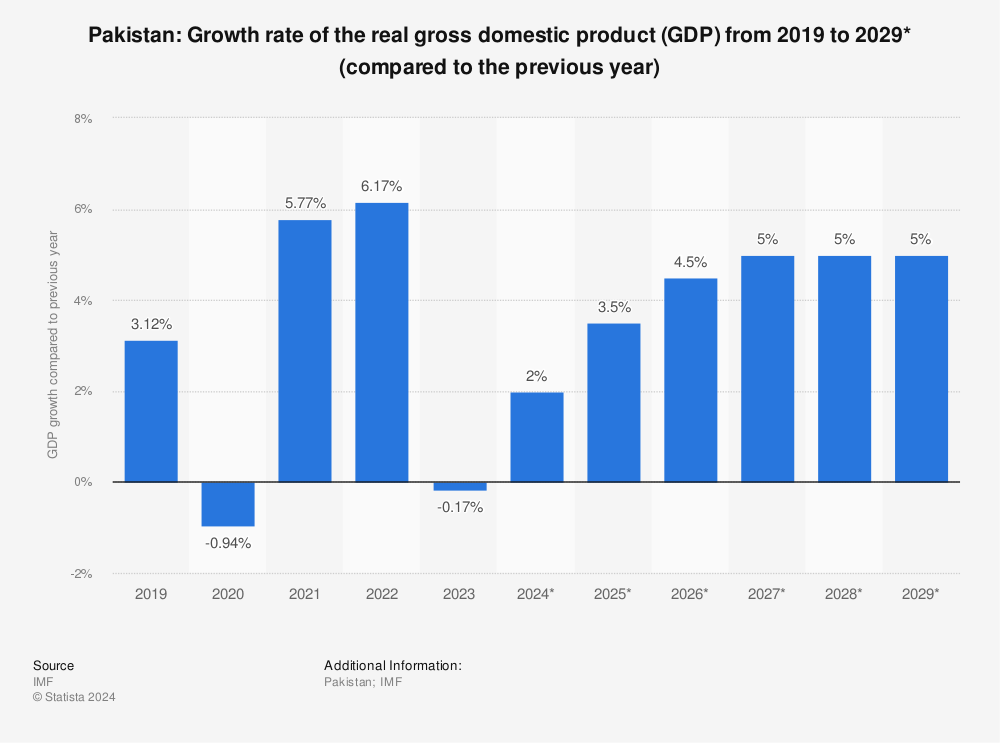
In recent years, Pakistan, like many nations, navigated the economic repercussions of the COVID-19 pandemic. While there was a rebound post-pandemic, the economy has faced renewed headwinds. High inflation, a depreciating currency, dwindling foreign exchange reserves, and a significant external debt burden have put immense pressure on its GDP growth potential. These challenges necessitate tough economic reforms and careful fiscal management to stabilize the economy and foster sustainable growth.
Key Sectors Contributing to Pakistan’s GDP
Pakistan’s economy is diversified, with significant contributions from three main sectors: agriculture, industry, and services. The relative importance of these sectors has evolved over time, reflecting global trends and domestic economic restructuring.
Agriculture: The Backbone of the Economy
Historically, agriculture has been the largest sector of Pakistan’s economy, employing a substantial portion of its labor force. It includes major crops like wheat, rice, cotton, and sugarcane, as well as livestock, dairy, and fisheries. While its share in GDP has gradually declined as other sectors have grown, agriculture still forms the foundation of the rural economy, provides raw materials for industry, and is crucial for food security and export earnings. Its performance is heavily influenced by weather patterns, input costs, and government agricultural policies.
Industry: Manufacturing and Construction
The industrial sector encompasses manufacturing, mining and quarrying, electricity, gas, and construction. Manufacturing, particularly textiles (which constitute a major portion of Pakistan’s exports), cement, fertilizers, and sugar, has been a key driver of industrial output. Small and Medium Enterprises (SMEs) also play a vital role, contributing to employment and local production. The growth of the industrial sector is critical for job creation, value addition, and increasing export potential, but it often faces challenges related to energy shortages, infrastructure deficits, and regulatory hurdles.
Services: The Growing Dominant Sector

In line with global trends, the services sector has emerged as the largest contributor to Pakistan’s GDP. This broad sector includes finance and insurance, wholesale and retail trade, transport and communication, public administration, education, healthcare, and IT services. The growth in telecommunications and information technology, in particular, has been notable, offering new avenues for employment and foreign exchange earnings. The services sector is often seen as a significant driver of economic modernization and diversification.
Factors Influencing Pakistan’s GDP Performance
A multitude of factors, both domestic and external, constantly shape Pakistan’s GDP performance. Understanding these influences is crucial for forecasting economic trends and making informed financial decisions.
Domestic Factors
- Fiscal Policy: Government spending levels, taxation policies, and management of the budget deficit directly impact economic activity. High fiscal deficits, often financed by borrowing, can lead to inflation and higher interest rates.
- Monetary Policy: The State Bank of Pakistan’s decisions on interest rates, money supply, and exchange rate management significantly influence investment, inflation, and economic growth.
- Governance and Political Stability: A stable political environment, strong institutions, and effective governance are essential for attracting investment, ensuring policy continuity, and fostering a predictable business climate.
- Infrastructure Development: Investments in energy, transport, and communication infrastructure are critical for enhancing productivity, facilitating trade, and supporting industrial growth.
External Factors
- Global Commodity Prices: As an import-dependent country for oil and other commodities, fluctuations in international prices have a direct impact on Pakistan’s import bill, inflation, and balance of payments.
- Remittances: Overseas Pakistanis send substantial remittances, which are a vital source of foreign exchange and significantly contribute to national income and household consumption.
- Foreign Direct Investment (FDI): Inflows of FDI are crucial for capital formation, technology transfer, and job creation, but these are sensitive to the country’s economic stability and investment climate.
- Geopolitical Events: Regional and global geopolitical developments can affect trade routes, security perceptions, and international relations, all of which have economic implications for Pakistan.
The Impact of GDP on Personal Finance and Investment in Pakistan
The performance of Pakistan’s GDP has direct and indirect implications for every individual’s personal finance decisions and every investor’s portfolio strategy within the country.
GDP Growth and Job Creation
A growing GDP typically correlates with an expanding economy, which translates into increased demand for labor. This leads to more job opportunities across various sectors, higher employment rates, and potentially upward pressure on wages. For individuals, this means better career prospects and improved income stability. Conversely, slow or negative GDP growth can lead to job stagnation or losses, making it harder for graduates to find employment and existing workers to maintain their positions.
Inflation, Interest Rates, and Saving Potential
Economic growth, if not managed well, can sometimes lead to inflation, where the purchasing power of money diminishes. This directly impacts personal savings, as the real value of money stored in bank accounts erodes. Central banks often raise interest rates to combat inflation, which can make borrowing more expensive for individuals (e.g., mortgages, personal loans) but might offer higher returns on savings for a period. For individuals managing their budgets, understanding the relationship between GDP trends, inflation, and interest rates is crucial for effective financial planning.
Investment Opportunities: Stocks, Real Estate, Business Ventures
GDP growth often fuels corporate earnings, which can translate into higher stock prices in the Pakistan Stock Exchange (PSX). A booming economy can also stimulate the real estate market, driving property values up due to increased demand and investment. For entrepreneurs, a growing GDP signals a favorable environment for new business ventures, as consumer spending increases and market opportunities expand. However, in an economy with volatile GDP, investors must be more discerning, prioritizing sectors with resilient fundamentals and considering long-term growth prospects over short-term fluctuations. Diversification across asset classes and a deep understanding of market-specific risks are paramount.
Understanding Risk in a Volatile Economy
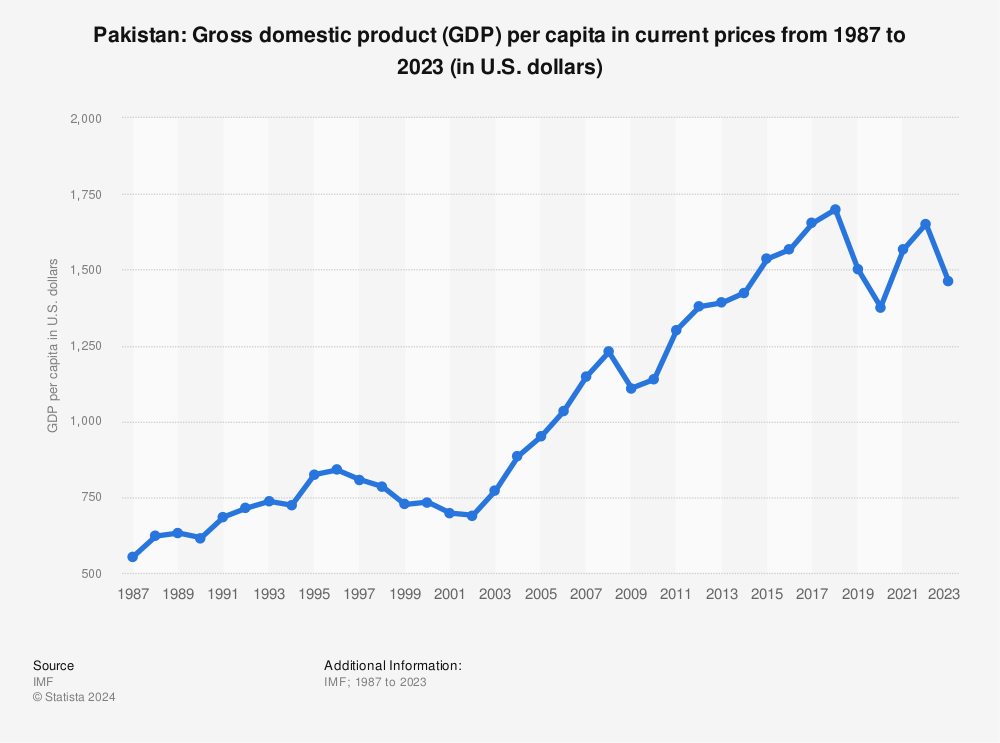
Pakistan’s economic history demonstrates that GDP can be susceptible to significant fluctuations. For personal finance and investment, this translates into higher risk. Currency depreciation, often linked to economic instability, reduces the international purchasing power of income and can impact investments denominated in local currency. Political uncertainty, policy shifts, and external shocks can rapidly alter the economic outlook, demanding a proactive and well-informed approach to managing financial assets. Investors must balance potential high returns with the inherent risks, often through thorough due diligence and a focus on resilience.
Challenges and Prospects for Pakistan’s Future GDP Growth
While Pakistan possesses significant potential, including a large youth population and a strategic geographic location, it faces several structural and cyclical challenges that hinder sustained high GDP growth. Addressing these will be key to unlocking its full economic potential.
Addressing Structural Issues
Long-standing issues such as persistent fiscal deficits, an underdeveloped tax base, an energy crisis leading to power outages, and the inefficiencies of state-owned enterprises continue to weigh on the economy. Comprehensive tax reforms are needed to broaden the tax net and improve revenue collection. Resolving the energy crisis through investment in diverse power sources and improving distribution efficiency is vital for industrial growth. Restructuring or privatizing loss-making state-owned enterprises could reduce the burden on public finances and enhance overall economic productivity.
Leveraging Demographic Dividend
Pakistan has one of the world’s largest youth populations. This demographic dividend presents an enormous opportunity for GDP growth, provided that investments are made in human capital development, quality education, and skill enhancement programs. Equipping the youth with market-relevant skills can boost productivity, foster innovation, and increase the labor force’s contribution to economic output. Without such investments, the demographic dividend could turn into a demographic challenge.
Diversification and Export Promotion
Over-reliance on a few sectors or export commodities (like textiles) makes the economy vulnerable to external shocks. Diversifying the industrial base, promoting value-added manufacturing, and expanding the range of export products and markets are crucial for sustainable GDP growth. Encouraging sectors like IT, tourism, and services can create new avenues for foreign exchange earnings and reduce dependence on traditional exports.
Role of International Financial Institutions and Bilateral Aid
Due to its balance of payments challenges and high debt, Pakistan frequently engages with international financial institutions like the International Monetary Fund (IMF) and the World Bank, as well as bilateral donors. These engagements often come with reform conditionalities aimed at fiscal discipline, structural adjustments, and improving governance. While these programs provide critical financial assistance, their success hinges on the government’s commitment to implementing the agreed-upon reforms effectively to stabilize the economy and pave the way for sustained, inclusive GDP growth.
aViewFromTheCave is a participant in the Amazon Services LLC Associates Program, an affiliate advertising program designed to provide a means for sites to earn advertising fees by advertising and linking to Amazon.com. Amazon, the Amazon logo, AmazonSupply, and the AmazonSupply logo are trademarks of Amazon.com, Inc. or its affiliates. As an Amazon Associate we earn affiliate commissions from qualifying purchases.