
The simple query, “What is Friday weather?”, belies a complex, dynamic ecosystem of advanced technology that has transformed our ability to peer into the immediate atmospheric future. Far from a mere glance at the sky, obtaining a reliable forecast for a specific day like Friday involves an intricate interplay of global sensors, sophisticated computational models, artificial intelligence, and user-friendly digital interfaces. This daily ritual, once a matter of local observation and almanacs, is now a testament to humanity’s prowess in data science, connectivity, and predictive analytics.
The Digital Forefront of Weather Prediction
Understanding “what is Friday weather” begins deep within a global network of monitoring systems and data processing centers. The journey from raw atmospheric data to a personalized forecast for your Friday commute is an incredible display of technological integration.
From Barometers to Big Data
For centuries, weather prediction relied on localized instruments like barometers and thermometers, coupled with empirical observation. The advent of modern meteorology in the 19th and 20th centuries saw the introduction of telegraph networks for data sharing, followed by radar and satellites. Today, this has evolved into a colossal “big data” challenge and opportunity. National meteorological agencies worldwide, often collaborating through the World Meteorological Organization (WMO), collect petabytes of data daily. This data comes from:
- Ground Stations: Thousands of automated weather stations continuously measure temperature, humidity, wind speed and direction, atmospheric pressure, and precipitation.
- Weather Balloons: Radiosondes launched multiple times a day ascend through the atmosphere, transmitting data on conditions at various altitudes.
- Ocean Buoys: Floating sensors gather marine weather data crucial for understanding ocean-atmosphere interactions and predicting phenomena like hurricanes.
- Aircraft Sensors: Commercial and research aircraft contribute real-time atmospheric data during their flights.
This raw, heterogeneous data forms the bedrock upon which all modern weather forecasts, including your specific “Friday weather” prediction, are built.
The Global Network of Sensors
The sheer volume and diversity of data are only part of the story; its global reach is equally critical. Weather patterns are inherently interconnected across continents and oceans. A frontal system developing over the Pacific Ocean might influence Friday’s weather in North America days later. This interconnectedness necessitates a global sensing infrastructure.
- Geosynchronous Satellites: Orbiting high above the Earth, these satellites provide continuous, broad-scale imagery of cloud formations, temperature, and atmospheric moisture. They are crucial for tracking large-scale systems like hurricanes and visualizing global weather trends.
- Polar-Orbiting Satellites: These satellites offer higher resolution data by passing over the poles multiple times a day, providing detailed atmospheric profiles and sea surface temperatures. They are essential for numerical weather prediction models.
- Doppler Radar Systems: These ground-based radars detect precipitation type, intensity, and motion, providing critical short-term insights into local storms, helping to refine “Friday weather” forecasts for immediate impact.
The seamless integration and rapid transmission of data from these diverse sources to supercomputing centers globally is the technological backbone that makes accurate short- to medium-range forecasts possible.
AI and Machine Learning in Forecasting
While vast data collection is fundamental, it’s the intelligence applied to this data that truly shapes our understanding of “what is Friday weather.” Artificial intelligence (AI) and machine learning (ML) are rapidly transforming the field of meteorology, moving beyond traditional numerical models to enhance accuracy, speed, and localized detail.
Predictive Models and Pattern Recognition
For decades, Numerical Weather Prediction (NWP) models have been the cornerstone of forecasting. These models use complex mathematical equations to simulate the atmosphere’s physical processes. Supercomputers process initial conditions (the aggregated sensor data) to project future states of the atmosphere. Different NWP models (e.g., GFS, ECMWF) use varying spatial resolutions, physics parameterizations, and initial data assimilation techniques, leading to slight variations in their outputs.
AI, particularly deep learning, is now being integrated into and alongside these NWP models. ML algorithms can:
- Identify complex patterns: AI can sift through historical weather data and current observations to identify subtle patterns that human forecasters or traditional models might miss, improving the prediction of recurring events or sudden shifts.
- Correct model biases: By comparing NWP model outputs with actual observed weather, ML models can learn to correct systematic biases inherent in the physical models, leading to more accurate predictions.
- Downscaling: Global NWP models often operate at resolutions too coarse for highly localized forecasts. ML techniques can “downscale” these outputs, generating high-resolution predictions for specific neighborhoods or even individual streets, providing a much more precise “Friday weather” outlook.
Enhancing Accuracy and Granularity
The primary goal of integrating AI into meteorology is to enhance forecast accuracy and provide more granular, actionable information. For instance, knowing “what is Friday weather” used to mean a general temperature range and a chance of precipitation for a whole city. Now, thanks to AI, we can expect:
- Hyper-Local Forecasts: AI models can process microclimates and urban effects, predicting specific temperature variations, wind gusts, or rain bands within a few square miles. This is invaluable for activities planned for a particular location on Friday.
- Probabilistic Forecasting: Instead of a simple “yes/no” for rain, AI-driven models can provide a probability distribution, indicating the likelihood of certain weather events. This helps users make more informed decisions by understanding the range of potential outcomes.
- Faster Updates: Machine learning algorithms can process data and update forecasts much quicker than traditional NWP models, offering more timely alerts for rapidly changing weather conditions relevant to your Friday plans.
- Seamless Blending: AI helps forecasters blend outputs from multiple NWP models and integrate them with real-time observations, creating a consensus forecast that often outperforms any single model.
The promise of AI is to make “what is Friday weather” not just a question of probability, but a statement with increasing certainty and detail.
Apps, Gadgets, and the Personalized Weather Experience
The final frontier in addressing “what is Friday weather” is how this complex data and advanced analytics are delivered directly to the user. This is where the tech industry, from app developers to hardware manufacturers, plays a pivotal role in making sophisticated weather insights accessible and intuitive.
The Ubiquitous Weather App: A Daily Essential
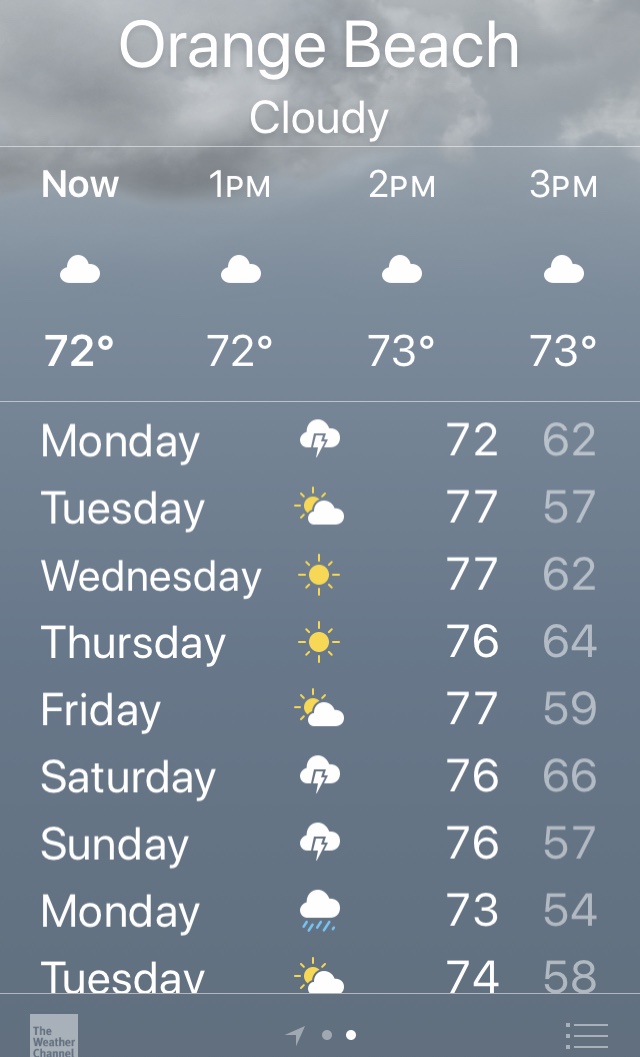
For most people, the answer to “what is Friday weather” comes from a dedicated weather application on their smartphone or computer. These apps act as sophisticated interfaces, pulling data from various meteorological services and often applying their own presentation layers and minor AI enhancements. Key features include:
- Location-Specific Forecasts: Automatically detecting a user’s location, apps provide hyper-local forecasts for temperature, humidity, wind, UV index, and precipitation.
- Hourly and Daily Breakdowns: Users can see detailed hourly forecasts for Friday, planning their activities around specific weather windows.
- Interactive Maps and Radar: Real-time radar maps show current precipitation, while future radar can project where rain or snow might be headed on Friday.
- Alerts and Notifications: Push notifications warn users of impending severe weather, sudden temperature drops, or precipitation events that could impact their Friday.
- Customization: Many apps allow users to select preferred units, add multiple locations, and even tailor the type of weather data they prioritize.
The evolution of weather apps has transformed a niche interest into an everyday utility, making highly technical data effortlessly consumable.
Smart Home Integration and IoT Weather Stations
Beyond mobile apps, smart home ecosystems and the Internet of Things (IoT) are embedding weather data into our living spaces.
- Smart Thermostats: These devices can integrate with local weather forecasts to optimize home heating and cooling, adjusting settings based on predicted Friday temperatures to save energy.
- Voice Assistants: A quick command to “Alexa, what’s the weather for Friday?” or “Hey Google, will it rain on Friday?” instantly retrieves a synthesized summary of the forecast.
- Personal Weather Stations (PWS): Hobbyists and homeowners can install PWS systems that measure hyper-local conditions and often upload data to global networks (like Weather Underground), contributing to the overall data pool and providing incredibly precise local forecasts. These can integrate with smart home hubs to trigger actions based on their readings.
This integration makes “what is Friday weather” not just a piece of information, but an input that can directly influence our environment and comfort.
Wearables and On-the-Go Information
Wearable technology, from smartwatches to fitness trackers, further extends the reach of weather information, providing immediate access to “Friday weather” updates without even needing to pull out a phone.
- Smartwatch Complications: Many smartwatches offer watch face “complications” that display current temperature, precipitation chance, or a quick summary of the day’s forecast.
- Activity Planning: For outdoor enthusiasts, integrated weather data on GPS watches or cycling computers can inform routes, gear choices, and timing for Friday adventures, factoring in expected conditions.
The trend is clear: weather information is becoming increasingly ubiquitous, seamlessly integrated into our devices and daily routines, making the answer to “what is Friday weather” just a glance or a voice command away.
Challenges and the Future of Weather Tech
Despite remarkable progress, the quest for perfect weather prediction remains an ongoing challenge, driven by continuous technological innovation.
Data Overload and Ethical AI Use
The sheer volume of atmospheric data generated daily presents its own set of challenges. Managing, storing, processing, and assimilating petabytes of diverse information requires immense computational power and sophisticated data governance. As AI becomes more prevalent, ethical considerations regarding data privacy, bias in algorithms, and the transparency of AI-driven forecasts will also come to the forefront. Ensuring that AI models are robust, explainable, and free from unintended biases is crucial for maintaining public trust in “what is Friday weather” predictions.
Hyper-Local Forecasting and Microclimates
The goal of achieving true “hyper-local” forecasting, where conditions can be accurately predicted for an individual block or even building, remains a significant hurdle. Microclimates, influenced by urban heat islands, topography, and bodies of water, create highly localized variations that global or even regional models struggle to resolve. Future advancements will likely involve even higher-resolution models, greater integration of ground-based sensor networks (e.g., dense arrays of urban sensors), and advanced AI techniques to accurately capture these fine-scale phenomena for a truly precise “Friday weather” outlook.

Satellite Technology and Beyond
The next generation of satellite technology promises even more granular and frequent data. Advanced instruments will offer unprecedented views of atmospheric moisture, wind fields, and aerosols, feeding even more precise information into predictive models. Developments in quantum computing could potentially revolutionize NWP by solving complex atmospheric equations faster and more efficiently. Furthermore, exploring new data sources, such as crowdsourced observations or advanced drone technology, could further enrich the data landscape. The trajectory of weather technology points towards an future where “what is Friday weather” is answered with near-perfect accuracy and detail, delivered precisely when and how it’s needed.
aViewFromTheCave is a participant in the Amazon Services LLC Associates Program, an affiliate advertising program designed to provide a means for sites to earn advertising fees by advertising and linking to Amazon.com. Amazon, the Amazon logo, AmazonSupply, and the AmazonSupply logo are trademarks of Amazon.com, Inc. or its affiliates. As an Amazon Associate we earn affiliate commissions from qualifying purchases.