
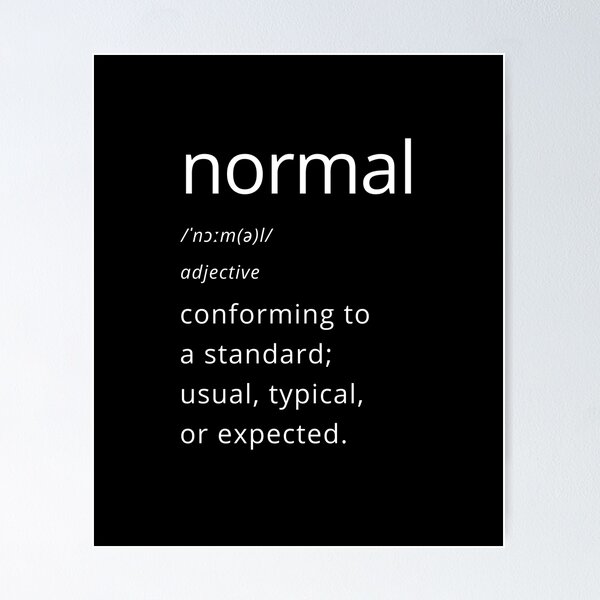
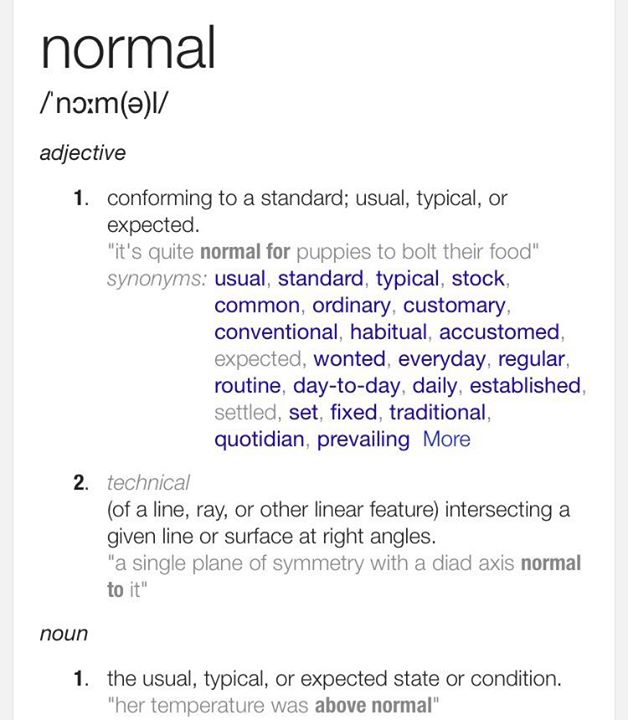
The concept of “normal” has long served as a societal anchor, a statistical average, or a baseline for comparison. Yet, in an era increasingly shaped by rapid technological advancement, artificial intelligence, and pervasive digital networks, this once seemingly stable concept has become profoundly fluid, dynamic, and often algorithmically determined. Technology isn’t just changing what we do; it’s fundamentally redefining what we perceive as normal, shifting our baselines across everything from daily routines to complex system behaviors and even the very fabric of human interaction.
The Shifting Sands of Digital Normality
For centuries, “normal” was largely a product of observable human patterns, cultural conventions, and statistical aggregates based on relatively stable environments. The digital revolution, however, has introduced a new dimension, transforming static expectations into dynamic, data-driven baselines that are constantly recalibrated.
From Static Expectations to Dynamic Baselines
Historically, a ‘normal’ day involved a set sequence of events: commuting to a physical office, in-person meetings, perhaps a trip to a brick-and-mortar store. Today, for many, a normal day involves logging onto a virtual workspace from a home office, collaborating through video conferencing tools, and ordering groceries via an app. These aren’t just new options; for millions, they have become the new normal. This shift isn’t merely about adopting new tools; it’s about a fundamental reorientation of what constitutes expected, typical, or average behavior. Technological platforms, with their inherent flexibility and global reach, have effectively dismantled many traditional geographical and temporal boundaries that once defined normalcy. What was once considered an exception – working remotely, international virtual teams, entirely cashless transactions – has now been absorbed into the mainstream, redefining the baseline for professional and personal conduct.
The Algorithmic Lens on Human Behavior
At the heart of this transformation is the rise of big data and advanced analytics. Algorithms now constantly monitor, analyze, and learn from our digital footprints, establishing what constitutes “normal” behavior not just for individuals but for entire populations. From recommending the next product to suggesting a new social connection, these systems operate on probabilistic models of what is most likely or what fits a pre-defined pattern of normalcy derived from vast datasets. For a financial institution, “normal” transaction behavior for a customer might be defined by their past spending habits, location data, and network of contacts. Any deviation, however minor, might trigger an alert, marking it as anomalous against an algorithmically established norm. This algorithmic lens is immensely powerful, shaping everything from cybersecurity protocols to personalized user experiences, often without our conscious awareness of how “normal” is being calculated and applied to our digital lives. It demonstrates how technology has moved beyond simply facilitating tasks to actively defining the very parameters of expected human-computer interaction.
AI’s Quest to Understand and Emulate Normal
Artificial intelligence stands at the forefront of defining, recognizing, and even generating “normal” patterns. Its ability to process and interpret vast datasets allows it to discern regularities that might be invisible to human observers, but also presents significant challenges in accurately reflecting the nuanced, often irrational aspects of human normalcy.
Anomaly Detection and Predictive Norms
One of AI’s most practical applications in defining normalcy is anomaly detection. In cybersecurity, AI systems continuously monitor network traffic, user logins, and data access patterns. By establishing a “normal” baseline of activity, any significant deviation—a login from an unusual location, an abnormally large data transfer, or a sudden spike in failed authentication attempts—is immediately flagged as an anomaly. This is critical for identifying potential threats before they escalate. Similarly, in industrial settings, AI monitors machine performance, detecting subtle changes in vibrations, temperature, or energy consumption that deviate from “normal” operating parameters, thereby predicting maintenance needs or preventing catastrophic failures. These predictive norms, derived from historical data, represent a purely functional definition of normal: what usually happens, and what is statistically most probable.
Ethical AI and the Challenge of Human Norms
While AI excels at statistical normalcy, defining “normal” in a human context presents a far greater challenge, particularly concerning ethics and societal values. For AI to truly integrate into human society, it must navigate the complexities of what is ethically normal, socially acceptable, and culturally appropriate—concepts that are far from universal or static. For example, what constitutes “normal” dialogue in a customer service chatbot? How should an autonomous vehicle respond to an ethically ambiguous situation, where “normal” human reactions might vary wildly? Training AI on historical data inherently carries the risk of perpetuating existing biases and societal norms that may not be equitable or desirable. If historical data reflects gender or racial biases, an AI trained on it might unintentionally define “normal” opportunities or outcomes in a biased way. The development of ethical AI frameworks therefore grapples with the need to explicitly define and encode values that transcend mere statistical normalcy, ensuring that AI systems contribute to a definition of normal that is fair, inclusive, and aligns with aspirational human values, rather than merely reflecting past imperfections.
Redefining Normal in the Connected Workplace
The workplace has undergone a monumental transformation, particularly in the wake of global events that accelerated digital adoption. What once constituted a “normal” work environment and methodology has been fundamentally rewritten by technology, leading to new paradigms of collaboration, productivity, and organizational structure.
Hybrid Models and Remote-First Paradigms
The rise of high-speed internet, cloud computing, and sophisticated communication tools has rendered the traditional office-centric model increasingly obsolete for many sectors. Today, a “normal” work setup might be entirely remote, with employees collaborating across continents, or a hybrid model that blends in-office and remote work. Companies like GitLab and Automattic have pioneered fully remote models, defining a new normal for distributed teams where physical proximity is no longer a prerequisite for cohesive work. This shift challenges old notions of supervision, team dynamics, and even corporate culture. It necessitates new normal practices for onboarding, performance management, and fostering a sense of community, all mediated through digital platforms. The physical office, for many, is no longer the default “normal” but an option, an amenity, or a space for specific collaborative events.
Digital Tools as the New Standard
Central to this redefined workplace normalcy is the ubiquitous integration of digital tools. Project management software (e.g., Asana, Jira), communication platforms (e.g., Slack, Microsoft Teams), video conferencing solutions (e.g., Zoom, Google Meet), and cloud-based document sharing (e.g., Google Workspace, Office 365) are no longer supplementary; they are the standard operating environment. A “normal” workflow now involves seamless transitions between these tools, with communication, task management, and document creation happening predominantly in the digital realm. Proficiency with these tools has become a fundamental expectation, and the “normal” flow of information is often asynchronous, documented, and searchable within these digital ecosystems. This instrumentalization of technology has not only boosted efficiency but has also democratized access to work opportunities, allowing talent pools to extend far beyond geographical confines, reshaping the very definition of a “normal” workforce.
The Personalization Paradox: My Normal vs. Our Normal
Technology, particularly through personalized algorithms, has the unique ability to create highly individualized experiences, leading to a “my normal” that can diverge significantly from a collective “our normal.” This personalization, while beneficial in many ways, also raises questions about shared realities and the societal impact of tailored digital experiences.
Filter Bubbles and Individualized Realities
Recommendation engines on streaming services, social media feeds, and news aggregators are meticulously crafted to present content that aligns with an individual’s past preferences and predicted interests. This creates a “filter bubble,” where an individual’s digital “normal” is a highly curated reality. The news they see, the opinions they encounter, and even the products they are exposed to are all filtered through an algorithmic lens designed for maximum engagement and relevance to them. While this can feel incredibly normal and intuitive for the individual, providing a constant stream of what they already like or agree with, it can also lead to fragmented understandings of the world. My “normal” news feed might be vastly different from my neighbor’s, leading to divergent perspectives on current events or societal issues. This individualization of normalcy challenges the idea of a shared public sphere and a collective understanding of what is generally considered “normal” or important.
The Future of a Fluid Normality
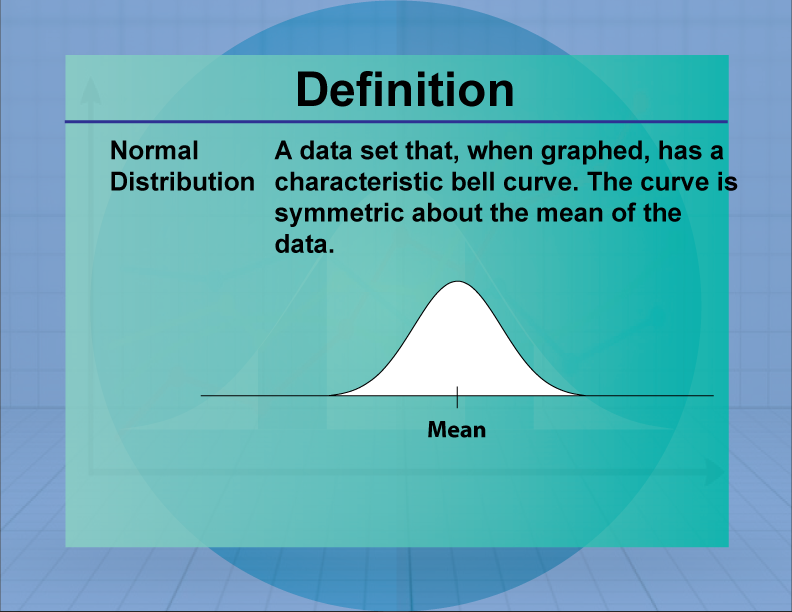
Ultimately, technology is not just defining a new normal; it is defining a process of continuous re-definition. The concept of normal is no longer a fixed point but a constantly recalibrated algorithm, a dynamic baseline that evolves with data, user interaction, and technological innovation. From adaptive user interfaces that learn individual preferences to AI systems that adjust their behavior based on real-time environmental data, the future of normalcy is inherently fluid and contextual. Navigating this future requires a critical awareness of how technology shapes our perceptions, an understanding of the underlying algorithms, and a commitment to ensuring that this ever-evolving definition of normal serves human flourishing rather than merely optimizing for engagement or efficiency. The conversation about “what is normal” in the digital age is no longer a philosophical abstract but a pressing technological and societal imperative.
aViewFromTheCave is a participant in the Amazon Services LLC Associates Program, an affiliate advertising program designed to provide a means for sites to earn advertising fees by advertising and linking to Amazon.com. Amazon, the Amazon logo, AmazonSupply, and the AmazonSupply logo are trademarks of Amazon.com, Inc. or its affiliates. As an Amazon Associate we earn affiliate commissions from qualifying purchases.